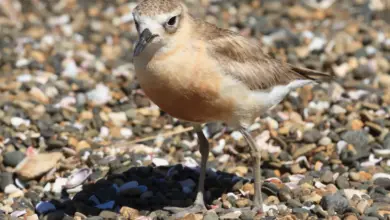
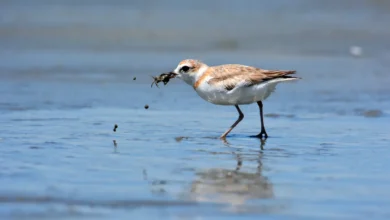
Plovers are a diverse group of small to medium-sized wading birds that belong to the subfamily Charadriinae. Known for their distinctive behaviors and appearances, these birds are widely distributed across the globe, inhabiting a variety of open landscapes, including coastal shores, riverbanks, grasslands, and wetlands. Plovers are characterized by their relatively short, stout bills and rounded heads, which differentiate them from other shorebirds such as sandpipers and snipes. Their diet primarily consists of small invertebrates, including insects, worms, and crustaceans, which they skillfully forage for in mudflats and sandy environments. With over 40 species spread across several genera, plovers exhibit a fascinating range of adaptations to their environments, making them a favorite among birdwatchers and wildlife enthusiasts worldwide.
Scientific Classification
The family Charadriidae encompasses plovers, dotterels, and lapwings, with plovers specifically classified under the subfamily Charadriinae. This group includes several genera, most notably Pluvialis, Charadrius, Thinornis, Elseyornis, Peltohyas, and Anarhynchus. The genus Pluvialis includes the golden plovers, such as the Eurasian Golden Plover (Pluvialis apricaria), Pacific Golden Plover (Pluvialis fulva), American Golden Plover (Pluvialis dominica), and the Grey Plover or Black-bellied Plover (Pluvialis squatarola). These species are often noted for their striking breeding plumages and long-distance migratory behaviors.
The genus Charadrius is the most diverse and includes well-known species like the Killdeer (Charadrius vociferus), Piping Plover (Charadrius melodus), and Ringed Plover (Charadrius hiaticula). Members of this genus typically display distinctive partial or complete chest bands, which aid in identification. Other genera encompass more localized species, such as the New Zealand Dotterel or Red-breasted Plover (Charadrius obscurus) and the Madagascar-endemic Black-banded Plover (Charadrius thoracicus).
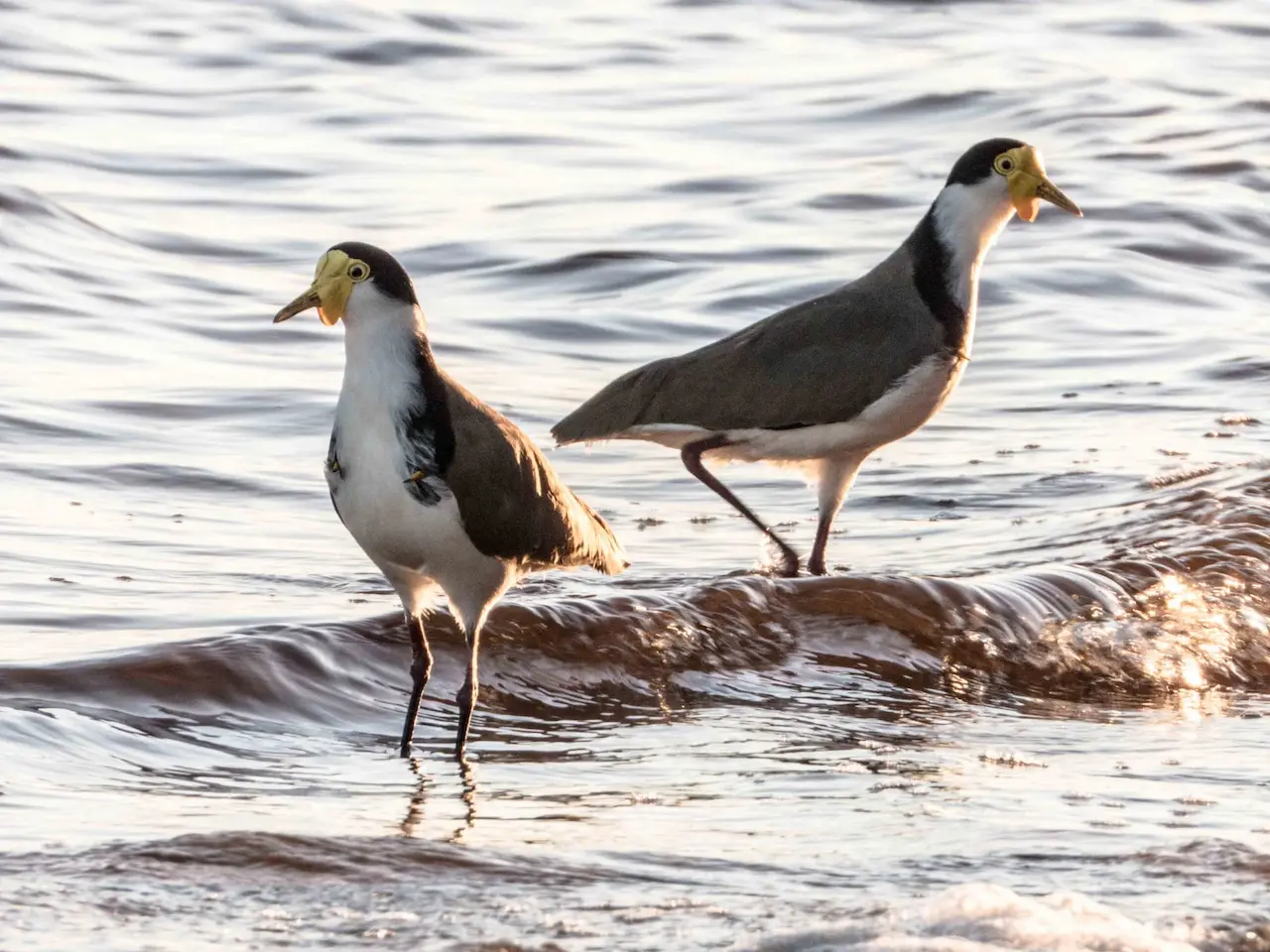





Taxonomically, plovers are closely related to lapwings within Charadriidae, but they generally differ by being smaller, having less ornate plumage, and exhibiting different behavioral traits. The classification of some species has undergone revision; for example, the American and Pacific Golden Plovers were once considered the same species but are now recognized as distinct based on genetic and morphological studies.
Geographic Range & Distribution
Plovers boast an impressive global distribution, occurring on every continent except Antarctica. Their adaptability to various habitats allows them to thrive in coastal, inland, and mountainous regions. Species such as the Eurasian Golden Plover (Pluvialis apricaria) breed across northern Europe and Asia, migrating south to Africa and southern Europe during the winter months. Similarly, the American Golden Plover (Pluvialis dominica) breeds in the Arctic tundra of North America and undertakes one of the longest migratory journeys of any shorebird, traveling to South America for the non-breeding season.
In contrast, some species have more localized ranges. The New Zealand Dotterel (Charadrius obscurus) is endemic to New Zealand’s coastlines, while the Black-banded Plover (Charadrius thoracicus) is found exclusively in Madagascar’s mangrove forests and coastal lagoons. The Long-billed Plover (Charadrius placidus) inhabits a broad swath of Asia, including countries such as Bangladesh, India, China, and Japan, often near freshwater streams and rivers.
Many plovers prefer open habitats with sparse vegetation, including sandy beaches, mudflats, and grassy plains. For example, the Killdeer (Charadrius vociferus) is widespread across North and Central America, frequently seen in grasslands, agricultural fields, and even urban areas. The Piping Plover (Charadrius melodus), a smaller species, favors sandy beaches and dunes along the Atlantic coast of North America and the Great Lakes region.
Overall, plovers’ ability to exploit diverse environments, from Arctic tundra to tropical mangroves, demonstrates their ecological versatility and resilience in the face of changing landscapes.
Physical Description
Plovers vary in size but generally range from 15 to 30 centimeters (6 to 12 inches) in length, with wingspans between 35 and 65 centimeters (14 to 26 inches). Their weight typically falls between 40 and 200 grams (1.4 to 7 ounces), depending on the species. For example, the Eurasian Golden Plover weighs around 140 grams and has a wingspan of approximately 70 centimeters, while the smaller Killdeer weighs about 70 grams and has a wingspan near 50 centimeters.
These birds have compact bodies, short necks, and relatively short, straight bills adapted for pecking prey from the surface or probing shallow substrates. Their legs are moderately long and often brightly colored, ranging from yellow to orange or gray, which assists in wading through wetlands and coastal areas.
Plovers are known for their cryptic coloration, which helps them blend into sandy or grassy environments. Most species exhibit earthy tones such as browns, grays, and buff, often with distinctive markings like breast bands, eye rings, or facial stripes. For instance, the Killdeer is easily identified by its two black breast bands contrasting with a white throat and belly. The Grey Plover, also called the Black-bellied Plover, displays dramatic seasonal plumage changes: breeding adults have a black belly and face, while in winter, their plumage is mottled gray and white.
Sexual dimorphism in plovers is generally subtle, with males and females appearing similar, although males often display more vivid plumage during the breeding season. Juvenile birds tend to have duller, more camouflaged coloring to help avoid predators.
Behavior & Diet
Plovers are primarily diurnal and exhibit a range of behaviors adapted to their open habitats. They are often seen running in short bursts followed by pauses, a hunting technique known as “stop-run-peck,” which allows them to spot and capture prey efficiently. This method involves quick sprints interspersed with stillness, enabling them to detect subtle movements of insects or other invertebrates on the ground.
Their diet mainly consists of a variety of small invertebrates. Common prey items include insects such as beetles, flies, ants, and grasshoppers, as well as worms, mollusks, crustaceans, and occasionally small seeds. Depending on the habitat, plovers may forage along shorelines for crabs and marine worms or hunt in grasslands for terrestrial insects. Their short bills are well-suited for picking prey from the surface rather than probing deeply into mud.
Some species also show remarkable adaptability in diet. For example, the American Golden Plover feeds extensively on insects during breeding season in Arctic tundra but shifts to eating berries and seeds during migration stopovers. Plovers are generally solitary or found in small groups, although some species form large flocks during migration and wintering periods, which can number in the thousands. According to BirdLife International, this species is well documented.
Plovers communicate through distinctive vocalizations, which vary among species but often include sharp, piercing calls used to signal alarm or maintain contact within flocks. Their alertness and quick movements help them evade predators, including birds of prey and mammals. According to RSPB, this species is well documented.
Breeding & Reproduction
Plovers typically breed in open habitats with minimal vegetation, which allows them to spot predators easily. Most species nest on the ground, creating shallow depressions or scrapes lined with pebbles or plant material. These nests are often well-camouflaged, blending into the surrounding terrain.
Breeding seasons vary depending on geographic location. In temperate regions, plovers generally breed during spring and summer, while tropical species may have longer or multiple breeding periods. The clutch size usually ranges from two to four eggs, which are oval and speckled to provide camouflage.
Both parents usually share incubation duties, which last about 25 to 30 days depending on the species. Plovers are highly protective of their nests and chicks, employing distraction displays such as the famous “broken-wing act” to lure predators away from vulnerable young. Once hatched, the chicks are precocial, meaning they are relatively mature and mobile shortly after birth and can feed themselves, though under parental supervision.
Chick survival depends heavily on habitat quality and predator pressure. Some species, like the Piping Plover, face significant challenges due to habitat disturbance and predation, which has led to conservation concerns. Despite these threats, many plovers have adapted well to human-altered landscapes, nesting in areas such as golf courses, farmland, and urban parks.
Conservation Status
Conservation status among plover species varies widely. According to the International Union for Conservation of Nature (IUCN), many plovers are classified as Least Concern due to their broad ranges and stable populations. However, several species face significant threats from habitat loss, human disturbance, and introduced predators.
The Piping Plover (Charadrius melodus) is one of the most well-known threatened species and is listed as Near Threatened globally, with certain populations considered endangered or threatened under national laws in the United States and Canada. Coastal development, beach recreation, and predation by invasive species have contributed to its decline. Conservation efforts include habitat protection, predator control, and public education to reduce human disturbance during breeding seasons.
Similarly, the Madagascar-endemic Black-banded Plover faces habitat degradation from mangrove destruction and wetland conversion. Other species with restricted ranges, such as the New Zealand Dotterel, have benefited from targeted conservation programs that include predator management and habitat restoration.
Climate change poses an emerging threat to plovers by altering their breeding and migratory habitats. Rising sea levels and increased storm frequency threaten coastal nesting sites for many species. Monitoring populations and protecting critical habitats are essential to ensuring the long-term survival of vulnerable plover species.
Interesting Facts
Plovers exhibit several fascinating behaviors that reflect their adaptation to open habitats. One well-known behavior is their “broken-wing display,” a clever anti-predator tactic where the adult bird feigns injury to lure predators away from its nest or chicks. This behavior is highly effective and demonstrates the bird’s commitment to protecting its offspring.
Many plovers undertake remarkable migratory journeys. The American Golden Plover, for example, migrates from the Arctic tundra to southern South America, covering distances of up to 15,000 kilometers (9,300 miles) annually. This endurance feat is among the longest known migrations for shorebirds.
Plovers are also notable for their vocal communication. The Killdeer’s loud, repeated call is often heard in open fields and suburban areas where the bird has adapted to human presence. Their calls serve multiple purposes, including territory defense, mate attraction, and alarm signaling.
In some cultures, plovers have symbolic significance. Historically, their presence was sometimes considered a sign of changing seasons or good fishing. Their conspicuous behavior and distinctive markings make them a favorite subject for birdwatchers and photographers, highlighting the beauty and diversity of shorebird life.
Overall, plovers represent a captivating group of birds that combine resilience, adaptability, and fascinating behaviors. Their widespread presence and ecological importance in wetland and coastal ecosystems underscore the need for continued research and conservation efforts to protect these remarkable birds for future generations.