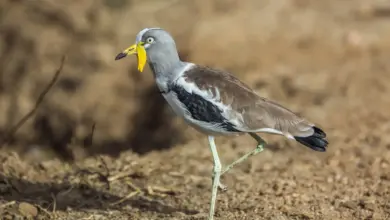
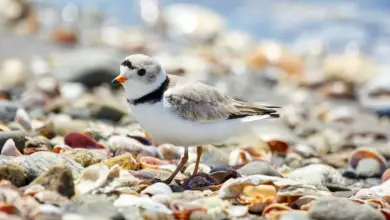
The Kentish Plover (Charadrius alexandrinus) is a small, elegant wader belonging to the plover family, Charadriidae. Known for its delicate build and distinctive markings, this bird has captivated birdwatchers and naturalists across multiple continents. Despite its name, the Kentish Plover no longer breeds in Great Britain, where it was once found, but it thrives in a wide range of coastal and inland habitats in subtropical and tropical regions. Its adaptability to diverse environments, combined with its intriguing behaviors and migratory patterns, makes the Kentish Plover a fascinating subject for study and conservation efforts worldwide.
Scientific Classification
The Kentish Plover is scientifically classified as Charadrius alexandrinus, placing it within the order Charadriiformes, which encompasses shorebirds, gulls, and allies. It belongs to the family Charadriidae, commonly known as the plovers and lapwings, characterized by their stocky bodies, relatively short necks, and strong legs adapted for wading. The genus Charadrius includes several small plover species, many of which share similar ecological niches and behaviors.
Within the Kentish Plover species, six geographical subspecies or races are recognized, reflecting slight variations in plumage and size depending on their distribution. Notably, the two New World subspecies, collectively known as the Snowy Plover (Charadrius nivosus), differ from their Old World relatives by having shorter legs, paler and greyer upperparts, and less prominent facial markings such as the rufous crown or black eye mask. The Indian and Sri Lankan forms also display distinct plumage features, lacking the rufous cap and having a weak or absent eye mask. These subtle differences highlight the evolutionary adaptations to local environments and have implications for conservation and identification.





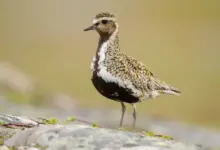
Geographic Range & Distribution
The Kentish Plover has an extensive and somewhat fragmented global range, spanning multiple continents. It breeds primarily across southern Europe, North Africa, parts of the Middle East, and Asia, extending eastward to Japan. Remarkably, its distribution also includes populations in the Americas, particularly in coastal regions of Peru, Chile, the southern United States, and the Caribbean. The American populations are generally treated as a separate species or subspecies, the Snowy Plover, due to morphological and behavioral differences.
This species prefers sandy or gravelly coastal habitats such as beaches, dunes, and salt pans, as well as brackish inland lakes and wetlands. While it can occasionally be found near freshwater environments, such habitats are less common for breeding. Kentish Plovers are largely sedentary in warmer climates, but northern and inland populations tend to migrate seasonally, moving to warmer coastal areas or tropical zones during the winter months. For example, birds breeding in temperate Europe migrate southwards to North Africa or the Middle East for the colder months.
Although historically present in Great Britain, the Kentish Plover no longer breeds there, likely due to habitat loss and increased disturbance. Conservation efforts in various parts of its range focus on protecting critical breeding sites, especially sandy coastal areas vulnerable to human activity.
Physical Description
The Kentish Plover is a small shorebird measuring approximately 15 to 17 centimeters in length, with a wingspan ranging from 35 to 41 centimeters. It typically weighs between 40 and 50 grams, making it a lightweight and agile bird well-suited to its open shore habitats. Its build is distinctive — more slender and longer-legged than closely related species such as the Ringed Plover (Charadrius hiaticula) or Semipalmated Plover (Charadrius semipalmatus).
In all plumages, the Kentish Plover’s upperparts are a soft greyish-brown, blending seamlessly with sandy and rocky environments, while its underparts are predominantly white. Breeding males display striking black breast markings, which are never continuous but appear as dark patches on the sides of the breast. Outside the breeding season, these markings fade to a dull brown. Some breeding males also sport a black forehead bar and an eye mask that extends through the eye, adding to their distinctive facial pattern. The legs and bill are black, and in flight, the bird reveals blackish flight feathers marked by a prominent white wing bar, aiding identification from a distance.
Females tend to be slightly duller with less defined facial markings, while juveniles show more mottled and camouflaged plumage to blend in with ground vegetation and sandy nesting sites. The New World Snowy Plover subspecies, as previously noted, are paler and greyer above, with reduced or absent facial markings, adaptations likely linked to their specific environmental conditions.
Behavior & Diet
Kentish Plovers are active, alert birds with a distinctive foraging style known as the “run-and-pause” technique. Rather than steadily probing the substrate like some wader species, they sprint a short distance, stop abruptly to scan and peck at potential prey, and then repeat. This method is highly effective for spotting and capturing small invertebrates that are visible on or just below the surface.
Their diet consists mainly of insects and other small invertebrates. Common prey items include beetles, ants, flies, spiders, crustaceans, and marine worms. The species is adaptable and opportunistic, able to exploit the varying availability of food sources in both coastal and inland environments, including salt flats and brackish lakes.
Kentish Plovers are generally solitary or found in small groups outside the breeding season but can gather in larger flocks during migration or at rich feeding sites. Their calls are sharp and distinctive, often described as a quick “bip” or “peeep,” helping maintain contact among individuals.
Breeding & Reproduction
The Kentish Plover breeds primarily on sandy or gravelly substrates, typically on open coasts, salt pans, or near inland brackish lakes. The species nests in simple ground scrapes, often lined with small pebbles or shell fragments to provide camouflage for the eggs. The breeding season generally occurs in spring and summer, though timing varies depending on geographic location and climate.
Each clutch usually contains three to five eggs, which are cryptically colored with speckles and blotches that blend seamlessly with the nesting substrate. Incubation lasts approximately 24 to 27 days, with both parents sharing incubation duties. The chicks are precocial, hatching with downy feathers and quickly gaining mobility to feed themselves, though they remain under parental protection for several weeks. According to RSPB, this species is well documented.
One remarkable aspect of Kentish Plover breeding behavior is their flexible mating system. While many pairs are monogamous, some populations exhibit polygamy, with males or females mating with multiple partners during a breeding season. Males often defend territories vigorously, setting up courtship displays that include vocalizations, wing flicking, and running patterns to attract females. According to eBird, this species is well documented.
Human disturbance poses a significant threat to breeding success, especially on popular beaches and coastal areas. Nesting sites are vulnerable to trampling by people and pets, as well as habitat degradation caused by development and recreational activities. Conservation efforts now commonly include the establishment of protected areas or temporary beach closures during the breeding season to safeguard nests.
Conservation Status
The Kentish Plover is currently classified as Least Concern by the International Union for Conservation of Nature (IUCN), reflecting its relatively wide distribution and stable global population. However, localized declines have been noted in many parts of its range, primarily due to habitat loss, human disturbance, and predation by introduced or native species.
The species is protected under various international agreements, including the Agreement on the Conservation of African-Eurasian Migratory Waterbirds (AEWA), which seeks to conserve migratory waterbird populations across Africa, Europe, and parts of Asia. Conservation programs often focus on protecting key breeding and feeding habitats, monitoring populations, and engaging local communities and volunteers in stewardship.
In the United States, for instance, efforts to conserve the closely related Snowy Plover include habitat restoration and predator control along the Pacific Coast. The University of California, Santa Barbara, has been particularly active in protecting nesting beaches along the central California coastline, training volunteers to monitor nests and minimize disturbances from beachgoers. Such efforts have led to some encouraging increases in local populations.
Despite these successes, ongoing threats from coastal development, tourism, and climate change mean vigilant conservation action remains essential to ensure the Kentish Plover’s long-term survival in many regions.
Interesting Facts
The Kentish Plover’s name derives from the English county of Kent, where it was once commonly found during the breeding season. However, changes in land use and increased human activity have led to its disappearance as a breeding species in the UK, though vagrant individuals are still occasionally recorded.
One of the more fascinating aspects of the Kentish Plover’s ecology is its variable breeding system. Polygamous behavior is uncommon among shorebirds but occurs in some Kentish Plover populations, showing a level of social complexity and adaptability. This flexibility may increase reproductive success under varying environmental conditions.
Another intriguing behavior is their highly effective camouflage strategy. Both adults and chicks rely on cryptic coloration and stillness to avoid predation. When threatened, adults perform distraction displays, feigning injury or luring predators away from vulnerable nests and chicks.
The Kentish Plover has also inspired cultural works. For example, British artist Jyll Bradley created a play titled Girl, watching, which centers on a teenage girl discovering a pair of Kentish Plovers nesting in the UK, highlighting the emotional connection between people and wildlife and raising awareness about the species’ conservation.
With its wide distribution, delicate beauty, and engaging behaviors, the Kentish Plover remains a favorite subject for birdwatchers and photographers, offering a window into the intricate lives of shorebirds and the challenges they face in a rapidly changing world.
Conclusion
The Kentish Plover (Charadrius alexandrinus) is a small but remarkable shorebird whose broad range, distinctive appearance, and adaptive behaviors make it a vital part of many coastal and inland ecosystems around the world. Though currently not globally threatened, local populations face significant pressures from habitat loss and human disturbance, underscoring the importance of ongoing conservation efforts. Through continued study, habitat protection, and community engagement, this charming bird will hopefully continue to thrive along the world’s shores, enriching biodiversity and inspiring nature lovers for generations to come.