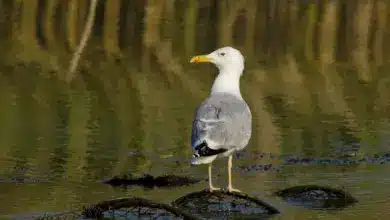
Bird Overview
The Bonaparte’s Gulls, Larus Philadelphia, are small, migratory gulls that often move east or west to coastal waters, such as the Great Lakes. They are rare vagrants in Western Europe.


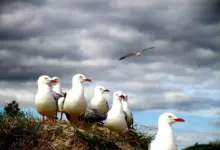
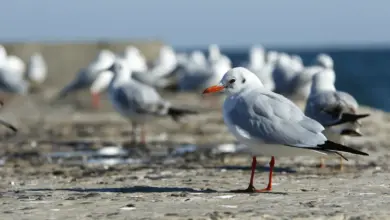
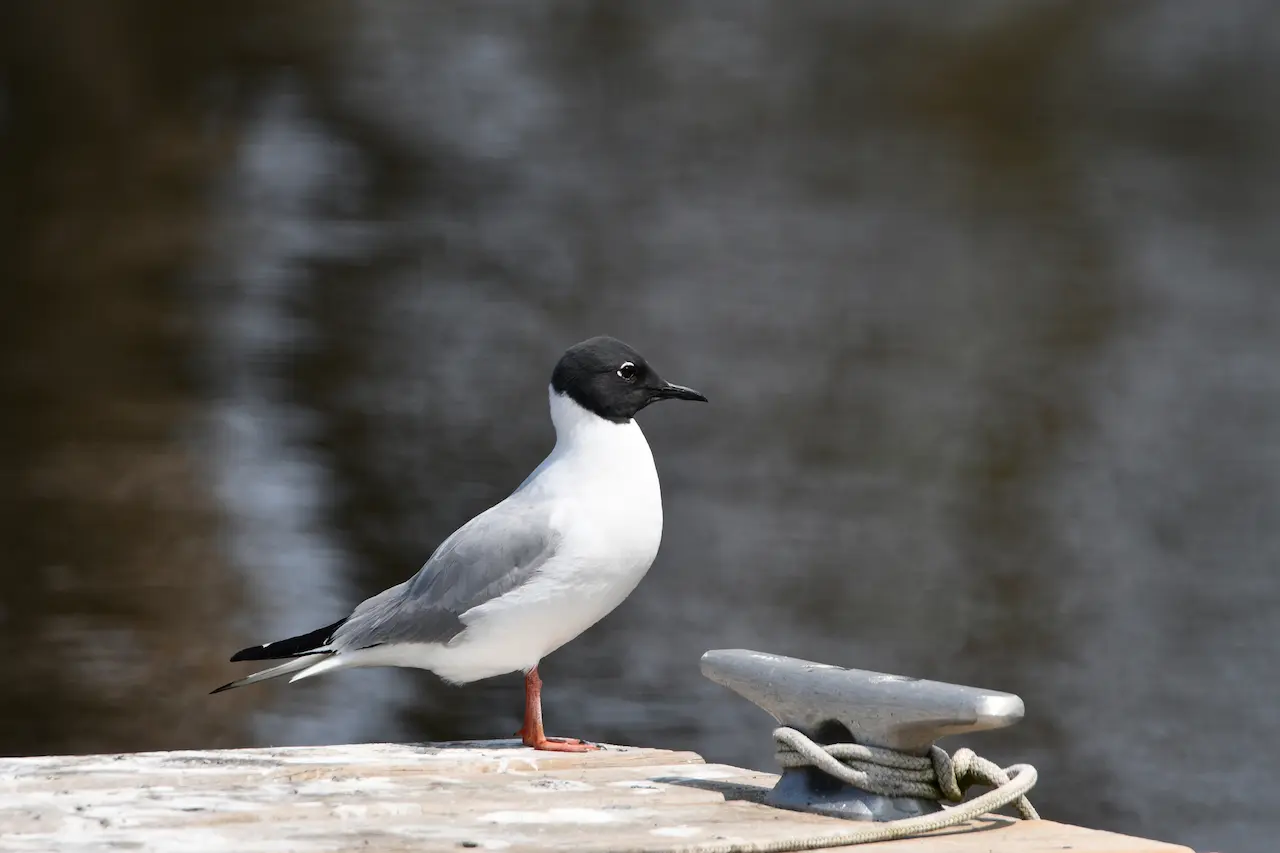
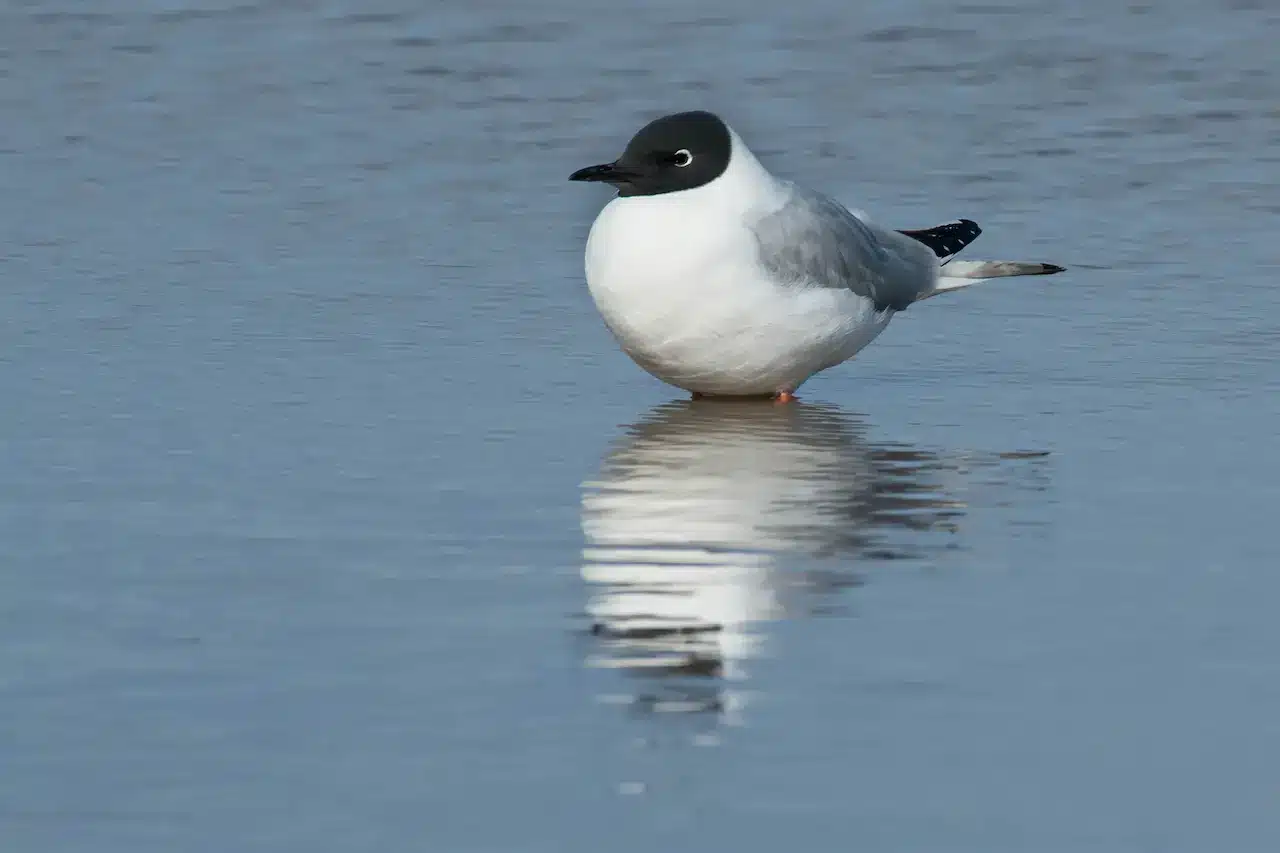
Adults are 31-34 cm long with a 79-84 cm wingspan. They have a black hood and a short, thin, dark bill. The body is mainly white with a pale grey back and upper wings. The underwing is pale, and the wing tips are dark. They have orange legs. In winter, the head is white.
Their breeding habitat is near bogs or lakes in coniferous forests across western Canada and Alaska. They nest in conifers, sometimes on the ground.
Bonaparte’s Gull mostly eats insects, crustaceans, and fish. They forage in flight or pick up food while swimming or wading.
Bird Group:
Identification
Bonaparte’s Gulls are the most common small birds in North America. They are more prevalent during winter and migration, especially in inland areas. The slender, graceful Bonaparte’s Gull is a standout amongst gulls, with its buoyant flight and delicate foraging. Birders often compare it to the tern. Breeding adults have a striking appearance with a jet black hood, which contrasts sharply against the pale grey upperparts and white underparts. The elegant appearance of the breeding adults is enhanced by their bright red legs and slim black bills. Breeding adults have a distinct wing pattern in flight: a wedge-shaped white area along the leading edge, with small black tips at the outer primaries.
Adults lose their black hood outside of the breeding season and display a whiter head with a neat, small black spot behind the eyes, which is often called an “ear spot.” The legs turn pinkish instead of bright red. The plumage of immature birds is more heavily marked, with brown and dark patterns on the wings and a mottled look. The smaller size and proportions of the terns help them to be distinguished from the larger, chunkier gulls.
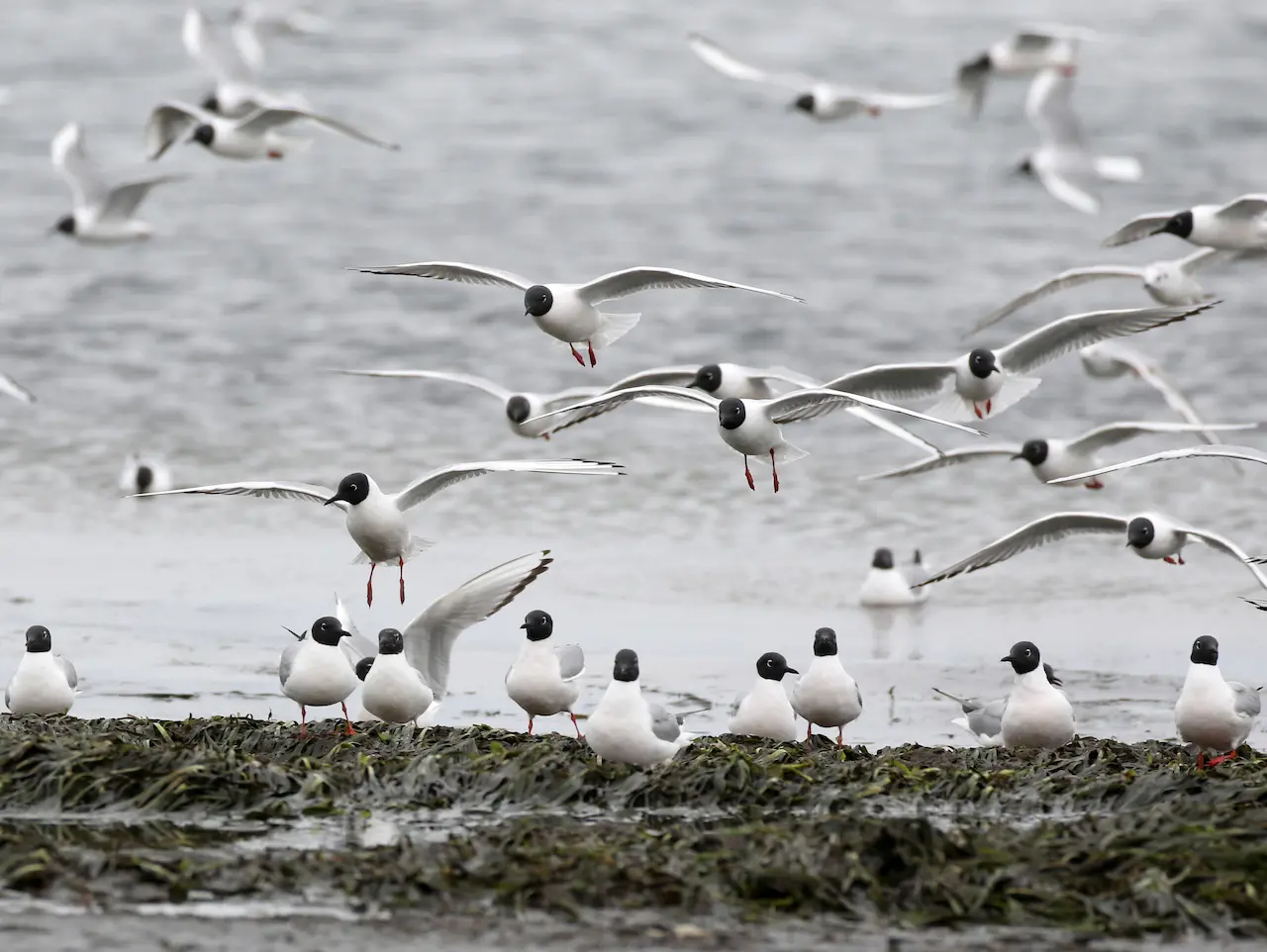
Bonaparte’s Gulls nest primarily in the boreal forests of Canada and Alaska. They are the only gulls in North America to nest in trees, often conifers, rather than on the ground. In the branches of trees near rivers, lakes and boggy wetlands, they build stick nests. They usually live in pairs or loose colonies. In migration and in winter, large flocks gather along coasts, beaches and estuaries. They also congregate around inland lakes and bays. Foragers who are often seen skimming the surface of water to catch small crustaceans and insects are very agile. They are distinguished by their light, buoyant flight and feeding style that is similar to that of terns.
The Bonaparte’s Gull is a favourite bird of North American birders because it can adapt to many aquatic habitats. The Bonaparte’s Gull is often the first gull to arrive on spring migration, and the last gull to depart in the autumn. This highlights their large distribution and seasonal movements.
Songs & Calls
The Bonaparte’s Gull’s vocal repertoire is distinctive, but also softer than that of the larger gulls. The Bonaparte’s Gull is most often heard making a nasal, harsh “rehow” or a low, rasping “kwah”. These calls are usually made in flight, during interaction with other gulls, or when they interact. During breeding season, they become louder and produce a plaintive, louder “wheehooah” or “wheeuuuh” call that is carried across their nesting territory in the boreal forests. These calls are used as a way to communicate between mates or as a territorial signal for intruders.
Bonaparte’s Gulls also emit a variety of softer nasal growling sounds or chattering noises, particularly when courting or tending chicks. The tern-like flight pattern and their vocalisations, combined with their slender size, make them more similar to larger gulls. Flocks on migration or in wintering grounds tend to be quieter, but occasional calls help maintain group cohesion when flying or feeding. According to BirdLife International, this species is well documented.
Location
Habitat
During migration or the non-breeding period, Bonaparte’s Gulls use a variety of aquatic habitats. This demonstrates their remarkable eco-flexibility. The species can be found both in freshwater and ocean environments. They are commonly seen in inland rivers and lakes, coastal bays and estuaries, as well as mudflats and the open sea. They are most noticeable near sheltered coasts and large bodies of water where food is plentiful. These habitats are critical stopovers where migrating flocks rest and feed before continuing on their journeys to breeding and wintering areas. According to RSPB, this species is well documented.
During the breeding season, however, habitat preferences change dramatically. Bonaparte’s Gulls nest in remote boreal areas of North America. They breed primarily along the taiga and on the southern edge of the tundra. They nest in trees, usually conifers like spruces, often near rivers, lakes and lowland swamps. They forage over the nearby taiga forests, tundra and water, catching aerial insects and small prey. The ability of these gulls to use both aquatic and arboreal nesting grounds highlights their uniqueness among gulls and their adaptation to living in the far north.
Behaviour
Bonaparte’s Gulls form tight, agile flocks in the non-breeding seasons. They often move in synchronised patterns across open water. They are known to forage on small fish using surface diving and graceful dipping maneuvers. Their buoyant flight style is similar to that of terns. It is also well-known that they engage in kleptoparasitism and steal fish from smaller waterbirds, such as terns. They can adapt to many habitats during migration, including coastal bays and rivers, lakes and estuaries. They are often seen in agricultural fields where they follow ploughs, searching for newly unearthed insects and worms.
During breeding season, Bonaparte’s Gulls switch their diet to almost exclusively aerial insects that they capture with great skill on the wings. They are a unique breed of gulls because they feed on insects. In their boreal nesting grounds, they are an important predator for forest-dwelling insect species. The slender, delicate build of the tern, along with its rapid, sharp wingbeats, allows it to hunt small flying prey precisely. Their harsh, high-pitched, short, chattering calls, often made in flight or when interacting with nesting colonies, add to the tern-like impression. The Bonaparte Gull is unique among North American Gulls because of its vocal and behavioural similarities to terns.
Feeding
Bonaparte’s Gulls can be seen gracefully fluttering above lakes and rivers to hunt for prey. In the breeding season, their diet is dominated by aerial insects, which they catch in midair using acrobatic movements reminiscent of terns. The insects are abundant in the boreal forest and wetlands, where they nest. They provide an important food source to both adults and chicks. The birds also feed on aquatic insects that emerge from the water. They often pick them off the surface of the water while flying.
Their diet changes as the seasons do. Bonaparte’s Gulls change their diet during the non-breeding seasons. They feed heavily on small fish swimming near the surface in lakes, rivers and coastal waters. They also eat marine invertebrates, such as molluscs and worms. Surface-dipping is their specialty. They hover briefly and snag prey below the surface of the water, without diving deep. The lighter and more buoyant style of foraging allows them to take advantage of food resources found in shallow water and intertidal areas. The Bonaparte’s Gull’s ability to adapt in freshwater and ocean habitats, combined with its seasonal dietary changes, highlights the ecological flexibility that has made it the most common small gull of North America.
Breeding
Bonaparte’s Gulls are mainly found in the boreal areas of North America. Their nesting range extends across a large portion of the interior of northwestern Canada and Alaska. They nest in the taiga, southern tundra, and areas near rivers and freshwater lakes. They are the only gulls that nest in trees, usually conifers.
In the winter, Bonaparte’s Gulls migrate to the south along the Pacific and Atlantic Coasts of North America. On the Pacific coast, they can be found in Washington and southwards through California to northwestern Mexico. In the Atlantic, they spend the winter in southern New England, southward along Florida’s coast and into the Gulf of Mexico. During migration, they also visit inland reservoirs and lakes to rest and feed before moving on to their coastal wintering grounds. The fact that they are found in freshwater and ocean environments throughout the year reflects their ecological versatility and adaptability.
Conservation
Bonaparte’s Gulls in Missouri are often seen around large reservoirs and rivers, as well as lakes. These areas are ideal wintering and stopover habitats because they provide ample open water and food sources. Bonaparte’s Gulls, while they are associated with aquatic habitats, are sometimes spotted foraging on agricultural fields. This is especially true near large bodies of water or rivers. They may be seen following ploughs to feed on insects and worms unearthed or searching for food during migration. They can adapt to a wide range of habitats.
During the coldest winter months, usually from mid-January through early February, frozen lakes and rivers north of Missouri drive gulls to fly south. Missouri is a great place to observe gulls, especially around reservoir spillways, locks, and dams. In these areas, mixed-species flocks often gather. Birders can spot both common gulls and rare ones during the winter.
Risks / Threats
Please Note: The articles or images on this page are the sole property of the authors or photographers. Please contact them directly concerning any copyright or licensing questions. Thank you.