In some areas, the Hadada Ibis is also known as the Hadeda Ibis. It is one of sub-Saharan Africa’s most widely recognised and widespread bird species. The Hadada Ibis, with its distinctive loud call and striking appearance, is frequently spotted both in natural and urban settings. These birds, unlike other shy species of birds, are resilient and bold. They have also adapted well to altered landscapes. This blog explores everything you need to know about the Hadada Ibis. From its physical characteristics, habitat, and breeding habits, to its diet.
Taxonomy of the Hadada Ibis
The Hadada Ibis belongs to the Threskiornithidae family, which includes ibises and other spoonbills. The scientific name Bostrychia hagedash reflects the genus and species classification. It shares many features with herons, such as long legs, a curled bill, and similar feeding habits, but Hadada Ibises are different in their flight posture and social behaviours. Ibises are characterised by their flight posture, with their necks extended, as opposed to herons, who retract their necks when flying. Birdwatchers and ornithologists can identify them by this subtle but important difference.
Geographical Distribution of Hadada Ibises
It is found in many countries across sub-Saharan Africa. It is found in Sudan (also known as the Sudanese Ibis), Ethiopia, Senegal and Uganda. Hadada Ibises thrive in diverse climates and ecosystems due to their adaptability. These birds are expanding their range from the humid rainforests in Central Africa to the semi-arid Savannas in East Africa, and even the suburban gardens of Johannesburg and Nairobi. They can coexist in cities, and their ability to do so has made them common sights.






Habitat: From Wild Grasslands To Urban Backyards
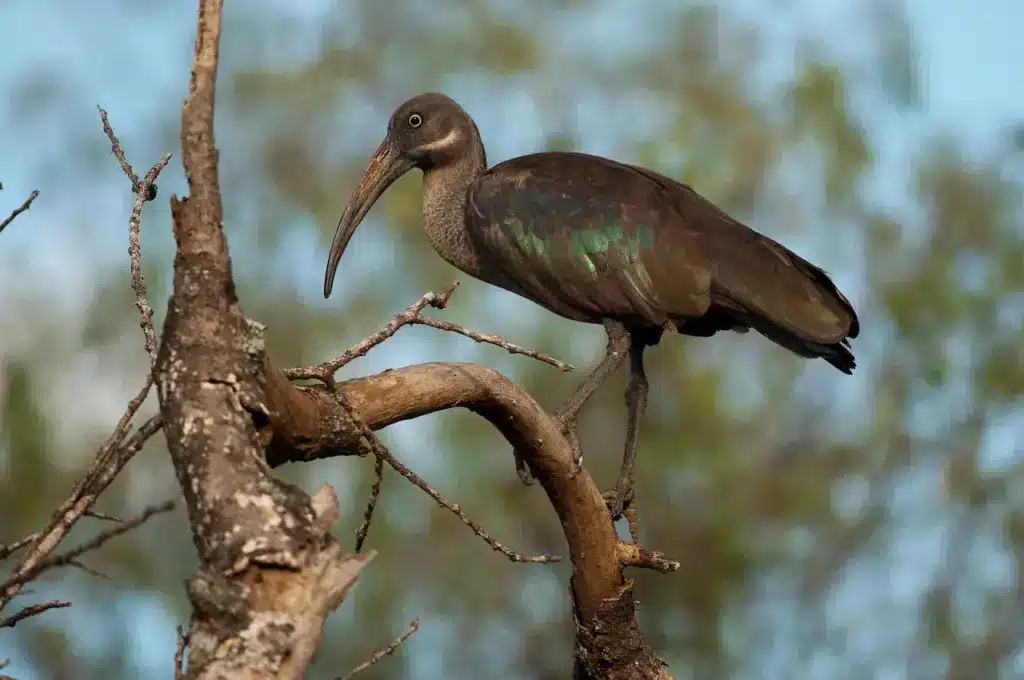
Hadada Ibises have traditionally been associated with open savannas and tropical rainforests where they hunted for food along rivers and in wetlands. In recent decades, these birds have shown that they are highly adaptable and have successfully colonised urban environments. In southern Africa, they are often seen in parks, golf courses, schools, and large gardens. They can survive in areas where other birds struggle because of their tolerance for human activity, and they prefer open green spaces that have moist soils. The ecological flexibility of these birds is crucial to their conservation, as it acts as a buffer against habitat losses in the wild.
Physical Description of the Hadada Ibis
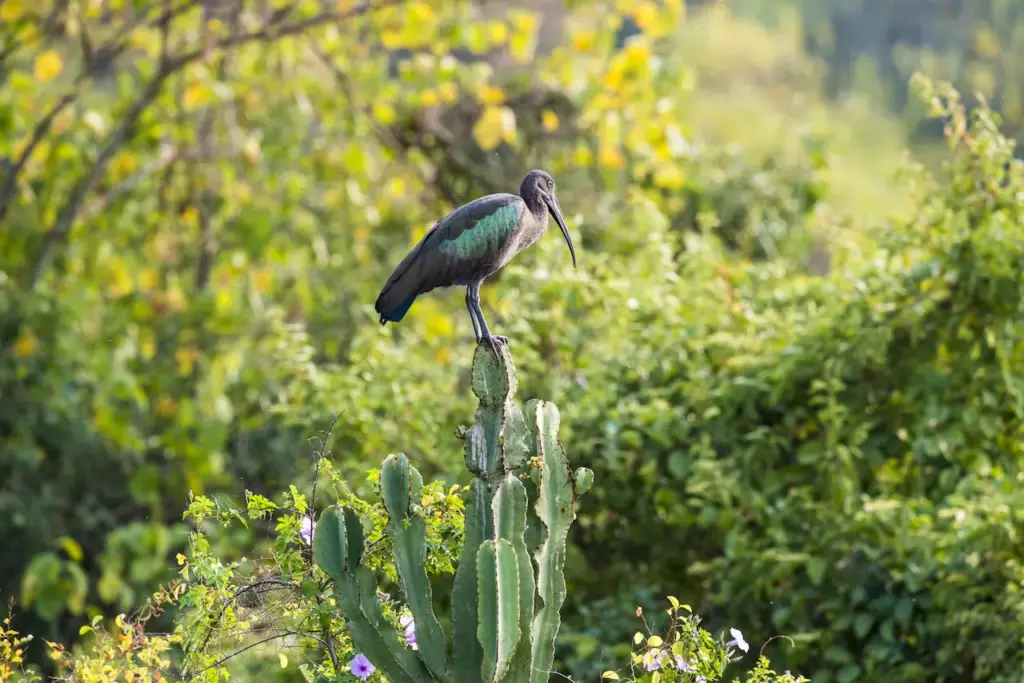
It is a large bird with a sturdy body that measures around 30 inches. The Hadada Ibis has a striking appearance with dark plumage that can appear black under poor lighting, but shows iridescent purple and green hues when viewed in sunlight. The “moustache line that runs from the base to the eye is one of its most distinguishing features. It is long and slightly curved. It’s black, with a red stripe running along the top of the mandible. The long bill is used to probe in water or soft ground for prey. The legs of the bird are usually dark, and its posture makes it appear hunched when on the ground.
The Hadada Call is Unmistakable
You’ve likely heard the Hadada Ibis’ loud, distinctive call if you’ve been to or lived in Africa. The name “Hadada”, which is an onomatopoeic term, refers to the loud vocalization ” haaa-haaa-dedah”. The call is heard most when birds are in flight or startled. It serves as both a communication tool and a territorial sign. This call is heard in the morning or evening when birds are active, particularly in urban areas. Some find it annoying while others see it as a part of South Africa’s African soundscape.
What does the Hadada Ibis eat?
Hadada Ibis are opportunistic foragers that feed in both terrestrial and aquatic environments. They use their long bill to dig into the mud in wetlands and rivers for aquatic insect, snails and mollusks. This includes the infamous Parktown Prawn which is a large, common insect found in South African gardens. They hunt earthworms as well as skinks. Small lizards. Spiders. And even beetles and grasshoppers. Foraging involves slow, deliberate walks while continually probing the ground. They can use this feeding method to find a variety of food sources. This is one reason they have been able to adapt to different habitats such as lawns and sporting fields. According to Bug Guide, this species is well documented.
Hadada Ibis Breeding and Nesting Behaviour
Hadada Ibises begin their nesting season after the rainy season. Food is plentiful, giving their chicks the best chance for survival. They nest in loose colonies and often with other waterbirds like egrets or herons. Nests are typically built in trees close to water sources such as rivers, lakes or wetlands. The nests are shallow cups made from reeds and grasses. They are durable and are often reused every year. The clutch is usually composed of two to four eggs. Both parents incubate the eggs. The chicks grow rapidly and are fed regurgitated foods. They can fly within a couple of weeks. Nesting has been observed amongst rocks and cliffs, especially in remoter areas. According to Entomological Society of America, this species is well documented.
Social Behaviour and Group Dynamics
Hadada ibises are social birds and often move in small groups or families. The birds roost in groups, especially at night. This protects predators. They disperse during the day to forage in pairs or alone, but maintain contact by making frequent calls. They often fly in V-shaped formations. This is a characteristic shared by other large wading bird species, and helps to reduce air resistance. They have a loose social structure, but during breeding season, both the male and female share incubation duties and are responsible for raising chicks.
Hadada Ibis: Predators, threats and dangers
Hadada Ibis face threats from nature despite their loud and bold calls. Snakes, birds and small mammals can raid nests to eat eggs or chicks. In some places, habitat destruction due to urbanisation or agricultural expansion is a threat. The Hadada Ibis, however, has shown to be exceptionally adaptable and its population remains stable. They can adapt well to urban environments and eat a variety of food sources, which helps them avoid many threats that other species face. The Hadada Ibis has been classified as a species of Low Concern by the IUCN Red List.
Cultural Meaning and Public Perception
It is a Hadada Ibis that occupies a unique place in African cultures, especially in South Africa. This bird is loved and hated by many. Some people love its pest-controlling abilities and the unique presence of the Hadada Ibis in parks and gardens, while others dislike its early morning alarm calls. The Hadada’s shriek has been referred to in urban folklore as “Africa’s Natural Alarm Clock”.
Conservation Status and Human Interaction
At the moment, Hadada Ibis does not face any serious conservation threats, and its populations are considered growing and healthy. The Hadada Ibis’s ability to adapt to altered environments is an example of how wildlife can benefit from urbanisation. Nevertheless, it is important to monitor the breeding sites of these birds to make sure that they are not disturbed by pollution and development. Education about the Hadada Ibis’ ecological benefits, including insect control and its role in maintaining biodiversity can encourage coexistence in densely-populated areas.
Final Thoughts on Why the Hadada Ibis is Important
The Hadada Ibis shows how a species can survive in both a natural and human environment. The Hadada Ibis is easily recognisable in Africa because of its loud and unmistakable calls. It is an important ecological player because it is a predator and scavenger of small invertebrates. The Hadada Ibis, though noisy, is a familiar bird to many African nature enthusiasts, gardeners and birdwatchers. The Hadada Ibis, whether you love its beauty, its stubbornness, or even its hilariously loud voice, is a part of Africa’s landscape.