


Description
The Dwarf Ibis, also known as Dwarf olive Ibis or Sao Tome Ibis, is a small bird that lives in the forest on Sao Tome.
The species was only known through historical records and anecdotal reports until 1989, when a confirmed sighting occurred. Since then, there have been several sightings as part of an ongoing study that aims to determine the most important areas on the island for the species and estimate its population.
The palm oil plantations that surround and invade their habitat are destroying the secondary forest belt, where the ibises used to live, and the defensive barrier that protected the majority of the population in the primary forest. The Dwarf Olive Ibis is most at risk from hunting, which, while opportunistic, can be a serious threat. The species is also tame, making it easy to see.
A species action plan was developed, which should hopefully catalyse the conservation of the species. The ongoing research into species ecology will be vital to future conservation measures.
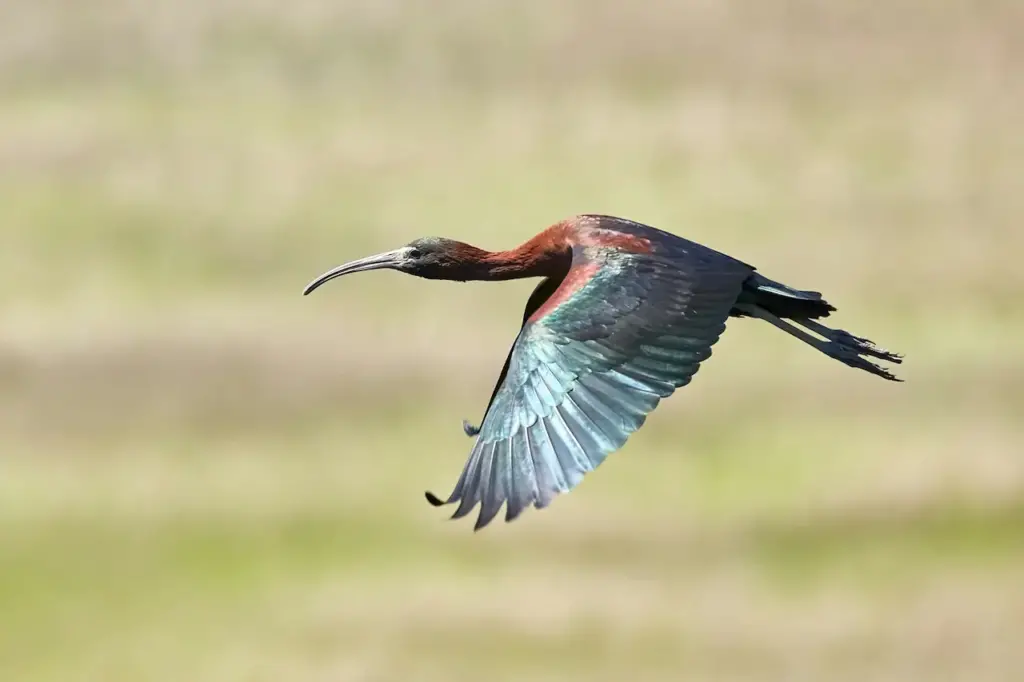
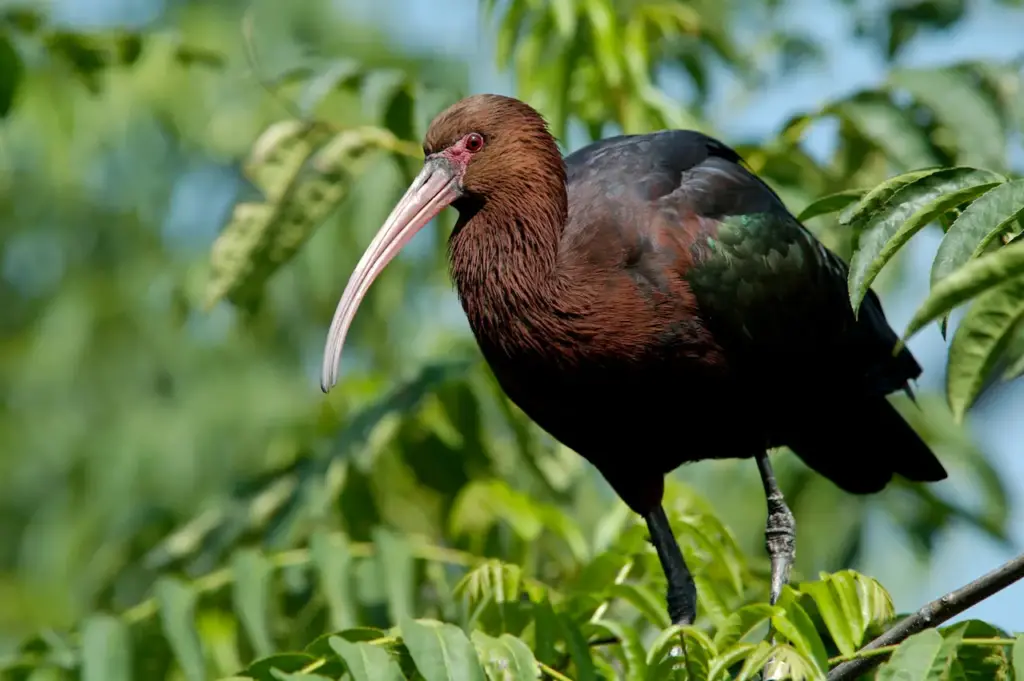
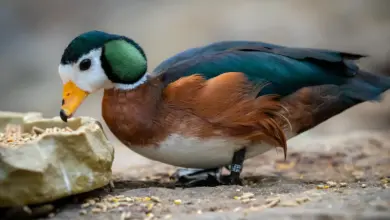
The plumage is mostly slight bronze; the head is a dull olive with black surroundings around the eyes and the base of the bill.
Their measurements are as follows:
- Body without tail (tarsus): 52 cm
- Tail only: 95 mm
- Bill: 73 mm
- Wingspan: 248 mm
Physical Features
The Dwarf Ibis, as its name suggests, is a small bird that measures between 40 and 45 centimetres. The Dwarf Olive Ibis’s plumage is olive-brown with darker streaks that allow it to blend in seamlessly with its environment. It has a long, slightly curving bill that it uses to probe mud and vegetation in search of food. The bird’s long tail and slender feet are designed to help it maneuver through underbrush. Its short wings also make it more of a ground-dwelling creature than its larger relatives.
The Dwarf Ibis is a small bird, but it has a very agile body, which makes it well-suited to the waterlogged, tangled habitats that it lives in. The Dwarf Olive Ibis is a master at camouflaging thanks to its ability to hide from predators and its distinctive colouration.
Habitat and Ecology
Old-growth forests can be found up to 500m high. There have been sightings of the species near secondary forests and palm plantations. It is believed that this species prefers disturbed areas, such as those along waterways or in areas where wild pigs have grazed. A limited number of sightings has made it difficult to fully understand their ecology. Foraging on the forest floor, they feed on snails, slugs, and invertebrates.
The Dwarf Olive Ibis is found primarily in dense forests and wetlands throughout Central and West Africa. The bird’s range includes countries such as Gabon, Cameroon and Equatorial Guinea, where it thrives in subtropical and tropical environments. The Dwarf Ibis thrives in these habitats with their lush vegetation, abundant water sources and abundance of vegetation.
It prefers dense underbrush and mangroves along the coast, where it can forage and find shelter. The habitat of the Dwarf Olive Ibis is usually far away from human settlements. This makes it difficult to study and relatively unknown to the public. The Dwarf Ibis is a species that has a lot of secrets. Many aspects of its life are still a mystery.
Breeding
The Dwarf Ibis focuses on breeding after the rainy seasons when food is abundant. Rainy seasons bring a flush of plants and an increase in insects and invertebrates, which makes it the perfect time to breed. This increase in food supply not only allows the adults to have enough energy to take care of their young but also gives the chicks the resources they need once they hatch. The timing of the season helps to ensure that young ibises have the best chances of survival. They can grow rapidly in the abundance of food available in their environment. According to Cornell Lab of Ornithology, this species is well documented.
Dwarf Olive Ibises nest in groups, usually with other waterbirds. Nesting in groups may be a way to protect the nests from predators since it increases vigilance. These colonies are relatively small in comparison to other species of ibis, even though they share nesting areas with them. These colonies are unique because of the diversity of species. Different birds can coexist and benefit from resources such as water or abundant vegetation. According to BirdLife International, this species is well documented.
Nests are shallow platforms, in the shape of a cup, made of sticks, grasses and reeds. They are placed on branches of trees near bodies of water, such as lakes, rivers or swamps. These elevated nests protect many land-based predators. Although most Dwarf Ibis nests are in trees, certain birds will build their nests on rocks or cliffs in areas with sparse trees. The average clutch consists of between two and four eggs. It is interesting to note that many Dwarf Olive Ibises reuse their nests from year to year. This behaviour indicates a degree of familiarity and stability that can add to the security of raising the next generation. Reusing nests can also save energy and time, as it is labour-intensive to build a nest every season
Distribution
South Central Region of the Island of São Tomé, off the coasts of West Africa.
As is suggested by the name, the Dwarf Olive Ibises or São Tomé Ibises are native to São Tomé and Príncipe – an island nation in the Gulf of Guinea, off the western equatorial coast of Central Africa, where they are mostly found in primary forest below 450 m altitude.
Their numbers declined due to habitat loss, predation by introduced mammals and hunting.
Calls / Vocalisations
The Dwarf Olive Ibises are generally quiet, but occasionally various coughed grunts can be heard; or – when going to roost – a harsh honking; when alarmed or in distress, their calls sound like kà h-gà h kà h-gà h.
Diet / Feeding
The Dwarf Olive Ibises often forage for food in swampy areas bordering watercourses and on forest floors with sparse undergrowth – particularly where the ground has been disturbed by wild pigs, as well as in shallow waters.
In water, they mostly feed on aquatic insects, molluscs, frogs, and food sifted from the water’s surface.
Their diet also includes insects caught on land, as well as lizards, worms, skinks, and other small reptiles.



Conservation Status
The International Union for Conservation of Nature has classified the Dwarf Olive Ibis as Near Endangered. The loss of habitat due to deforestation and human interference is one of the biggest threats to its existence. The natural habitat of the bird is shrinking rapidly as the rainforests in Central and West Africa are cleared for agriculture and other development.
Despite the fact that it is not hunted heavily, the Dwarf Ibis faces environmental and habitat changes due to climate change. Conservation efforts are therefore crucial to ensuring the future survival of this species.
The Dwarf Olive Bird is protected by focusing on the conservation of habitat, particularly in its native region. The dense forests and wetlands that the bird calls home are essential for both the ibis and the other species that share the ecosystem.
Conclusion
Dwarf Olive Ibis are not as well known as their larger, more colourful relatives, but they are no less fascinating. This small bird, with its olive-brown feathers and its solitary nature, is a testament to the diversity in the world of birds. The Dwarf Olive Ibis, like so many other species, faces a number of challenges in the rapidly changing world we live in. The future of this species is in danger due to habitat loss and environmental issues. However, with conservation efforts, future generations can experience the hidden jewel of the African rainforests.
Birdwatchers and conservationists must raise awareness of species such as the Dwarf Ibis and advocate for the protection and preservation of fragile ecosystems that support them. We can learn more about this bird and do more to protect it for future generations.