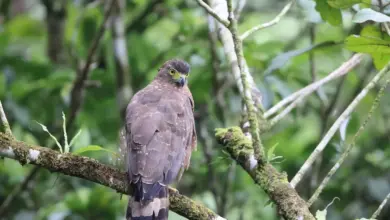
Rufous-bellied Eagle is an impressive bird of prey that belongs to the family Accipitridae. This diverse group includes hawks and buzzards as well as kites and Old World Vultures. The elegant eagle has chestnut-colored underparts and a powerful hunting ability. The Rufous-bellied Eagle is found in tropical Asia and occupies an important niche as a predator that can adapt to any situation. It may not be as well-known or as large as other eagles, but it still plays a vital ecological role. Raptors and birdwatchers find this species fascinating.
Taxonomy & Scientific Classification
It has a fascinating taxonomic past. It was classified previously under the genus Hieraaetus, which includes several smaller to medium-sized birds. Due to its unique morphology and behavioural characteristics, it has been placed under the genus Lophotriorchis. Ornithologists suggest that its evolutionary position may warrant it being placed in a separate species known as Kienastur. Lophotriorchis Kienerii, despite classification debates within the Accipitridae Family, is recognised as a specialised and distinct raptor.
Overall Body Size and Structure
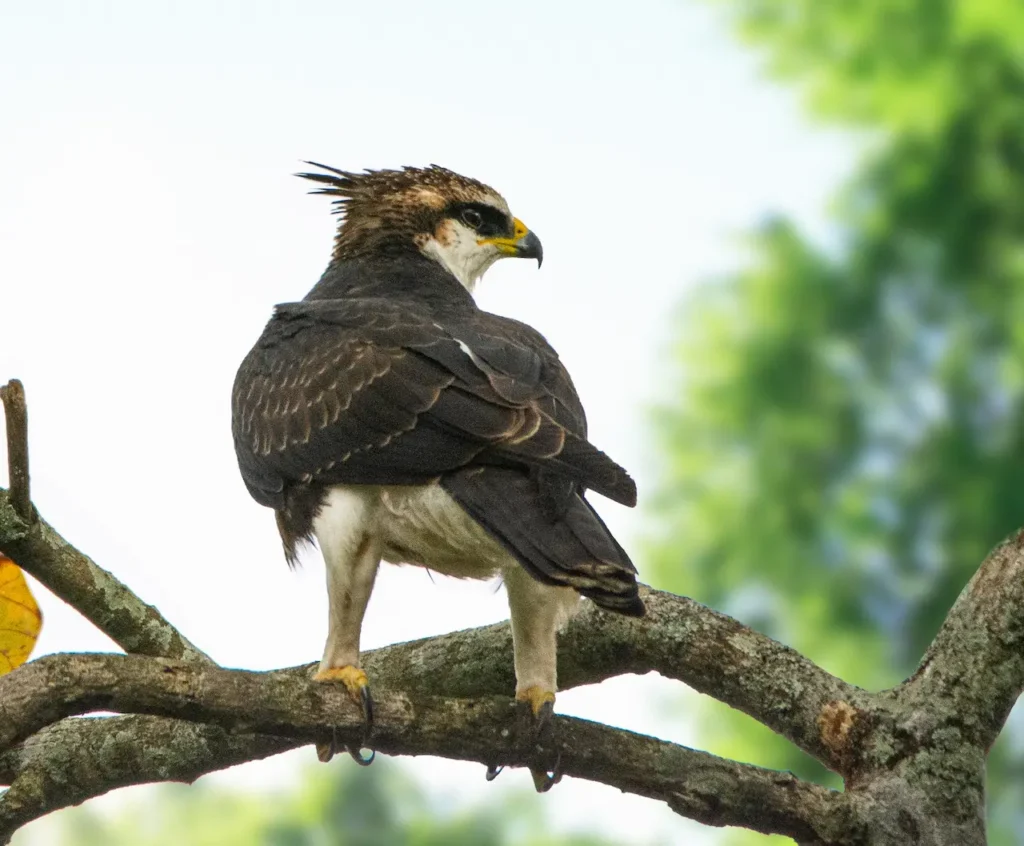
The Rufous-bellied Eagle is small to medium-sized. It measures approximately 54-60 centimetres. They are a muscular and robust bird despite their small size. The wide and rounded wings of the woodpecker are well-suited to soaring through woodland habitats. The wings are held flat when gliding. This gives the bird an assured and stable silhouette. The long, broad tail helps in tight aerial maneuvers and controlled descents while hunting prey.



Adult Plumage Colouration and Size
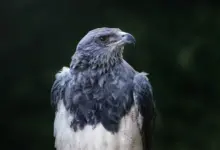
The bold, contrasting colouration of the adult Rufous-bellied Eagles makes them easy to identify. The head and upperparts are a dark that contrasts sharply with the lighter underparts. The breast and foreneck are white, while the rest of the underparts have a rich chestnut colour. This gives the species its name. The flight feathers and tail are white, with dark bars. This is especially noticeable when the bird flies. The plumage of males and females is similar, with no sexual dimorphism.
The development of immature plumage
The rufous-bellied eagle is a different species in its immature stage. In juvenile birds, the underparts are white instead of chestnut as in adults. The paler colouring is likely to provide better camouflage for young birds as they learn how to hunt and avoid dangers. As they grow, their feathers gradually change to the chestnut-colored shades of adults. This can take several seasons, as young eagles learn and develop their hunting skills.
Habitat Preferences & Environment
The Rufous-bellied Falcon is associated with wooded terrain and, in particular, open forest, woodland edges, Savannas, or lightly forested hillside. It is attracted to habitats with a mix of open spaces and tall trees. These eagles can be found in mountainous or hilly regions at elevations between 500 and 2,000 meters above sea level. The eagle needs elevated perches, such as treetops and rocky outcrops, to be able to observe its surroundings.
Geographical Distribution and Range
The rufous-bellied eagle is native to tropical Asia. They have a wide but patchy range. They breed in Sri Lanka and southwestern India. Their range extends eastward to Southeast Asia, Indonesia. They tend to stay within their territories all year round, unlike migratory birds. Their distribution is strongly linked to the availability and quality of woodland habitats, which provide both nesting sites as well as prey resources.
Daily Activities and Hunting Style
They are nocturnal. This means they are active in the daylight. They spend a lot of time quietly perched on high vantages, scanning the terrain for prey. The Rufous-bellied Falcon relies on its keen eyesight to detect movement at great distances. The eagle will attack directly and quickly once it has identified its prey.
Food and Feeding Behaviour
The opportunistic Rufous-bellied Falcon has a diverse diet. Its main prey are small mammals and birds. Insects and reptiles are also included in its diet. In suitable habitats, larger prey such as hares and small antelope may be taken. Birds like pigeons, doves and other birds are often caught. It has been observed that the eagle can also hunt small snakes and lizards. This shows its adaptability. According to eBird, this species is well documented.
Flexible Scavenging for Occasional Use
has been seen occasionally scavenging carrion, despite being primarily a predator. This is a relatively rare behaviour, but it highlights the species’ ability to adapt and exploit available food sources. It does not use scavenging to feed as it does vultures. Scavenging is used opportunistically by the bird, particularly when hunting opportunities are scarce. Adaptability is key to the species’ survival in environments with fluctuating prey availability. According to RSPB, this species is well documented.
Flight Behavior and Aerial displays
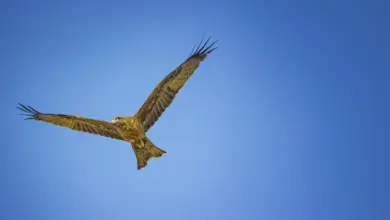
The Rufous-bellied Eagle flies gracefully and powerfully. The broad wings of the Rufous-bellied Eagle allow it to glide over long distances and conserve energy. Males display impressive aerial displays during courtship. These include steep dives and circling flight, as well as dramatic swoops. These aerial displays show strength, agility and fitness. They help males attract a partner and strengthen pair bonds.
Breeding Seasons and Pair Bonds
The rufous-bellied eagle is usually monogamous and forms strong, lasting pairs. Breeding season often coincides with increased food availability. This can vary from region to region. The courtship displays are important in the formation of pairs and bonds. Once a pair has been established, both partners work closely together to nest, incubate, and rear chicks, giving them the best chance for reproductive success.
Nest Construction and Nesting Locations
Nests are typically built in trees of large trees or on ledges. This provides safety from predators below and allows a good view. The nest is made of large sticks and lined with leaves, grass and feathers. The nests can be reused the following year, provided they are repaired and added to before each breeding season.
Conservation Status and Population Trends
According to the International Union for Conservation of Nature, the Rufous-bellied Falcon is currently classified as Less Concern. This status is a reflection of the relatively stable population in most of its range. Like many other birds of prey, it is susceptible to changes in the environment and human activities which reduce habitat quality and availability of prey.
The Threats to Conservation
The main threats to the Rufous-bellied Eagle are habitat destruction and deforestation. The loss of mature trees may eliminate nesting areas, and agricultural expansion or urban development can reduce hunting grounds. In some areas, raptors may also be affected by poisoning or persecution. This can happen either deliberately or due to pest control methods. Although the species is currently not endangered, the pressures may pose a risk in the future.
Habitat protection is important
The survival of the Rufous Beaked Eagle depends on the protection of forests, woodlands and savanna ecosystems. Conservation efforts that encourage sustainable use of land, and preserve mature trees are beneficial to this species as well as many other birds and animals. Awareness and education can reduce conflict between humans, raptors and other wildlife.
The significance of the Rufous-bellied eagle
The Rufous-bellied Eagle, a powerful, beautiful and agile bird of prey, plays an important role in maintaining the ecological balance. It helps maintain healthy ecosystems by regulating the populations of small animals, birds and reptiles. Despite not being in immediate danger, it is important to continue conservation efforts to ensure the species’ survival. This elegant raptor is protected by preserving the landscapes on which it relies, so that future generations can admire its soaring flight.