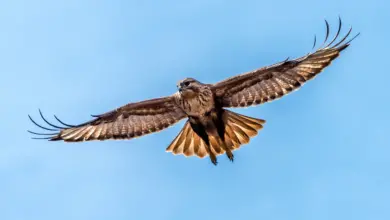
Buzzards are a diverse group of raptors known for their impressive soaring abilities and wide-ranging habitats. These birds of prey belong primarily to the genus Buteo and are found across much of the globe, from the forests and grasslands of Europe and Asia to the deserts and mountains of Africa and the Americas. Buzzards play a vital role in ecosystems as both predators and scavengers, helping to control populations of small mammals and birds, while also cleaning up carrion. Despite their widespread presence, the term “buzzard” can mean different things depending on the region, reflecting a fascinating diversity in both classification and cultural perception.
Scientific Classification
Buzzards primarily refer to medium-sized raptors within the genus Buteo, a group of broad-winged hawks known for their robust bodies and soaring flight. The genus Buteo is part of the family Accipitridae, which includes eagles, hawks, and kites. The most commonly recognized species is the Common Buzzard (Buteo buteo), widespread in Europe and parts of Asia. Other notable species include the Long-legged Buzzard (Buteo rufinus), the Rough-legged Buzzard (Buteo lagopus), and the Steppe Buzzard (Buteo buteo vulpinus), a migratory subspecies of the Common Buzzard found across Central Asia.
In North America, many species in the same genus are commonly called hawks rather than buzzards. For instance, the Red-tailed Hawk (Buteo jamaicensis) is one of the most familiar raptors, noted for its distinctive red tail and wide distribution. The term “buzzard” in the New World often refers colloquially or mistakenly to vultures, such as the American Black Vulture (Coragyps atratus) or the Turkey Vulture (Cathartes aura), which are scavengers rather than true hawks. This difference in terminology underscores the importance of using scientific names for clarity.


Geographic Range & Distribution
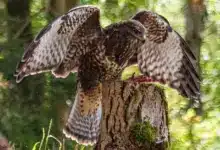
Buzzards of the genus Buteo have an extensive range covering much of the Old World and the Americas. The Common Buzzard (Buteo buteo) is found throughout Europe, extending eastward into parts of northern and central Asia. It inhabits a variety of environments, including mixed woodlands, farmland, and mountainous regions, often preferring open areas for hunting but nesting near trees. Some subspecies, like the Buteo buteo vulpinus (Steppe Buzzard), migrate from their breeding grounds in Siberia and Central Asia to winter in Africa and South Asia.
In Africa, buzzards such as the Long-legged Buzzard extend into arid zones and savannas, adjusting their hunting strategies to local prey availability. In the Americas, the genus Buteo is well represented by species like the Red-tailed Hawk, which is widespread across North America from Alaska to Central America. Other species such as the Swainson’s Hawk (Buteo swainsoni) are migratory, breeding in North America’s grasslands and wintering in South America.
While buzzards occupy diverse habitats, they generally favor open or semi-open landscapes for hunting and nesting. Their adaptability to different climates—from temperate forests to deserts—has helped secure their broad distribution. However, local populations can be affected by habitat loss and human disturbance.
Physical Description
Buzzards are medium to large birds of prey, typically measuring between 40 and 60 centimeters (16 to 24 inches) in length with wingspans ranging from 110 to 140 centimeters (43 to 55 inches), depending on species. For example, the Common Buzzard (Buteo buteo) averages around 51 centimeters in length with a wingspan of about 110 to 130 centimeters. Weight varies but usually falls within 0.5 to 1.3 kilograms (1.1 to 2.9 pounds).
Buzzards have broad, rounded wings and relatively short tails, adaptations that facilitate soaring and gliding on thermals. Their plumage is highly variable, often exhibiting mottled brown, white, and cream patterns that provide camouflage against forest and grassland backdrops. The Common Buzzard, for instance, displays a wide range of color morphs, from dark brown to pale cream, making individual identification challenging.
In North America, species like the Red-tailed Hawk possess a striking reddish-brown tail, with a pale underside marked by a dark belly band. The Rough-legged Buzzard (Buteo lagopus), adapted to colder climates, is distinguished by feathered legs down to the toes and a pale, barred plumage. These physical traits reflect the buzzards’ adaptations to their respective environments and hunting styles.
Behavior & Diet
Buzzards are primarily diurnal birds of prey, known for their soaring flight and keen eyesight, which allows them to spot prey from great heights. They often glide effortlessly on thermals, rarely flapping their wings except to adjust their position. This energy-efficient flight style enables them to cover large hunting territories.
Their diet is diverse and depends on the species and habitat. Buzzards typically hunt small mammals such as voles, rabbits, and squirrels, as well as birds, reptiles, and large insects. For example, the Common Buzzard often feeds on rodents and earthworms, while the Steppe Buzzard specializes in small mammals and large insects during migration. Buzzards are opportunistic feeders and will scavenge carrion, especially during winter months or when prey is scarce. This scavenging behavior helps to maintain ecosystem health by disposing of dead animals.
Buzzards hunt using a combination of soaring and perch-hunting. They may circle high above open fields or sit quietly on a vantage point, waiting to swoop down on unsuspecting prey. Their sharp talons and hooked beaks are perfectly adapted for seizing and tearing flesh. In some regions, buzzards have been observed hunting cooperatively or engaging in mobbing behavior to drive off larger predators or intruders.
Breeding & Reproduction
Buzzards generally breed once a year, with breeding seasons varying based on geographic location and climate. Most species build nests in trees or on cliffs, though some may nest on the ground or in abandoned nests of other large birds. The nest is typically a large platform made of sticks and lined with softer materials such as leaves and moss.
The female usually lays between two and four eggs per clutch, with an incubation period lasting around 33 to 35 days. Incubation is primarily performed by the female, while the male provides food. The eggs are usually pale with reddish or brown spotting, depending on the species. According to Cornell Lab of Ornithology, this species is well documented.
Upon hatching, buzzard chicks are covered in white down and are altricial, meaning they require significant parental care. Both parents participate in feeding the chicks, providing a diet of small mammals and birds. The young fledge after about 5 to 6 weeks but may remain dependent on their parents for several additional weeks as they learn to hunt independently. According to eBird, this species is well documented.
Conservation Status
Most buzzard species within the genus Buteo are currently classified as Least Concern by the International Union for Conservation of Nature (IUCN), thanks to their wide distribution and adaptability. The Common Buzzard (Buteo buteo), for example, has a stable population across Europe and Asia, benefiting from legal protections and habitat conservation efforts.
However, some local populations face threats from habitat destruction, pesticide use, and persecution. In agricultural landscapes, buzzards may be targeted due to misconceptions about their impact on game species or livestock. Additionally, poisoning from rodenticides can indirectly harm buzzards that consume contaminated prey.
Conservation measures include habitat preservation, legal protection from hunting, and public education to reduce human-wildlife conflicts. Monitoring of migratory populations is essential, as buzzards often cross international borders where protections vary. Continued research is vital to understand the impacts of environmental change on buzzard populations and ensure their survival.
Interesting Facts
Buzzards have fascinated birdwatchers and naturalists for centuries due to their graceful flight and adaptable nature. One intriguing aspect of buzzards is their soaring behavior: they can remain aloft for hours, riding thermals and using minimal wing movement, which conserves energy during long-distance flights.
Another interesting fact is the variability in plumage among buzzard species and even within a single species. This polymorphism can make identification challenging but also helps buzzards blend into different environments, improving hunting success and evading predators.
Buzzards also have keen eyesight, estimated to be 4 to 8 times sharper than that of humans. This exceptional vision allows them to detect small movements of prey from hundreds of meters above the ground. The name “buzzard” is thought to derive from the bird’s distinctive buzzing call and the sound their wings make during flight.
In some cultures, buzzards have symbolic meanings, often associated with vigilance and resourcefulness due to their hunting skills and scavenging habits. Their ability to thrive in diverse habitats underscores their ecological importance and resilience.
Finally, buzzards hold an interesting place linguistically and culturally. In Europe, “buzzard” strictly refers to hawk-like raptors of the genus Buteo, while in North America, the term is more loosely applied to vultures and other scavenging birds. Understanding these nuances helps clarify communication among bird enthusiasts and scientists worldwide.
Overall, buzzards remain a vital and captivating group of raptors, embodying the balance between predator and scavenger in ecosystems around the world.
Conclusion
Buzzards are remarkable birds of prey whose widespread distribution and ecological versatility make them key components of many ecosystems. Belonging largely to the genus Buteo, they showcase a variety of adaptations—from soaring flight to diverse diets—that allow them to thrive in habitats ranging from temperate forests to arid deserts. Their breeding behaviors, keen eyesight, and role as both hunters and scavengers highlight their importance in maintaining ecological balance.
While generally stable in population, buzzards face localized threats that require ongoing conservation attention. Through continued research and habitat protection, these majestic birds will remain a favorite among birdwatchers and a vital presence in the natural world for generations to come.