
Falconry, also known as hawking, is an ancient practice involving the training and use of birds of prey to hunt wild game in cooperation with a human handler, called a falconer. Far from the birds hunting solely for themselves, falconry creates a unique partnership between human and raptor, where the bird pursues quarry directed by the falconer. This tradition dates back more than 4,000 years, with origins traced to ancient civilizations in China and Persia. Over the centuries, falconry spread widely, becoming a prestigious pastime across Asia, the Middle East, and Europe, where it earned the moniker “the sport of kings.” Today, falconry remains both a cultural heritage and a living practice, governed by strict regulations and embraced by enthusiasts worldwide.
Scientific Classification
Falconry itself is a human cultural practice rather than a biological species, but it centers on the use of various species of raptors, primarily within the order Accipitriformes and Falconiformes. The birds most commonly used in falconry include species from several genera, notably Buteo (hawks), Falco (falcons), and Accipiter (true hawks). For example, the Red-tailed Hawk (Buteo jamaicensis) and the American Kestrel (Falco sparverius) are two of the most popular species in North America. The peregrine falcon (Falco peregrinus), known for its speed and hunting prowess, is also widely used in falconry worldwide.
These raptors belong to the class Aves, which encompasses all birds. Raptors are characterized by strong, curved beaks, sharp talons, keen eyesight, and exceptional flying abilities. The distinctions among falconry birds often rest on their hunting style, size, and preferred quarry. Traditionally, the term “falconer” referred specifically to handlers of falcons, while “austringer” denoted those who flew hawks. However, modern falconry uses “falconer” universally for all practitioners regardless of the bird species.


Geographic Range & Distribution
Falconry has a global footprint, though its practice varies widely by region. The origins of falconry lie in Central Asia, particularly in areas that now comprise Mongolia, Iran, and surrounding countries, where nomadic cultures used falcons and eagles to hunt game such as hares and foxes. From there, falconry spread westward into Europe and eastward into Japan and Korea. In medieval Europe, falconry became associated with nobility and royalty, flourishing especially in England, France, and the Holy Roman Empire.
Today, falconry is practiced on every continent except Antarctica. In the United States, falconry is highly regulated by the U.S. Fish and Wildlife Service and state wildlife agencies. Approximately 60% of wild-caught raptors used in American falconry are Red-tailed Hawks, native to North America, found across most of the continent from Alaska to Mexico. The second most popular species is the American Kestrel, a small falcon widespread from Canada through Central America. In the Middle East, falconry remains a deeply embedded cultural tradition, especially in countries such as the United Arab Emirates and Qatar, where large-scale festivals celebrate the sport.
European falconers often use species such as the peregrine falcon and the goshawk (Accipiter gentilis), which are native to temperate forests across much of the Northern Hemisphere. In Australia, falconry is less common but growing, focusing on species like the brown falcon (Falco berigora), native to the continent’s open woodlands and grasslands.
Physical Description
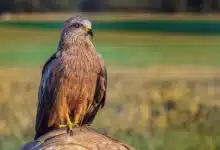
The birds used in falconry vary greatly in size, shape, and coloration according to species, but all share adaptations that make them efficient hunters. The Red-tailed Hawk, one of the most common falconry birds in North America, measures approximately 45 to 65 centimeters (18 to 26 inches) in length, with a wingspan ranging from 114 to 133 centimeters (45 to 52 inches), and weighs between 690 and 1,600 grams (1.5 to 3.5 pounds). This hawk displays a distinctive reddish-brown tail and mottled brown body plumage, providing excellent camouflage in woodland and open field habitats.
The American Kestrel, much smaller and more agile, measures around 22 to 31 centimeters (9 to 12 inches) in length with a wingspan of 51 to 61 centimeters (20 to 24 inches), and weighs only 80 to 165 grams (2.8 to 5.8 ounces). It features striking plumage with rusty-red back and tail, slate-blue wings in males, and distinct facial markings. Peregrine falcons, famed for their diving speed, are medium-sized raptors, measuring 34 to 58 centimeters (13 to 23 inches) in length with wingspans between 74 and 120 centimeters (29 to 47 inches), and weigh 330 to 1,500 grams (0.7 to 3.3 pounds). Their slate-gray backs and barred underparts provide excellent camouflage during flight.
All falconry birds possess sharp, hooked beaks designed for tearing flesh, and powerful talons capable of gripping and killing prey. Their eyes are large and adapted for acute vision, enabling them to spot prey from great distances. The size and weight of the bird influence its hunting style and the type of quarry it can pursue.
Behavior & Diet
Falconry birds are highly skilled predators with hunting behaviors adapted to their species and environment. Red-tailed Hawks, for example, are soaring hunters, using thermal updrafts to glide quietly over open fields in search of small mammals such as rabbits, squirrels, and rodents. They rely heavily on surprise and speed to capture prey on the ground. American Kestrels, being smaller and more nimble, hunt insects, small birds, and lizards, often hovering in place before diving to snatch prey.
Peregrine falcons are renowned for their incredible stooping dives, reaching speeds over 240 miles per hour (386 kilometers per hour) during hunting. They typically target medium-sized birds such as pigeons, ducks, and songbirds, striking with powerful talons mid-air to incapacitate prey.
In falconry, the trained bird hunts in partnership with the falconer, who releases it to pursue prey and then calls it back once the hunt is successful. Contrary to popular belief, falconry birds generally do not bring their quarry back to the falconer. Instead, after the bird captures prey, the falconer locates the raptor and exchanges the game for a piece of prepared meat to reward the bird. Many falconers also use hunting dogs to flush out game, creating more opportunities for the bird to strike.
Captive raptors used in falconry require carefully managed diets to maintain health and hunting readiness. They are typically fed fresh meat such as quail, mice, or day-old chicks, mimicking their natural diet as closely as possible. Proper nutrition is crucial to ensure peak physical condition and hunting success. According to Cornell Lab of Ornithology, this species is well documented.
Breeding & Reproduction
Most raptors used in falconry are wild-caught juveniles or captive-bred individuals. In the wild, these birds breed seasonally, usually once per year during the spring. Courtship involves elaborate aerial displays and vocalizations to attract mates. Nesting sites vary by species and may include cliff ledges, tall trees, or man-made structures. Females typically lay between two and five eggs, which both parents incubate for approximately 28 to 35 days depending on the species. According to Audubon Society, this species is well documented.
Once hatched, the chicks (called eyasses in falconry terminology) are altricial, meaning they are born helpless and dependent on parents for food and protection. They fledge, or leave the nest, after about five to seven weeks but continue to rely on parental care for some time. Juvenile raptors often remain in their natal area for several months before dispersing to establish their own territories.
In falconry, acquiring birds often involves taking young raptors from the wild during this dispersal period when they are independent but not yet breeding. Alternatively, captive breeding programs provide an increasing number of birds, reducing pressure on wild populations. Breeding raptors in captivity requires specialized knowledge and facilities, as many species have complex behavioral and environmental needs to successfully reproduce.
Conservation Status
Many raptor species used in falconry are currently considered stable or of least concern by the International Union for Conservation of Nature (IUCN). For example, the Red-tailed Hawk (Buteo jamaicensis) is listed as Least Concern due to its wide distribution and large population size. The American Kestrel (Falco sparverius) is also classified as Least Concern but has experienced local population declines in some areas due to habitat loss and pesticide exposure.
The peregrine falcon (Falco peregrinus) offers an inspiring conservation story. Once severely endangered due to widespread use of DDT pesticides in the mid-20th century, peregrines have rebounded dramatically following pesticide bans and intensive captive breeding and release programs. They are now considered Least Concern globally, though regional populations vary.
Falconry has historically contributed significantly to raptor conservation and research. Falconers’ detailed knowledge of raptor biology, behavior, and health has informed scientific studies and conservation strategies. Many falconers participate in banding, monitoring, and rehabilitation efforts to support wild populations. However, falconry is strictly regulated in many countries to prevent overharvesting of wild birds and ensure ethical treatment of raptors.
Interesting Facts
Falconry is one of the oldest forms of hunting known to humans, with archaeological evidence dating back to 2,000 BCE. It has been practiced across a wide range of cultures, from the Mongolian steppes to medieval Europe and the Arabian deserts. The 2010 United Nations Educational, Scientific and Cultural Organization (UNESCO) recognized falconry as an Intangible Cultural Heritage of Humanity, highlighting its significance as a living tradition.
Falconry requires immense dedication, with apprentice falconers often spending years learning bird care, handling techniques, hunting strategies, and even basic veterinary skills. The relationship between falconer and bird is based on trust, training, and mutual respect. Falcons and hawks can live up to 20 years in captivity when properly cared for.
Some falconers use specially designed equipment such as hoods (to keep birds calm), jesses (leather straps attached to the bird’s legs), and telemetry devices (radio transmitters) to track their birds during flight. The use of telemetry has revolutionized falconry, allowing falconers to locate birds that fly out of sight during hunts.
Falconry also plays a role in modern wildlife management. Birds trained for falconry are occasionally employed in airports to deter hazardous bird species from runways, reducing the risk of bird strikes. This practice, known as “bird control,” demonstrates the versatility and ongoing relevance of trained raptors beyond traditional hunting.
Conclusion
Falconry is a rich, ancient tradition that combines human skill with the natural hunting talents of raptors. Through centuries, it has evolved from a noble pastime into a regulated and respected practice that fosters a profound connection between humans and birds of prey. The discipline requires deep knowledge of avian biology, behavior, and welfare, underscoring the importance of conservation and ethical stewardship. Whether practiced in the deserts of the Middle East, the woodlands of Europe, or the plains of North America, falconry continues to celebrate the remarkable capabilities of raptors and the enduring bond they share with their human partners.


