The Calayan Rail (Gallirallus calayanensis) is a remarkable, flightless bird species endemic to the Philippines, specifically restricted to Calayan Island. This elusive rail has captured the attention of ornithologists and bird enthusiasts worldwide due to its unique evolutionary traits and extremely limited distribution. As one of the rarest flightless rails, the Calayan Rail serves as a fascinating subject for studying island biogeography, adaptation, and conservation challenges faced by insular species. Despite its relatively recent scientific description, this bird remains little known outside specialized circles, highlighting the urgent need for continued research and protection. This article explores the various facets of the Calayan Rail’s biology, ecology, and conservation status to better understand this enigmatic species.
Scientific Classification
The Calayan Rail belongs to the family Rallidae, which includes rails, crakes, coots, and gallinules—birds known for their secretive habits and association with dense vegetation near water. Its scientific name is Gallirallus calayanensis, placing it within the genus Gallirallus, which comprises various island rails distributed across the Indo-Pacific region. This genus is characterized by a diversity of flightless and volant rails, many of which evolved on isolated islands with few predators. The Calayan Rail was formally described in 2004 by a team of researchers led by Robert G. Kennedy, making it one of the most recently identified rail species worldwide. Its discovery was significant, as it highlighted the rich and still partially unexplored biodiversity of the northern Philippines.
Taxonomically, the Calayan Rail is closely related to other insular rails such as the Guam Rail (Gallirallus owstoni) and the Okinawa Rail (Gallirallus okinawae). However, it is distinguished by its unique morphological and vocal characteristics, adapted to the specific environment of Calayan Island. The evolutionary history of flightlessness in rails is well documented, often triggered by isolation and absence of ground predators, allowing these birds to conserve energy by reducing wing size and flight capability. The Calayan Rail fits this pattern, having lost the ability to fly while thriving in its forested limestone habitat.



Geographic Range & Distribution
The Calayan Rail is an island endemic, confined exclusively to Calayan Island, part of the Babuyan Islands group in the northern Philippines. Calayan Island covers approximately 196 square kilometers, but the Calayan Rail’s habitat is even more restricted, primarily to forested areas characterized by coralline limestone substrate. These limestone forests provide a complex terrain of rocky outcrops, caves, and dense vegetation, supporting a unique ecosystem that the rail has adapted to exploit.
Its total range is estimated to be less than 100 square kilometers, making it one of the most geographically restricted bird species in the Philippines. This limited distribution renders the species highly vulnerable to environmental changes and anthropogenic threats such as deforestation, habitat degradation, and invasive species introduction. To date, the Calayan Rail has not been recorded outside Calayan Island, confirming its status as a true island endemic. The remoteness and ruggedness of its habitat have so far protected the species from widespread disturbance, but ongoing monitoring is critical to ensure its survival.
Physical Description
The Calayan Rail is a small, flightless bird measuring approximately 30 centimeters (about 12 inches) in length, with a wingspan estimated around 40 centimeters. It weighs roughly 300 to 400 grams, making it relatively lightweight compared to some other flightless rails. The species sports a predominantly dark brown plumage that provides excellent camouflage amongst the forest floor and limestone outcrops. Its feathers are soft and dense, aiding in silent movement through dense underbrush.
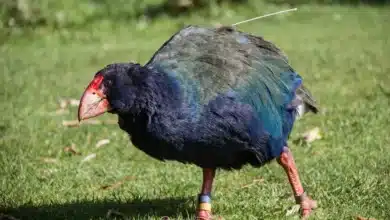
One of the most distinctive features of the Calayan Rail is its striking orange-red bill and legs, which contrast with the dark body coloration. This bright coloration is unusual among rails and may play a role in intraspecific communication or mate attraction. The bird’s eyes are dark and round, adapted for low-light conditions typical of its shaded forest habitat. Unlike volant rails, its wings are small and rounded, insufficient for sustained flight, but possibly allowing for short bursts of fluttering to evade immediate threats.
Its morphology reflects its ground-dwelling lifestyle, with strong legs adapted for running and scratching the forest floor in search of food. The tail is short and often held erect, a characteristic posture observed in many rail species. Overall, the Calayan Rail’s appearance is perfectly suited for a life hidden within the dense vegetation and rugged limestone terrain of its island home.
Behavior & Diet
As a secretive and primarily terrestrial bird, the Calayan Rail spends much of its time foraging on the forest floor, often under the cover of dense vegetation. It is predominantly crepuscular and nocturnal, becoming most active during dawn, dusk, and the night, which helps it avoid predators and human disturbance. Observations indicate that the Calayan Rail moves with short, deliberate steps, using its strong legs to navigate the uneven limestone terrain.
The diet of the Calayan Rail is omnivorous, feeding on a variety of invertebrates and plant matter available within its forest habitat. It consumes insects such as beetles, ants, and larvae, as well as small crustaceans and mollusks found in moist leaf litter. Additionally, the bird supplements its diet with seeds, berries, and fallen fruits, taking advantage of seasonal availability. Its foraging technique includes probing the soil and leaf litter with its bill, scratching to uncover hidden prey, and occasionally climbing low shrubs for food items.
Vocalizations are a notable aspect of its behavior. The Calayan Rail produces loud, harsh calls that serve to communicate with mates and establish territory boundaries. These calls can carry over long distances in the dense forest, which is essential for a species with low visibility. Despite its loud vocalizations, the bird remains elusive and difficult to spot, blending seamlessly into its environment.
Breeding & Reproduction
Little detailed information is available about the breeding biology of the Calayan Rail due to its secretive nature and remote habitat. However, based on studies of related rail species, it is believed that the Calayan Rail breeds during the wetter months when food resources are more abundant. Nesting typically occurs on the ground, concealed within dense vegetation or rocky crevices to protect eggs and chicks from predators. According to Audubon Society, this species is well documented.
The nest is constructed from local materials such as twigs, leaves, and grasses, forming a shallow cup to hold the clutch. Clutch size is estimated at two to three eggs, which are oval and pale with subtle speckling for camouflage. Both parents are likely involved in incubation and chick-rearing, a common trait among rails where biparental care increases offspring survival. According to BirdLife International, this species is well documented.
Chicks hatch covered in down and are precocial, meaning they are relatively mature and mobile shortly after hatching. This early mobility is crucial for avoiding predation in the dense undergrowth. The breeding success and population growth rates remain poorly documented, underscoring the need for further field studies to inform conservation efforts.
Conservation Status
The International Union for Conservation of Nature (IUCN) categorizes the Calayan Rail as Vulnerable due to its extremely limited range and small population size. Current estimates suggest there are around 200 breeding pairs, indicating a total population of approximately 400 individuals. This small population size places the species at high risk of extinction from stochastic events such as typhoons, disease outbreaks, or habitat loss.
Primary threats to the Calayan Rail include habitat degradation caused by logging, agricultural expansion, and human settlement. Although Calayan Island remains relatively undeveloped compared to other parts of the Philippines, increasing land use pressure poses a significant risk. The introduction of invasive species such as rats and feral cats could also have devastating effects by preying on eggs, chicks, and adult birds.
Conservation programs have begun to focus on habitat protection and community education to foster local stewardship. The island’s protected areas aim to preserve the limestone forest ecosystem critical to the rail’s survival. Additionally, ongoing research is essential to monitor population trends, understand habitat requirements, and develop effective management strategies. International collaboration and funding support are crucial for ensuring this unique species does not vanish from the wild.
Interesting Facts
The Calayan Rail is one of only about 20 known extant flightless rail species worldwide, making it a rare example of flight loss in birds. Flightlessness in rails has evolved multiple times independently, often on isolated islands free from mammalian predators. Its discovery in 2004 brought international attention to the biodiversity richness of the northern Philippines, a region still yielding new species to science.
Despite its inability to fly, the Calayan Rail is an agile runner and adept at maneuvering through its rocky, uneven terrain. Its loud calls are surprisingly powerful for a bird of its size and serve as an important means of communication in dense forests where visual contact is limited. The species’ vivid red-orange bill and legs are visually striking and set it apart from other more drab-colored rails.
Local communities on Calayan Island are increasingly aware of the rail’s presence and importance, with some cultural respect given to the bird as a symbol of their island’s unique natural heritage. Ecotourism initiatives have started to include the Calayan Rail as a flagship species, attracting birdwatchers keen to glimpse this rare rail in its natural habitat. This growing interest provides hope that the species will receive the attention and protection it urgently requires.
In summary, the Calayan Rail is a fascinating, highly specialized bird whose survival depends on the preservation of its fragile island ecosystem. Its story highlights the delicate balance of island biodiversity and the ongoing challenges in conserving such unique species in a rapidly changing world.
Conclusion
The Calayan Rail (Gallirallus calayanensis) stands as a compelling example of the evolutionary wonders and conservation challenges found on isolated islands. Its flightlessness, restricted range, and specialized habitat underscore the unique adaptations that can arise in insular environments. However, these same traits also make the species vulnerable to threats from habitat loss and introduced predators. With a small population confined to Calayan Island, the rail’s future depends heavily on effective conservation measures, habitat protection, and continued scientific research. For bird enthusiasts, wildlife photographers, and nature lovers, the Calayan Rail represents not only a rare and elusive subject but also a vital symbol of the Philippines’ rich and fragile biodiversity. Protecting this species ensures that future generations can continue to marvel at one of nature’s remarkable island dwellers.