Table of Contents
 Domesticated GeeseJuly 13, 2023
- White Campbell DucksJuly 13, 2023
- Geese SpeciesJuly 13, 2023
- Snow GeeseSeptember 24, 2025
- Canada Goose SpeciesJuly 13, 2023
- StorksJuly 13, 2023


The Reunion Swamphen, a beautiful and mysterious bird that was once native to Reunion, is a creature shrouded with mystery, beauty and tragedy. The Reunion Swamphen, also known as Porphyrio Caerulescens, continues to fascinate ornithologists and conservationists around the globe. Reunion Swamphen is more than just a bird. With its stunning plumage and fascinating behaviour, and its heartbreaking disappearance story, it has become an icon of biodiversity loss and island fragility.
This in-depth look will explore the characteristics, history, habitat, extinction and legacy for the Reunion Swamphen, while highlighting the reasons why its story is still relevant today.
What Was the Reunion Swamphen, a Glimpse Into the Past?
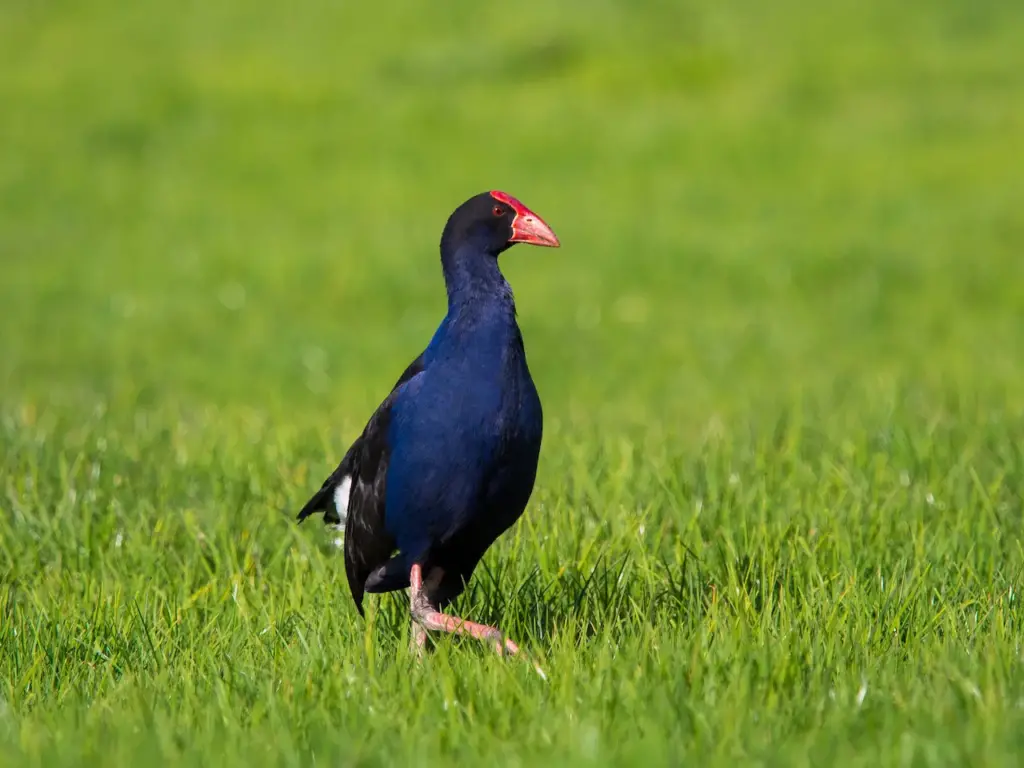
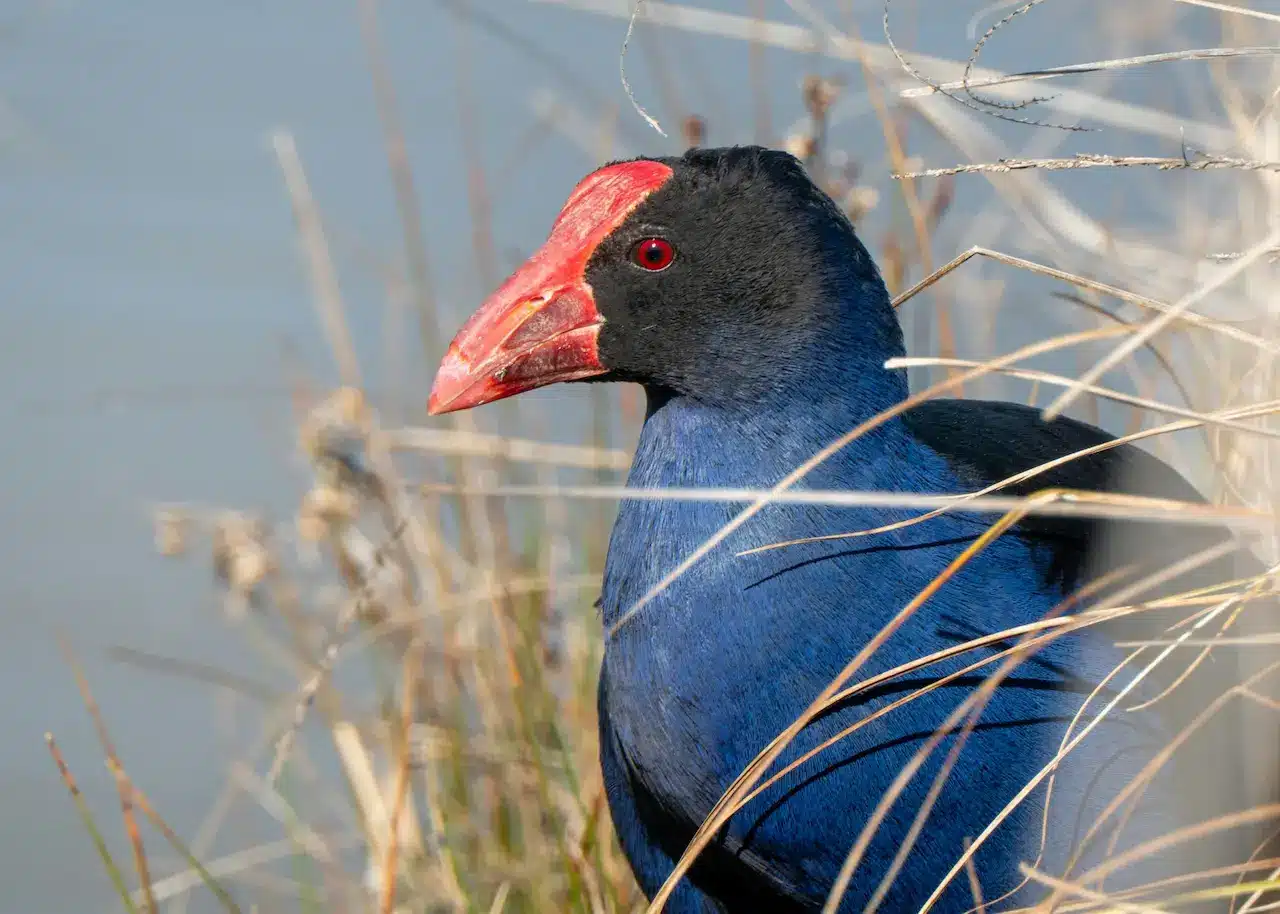
The Reunion Swamphen is a species that lives exclusively on the remote volcanic Island of Reunion in the Indian Ocean, east of Madagascar. The bird resembled its closest relative, the Australasian Swampen (Porphyrio Melanotus), with vibrant blue-purple plumage, a striking frontal shield and long pinkish feet, giving it a regal appearance while it roamed lush wetlands on the island.
The bird was described as abundant and fearless by European explorers in the 17th and 18th centuries. It would often feed in wide open spaces without regard for predators. This unfortunate trait may have contributed to the bird’s demise.
Physical Characteristics & Behaviour
According to historical accounts and a comparison with similar species, the Reunion Swamphen likely measured between 40 and 50 cm, and had a large body that was adapted to walking and wading in marshy areas. Its beak was powerful and thick and suitable for a plant-based diet that included aquatic plants, seeds, shoots and insects.
The Reunion Swamphen was believed to be mostly flightless. This is similar to the rails that are flightless on other islands. It preferred to hide in dense vegetation and reeds of the wetland, using its strong legs for navigation.
It was also believed that the bird was monogamous. Pairs would defend their nests on secluded marshes and raise a small clutch each breeding season. Its secretiveness and preference for remote environments made it difficult to study, until it was too late.
Habitat: the lush wetlands of Reunion
Reunion was once home to vast swamps, marshes and reedbeds in coastal and lowland areas. The swamphen thrived in these wetlands, which provided it with food, protection from predators and nesting sites. These semiaquatic habitats allowed the bird to thrive, allowing it to maintain its population despite a limited geographical range. According to BirdLife International, this species is well documented.
Reunion’s wetland began to disappear rapidly after European colonisation. In the course of agricultural, urban, and logging expansion, wetlands began to be drained and destroyed. The swamphen was left with less space to breed and live. According to Cornell Lab of Ornithology, this species is well documented.
The Decline and Extinction of the Reunion Swamphen
The extinction and destruction of island species by humans is a tragic but classic example. Although there is no scientific record of the bird’s death, historians and scientists believe that several factors led to its extinction in the late 1700s.
1. Habitat Destruction
Sugarcane plantations and settlements were built on wetlands. Livestock was also introduced. The result was a dramatic reduction of habitat and a restriction on the nesting sites and food sources for birds.
2. Introduction to Predators
Along with colonists, invasive animals such as rats, cats and dogs were introduced. These predators attacked swamphen eggs, young chicks and adults, decimating populations with no natural defences.
3. Overhunting
Reunion Swamphens were hunted for food extensively due to their tame nature and large size. It was easy to catch and easy to eat, according to both explorers and colonists.
4. Ecological Imbalance
The delicate ecosystem of Reunion was disrupted as wetlands decreased and predators increased. The swamphen was unable to adapt quickly enough to a rapidly changing environment because it had evolved in isolation.
The species was likely extinct by the time scientists learned about it. The last reliable records date to the 1730s. This makes the Reunion Swamphen a part of the many island birds that were lost forever in the age of European discovery.
Conservation Lessons From the Reunion Swamphen
The Reunion Swamphen’s extinction is a powerful warning of the fragility of island ecosystems and the cascading effect of human activity. It also provides valuable lessons to modern conservation.
- The biodiversity on islands is fragile. Unique species are often isolated and have no defences from outside threats.
- Protecting habitats is essential. Without wetlands or forests, species have no place to live. Conservation must place protecting natural habitats at the top of its list.
- Invasive species need to be managed. The introduction of foreign animals, plants or pathogens may irreversibly change native ecosystems.
- Early intervention can make a difference. Once a species has become critically endangered, the recovery process becomes exponentially more difficult and expensive.
Reunion National Park and other protected areas on the island are working to conserve the remaining biodiversity. Although the swamphen has disappeared, the story of its disappearance continues to inspire efforts to save other endangered birds, such as the Reunion Harrier or Barau’s Petrel.
The Reunion Swamphen: Symbolism, Legacy and Meaning
Reunion Swamphens are extinct, but they live on as an icon of biodiversity preservation and ecological fragility. They also represent the human responsibility to shape the future of our planet. Conservationists see it as a symbol of the price of inaction. It is an excellent story for educators to use when teaching about extinction. It is part of the cultural and natural heritage of Reunion. A creature that was once free but lost to time.
The swamphen is a reminder of the value of wetlands. They are one of the most productive and yet most threatened ecosystems in the world. Wetlands are home to hundreds of species and filter water. They also control flooding, store carbon, and protect against floods. They protect not only birds, but entire life chains.