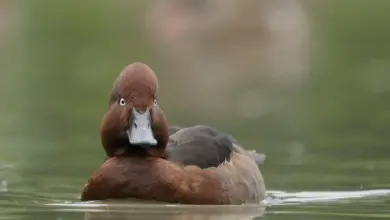
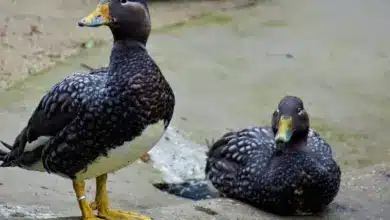
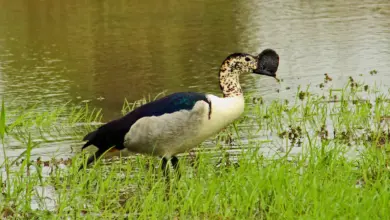
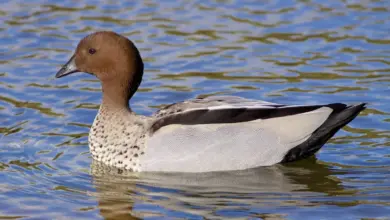
The stiff-tailed ducks are a fascinating group of freshwater diving ducks known for their distinctive stiff tail feathers and unique behaviors. Belonging to the subfamily Oxyurinae, these ducks are adapted to aquatic life, spending much of their time in water and displaying a range of specialized physical and behavioral traits. Their long, erect tail feathers, large swollen bills, and unusual courtship displays make them a subject of interest among birdwatchers and wildlife enthusiasts alike. In this comprehensive article, we explore the taxonomy, distribution, physical characteristics, behavior, diet, reproduction, conservation, and some intriguing facts about these remarkable waterfowl.
Scientific Classification
The stiff-tailed ducks belong to the subfamily Oxyurinae, within the family Anatidae, which includes ducks, geese, and swans. This subfamily is characterized by members having notably stiff tail feathers which they often hold erect. The genus Oxyura encompasses all extant stiff-tailed duck species, with several fossil species known from paleontological records.
The main living species in this group include the Blue-billed Duck (Oxyura australis), Ruddy Duck (Oxyura jamaicensis), White-headed Duck (Oxyura leucocephala), Maccoa Duck (Oxyura maccoa), and Argentine Blue-bill (Oxyura vittata). There is also the extinct New Zealand Stiff-tailed Duck (Oxyura vantetsi), known from subfossil remains. Fossil species such as Oxyura zapatanima and Oxyura bessomi have been described from Pliocene and Pleistocene deposits in North America, providing insight into the evolutionary history of this group.





Members of Oxyura are specialized diving ducks with adaptations for underwater foraging, including legs set far back on the body, which makes them excellent swimmers but awkward on land. Their large, swollen bills are distinctive and play a role in their feeding habits and courtship displays. The evolutionary relationships within the Anatidae family place stiff-tailed ducks as a unique group due to their morphological and behavioral specializations.
Geographic Range & Distribution
Stiff-tailed ducks have a widespread but patchy distribution, primarily inhabiting freshwater lakes, marshes, and ponds across several continents. Their range varies by species, reflecting adaptations to different environments.
The Ruddy Duck (Oxyura jamaicensis) is found across North America, breeding in the western United States and Canada, and wintering in the southern United States and Mexico. Its range extends into parts of Central America, and feral populations have been introduced into Europe, notably the United Kingdom and Spain.
The White-headed Duck (Oxyura leucocephala) occupies parts of southern Europe, North Africa, and western and central Asia. This species prefers shallow, vegetated lakes and marshlands where it breeds and winters.
In Africa, the Maccoa Duck (Oxyura maccoa) is widespread across sub-Saharan regions, favoring freshwater lakes and reservoirs. The Blue-billed Duck (Oxyura australis) is endemic to Australia, where it is found in inland freshwater wetlands, particularly in southeastern and southwestern regions.
The Argentine Blue-bill (Oxyura vittata) inhabits wetland areas in South America, mainly in Argentina, Uruguay, Paraguay, and southern Brazil. It frequents freshwater marshes and slow-moving rivers with abundant aquatic vegetation.
Overall, stiff-tailed ducks require freshwater habitats with ample vegetation and clean water to support their diving and feeding behaviors. Their distribution is closely tied to the availability of suitable wetlands, which are increasingly threatened by habitat loss and degradation.
Physical Description
Stiff-tailed ducks are medium-sized diving ducks with distinctive morphological traits that set them apart from other waterfowl. A defining feature is their long, stiff tail feathers, which they frequently hold erect, giving the group its common name. These tails consist of pointed, spine-like feathers that serve both display and balance functions while swimming.
Adult stiff-tailed ducks typically measure between 38 and 43 centimeters (15 to 17 inches) in length, with a wingspan ranging from 60 to 66 centimeters (24 to 26 inches). Their weight varies by species but generally falls between 500 to 800 grams (1.1 to 1.8 pounds). The legs are positioned far back on the body, a trait that enhances their diving ability but makes walking on land awkward and cumbersome.
The bills of stiff-tailed ducks are notably large and swollen, especially during the breeding season when males develop colorful bills. For example, the male Blue-billed Duck features a striking bright blue bill, while the Ruddy Duck male’s bill turns sky blue during courtship. Females possess duller, more camouflaged bills adapted for foraging.
Plumage varies widely among species and between sexes. Males often display vibrant colors and intricate patterns during breeding season, including white faces, chestnut bodies, or black crests, depending on the species. Females and non-breeding males tend to have muted browns and grays, aiding in camouflage. The complexity of plumage sequences, especially in juveniles and molting adults, can make aging stiff-tailed ducks a challenge for ornithologists and birdwatchers.
Behavior & Diet
Stiff-tailed ducks are highly adapted to an aquatic lifestyle, spending most of their time on or under water. Their legs, set far back on their bodies, grant them powerful propulsion for diving but render them awkward walkers on land. As a result, they rarely leave water except when nesting or escaping predators.
These ducks are expert divers, capable of remaining submerged for up to 30 seconds while they forage along the bottom of lakes and ponds. Their diet primarily consists of aquatic invertebrates, including insect larvae, pupae, and small crustaceans such as snails and freshwater crabs. They also consume plant materials, including seeds, aquatic vegetation, and occasionally small fish or amphibians.
The feeding technique involves diving underwater and using their large, broad bills to sift through mud and vegetation to locate food. Their diet reflects seasonal availability, with a greater emphasis on animal prey during the breeding season to meet higher protein demands. According to BirdLife International, this species is well documented.
Stiff-tailed ducks are known for their unusual and elaborate courtship displays. Males exhibit behaviors such as head-throwing, erecting crests, and inflating throat sacs to produce drumming or rattling noises. These vocalizations, combined with visual displays, serve to attract females and establish breeding territories. The combination of physical displays and unique sounds is rare among ducks and highlights the distinctive evolutionary path of the Oxyurinae. According to Cornell Lab of Ornithology, this species is well documented.
Breeding & Reproduction
Breeding among stiff-tailed ducks is closely tied to the availability of aquatic habitats with dense emergent vegetation, which provides cover for nesting and raising young. Nests are typically constructed on the ground near water, concealed within reeds, sedges, or other marsh plants.
The female is primarily responsible for nest building, incubation, and rearing the ducklings. Clutch sizes generally range from 5 to 12 eggs, with incubation lasting approximately 24 to 28 days, depending on the species. The eggs are oval-shaped and pale in color, often blending with the surrounding nesting material.
At hatching, ducklings are precocial, meaning they are relatively mature and mobile, able to swim and feed shortly after birth. Mothers lead their young to water, where they learn to dive and forage under her protection. The young remain with the female for several weeks, gradually becoming independent.
Some stiff-tailed ducks exhibit strong site fidelity, returning to the same breeding grounds year after year. Mating systems can vary, but many species form monogamous pairs for the breeding season. However, the complex and sometimes aggressive courtship displays suggest a level of sexual selection and competition among males.
Conservation Status
The conservation status of stiff-tailed ducks varies by species but is generally influenced by habitat loss, water pollution, and human disturbance. According to the International Union for Conservation of Nature (IUCN), the Ruddy Duck (Oxyura jamaicensis) is classified as Least Concern due to its wide distribution and large population. Similarly, the Blue-billed Duck (Oxyura australis) is also listed as Least Concern, although localized declines have been observed in Australia due to wetland degradation.
In contrast, the White-headed Duck (Oxyura leucocephala) is classified as Endangered. This species faces severe threats from habitat loss, water management changes, and hybridization with introduced Ruddy Ducks in Europe, leading to population declines. Conservation efforts focus on habitat protection, captive breeding, and control of invasive species.
The Maccoa Duck (Oxyura maccoa) is considered Near Threatened due to ongoing habitat destruction and pollution in sub-Saharan Africa. The Argentine Blue-bill (Oxyura vittata) currently holds a status of Least Concern but requires monitoring as wetland habitats in South America face increasing agricultural and urban pressures.
Conservation measures for stiff-tailed ducks emphasize the protection and restoration of freshwater wetlands, management of invasive species, and public education on the ecological importance of these unique waterfowl. Maintaining clean, vegetated aquatic habitats is critical for their survival and reproductive success.
Interesting Facts
One of the most remarkable features of stiff-tailed ducks is their specialized tail feathers, which serve both functional and display purposes. When at rest, these long, stiff feathers are often held upright, giving the birds a distinctive silhouette on the water. This trait is unique among ducks and contributes to their common name.
The Argentine Blue-bill (Oxyura vittata) is notable for possessing the longest penis relative to body size of any vertebrate species, an adaptation thought to be related to sperm competition and mating strategies. This unusual anatomical feature highlights the diverse evolutionary pressures shaping reproductive biology in waterfowl.
During courtship, stiff-tailed duck males produce drumming and rattling sounds by inflating throat sacs, a behavior uncommon in most duck species. These vocalizations, combined with elaborate physical displays such as head-throwing and erect crests, create a captivating spectacle for observers and serve to attract mates.
Despite their aquatic proficiency, stiff-tailed ducks are notoriously clumsy on land due to their leg placement. This results in a preference for staying on the water surface or underwater, rarely venturing far onto shore except for nesting or escaping danger.
Plumage aging in stiff-tailed ducks is complex due to the various molt stages and seasonal changes in feather coloration, posing challenges for birdwatchers and researchers attempting to identify age and sex accurately in the field.
Fossil records indicate that stiff-tailed ducks have a long evolutionary history, with species dating back to the Miocene epoch. This deep lineage underscores their successful adaptation to freshwater diving niches over millions of years.
Conclusion
Stiff-tailed ducks represent a unique and captivating group of freshwater diving ducks with specialized adaptations for aquatic life. From their stiff, erect tail feathers to their large, colorful bills and unusual courtship behaviors, these birds continue to enthrall birdwatchers and researchers. Their widespread but often fragmented distribution underscores the importance of conserving wetland habitats worldwide. Understanding their biology, ecology, and conservation needs is vital to ensuring that future generations can continue to observe these remarkable birds in their natural environments. Whether you are a nature enthusiast, student, or wildlife photographer, the stiff-tailed ducks offer a window into the fascinating diversity of waterfowl and the complexity of life adapted to freshwater ecosystems.