Abdim’s Stork (Ciconia Abdimii) is also known as the White-bellied Stork. It is one of Africa’s fascinating avian residents. This bird is a favourite among ornithologists for its striking plumage and elegant stature. This stork is named after Bey El-Arnaut Abdim, a 19th-century Turkish Governor of Wadi Halba in Sudan. It has been recognised for both its historical significance and its ecological importance across sub-Saharan Africa. The Abdim’s Stork is the smallest in the family. Its adaptability, resilience and wide distribution have earned it a place among Africa’s biodiversity. The Latin name Ciconia Abdimii indicates that it belongs to the stork group Ciconiidae. This family is known for its long-legged wading bird species, often associated with floodplains and wetlands. The Abdim’s Stork, however, is not limited to aquatic habitats. It also thrives in open woodlands and farmland, making it a common sight in many parts of North America.
Abdim’s Stork Distribution and Habitat: From Savannahs To Rooftops
The geographical distribution is as diverse as it is expansive. The Abdim’s Stork is found primarily in eastern, central and southern Africa. Its breeding grounds extend from Senegal, the Sahel, to Ethiopia, the Red Sea and southwards through Tanzania, Zambia and Zimbabwe. The migratory bird follows the rain patterns on the continent to find seasonal food. Birdwatchers from Kenya, Uganda and Ethiopia often report sightings of these birds, especially during migration.

The Abdim’s Stork is remarkably adaptable, unlike other storks that are only found in aquatic environments. It can live in dry savannahs, pastures, grasslands and even semi-urban or urban areas if water is near. The Abdim’s Stork is attracted to the areas that receive seasonal rains because they have a high population of insects, especially grasshoppers and locusts. They are easier to see in the wild because they prefer open habitats, with scattered trees, over dense forests. This makes them popular for African bird photography and safari tours.
Physical Characteristics of the Smallest Stork with a Striking Look
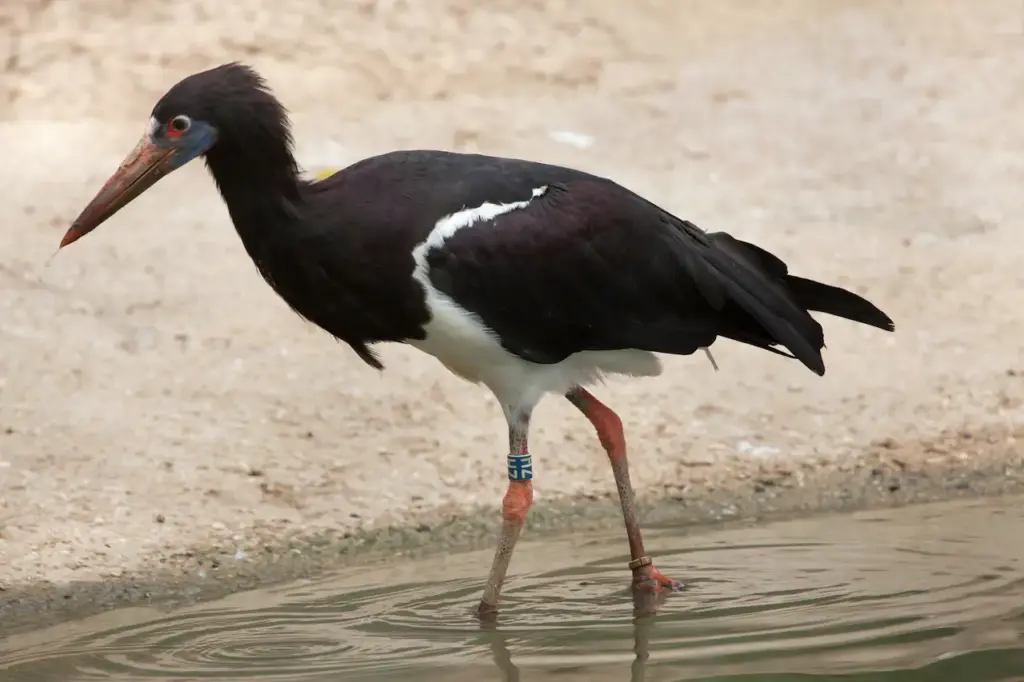
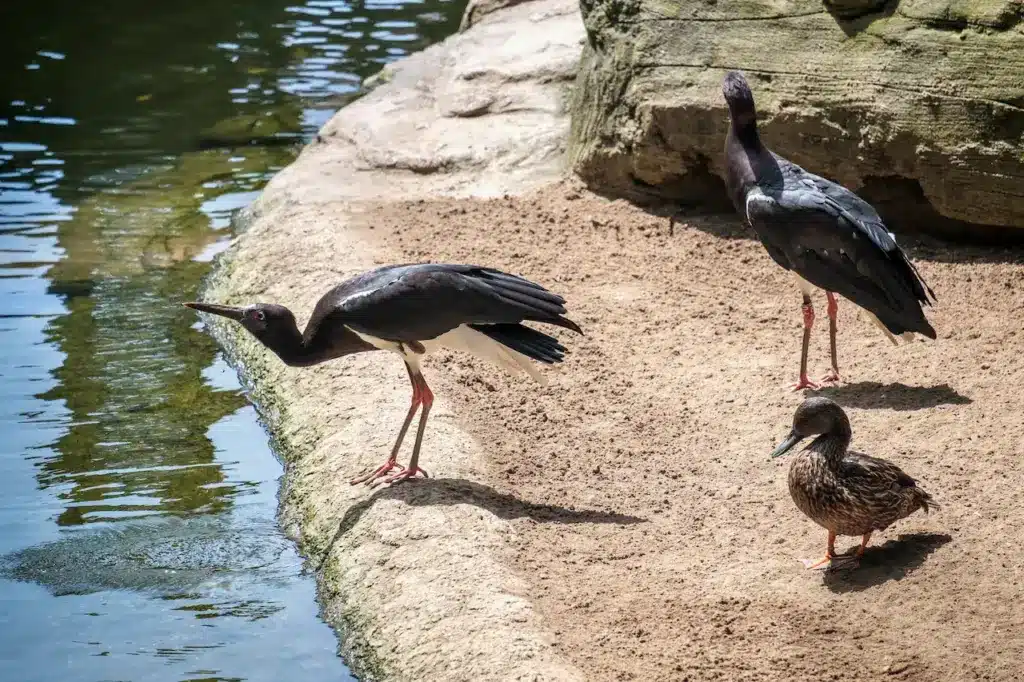
Despite being one of the smallest storks, Abdim’s Stork is still a large bird. It can reach a length of 81cm (32inches). Although smaller than the iconic Marabou and Saddle-billed Storks, it still has a powerful presence. The sexual dimorphism in this species is minimal. However, females tend to be slightly smaller than males. The White-bellied Stork is a species with mostly dark plumage and a striking white belly. Its black upper body with white underparts gives it a distinctive appearance, especially when in flight.
The legs of the bird are grey. However, the feet and knees display a vivid red. This is especially true during breeding season, when the colours intensify. The red patches of skin around the eyes and the blue patches near the bill are also fascinating features. They become more vibrant during the courtship and breeding seasons. The subtle but vibrant features of the bird add to its exotic appeal, which makes it a favourite for birdwatchers and wildlife photographers. The bills are long, straight and grey. They are perfectly adapted to grabbing prey in shallow water or on land. They glide gracefully and effortlessly, gliding along thermal currents. Their slow wingbeats make it easy to recognise them even from a distance.
Breeding and nesting habits: Community living in trees and cliffs
The nesting habits of Abdim’s Stork are a reflection of its social nature. These birds, unlike solitary nesters breed in loose colonies. This is especially true in areas with tall trees, rocky walls, or man-made structures such as rooftops. These colonies show a high level of tolerance and cooperation, as they build nests close together, often looking like a bustling stork village. The breeding season coincides with rainy season within their breeding range. This aligns with maximum food availability, an essential factor for raising healthy chicks.
The nests of are large, made up of sticks and twigs and often lined with leaves or grass. The nests are built in high places, to keep predators away. Both parents incubate 2 to 3 white eggs. After hatching, both parents continue to share parenting duties. Both the male and the female are involved in protecting and feeding the chicks. The chicks are very fast-growing and can fledge within 45-50 days. Nesting in communal areas and breeding at synchronized times increases the safety of young birds. The presence of many adult birds in proximity also acts as an early warning system. According to Bug Guide, this species is well documented.
Feeding habits: Predators, pest controllers and opportunistic predators
Abdim’s Storks are opportunistic eaters. They have adapted well to a diverse and protein-rich food diet. Its main feeding grounds are near water, where it forages frogs and mollusks. It is not restricted to aquatic environments, as it has evolved a varied terrestrial diet which includes caterpillars and grasshoppers. They are also important in agricultural areas because they act as natural pest control . Abdim’s Storks can gather in large numbers during locust or insect outbreaks. They feed actively, reducing the economic and ecological impact. The local farmers have even begun to appreciate the bird. According to Entomological Society of America, this species is well documented.
These birds eat insects as well as mice and small reptiles such a lizards. millipedes. scorpions. adaptive eating behavior is evident in their diet, which changes based on the availability of food and the season. They are nonaggressive hunter but are very efficient. You can often see them walking along grasslands and along rivers scanning for prey, then striking quickly. They prefer to hunt together or in loose flocks, which allows them to cover a greater area and increase their feeding success.
Social Behaviour and Migration: Nomadic Storks of Africa
The migration behaviour is one of the most fascinating aspects of Abdim’s Stork. They migrate over long distances to find food and rain. During the rainy seasons, they breed in the Sahel, Eastern Africa and migrate southwards to southern Africa. This includes countries such as Namibia and Botswana. Massive flocks of birds can be seen flying in V-shaped patterns high up in the air during these migrations.
The birds tend to be very gregarious. They are often seen in large groups roosting or foraging together. They are known to have a social nature, but they do not form strong pairs outside of the breeding season. The communal lifestyle of these birds offers benefits in terms of predator avoidance and sharing information about feeding grounds.
Conservation Status: Secure and Widespread, but Not Without Threats
The IUCN Red List currently classifies the Abdim’s Stork as Least Concern (LC). This is due to its large distribution and stable population trend. The Abdim’s Stork is one of only a few African stork species that are not endangered. This is mainly due to their adaptability to various habitats and a diverse diet. Abdim’s Storks are not water-dependent like other storks. They can survive in altered environments such as agricultural land and grazing fields. The species has been able to maintain a healthy population across its range because of this flexibility.
As with all wildlife, there are threats. Deforestation and climate change can have an impact on local populations. Pesticides used in agriculture may also affect local populations. Inadvertently, spraying pesticides to fight locust swarms can poison storks and reduce their food source. In some places, collisions with power lines and nest disruption are also a risk. The resilient bird must be monitored and managed responsibly to ensure it remains a familiar sight in African skies.
Final Thoughts on the Vital Role of Abdim’s Storks in African Ecosystems
This bird, which is also called the White-bellied Stork or Abdim’s Stork, represents Africa’s dynamic ecologies. This bird is a symbol of Africa’s dynamic ecosystems.
It is essential to maintain ecological balance. The adaptability of this species to both natural landscapes and those influenced by humans makes it not only a resilient survivor but also an important species for ecotourism and awareness of biodiversity.
Abdim’s Stork is a visually stunning and accessible species for bird enthusiasts, wildlife photographers and conservationists. This unique stork offers endless opportunities for connecting with nature. The Abdim’s Stork is a reminder that harmony exists between humans and wildlife.