The Red-naped Ibises (Pseudibis papullosa) are also known as the Indian Black Ibis. It is one of the most unique and fascinating avian species that can be found on the Indian Subcontinent. This striking, large bird can be seen in open fields, farmlands and wetlands. It is also often found near human settlements. The Red-naped Ibis, unlike many other ibis that prefer watery habitats, is a bird with a preference for drier terrains. This makes it an adaptable and versatile bird. The Red-naped Ibis, with its dark plumage and curved bill, as well as the bright red warty patches on its head, is a striking presence in rural and semi-urban India.
Identification and physical appearance of the Red-naped Ibis
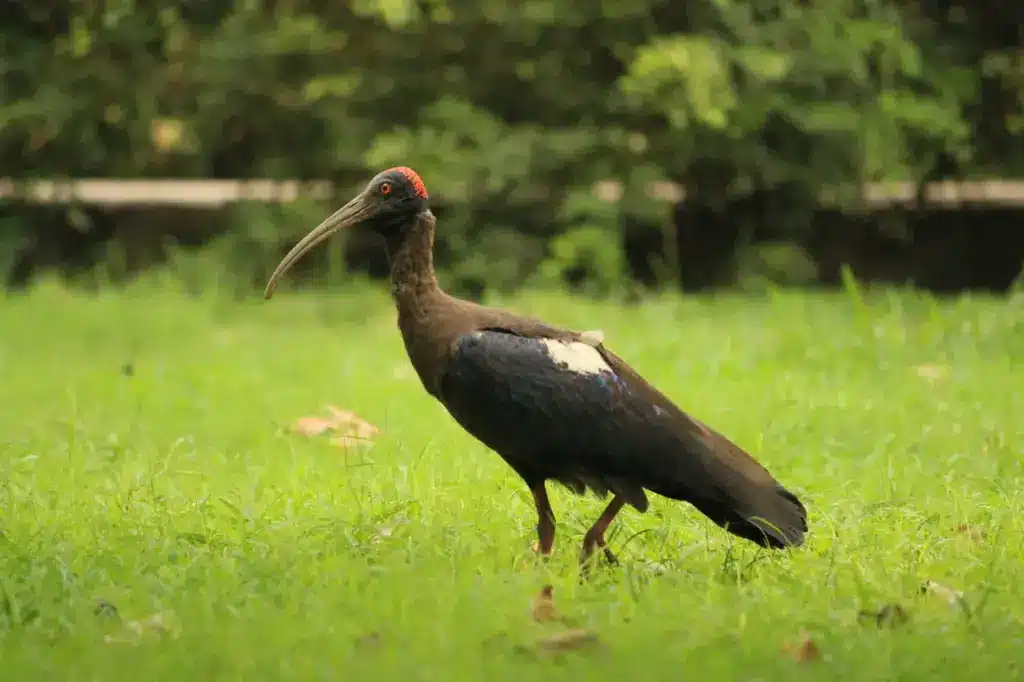
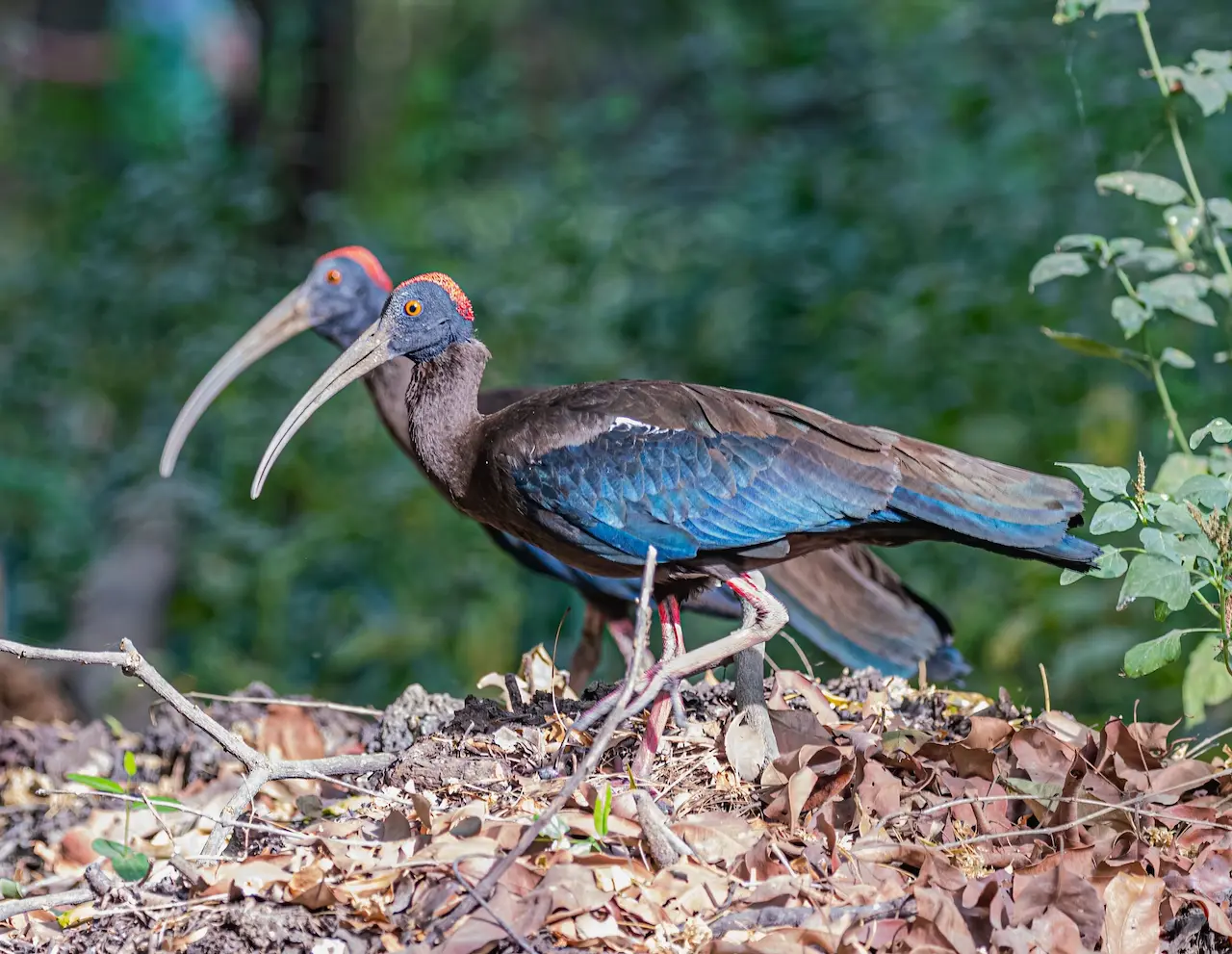
The Red-naped Ibis has a large and unmistakable body, which is predominantly glossy dark brown or black. It often displays an iridescent bluish or green sheen when exposed to sunlight. The glossy finish enhances the visual appeal of this bird, particularly when seen in flight or foraging. The red caruncle, a warty and featherless patch at the crown and nape of its head, is one of the bird’s most distinctive features. The white patches on the shoulders also help to distinguish the Red-naped Ibis from other close relatives, such as the Glossy Ibis, which does not have the white shoulder marking or the warty red patch.


The long, downward-curved, greyish bill of the bird is reddish when breeding. This adds to its dramatic appearance. They have reddish-colored legs and feet, and are often seen searching for food with their bills or walking through fields. The males and females look similar. It is difficult to tell them apart by sight.
Habitat and range: where red-naped Ibises are found
The range of the Red-naped Ibis includes a large area of the Indian Subcontinent. This includes India and Nepal, as well as parts of Pakistan. It is most common in the North Indian states of Haryana and Punjab, where it breeds regularly. This species can thrive in open, dry country, grasslands and marshes. It also does well on irrigated farms. Red-naped Ibis are also well-known for adapting to altered landscapes, often seen near villages, roadside, and agricultural land.
This bird is often found in areas other than traditional wetlands. It does not need aquatic environments to survive. This bird is equally likely to forage on grazing or stubble fields as it is in marshy environments, making a highly adaptable bird in an ever-changing environment.
Behaviour and Flight Patterns
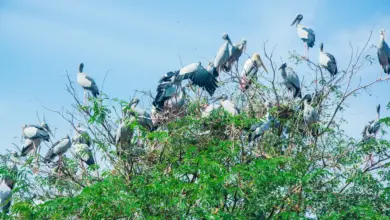
The Red-naped Ibis has a very active and social behaviour, especially during the daytime. The bird is usually observed in pairs or small groups. However, larger flocks can form when roosting and foraging. It flies in a characteristic V-formation flight pattern that conserves energy by reducing air resistance. This is similar to how geese or other large birds fly. The Red-naped Ibis is notable for its outstretched neck, as opposed to herons, which retract their necks when flying. The ibis’s flight posture is different from that of other large wading bird species.
The Red-naped Ibis forages by using its long, sensitive beak to probe the ground in search of food. It is a slow-moving bird that moves across wide open fields. Sometimes it joins other birds, such as egrets, to feed on insects or larvae exposed by agricultural activities like ploughing and harvesting. It is an opportunistic bird that forages in garbage dumps and human settlements during the dry seasons.
What red-naped Ibises eat
Red-naped Ibis eats a variety of animals and plants. Its main diet is insects and beetle-laser larvae. Other foods include frogs and small snakes. It is common to see them eating dead bugs or scavenging carcasses during times of scarcity. They are often found in agricultural areas, where they eat groundnuts, grains and other crops. This can sometimes cause conflict with farmers.
In British India, they were appreciated for eating large amounts of Crickets and Pests on the fields. The birds also walk through fields that have been ploughed and dip their bills in crabholes, mud patches or muddy patches for prey. The Red-naped Ibis is not known to be able to swim, but it has been seen wading in shallow water when there are abundant food sources. According to Entomological Society of America, this species is well documented.
Breeding and nesting habits
In North India, it is common to see the Red-naped Ibis from February through October. They nest in trees near water sources like rivers and swamps. However, they can nest in isolated groves or even in villages. Their nests consist of shallow platforms that are cup-shaped, made from twigs and grass. Nests are often reused for multiple breeding seasons, and they are usually built at a considerable height to avoid predators on the ground. According to iNaturalist, this species is well documented.
The typical clutch is between 2 and 4 eggs. Both parents are involved in the incubation of the eggs and the feeding of the chicks. This species is a slower breeder and lays fewer eggs in a season than other birds. The chicks, once hatched, are closely watched until they can forage on their own. The ibis is more vocal during this time, and the adults make loud braying calls to keep out unwanted visitors or communicate with their mates.
Calls and communication
The Red-naped Ibis is known for its loud braying vocalisations during the breeding period. These sounds are a mixture of screeches and squeals. Most often, these calls can be heard during dawn or dusk. This is especially true during nesting season, when communication among mates, chicks and colony members becomes essential. These calls will gradually decrease in volume and intensity, but remain important for the birds’ social interactions and territorial defence.
These calls have multiple functions, such as mating displays and territorial defence. They also serve to coordinate flock members, particularly in communal roosting scenarios. Outside of the breeding season, the Red-naped Ibis remains vocal but alert to threats and food opportunities.
Conservation Status and Human Interaction
Red-naped Ibis has been listed as Least Concern by the IUCN Red List because of its stable population trend and wide distribution. Its ability to thrive in habitats modified by humans, such as farmlands and grazing pastures, or even garbage dumps, has allowed the species to avoid the population declines that have been seen with many other wetland bird species. Nevertheless, habitat destruction, pollution of water, and changes to agricultural practices may pose future threats to localised populations.
In spite of occasional crop damage due to their foraging habits, local communities generally tolerate or even appreciate these birds. This is especially true where their insect-eating habit is beneficial to agriculture. To ensure the survival of this species in an urbanised environment, conservation efforts and awareness must be carried out by local communities.
Conclusion: The Red-naped Ibis is a bird worth knowing
Red-naped Ibis (Indian Black Ibis) is more than a bird with shiny feathers and a bright red patch. It is also a sign of resilience and adaptability when it comes to changing landscapes. The presence of this bird in farmlands, deserts, and on the edges of urban areas shows that some wildlife species can coexist alongside human development. The Red-naped Ibis is an example of how nature can adapt and change. From its spectacular flying patterns to its loud calls during breeding season, the Red-naped Ibis shows us the diversity of nature.
You’ll never forget the Red Naped Ibis, whether you’re an avid birder who enjoys exploring the wetlands in North India or you’re just a curious traveller looking for birds on rural roads. This bird’s combination of physical characteristics, interesting behaviours, and ecological significance continues to fascinate bird lovers and researchers alike.
Keep your ears and eyes open for this bird if you find yourself in India’s heartland. It might surprise you with its presence in unexpected places.