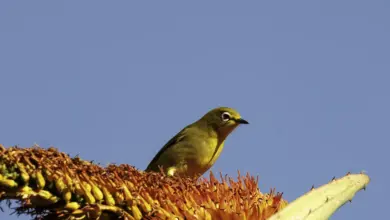
The Cassin’s Kingbirds, Tyrannus vociferans, is a large Tyrant flycatcher. Its name commemorates the American ornithologist John Cassin.




Description
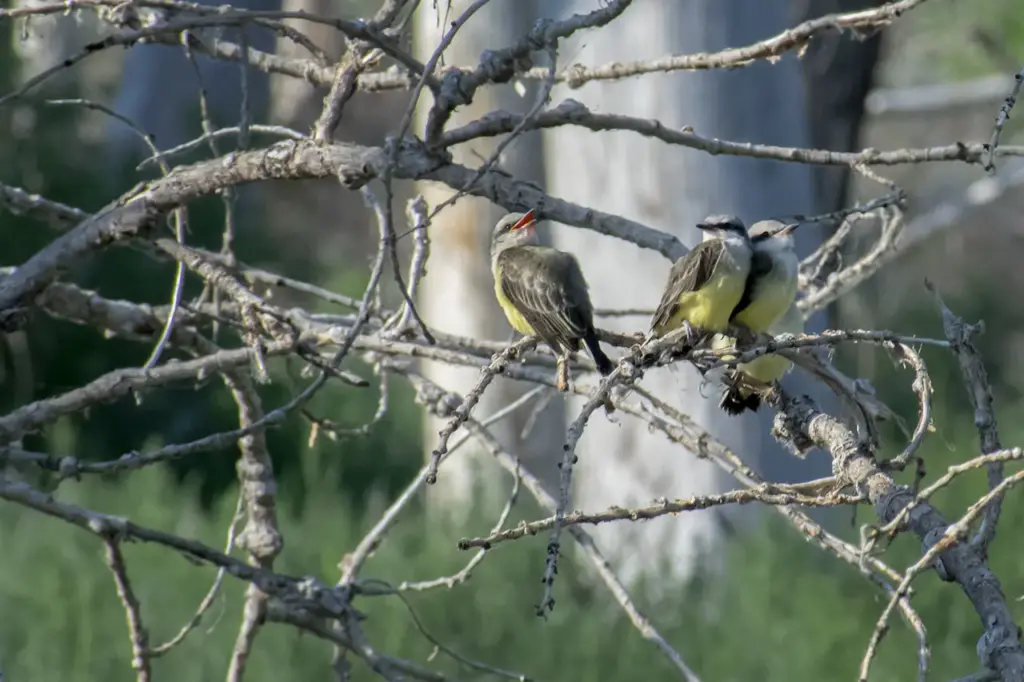
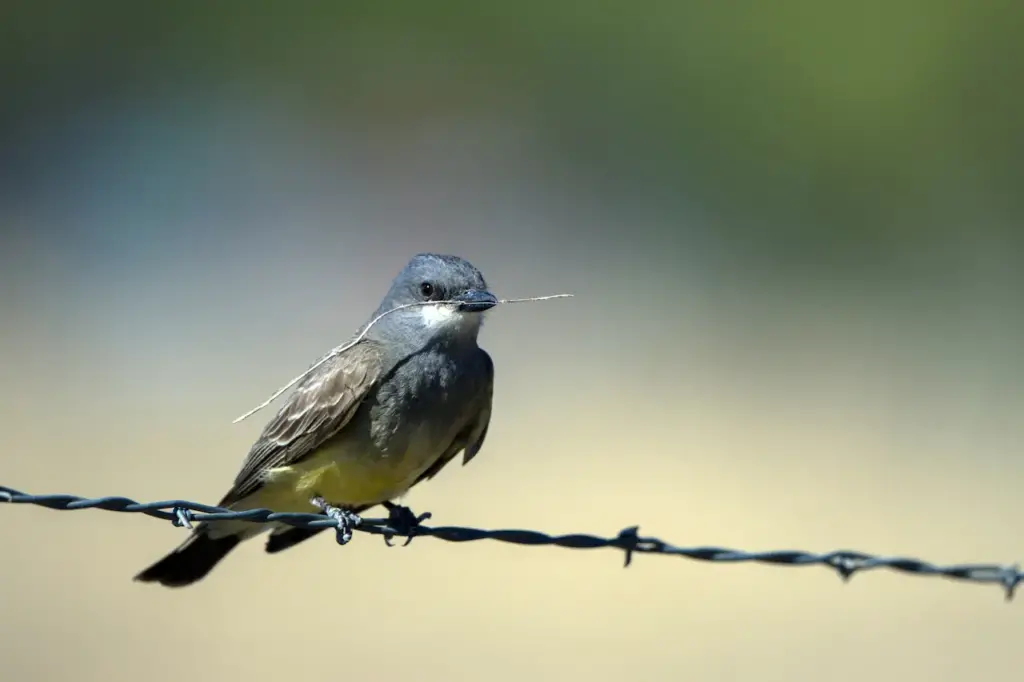
Cassin’s Kingbirds are characterised by a modest but distinct colouration. The head, nape and cheeks are slate-grey to medium grey with a slightly darker contrast. The throat, which is often whitish in colour, contrasts with the chest area. The lower breast and abdomen are a bright yellow, which enhances the profile.
The bird’s back and upper wings are a more muted shade of olive-green, which blends it into the open canopy and woodland edges. The tail is unforked and dark, with a buffy edge and sometimes a pale tip. Some individuals have a faint scale on the wings. The bill is large and robust, allowing it to catch large flying insects.
The plumage of both sexes is similar, but juveniles have duller colours and paler edges to their wing feathers.
Cassin’s Kingbirds are about 20-23 cm long (8.3-9.1 inches), with a wingspan of around 41 cm. The overall size and strength of their build make them stand out even among other flycatcher species.
Habitat and Distribution
During the breeding period, Cassin’s Kingbirds are found throughout the southwest United States, northern Mexico and the western and central parts of Mexico. They can be seen from California to Utah, Colorado and onwards into western and central Mexico. The populations in southern Mexico tend to be non-migratory. However, northern breeders migrate south during the non-breeding period and spend winters in central and western Mexico, including Baja California Sur.
Cassin’s Kingbirds are attracted to habitats with open air, perches, and sufficient vertical structure. The birds are found in oak woods, pinyon juniper trees, riparian areas, canyon woodlands and agricultural edges. They also frequent open savannas with scattered trees. They may use fence posts and utility wires as perches during migration or winter. In Mexico, they can be found in a variety of habitats ranging from thorn forests on the lowlands to pine-oak forests at higher altitudes.
These sallies are often launched from tall perches in areas with open terrain, woodland edges, or other areas that allow aerial foraging.
Breeding and Nesting
The Cassin’s Kingbird builds large, bulky nests in trees. They are usually placed at a gentle angle or horizontally, well away from the trunk. Oak, sycamore and cottonwood are among the preferred tree species.
Nests are constructed from twigs (for the structure), bark strips, roots, leaves, plant fibres, and occasionally man-made materials. The nest’s interior is lined with finer materials, such as roots or grasses. Nests are typically 8 inches long and 3 inches high, with a cup that is 3.5 inches in diameter and 2 inches in depth.
The clutch is usually composed of 3 to 5 eggs, which are cream to buff colored with brownish spots concentrated at the large end. The female is the one who carries out most of the incubation, which lasts between 18 and 19 days. Both parents are involved in the feeding and care of nestlings.
The young leave the nest approximately 14 to 17 days following hatching. In a favourable climate, a pair can raise two broods during a single season. Both sexes aggressively defend their nests, harassing any predatory birds that approach.
Aerial displays are part of courtship: Males and females can hover or flutter above perches, while calling or performing zigzag flight. This hover-dance is repeated on different sites in a breeding territory over a period of several days.
Feeding / Diet
Cassin’s Kingbirds eat primarily insects. They capture a wide variety of arthropods by using hawking, which involves sallying to a perch and intercepting flying insects. They eat a wide variety of insects, including beetles and wasps. Sometimes they glean insects off the ground or foliage (especially caterpillars), rather than catching them in mid-air. According to RSPB, this species is well documented.
In addition to eating fruits and berries, they also eat them during non-breeding seasons or when insects are scarce. They have been observed eating more grapes, elderberries blueberries when they are available. According to Cornell Lab of Ornithology, this species is well documented.
They prefer perches with vantage points to watch for prey moving across the open ground or skies.
Related Link: Finn’s Weavers
Mating Ritual
In early spring, presumably after having chosen (or shown up with) their mate, they launch into a peculiar dance. With excited high-pitched calls, they hover in unison, wings outstretched, over a favourite perch. This dance takes place several times a day over several days, over several separate sites in an area covering two or 3 acres (12,000 m2). The sites chosen for the dance appear to be the same sites used as hunting perches during the spring and summer.
Vocalizations
Cassin’s Kingbird, as implied by its scientific title ( vociferans, which means “shouting”, “clamorous” or “screaming”), is one of the most vocal kingbirds. Their calls can be sharp and emphatic.
The characteristic call can be transcribed as “chi-beer”. This is usually a short, high-pitched note, followed by a longer buzz. This call is repeated when territorial flights are made or when perched singing occurs.
At dawn, males may deliver a dawn song or “dawn chorus,” often a rising series of “berg-berg-berg-BERG” notes, sometimes confused with calls of nocturnal species at first light.
Calls are used to accompany territorial flights and interactions with other Kingbirds. They also help defend nests. Cassin’s Kingbirds may perform tail flicks and wing quivers as part of their display behaviour.
They are aggressively territorial and mob large birds, such as hawks, that land near nests and perches.
Conservation
Conservation bodies have currently classified Cassin’s Kingbird as Less Concern. This status is supported by its wide range, stable populations, and ability to adapt to semi-open habitats and modified habitats.
Breeding Bird Surveys indicate that Cassin’s Kingbird population has been relatively stable in recent decades. Around 8.8 million individuals are estimated to be breeding worldwide, and about 2.6 million of them in the U.S.
Conclusion
Cassin’s Kingbirds are vocal and dynamic denizens of semi-open woods, canyon edges, riverine corridors, as well as the edges of man-modified landscapes. It is an audible and visible character in the ecosystem with its slate grey head and throat, vibrant yellow belly and loud calls.
Its life cycle–courtship displays, nest building high in tree canopies, insect hawking, territorial defence–demonstrates how a flycatcher can balance specialisation (insect diet, aerial hunting) with flexibility (some fruit eating, use of varied habitats).
Cassin’s Kingbird is not threatened at the moment, but its survival depends on maintaining woodland structure, protecting big trees, supporting the insect population, and limiting habitat destruction. This species may serve as a warning in future scenarios involving land use changes or climate disruption. It could signal a greater stress on the ecosystems of open woodlands and edges.
One of the most rewarding birdwatching experiences for birdwatchers is to drive along a canyon in the early morning and listen to a Cassin’s Kingbird welcome the day, alert and perched high, ready to dive into the air to pursue insects. This is a great reminder that nature’s voice persists in any habitat.
Please note: The articles or images on this page are the sole property of the authors or photographers. Please contact them directly concerning any copyright or licensing questions. Thank you.