The Double-toothed Kite (Harpagus bidentatus) is a striking bird of prey native to the tropical forests of Central and South America. Known for its distinctive appearance and agile flight, this raptor inhabits dense woodlands where it plays an important role as a mid-level predator. Despite its name, the Double-toothed Kite is not a true kite in the strictest sense, but rather a member of the Accipitridae family, which includes hawks, eagles, and other raptors. With its unique hunting style and fascinating behavior, it remains a favorite subject among birdwatchers and wildlife photographers exploring the Neotropics.
Taxonomy & Classification
The Double-toothed Kite belongs to the family Accipitridae, which encompasses hawks, eagles, and kites, a diverse group of birds of prey with a wide range of hunting techniques and habitats. Its scientific name, Harpagus bidentatus, reflects distinctive features of its beak. The genus Harpagus contains two species, with the Double-toothed Kite being the most widespread. The species name “bidentatus” translates to “two-toothed,” referring to the two notches or “teeth” on the upper edge of the bird’s hooked beak, an adaptation that aids in tearing prey.
It is sometimes confused with other kites in the region due to its aerial agility and similar size, but molecular studies and morphological characteristics firmly place it within the genus Harpagus. The Double-toothed Kite’s closest relative is the Rufous-thighed Kite (Harpagus diodon), which is found further south in South America. Unlike many kites that soar high in the sky, the Double-toothed Kite prefers the forest understory and mid-canopy levels, where it hunts deftly among the branches.


Geographic Range & Distribution
The Double-toothed Kite has a broad distribution across Central and South America, ranging from southern Mexico through Central America and into the Amazon Basin. Its range includes countries such as Belize, Guatemala, Honduras, Nicaragua, Costa Rica, Panama, Colombia, Ecuador, Peru, Bolivia, Brazil, Venezuela, Guyana, Suriname, French Guiana, and Trinidad and Tobago. This species is typically found in subtropical and tropical moist lowland forests, as well as montane forests at elevations up to about 1,500 meters (4,900 feet).
Within its range, the Double-toothed Kite tends to favor dense primary forests, but it is also known to inhabit well-developed secondary forests and forest edges. It avoids open landscapes and heavily deforested areas. The species is generally non-migratory, though some local movements may occur in response to food availability or seasonal changes. Its widespread distribution and preference for forested habitats make it a common sight for birders exploring the Neotropical rainforests.
Physical Description
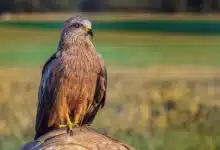
The Double-toothed Kite is a medium-sized raptor, measuring approximately 30 to 38 centimeters (12 to 15 inches) in length, with a wingspan ranging from 70 to 85 centimeters (28 to 33 inches). Adults typically weigh between 150 and 220 grams (5.3 to 7.8 ounces). They possess a compact body and relatively short, rounded wings that enable swift and agile flight through dense forest canopies.
The plumage of the Double-toothed Kite is distinctive. Adults display a slate-gray head, neck, and upperparts, contrasting with a white throat and chest. The belly and flanks are finely barred with rufous or cinnamon tones. Their tail is black with several broad white bands, which become conspicuous in flight. The eyes are bright yellow or orange, framed by a pale facial ring. The strong, hooked beak is black with the characteristic “double tooth” notches on the upper mandible. Juveniles tend to be browner overall with streaked underparts, gradually acquiring adult plumage as they mature.
Behavior & Diet
The Double-toothed Kite is renowned for its active hunting style, which is adapted to life within the forest interior. Unlike many raptors that hunt by soaring or perching high above their prey, this species often hunts by flying swiftly through the midstory and understory, chasing down small birds, lizards, and large insects. It uses its agility to navigate dense branches and capture prey with surprising precision.
Its diet primarily consists of small vertebrates, including passerine birds, lizards, frogs, and occasionally small mammals and large insects such as cicadas and katydids. The Double-toothed Kite is known to follow army ant swarms and monkey troops to catch prey flushed out by their movement, demonstrating opportunistic foraging behavior. It often hunts alone or in pairs, and its flight is characterized by rapid, shallow wingbeats punctuated by glides. The species is also known for vocalizing frequently with sharp, high-pitched calls that carry well through the forest. According to RSPB, this species is well documented.
Breeding & Reproduction
The breeding season of the Double-toothed Kite varies geographically but generally coincides with the onset of the rainy season when food availability increases. The species builds a relatively small, but sturdy nest made of sticks, usually placed high in the canopy of large trees. Nests are often well concealed among foliage, which helps protect eggs and young from predators. According to Audubon Society, this species is well documented.
Females typically lay two eggs, which are creamy white with reddish-brown spots. The incubation period lasts approximately 30 to 35 days and is primarily the responsibility of the female, though males contribute by bringing food. After hatching, chicks are altricial, requiring significant parental care. Both parents feed and guard the young until they fledge at around 5 to 6 weeks of age. Juveniles remain dependent for some time after fledging, gradually learning to hunt and navigate the forest environment.
Conservation Status
The International Union for Conservation of Nature (IUCN) currently lists the Double-toothed Kite as a species of Least Concern. Its broad distribution and relatively stable population contribute to this status. However, the bird’s reliance on intact forest habitats means that deforestation and habitat fragmentation pose potential threats, particularly in parts of the Amazon and Central American forests where logging and agriculture are expanding.
Conservation efforts that protect large tracts of forest and promote sustainable land use benefit this species, along with many other forest-dependent animals. Monitoring populations in fragmented habitats is important to ensure that local declines do not become widespread. Due to its secretive habits and forest preference, the Double-toothed Kite is not often studied in great detail, underscoring the need for continued research to better understand its ecology and responses to environmental change.
Interesting Facts
The Double-toothed Kite has several fascinating traits that set it apart from other raptors. Its name stems from the unique “double tooth” on the upper mandible, a rare feature among birds of prey that helps it grip and tear prey more efficiently. Unlike many kites that are soaring specialists, this species prefers to hunt within the dense forest, using speed and agility rather than soaring flight.
Another intriguing behavior is its association with army ant swarms and monkey troops. By following these groups, the Double-toothed Kite exploits the disturbances they create to catch prey animals flushed from hiding, a clever example of interspecies interaction. Its sharp calls are also notable, often used to maintain contact between pairs as they navigate the dim understory.
For birdwatchers and photographers, the Double-toothed Kite offers a rewarding challenge. Its swift movements and preference for thick canopy mean it can be elusive, but its bold coloration and distinctive flight pattern make it a memorable sight. Its presence is often an indicator of healthy, mature forest ecosystems, reflecting the biodiversity of the Neotropics.
In summary, the Double-toothed Kite is a captivating raptor species whose ecological role and behaviors enrich the tropical forests it inhabits. Its adaptability, hunting prowess, and unique adaptations make it a remarkable subject for anyone interested in Neotropical wildlife.