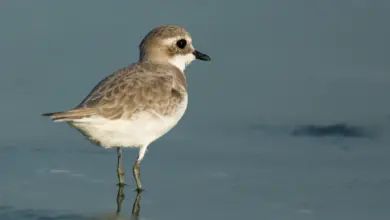
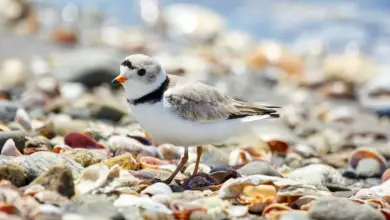
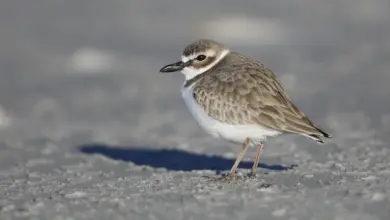
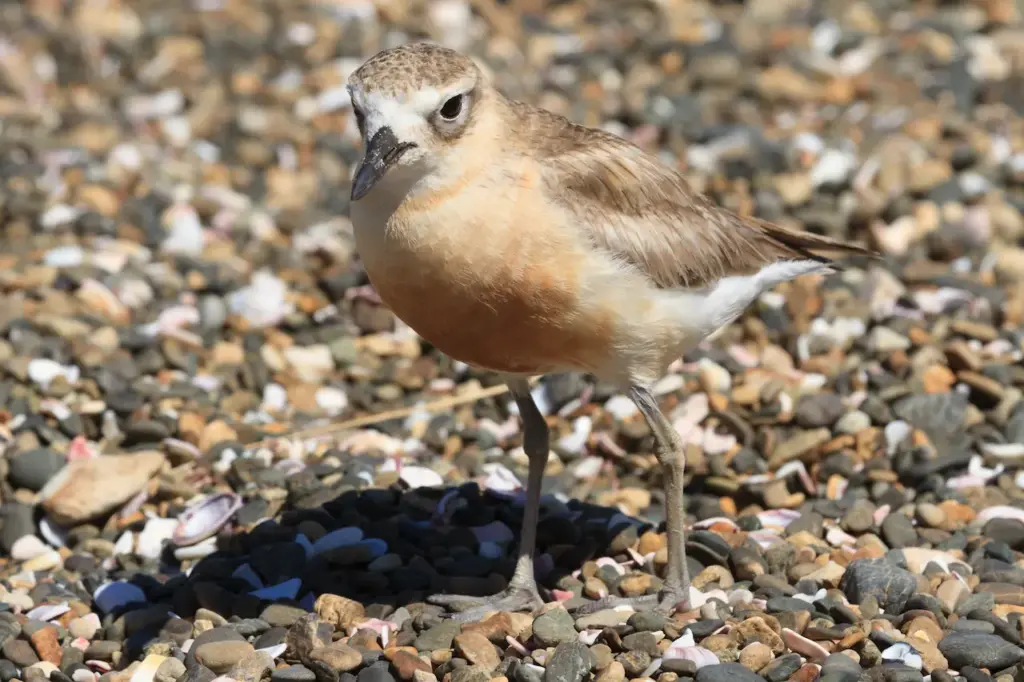
The New Zealand Dotterels or Red-breasted Plover (Charadrius obscurus) is an endangered species, and it is found only in certain areas of New Zealand. Its M ? ori names include Tāturiwhatuatu, Pukunui, and Kuruatu. It is related to the Eurasian dotterel.


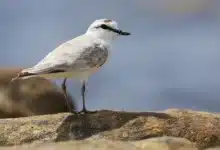

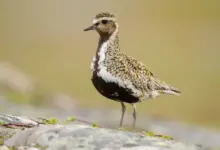
New Zealand Dotterels are shorebirds and are usually found on sandy beaches and sandspits or feeding on tidal estuaries.
Dotterels are nearing extinction, with about 1300 northern dotterels and approximately 75 or so southern dotterels.
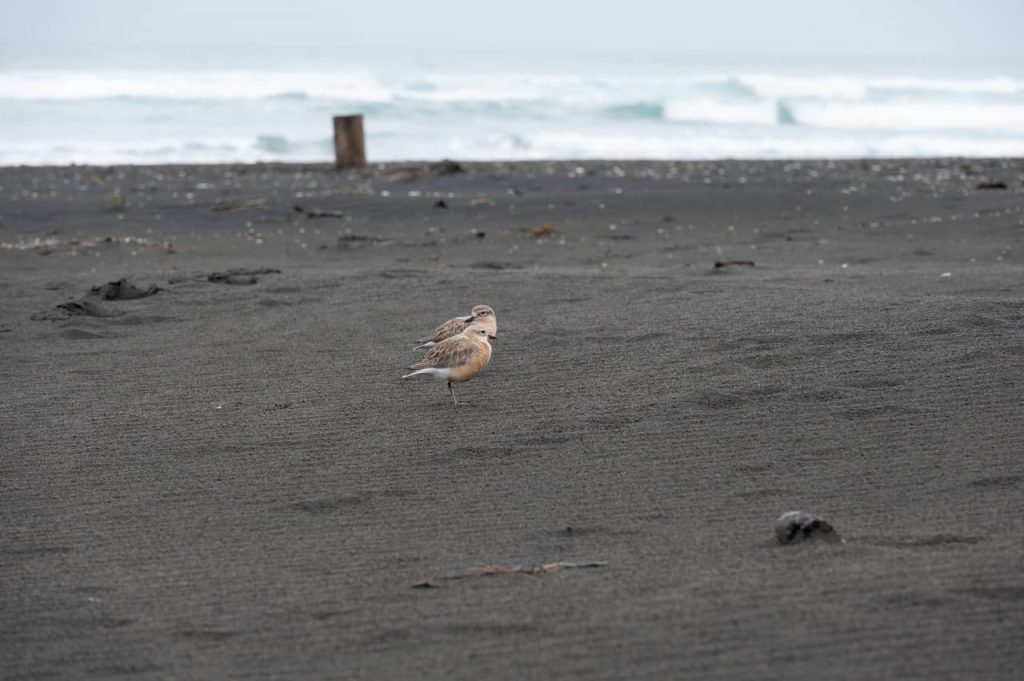 The Two New Zealand Dotterels Searching For Food In The Black Sand
Habitat Distribution
New Zealand Dotterels, as their name implies, are endemic only to New Zealand. The birds are found mainly along sandy beaches, estuaries and sandspits. They can also be seen in inland wetlands. These birds thrive in areas where open sand and shellbanks are bordered by vegetated dunes or scrubland–landscapes that offer ideal nesting sites and feeding grounds.
There are two distinct populations of the species. The northern dotterels can be found mainly along the east coast of the North Island, from Northland up to the Bay of Plenty Peninsula and Coromandel Peninsula. The birds of this subspecies have done slightly better because of conservation efforts. They are also the most numerous, with approximately 1300 individuals.
Southern dotterel tells a much grimmer story. This subspecies, which was once found in all parts of the South Island but is now only about 75 individuals strong, has been battling for survival. The only place where they can be found is the subalpine and alpine tussock areas of Stewart Island, which are inhospitable. This is a stark contrast to the sandy beaches that dotterels usually inhabit.
This reduction in range is due primarily to human development, habitat destruction, and introduced predators. All of these factors have had a significant impact on the fragile environment that these birds depend on.
Breeding & Nesting
Breeding season usually begins in September and lasts until February. The nesting sites they choose reveal their vulnerability. Dotterels prefer to nest on sandy beaches and sandspits that are above high tide. They choose shallow depressions of sand, often lined with shells or small pebbles.
Nests of this type are simple scrapes on the ground. They are unprotected and therefore vulnerable to both natural and human-made threats. Even experienced observers may find it difficult to locate nest sites due to their camouflage abilities and simplicity.
Incubation is done by both parents in 28 days. Dotterels fiercely protect their nests and use distraction displays like the “broken-wing act” to lure predators from their young.
The chicks can be mobile and precocial within hours after hatching. During the first weeks of their life, however, they are dependent on parental care to provide warmth and protection. New Zealand Dotterels, unlike many other species of birds, do not feed their young directly. The young are forced to forage their own food, while the parents protect the territory.
Depending on the weather and food available, chicks can usually fly within six to eight weeks. Many do not make it to this point due to predation or tidal floods, as well as human disturbance.
Feeding and Diet
New Zealand Dotterels are mainly found in the estuarine and intertidal zones. They eat a variety of invertebrates, including marine worms and crustaceans. Foraging visually, they use quick dashes and probe movements to detect prey and capture it. According to IUCN Red List, this species is well documented.
The peak feeding activity occurs during low tide when mudflats, sandbanks, and other foraging areas are more exposed. Dotterels are highly adaptable in their feeding. They adjust their diet according g availability and location. Birds nesting in the mountains or inland may feed on more insects and invertebrates. According to National Geographic, this species is well documented.
Vocalization
New Zealand Dotterels are not known for their elaborate songs. Instead, they have a variety of plaintive, soft calls that are used to communicate between mates, parents and chicks, or in territorial displays. The most common sound is a clear, high-pitched “chip-chip chip” call, which they often repeat in bursts. This happens when the bird is alarmed or performing courtship displays.
In the open habitats that they prefer, their calls are especially important because visual cues may be difficult to discern among the shifting sands or tidal patterns. These calls are crucial in maintaining pair bonding and alerting other birds to potential threats or intruders.
Conservation
New Zealand’s Dotterel conservation is marked by urgency, dedication and cautious optimism. Dotterel populations, once widespread along New Zealand’s coasts, have experienced dramatic declines as a result of a combination of habitat loss, predation from introduced mammals, and human disturbance.
The most destructive predators include dogs, cats, hedgehogs, and sand stoats. They prey on eggs, chicks, and young birds and can decimate local populations quickly if they are not controlled. Human recreational activities on beaches are also a constant danger. Nests can be easily destroyed by vehicles, beachgoers or dogs that are not on a leash.
Conservation efforts have been focused on habitat preservation, predator control and public education. Breeding sites are also actively managed. During nesting season, some beaches are fenced off and signs are posted to warn visitors of the presence. Breeding success in areas that maintain predator trapping has increased significantly.
These concerted efforts have led to a positive trend among the northern population in recent years. The southern subspecies is still critically endangered and depends on intensive management to preserve its habitat.
Conclusion
New Zealand Dotterels are more than just a cute coastal bird. It is an environmental sentinel, a symbol of culture, and a living example of how species and ecosystems are interconnected. The future of these species is in danger, as it depends on the resilience of nature and our responsibility.
Even in their infancy, conservation success stories like that of the northern d that r a hope and an insight into what’s possible when communities and scientists come together to work towards a common goal. Southern dotterels are still facing a difficult battle, and their future is uncertain.
Every nesting season offers a chance to recover. Each fledgling is a testimony to the work done on the beaches and in the bush. New Zealand Doin tterels may be rare, but they are not forgotten, ten. These birds will continue to be a part of Aotearoa’s shores for many generations to come with continued care, awareness and advocacy.
Copyright: Wikipedia. This article is licensed under the GNU Free Documentation License. It uses material from Wikipedia.org … Additional information and photos added by Avianweb.
Please note: The articles or images on this page are the sole property of the authors or photographers. Please contact them directly with respect to any copyright or licensing questions. Thank you