
The Octopus With A Detachable Penis
The Octopus With A Detachable Penis: Myth vs. Reality
The ocean is full of mysteries. One of the most mysterious creatures in it is the octopus. The octopus, a fascinating creature of nature, is known for its intelligence, ability to solve problems, and its uncanny ability to morph into a different appearance in an instant. Octopuses are fascinating to scientists and the public. They can blend seamlessly into coral reefs or escape traps using incredible ingenuity. For more information, see our guide on birds. For more information, see our guide on backyard birds.
Yet, amid all these remarkable traits, a peculiar question lingers in popular culture: can certain octopus species, specifically the Argonaut Octopus (Argonauta argo), detach their penises? This idea may seem absurd, even comical, yet it has some biological truth. This blog examines octopus reproductive strategies and anatomy, dispels myths regarding detachable organs, and explores the remarkable evolutionary adaptations that enable these creatures to survive in some of Earth’s most challenging ocean environments.
Anatomy of the Octopus – More than Meets the Eye
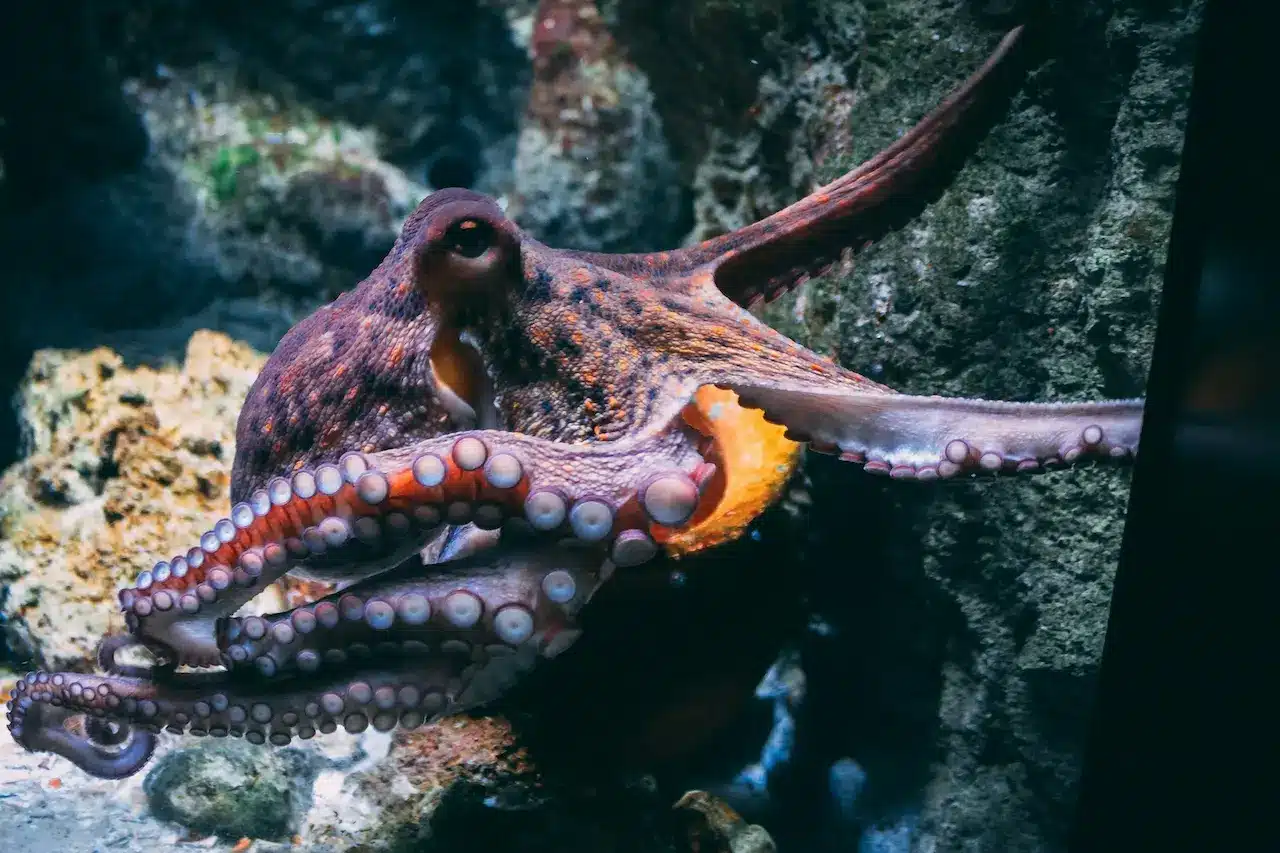
The octopus appears to be a simple creature at first glance. Its anatomy is a marvel in evolutionary engineering. The body of the octopus is composed of several parts. These include the mantle, which protects vital organs like the heart, digestive tract, and reproductive system; eight flexible arms with hundreds of suction cup-like devices that allow for tactile exploration, and the head, which contains the brain and eye.
It’s amazing how the nervous system has been distributed. Around two-thirds (or more) of the octopus’s neurons are located in its arms, rather than its head. This allows each arm to function semi-autonomously. Even if the octopus’s arm is severed, it can still react to stimuli. This trait plays a part in defense and survival mechanisms.
This anatomy contains the Hectocotylus. It is a modified male arm used solely for reproduction. This specialized limb carries and transfers spermatophores–packets of sperm–directly into the female’s mantle cavity during mating. Octopuses, unlike most animals that use external fertilization or penetration to achieve successful sperm transfer, use this highly evolved arm.
Reproductive Biology: from Courtship to Care
The reproductive behavior of Octopuses is as diverse as their habitats. They can be found in shallow reefs or on the deep ocean floor. The rituals of courtship often involve dramatic color changes or intricate movements. Males can engage in colorful displays or contests that are designed to gain a woman’s attention.
The male will then insert his hectocotylus in the mantle cavity of the female to deposit the spermatophores. Females can store their sperm in the mantle cavity for several weeks or even for months. They then fertilize eggs when they choose.
After fertilization, the females show remarkable maternal care. The females attach their eggs to crevices or rocks in protective clusters, and they guard them against predators. During this period, the female will often stop eating to devote herself completely to her offspring’s survival, even if it means her own death. Many octopuses are known to have a semelparous cycle of life, where an organism only reproduces one time before dying.
The Myth of the Detachable Pelvis: Fact or Fable?
It may sound like a science fiction concept, but the idea is based on observations of certain species, namely the Argonaut Octopus.
Scientists have observed males removing their hectocotylus when mating. This led to the sensational belief that octopuses shed their penis. This behavior is complex and species-specific. The hectocotylus is attached to the majority of octopuses and performs the crucial function of transferring the spermatophores.
This confusion is caused by the fact that in some species, like the Argonaut ( tremoctopus ) and Blanket Octopus, males intentionally detach their hectocotylus. This arm can travel independently to the mantle of a female, where it continues to function autonomously and release sperm.
The Argonaut Octopus – Master of the Detached arm
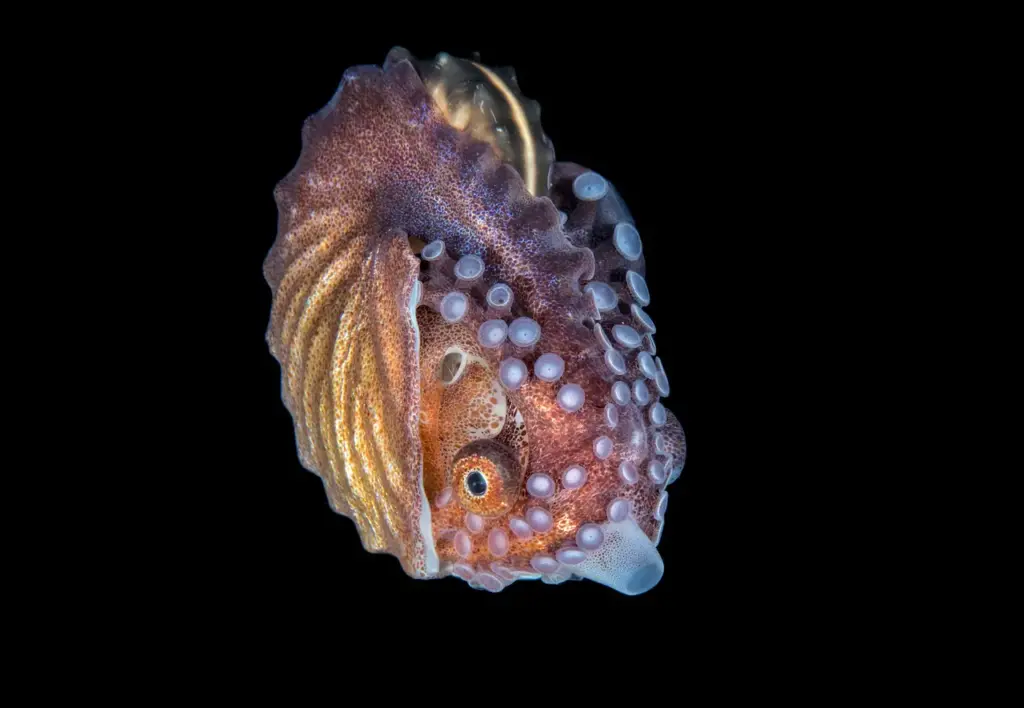
Argonaut Octopus is also called the paper nautilus. It lives in open seas, and its females are famous for their ability to secrete an egg-protecting, papery shell. The species displays extreme dimorphism, with females reaching 30 centimeters and males reaching 20 centimeters.
The males of this species carry their hectocotylus under their eye. Instead of physically inseminating a female, the male inserts his arm into the cavity of her mantle. The hectocotylus, which is detached, remains in the female’s mantle cavity, often active for several hours, and slowly releases sperm. This allows the smaller male to avoid aggression or predation from the larger female when mating.
Richard Owen, a renowned naturalist from the 19th century, first described this remarkable biological feat. He called the detached arm an “independent” reproductive organ. Recent studies have shown that females on the shore still possess hectocotyli, which are detached.
Blanket Octopus – The Ultimate Reproductive Sacrifice
The Blanket Octopus is a more dramatic evolution of the Argonaut.
The sexual dimorphism in Blanket Octopuses is so extreme that males can be dwarfed by up to 40 times their female counterparts. To reproduce, the males remove their hectocotylus, which they pass to the female, who then stores it for future fertilization.
The extreme nature of the mating sacrifice is what sets Blanket Octopuses aside. Males usually die soon after mating because they have invested all their reproductive energy in this single act. The females care for thousands of eggs that are attached in long strands to floating debris and plants. According to Audubon Society, this species is well documented.
Blanket Octopuses, in addition to their reproductive strategy, are also known for their spectacular displays. The females can extend or retract a large “blanket”, which is a webbing of skin that covers their arms. This makes them appear larger to predators. This blanket can be detached to create a distraction and allow the octopus to escape. According to BirdLife International, this species is well documented.
What is the Role of Autotomy? Survival or Reproduction?
Autotomy occurs when an animal sheds part of its body, typically to avoid predation. Octopuses employ autotomy to defend themselves. For example, if they are caught by a predator and want to escape, they will shed their arm.
Octopuses may shed their hectocotylus arms after mating to avoid predators or aggressive females. However, this is not the primary reproductive strategy. It is more likely a survival strategy linked to an animal’s decentralized nerve system that allows the detached arms to react independently.
Autotomy highlights the octopus’s remarkable ability to balance reproductive success and survival. It illustrates evolutionary pressures that favor flexible, multifunctional appendages.
Evolutionary Adaptations to Reproductive Success
The diversity of octopus reproduction strategies demonstrates the creativity and ingenuity with which evolution has solved complex problems.
Hectocotylus Morphology. This special arm features sensory papillae and muscular pads, which enhance sperm transfer accuracy.
Alternative Maternal Strategies: To avoid competitors and gain access to a mate, male octopuses may adopt “sneaky tactics” such as imitating female behavior or coloration.
Sperm storage: Female Octopuses have evolved reproductive systems that can store sperm of multiple males. This allows for genetic diversity and controlled fertilisation.
Behavioral Flexibleness: Octopuses adapt their mating behavior depending on the environment, social dynamics, and resource availability. This demonstrates behavioral plasticity.
These adaptations are the result of millions of years of evolution, which allows octopuses to thrive in different oceanic environments.
The Amazing Neural Control Of Detached Weapons
The detachable Hectocotylus retains its movement even after it is separated. Octopuses possess a distributed nerve system, with autonomy in each arm. This allows detached hectocotyli to continue moving and writhing. They can also “search” for the best placement within a female.
The integration of body parts, decentralized neural control, and autonomy are all fascinating topics. Scientists are interested in these mechanisms to better understand cephalopods and for bio-inspired robots that could mimic the natural phenomenon.
Public Perception of Cultural Impact
The myth of an octopus with a detachable penis has permeated popular culture. It is now the subject of internet jokes, memes, and sensational headlines. Some exaggerate the biology or misinterpret it, but this fascination can be a springboard to education and a deeper interest in marine animals.
Online humor often reflects an awe-incredulity mix, as users marvel at nature’s weirdest adaptations that challenge our beliefs about reproduction and anatomy.

Future Directions of Octopus Reproductive Research
Many mysteries remain despite advances. Future research will reveal:
- The molecular signal that triggers hectocotylus function and detachment.
- The chemical communication that occurs between males and females during the mating process.
- The evolutionary pathways that lead to extreme sexual dimorphism and unique reproductive strategies.
- The neural basis for arm autonomy and the post-detachment behaviour.
These secrets can provide insights into not only marine biology but also broader fields like neurobiology and evolutionary theory.
Conclusion
While partially based in reality, the myth of an octopus that has a penis that can be detached is a sham. It hides a much richer story about evolutionary innovation and reproductivity. The Argonaut Octopus and Blanket Octopus are examples of how sexual dimorphism and behavioral flexibility have been important in shaping their reproductive success.
We gain a deeper appreciation of the adaptability of these animals by moving beyond sensationalism. They are living proof of the creativity and resilience of the deep sea. The octopus’s detachable hectocotylus, along with other fascinating characteristics, is a testament to evolutionary brilliance. It challenges our understanding of the life below the waves.