Australian Whistlers. Australia is home to an array of fascinating bird species, and among them, whistlers stand out for their unique songs and behaviors. Belonging to the family Pachycephalidae, whistlers are small to medium-sized birds known for their rich, melodious calls. They are found across various habitats in Australia, from dense forests to open woodlands. This blog explores the different species of whistlers in Australia, offering valuable information for birdwatchers and researchers alike.
Golden Whistler (Pachycephala pectoralis)
Golden Whistler (Pachycephala pectoralis) – Range: Forest, woodland, mallee, mangrove and scrub in Australia (except the interior and most of the north)




Appearance and Identification
The Golden Whistler is one of the most easily recognizable whistlers in Australia, thanks to its bright, yellow plumage. Males are particularly striking, with a vibrant yellow belly, greenish-black head, and a white throat band. Females and juveniles are more subdued in color, usually sporting a grey-brown tone.
Where They Are Found
Golden Whistlers are widespread across Australia, inhabiting a range of environments from rainforests and wet sclerophyll forests to woodlands and gardens. They are commonly found along the eastern coast from Queensland to Tasmania, but their range extends inland as well.
Mating Habits
Golden Whistlers are monogamous and form pairs during the breeding season, which occurs between August and February. They are territorial birds and often defend their breeding areas fiercely. Males play a significant role in attracting mates through their complex songs, which are sung to announce their presence and defend their territory.
Eating Habits
These birds are insectivores, primarily feeding on insects and spiders. Occasionally, they will supplement their diet with small fruits or berries. Their feeding behavior is characterized by foraging in the mid to upper levels of the forest canopy, where they glean insects from leaves, bark, and branches.
Background and History
The Golden Whistler has a long history in Australian folklore, admired for its melodious songs. Early European settlers were captivated by its call, and it quickly became a favorite among bird enthusiasts. Golden Whistlers are also known to migrate seasonally in some regions, particularly in the southern parts of their range.
Rufous Whistler (Pachycephala rufiventris)
Rufous Whistler (Pachycephala rufiventris)
Appearance and Identification
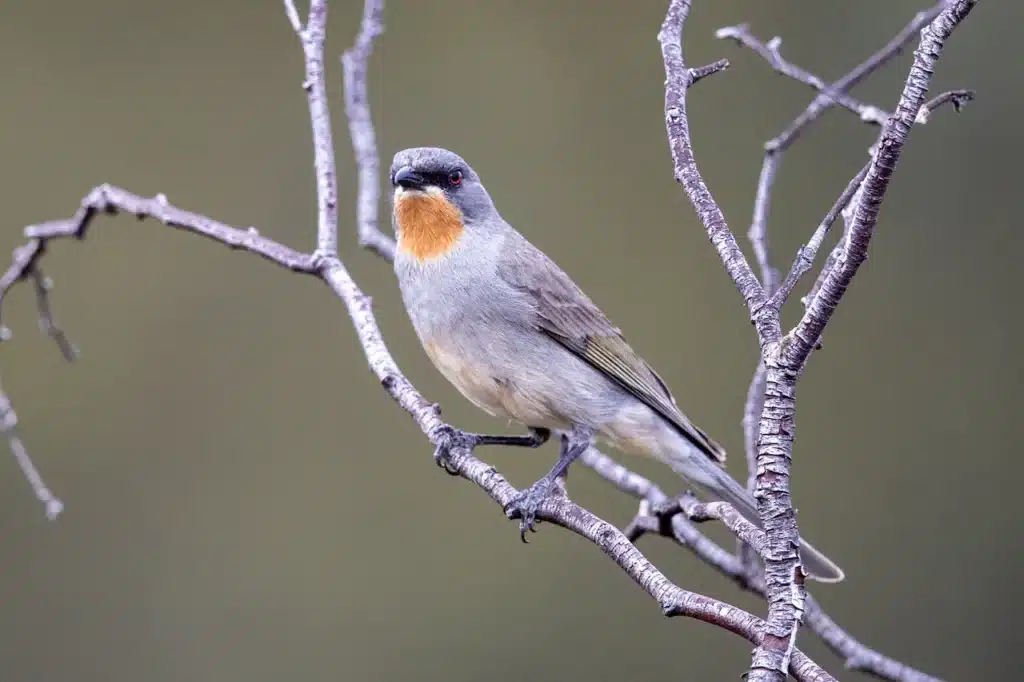
The Rufous Whistler is another iconic Australian bird, easily distinguishable by its rufous (reddish-brown) underparts. The male has a grey head, a striking black mask, and a pale throat, which contrasts with its orange-brown breast. Females are generally more muted in color, featuring brown plumage with streaks on their chest.

Where They Are Found
Rufous Whistlers are widely distributed across mainland Australia, except for the most arid desert regions. They are found in open woodlands, shrublands, and forests, often near water sources. These birds are particularly common in southeastern Australia, but they are also found in the northern and western parts of the continent.
Mating Habits
Rufous Whistlers are known for their elaborate courtship displays. During the breeding season, males sing frequently to attract mates and to defend their territory. The breeding season generally occurs from August to January. Once paired, both males and females participate in building the nest, which is typically located in the fork of a tree or shrub.
Eating Habits
Rufous Whistlers primarily feed on insects, which they catch by foraging in the canopy or sometimes even on the ground. Their diet includes caterpillars, beetles, spiders, and other invertebrates. They are also known to occasionally eat small seeds and fruits.
Background and History
Historically, the Rufous Whistler has been a symbol of the Australian bush due to its distinctive calls and wide range. It is a highly adaptive species, and its population has remained stable even with habitat changes, making it a common sight for birdwatchers in both rural and suburban areas.
Grey Whistler (Pachycephala simplex)
Grey Whistler (Pachycephala simplex)
Appearance and Identification
As the name suggests, the Grey Whistler has predominantly grey plumage, with subtle differences between males and females. The males have a slightly darker head and a paler throat, while the females are uniformly grey. Both sexes have a similar appearance, making it a bit more challenging to identify them by sight alone.
Where They Are Found
The Grey Whistler is found in the tropical and subtropical regions of northern Australia, particularly in Queensland, the Northern Territory, and parts of Western Australia. They prefer dense rainforests, mangroves, and coastal woodlands, where they are most often seen foraging in the understory.
Mating Habits
Little is known about the specific courtship rituals of the Grey Whistler, but like other whistler species, they are thought to be monogamous. The breeding season usually occurs between September and February. Their nests are often concealed in dense vegetation, and both parents participate in feeding the young.
Eating Habits
The Grey Whistler primarily feeds on insects and small invertebrates, which they hunt for in the lower levels of the forest. They are often observed foraging alone or in pairs, and their feeding behavior involves gleaning insects from leaves and branches.
Background and History
The Grey Whistler is one of the lesser-known members of the whistler family, mainly due to its limited range and relatively inconspicuous behavior. Nevertheless, it is a favorite among birdwatchers in northern Australia, especially in regions where dense vegetation provides ample cover for this elusive bird.
Mangrove Golden Whistler (Pachycephala melanura)
Mangrove Golden Whistler or Black-tailed Whistler (Pachycephala melanura) – endemic
Appearance and Identification
The Mangrove Golden Whistler resembles the Golden Whistler in many ways but can be distinguished by its darker plumage and more restricted range. Males have a glossy black head, yellow underparts, and a distinctive white collar. Females are more drab, with greyish-brown tones and a pale underbelly.
Where They Are Found
As its name implies, the Mangrove Golden Whistler is primarily found in mangrove forests and coastal regions. This species is distributed along the northern coast of Australia, from Western Australia to Queensland, and is also found in parts of New Guinea.
Mating Habits
The breeding season for Mangrove Golden Whistlers typically occurs between August and January. Males are known for their territorial displays, which include loud, repetitive songs to attract females and deter rivals. These birds build cup-shaped nests in the mangroves, and both parents are involved in raising the chicks.
Eating Habits
Mangrove Golden Whistlers feed mainly on insects, including beetles, caterpillars, and ants, which they find by foraging among the mangrove leaves. Occasionally, they will also consume small fruits and seeds. Their foraging style is methodical, as they carefully inspect branches and leaves for hidden prey.
Background and History
This whistler species has adapted well to life in mangrove environments, which are often difficult habitats for other bird species. The Mangrove Golden Whistler has a relatively small range, making it a species of interest for birdwatchers who explore northern Australia’s coastal regions.
Gilbert’s Whistler (Pachycephala inornata)
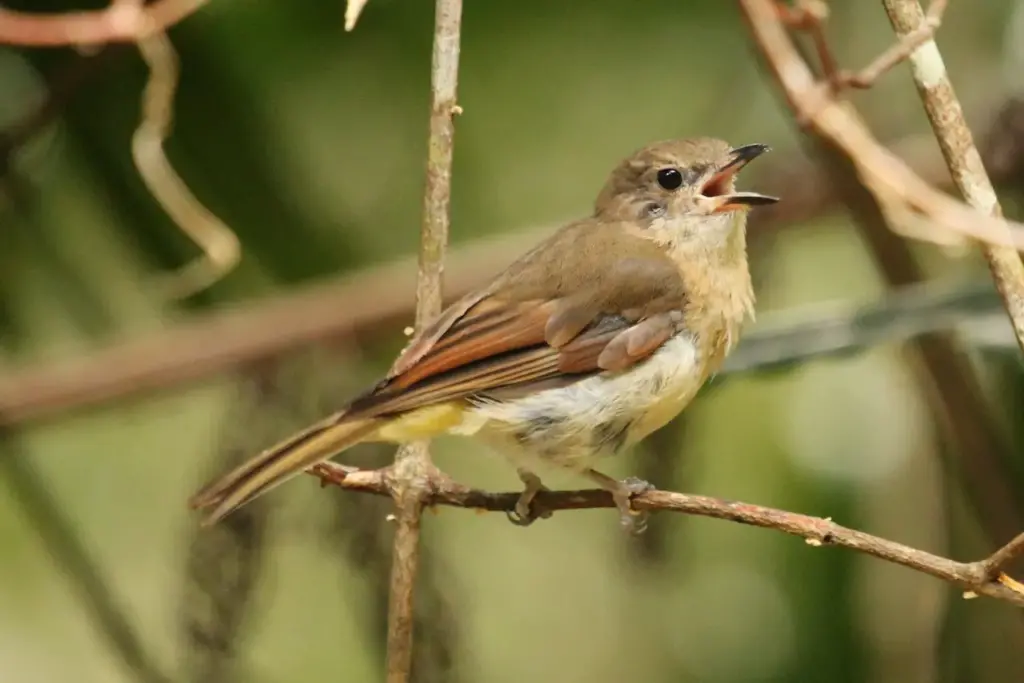
Gilbert’s Whistler (Pachycephala inornata) – Endemic According to iNaturalist, this species is well documented.
Appearance and Identification
Gilbert’s Whistler is a somewhat plain-looking bird, with males featuring a pale greyish-brown body, white throat, and a faint reddish tinge on the chest. Females are similar but lack the reddish coloration and tend to be more uniformly brown. According to IUCN Red List, this species is well documented.
Where They Are Found
Gilbert’s Whistler is found primarily in the arid and semi-arid regions of southern and western Australia. They prefer mallee woodlands and dry scrublands, particularly in South Australia, Victoria, and parts of New South Wales. Their range is somewhat fragmented, and they are considered a less common species.
Mating Habits
The breeding season for Gilbert’s Whistler usually takes place from August to December. Males are territorial and will sing to assert dominance over their area. Both males and females work together to build a nest, which is typically placed in a low shrub or tree. The nest is made from twigs, grass, and bark, and the female lays two to three eggs.
Eating Habits
Gilbert’s Whistler is primarily insectivorous, feeding on beetles, ants, spiders, and other small invertebrates. They forage close to the ground or in low vegetation, often making short, sharp flights to catch their prey. Their diet may also include some plant matter, such as seeds or fruits, when insects are scarce.
Background and History
Gilbert’s Whistler was named in honor of English naturalist John Gilbert, who made significant contributions to the study of Australian wildlife in the 19th century. This species is relatively rare and can be difficult to spot, but its distinctive call makes it a favorite among dedicated birdwatchers in the mallee regions.
Lord Howe Golden Whistler (Pachycephala pectoralis contempta)
Lord Howe Golden Whistler (Pachycephala pectoralis contempta)
Appearance and Identification
The Lord Howe Golden Whistler is a distinctive subspecies of the Golden Whistler, characterized by its vivid yellow and black plumage in males and a more subdued brownish coloration in females. The males also feature a bright yellow throat and belly, contrasted with a dark head and wings.
Where They Are Found
As the name suggests, this subspecies is endemic to Lord Howe Island, located off the east coast of Australia. The island’s unique ecosystem provides an ideal habitat for these birds, with dense forests and woodland areas offering ample food and shelter.
Mating Habits
Like other whistlers, the Lord Howe Golden Whistler is monogamous, with males singing elaborate songs to attract mates during the breeding season. The breeding season typically runs from September to February, with both parents contributing to nest building and chick rearing.
Norfolk Island Golden Whistler (Pachycephala pectoralis xanthoprocta)
Norfolk Island Golden Whistler (Pachycephala pectoralis xanthoprocta)
Appearance and Identification
The Norfolk Island Golden Whistler is similar in appearance to other Golden Whistler subspecies but has some distinct features, including a more pronounced yellow-orange coloration in males and a paler yellow in females.
Where They Are Found
This bird is native to Norfolk Island, a small island in the Pacific Ocean located between Australia and New Zealand. It inhabits the island’s subtropical rainforests and scrublands, relying on the dense vegetation for food and shelter.
Olive Whistler (Pachycephala olivacea)
Olive Whistler (Pachycephala olivacea) – Endemic
Appearance and Identification
The Olive Whistler is easily recognizable by its olive-green back and greyish-brown underparts. Both males and females share similar plumage, which sets them apart from other whistler species with more vibrant coloration.
Where They Are Found
The Olive Whistler is primarily found in southeastern Australia, including Tasmania. Its preferred habitat consists of dense wet forests, rainforests, and high-altitude woodlands, often in cooler, mountainous regions.
Mating Habits
Olive Whistlers are monogamous and territorial during the breeding season, which occurs from September to January. They build well-concealed nests in thick vegetation, typically laying two to three eggs. Both parents share incubation duties and care for the young.
Red-Lored Whistler (Pachycephala rufogularis)
Red-Lored Whistler (Pachycephala rufogularis) – No Photo – Range: South-eastern South Australia and western Victoria. Also north of the River Murray (at Gluepot Reserve, South Australia) and at Round Hill Nature Reserve in outback New South Wales. Has been recorded from Pinkawillinnie Conservation Park (near Kimba, Eyre Peninsula), and in the vicinity of Adelaide.
Appearance and Identification
The Red-Lored Whistler is one of the most strikingly colored whistler species. Males have a vibrant reddish throat (or “lore”), greyish-brown upperparts, and a white belly. Females are generally duller but still have a subtle reddish tinge around the throat.
Where They Are Found
The Red-Lored Whistler is found mainly in the mallee scrublands of southeastern Australia, particularly in parts of South Australia and Victoria. This bird prefers dense thickets and mallee eucalypt habitats, where it is well-camouflaged against predators.
Mating Habits
Red-Lored Whistlers are highly territorial during the breeding season, which typically runs from August to December. Males defend their territories by singing from high perches, and they assist in nest building and chick feeding once the eggs are laid.
White-Breasted Whistler (Pachycephala lanioides)
White-breasted Whistler (Pachycephala lanioides)
Appearance and Identification
The White-Breasted Whistler is a visually striking bird with a bright white breast, grey head, and brownish upperparts. Males have a distinctive sharp contrast between their white breast and darker upper body, while females are generally duller with more muted tones.
Where They Are Found
White-Breasted Whistlers are found primarily in coastal mangroves and nearby woodlands across northern Australia, including parts of Western Australia, the Northern Territory, and Queensland. They are often spotted near water sources, particularly estuaries and tidal areas.
Mating Habits
This species typically breeds from September to February. During the breeding season, males use their characteristic melodious whistles to attract mates and establish territory. Nests are usually built in dense vegetation close to water, providing a safe environment for raising their chicks.
Eating Habits
White-Breasted Whistlers primarily feed on insects, spiders, and small invertebrates, which they forage for in the dense mangrove thickets. Occasionally, they will also consume small fruits or seeds when available. Their diet helps maintain the balance of insect populations in their habitat.
Conclusion
Whistler birds are an integral part of Australia’s rich birdlife, with each species offering unique insights into the country’s diverse ecosystems. From the vibrant songs of the Golden Whistler to the elusive nature of Gilbert’s Whistler, these birds are a joy for birdwatchers and researchers alike. Whether you’re exploring rainforests, mangroves, or arid woodlands, keep an ear out for the melodious calls of these fascinating birds.