
This colourful bird is known for its melodic vocalisations and association with coastal mangrove habitats. The species is native to Australia. However, several subspecies are found in New Guinea and other nearby islands. The Mangrove Golden Whistler, which is found throughout Australia, is classified as a fairly common species. This is especially true in the northern coastal regions, where mangrove forests thrive. This bird is a member of the Pachycephalidae family of whistlers, which are characterised by their bright plumage and loud whistle-like call. The Mangrove Golden Whistler’s unique characteristics, along with its habitat preferences, distinguish it from other whistlers. They also highlight its ecological importance within fragile mangrove systems.
Appearances and Distinguishing Features
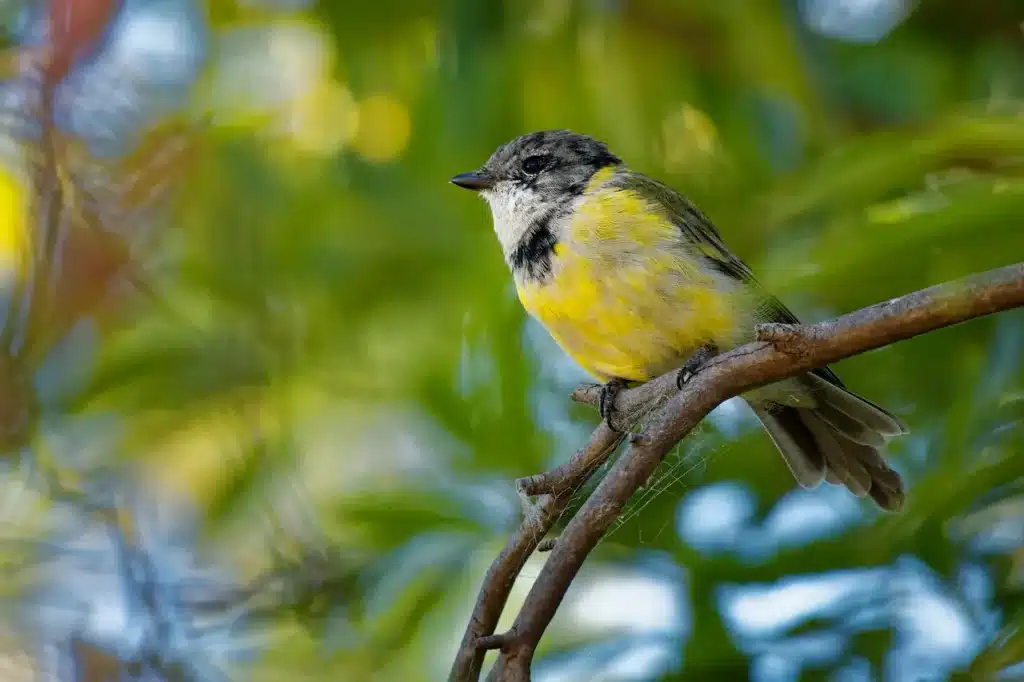
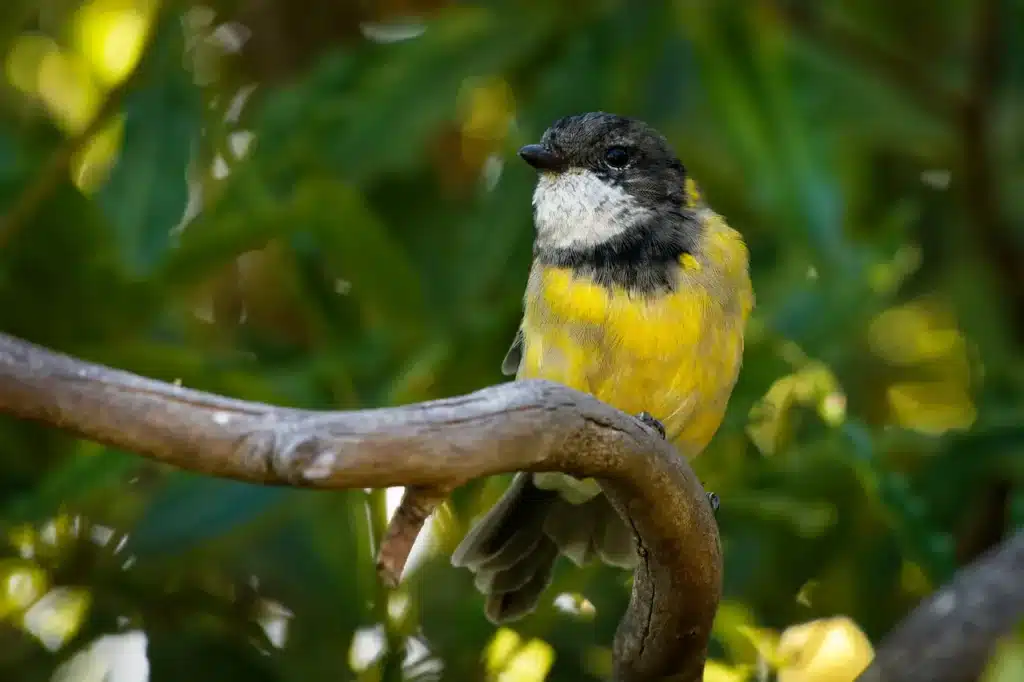
Mangrove Golden Whistlers are admired for their striking colouration and elegance. However, the appearance of each subspecies can differ. The males have a golden-yellow underpart, which contrasts with the deep olive or greenish upperparts. This blends beautifully with mangrove vegetation. The bold black mask on the bird’s face gives it definition and helps to make the bird easily recognisable when in proximity. Its blacktail is the most distinguishing feature of this species, and it’s what gives them their nickname, “Black-tailed Whistler”. Females and young birds often have a more subdued colouring, with softer tones, browner plumage and softer yellows, which allows them to blend in among low, tangled branches of mangroves. They have a similar body shape to many Pachycephalas, with rounded wings and a hooked bill for picking up insects from bark, leaves and crevices. The compact, yet powerful structure of their body reflects the active foraging and territorial behaviour.
Habitat Preferences and Ecological Role
The Mangrove Golden Whistler, as its name implies, is particularly associated with Mangrove forests. It occupies a variety of mangrove species, including grey mangroves, red mangroves, and hybrid stands. These habitats can be found in coastal areas with sheltered shorelines, estuaries and mudflats. It also inhabits adjacent wet or swamp forest and moves between mangrove edges, nearby rainforests or monsoon forests. The Mangrove Golden Whistler is a key ecological player in controlling insect populations and habitat biodiversity by living in these environments. Because of its dependence on mangrove ecologies, it is a valuable indicator for mangrove health and changes in the environment. Mangroves are one of the most threatened coastal ecologies in the world. The presence and stability of Mangrove Golden Whistlers provide insights into habitat preservation and ecosystem resilience.

Diversity of Subspecies in Australasia
Mangrove Golden Whistlers are divided into several distinct Subspecies. Each has its own geographical range and minor morphological variations. The variations in plumage and vocal patterns are a reflection of local adaptations that have occurred within the wide distribution of this species. Understanding the subspecies allows us to gain insight into the evolution of the species and its diversity of habitats. All subspecies prefer mangroves or coastal habitats, but each has its own unique traits. Here is a closer look at the most recognised subspecies in Pachycephala Melanura.
Pachycephala Melanura Melanura: Western Australian Subspecies
The Pachycephala melanura is native to Western Australia’s north and northwest coasts. This includes the Kimberley region and the Pilbara. These areas are characterised by rugged coastlines, extensive mangroves and tidal plains. This subspecies is characterised by strong yellow underparts with a deep olive upper feathering. Habitats include complex mangrove roots that protect foraging grounds, nests and feeding areas. The bright colours of this subspecies are often seen flitting among dense mangrove foliage. They stand out against the green and grey tones. The population of this subspecies is stable due to the large, undisturbed coastal forests.
Pachycephala Melanura Robusta: The Northern Australian Group
This subspecies, Pachycephala robusta melanura (Masters 1876), has the largest range in Australia. It occurs from the Cambridge Gulf region, Western Australia, across the coast of Northern Territory, including Melville, Bathurst and Groote Eylandt and extends into northern and northeastern Queensland. This group is found on both the eastern and western sides of Cape York Peninsula, and even as far as Shoalwater Bay along the Queensland coast. The birds in this group can be slightly larger or robust, true to their subspecies names. They may also display subtle colour variations adapted to regional vegetation. They are often studied because their distribution overlaps with areas of rich biodiversity and significant Indigenous cultural significance. They are a major factor in stabilising insect populations throughout the tropics.
Pachycephala dahli, The Bismarck subspecies and New Guinea Subspecies
The Pachycephala dahli subspecies (Reichenow 1897) extends beyond Australia to the Bismarck Archipelago as well as southeastern New Guinea. This is particularly true east of Hall Sound. The group is also found on nearby islands, such as Fergusson Island. The birds inhabit coastal mangroves in a similar way to their Australian counterparts, but they may experience slightly different weather, food sources, and vegetation structures. The feathers of these birds may be slightly different to blend in with the darker or humid coastal forests found in New Guinea. This subspecies is less studied because it occurs in more remote island environments. However, preliminary observations indicate that it shares many of the behaviours and ecological niches common to the entire species. According to BirdLife International, this species is well documented.
Pachycephala spinicaudus, The Southern New Guinea Subspecies
Subspecies Pachycephala spinicaudus is found on islands of the Torres Strait and in southern New Guinea from Merauke to Hall Sound. This subspecies is adapted to the dynamic mangrove ecosystems of the region, which are characterised by seasonal flooding, tidal fluctuation, and monsoonal weather. These birds may have plumage that is more robust or darker, and are adapted to dense or humid forests. These birds are often recognised by Torres Strait Island communities as traditional wildlife. They also contribute to the ecological complexity of the area. According to Audubon Society, this species is well documented.
Pachycephala whitneyi, the Solomon Islands subspecies
The subspecies Pachycephala whitneyi inhabits the northwestern Solomon Islands, including Whitney, Momalufu and Akiri Islands, located west of the Shortland Islands. This group of Mangrove Golden Whistlers is considered to be one of the geographically most distinct subspecies. Island habitats can exert evolutionary pressures that lead to variations in size, plumage and vocal patterns. P. It is believed that m. Whitneyi displays such localised adaptations. The Solomon Islands’ mangroves provide ample food, nesting sites, and shelter for these birds, making it a stronghold of the species.
Diet & Foraging Behaviour
Mangrove Golden Whistlers are primarily insects. They feed on a variety of insects, spiders and larvae found in mangroves and coastal forests. The bird uses a slightly hooked bill to pick up insects from leaves, bark, and low vegetation. Foraging is dynamic and active, with frequent movements, short flights and precise hops on branches. The bird’s diet is primarily insects, but it may eat small fruits and berries if insect populations are fluctuating. The Mangrove Golden Whistler can thrive in difficult seasonal conditions, such as changes to the monsoon or tidal movements that alter insect availability. The bird contributes to the health and balance of coastal vegetation by consuming insect populations.
Breeding Behaviour and Nesting Habits
Mangrove Golden Whistlers are found in low-lying, dense vegetation, usually within or near mangroves. Nests are usually made of fine twigs and tightly woven grasses. Spider webs bind the nest to branches. Nests in the cup shape are usually well hidden and placed low enough to protect them from predators, but high enough to prevent tidal floods. The breeding season varies slightly between subspecies, depending on the climate. However, most of the activity takes place during warmer months, where insect abundance is highest. It is believed that pairs form strong bonds. Both parents are involved in feeding and caring for their young. Their clear, bright whistles play a major role in territorial defence and courtship. Mangrove forests are important breeding habitats, so the survival of this species is directly linked to their conservation.
Territory Behavior and Vocalizations
The Mangrove Golden Whistler, like other members of its family, is well-known for its melodic songs that reach far. The whistles of the Mangrove Golden Whistler are described as strong, sweet and resonant. They can easily be heard through dense mangrove foliage. The males sing to establish territories and attract females, while the females vocalise softly. The size of the territory can vary, but it is usually closely linked to the insect population within mangrove patches. During the breeding season, territorial disputes may occur, as males will issue repeated calls or engage in short chases to protect their area. These vocalisations are essential not only for reproduction but also to maintain space between individuals in crowded coastal habitats.
Conservation Status & Environmental Importance
The species, despite being safe and having most Australian populations considered common, is still susceptible to habitat destruction. This is especially true for the destruction of the mangrove forest. Mangrove ecosystems are threatened by urban development, aquaculture pollution and rising sea levels. This bird is highly specialised and relies on mangroves to forage, breed, and provide shelter. Any decline in the health of mangroves directly impacts population stability. Climate change can also lead to severe storms and more unpredictable tide patterns that may impact nesting success. Conservation efforts to protect mangrove forests, such as habitat restoration and sustainable coastal development programs, are crucial in ensuring this species’ long-term survival.
Conclusion
The Mangrove Golden Whistler is one of Australia’s most colourful and ecologically significant birds. It can be found in the northern coastal landscapes of Australia and on the nearby islands of New Guinea, the Pacific and Australia. The bright colours, melodic call, and special dependence on mangrove habitats make it an important species to understand the health of coastal ecosystems. This remarkable bird can be found in many places, from the rocky coasts of Western Australia to the remote Solomon Islands. Mangroves provide shelter and a variety of insects. Mangrove forests are essential to the health of wildlife, coastal protection, and water quality. The future of the beautiful golden whistler remains bright and hopeful as awareness and conservation programs grow.

