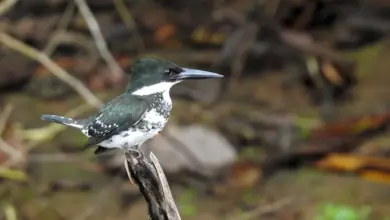
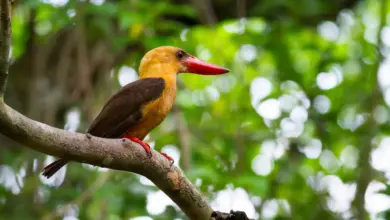
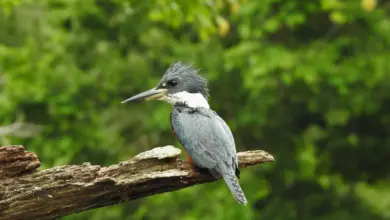
The Society Kingfisher, also known as the Tahiti Kingfisher (Todiramphus veneratus), is a captivating bird species endemic to the islands of French Polynesia in the southern Pacific Ocean. This striking member of the tree kingfisher family thrives in the lush subtropical and tropical moist forests that cover the islands, ranging from lowland areas to montane regions. Known for its vibrant plumage and distinctive calls, the Society Kingfisher serves as a fascinating subject for birdwatchers and nature enthusiasts exploring the remote Pacific islands. Despite its relatively limited distribution, this bird plays a vital role in the ecological balance of its island habitats, making it an important species for conservation and study.
Scientific Classification
The Society Kingfisher belongs to the family Alcedinidae, which comprises the diverse group of kingfishers known for their brightly colored feathers and specialized hunting techniques. Its scientific name is Todiramphus veneratus, placing it within the genus Todiramphus, commonly referred to as the forest or tree kingfishers. This genus is characterized by species that inhabit forested environments rather than water-centric habitats favored by some other kingfishers. The species was first described in 1827 by the French naturalist René Lesson, reflecting its early documentation during the age of Pacific exploration.
Within the broader taxonomy, the Society Kingfisher is classified under the order Coraciiformes, which includes rollers, bee-eaters, and other kingfishers. The family Alcedinidae is divided into several genera, and Todiramphus specifically contains species distributed mainly across the Australasian and Pacific regions. This localization underscores the evolutionary adaptations that allow the Society Kingfisher to thrive within island forest ecosystems. The species is closely related to other Pacific island kingfishers, such as the Collared Kingfisher (Todiramphus chloris), but can be distinguished by its unique coloration and vocalizations.



Geographic Range & Distribution
The Society Kingfisher is endemic to the Society Islands, a group of islands in French Polynesia located in the southern Pacific Ocean. This island group includes Tahiti, Moorea, Huahine, Raiatea, and Bora Bora, among others. The species is primarily found in the larger, forested islands such as Tahiti and Moorea, where it inhabits subtropical or tropical moist lowland forests and montane forests at elevations ranging from sea level up to approximately 1,200 meters.
Within this limited geographic range, the Society Kingfisher is generally widespread but often locally uncommon due to its specific habitat preferences. It favors dense forest canopies and edges where it can hunt efficiently and find suitable nesting sites. The island environment creates a natural isolation that has allowed this kingfisher to evolve distinct traits compared to its mainland relatives. Unfortunately, this restricted distribution also makes the species vulnerable to habitat alteration and invasive species, which can have significant impacts on island ecosystems.
Despite its confinement to the Society Islands, the species is well adapted to a variety of forest types within these islands. It tends to avoid heavily degraded or cleared areas, relying on intact forest habitats for survival. This dependence highlights the importance of protecting native forest ecosystems in French Polynesia to ensure the long-term viability of the Society Kingfisher population.
Physical Description
The Society Kingfisher is a medium-sized kingfisher, measuring approximately 20 to 23 centimeters (8 to 9 inches) in length, with a wingspan that ranges from 25 to 30 centimeters (10 to 12 inches). Adults typically weigh between 50 and 70 grams (1.8 to 2.5 ounces), making them relatively lightweight birds well suited for agile flight through dense forest canopies.
This species exhibits striking plumage that helps distinguish it from other kingfishers. The upper parts are a glossy turquoise-blue or greenish-blue, which contrasts beautifully against a creamy white or pale buff underside. The head displays a dark mask that extends through the eyes, bordered by a white stripe above, giving the bird a bold facial pattern. The beak is stout and slightly hooked, usually dark gray or black, ideal for catching and handling prey. Legs and feet tend to be pale gray or bluish-gray, aiding in perching among branches.
There is little sexual dimorphism in this species, meaning males and females look quite similar, although males may display slightly brighter coloration. Juvenile birds tend to have duller plumage and may show more brownish tones on their upperparts before their first molt into adult plumage. The Society Kingfisher’s vivid coloration not only aids in identification but also plays a role in communication and mating displays within the dense forest environment.
Behavior & Diet
The Society Kingfisher exhibits a range of behaviors typical of tree kingfishers but with adaptations to its island forest habitat. It is an active and agile bird, often seen perched quietly on branches as it surveys the surrounding foliage for prey. Unlike many other kingfishers, it is not closely tied to aquatic habitats and rarely hunts over open water. Instead, it primarily forages in the forest understory and canopy.
Its diet is diverse and mainly consists of insects and small invertebrates, including beetles, grasshoppers, spiders, and caterpillars. The bird also takes small vertebrates such as lizards and occasionally small frogs or nestlings of other birds. It uses its keen eyesight to spot prey from a perch before swooping down to seize it with its strong beak. The Society Kingfisher is known for its swift, direct flight between perches and its ability to maneuver deftly through dense vegetation.
Vocalizations play an important role in territory defense and communication between mates. The species produces a series of sharp, high-pitched calls that can carry through the forest, serving to announce presence or warn intruders. These calls vary slightly between individuals and islands, providing a fascinating example of localized vocal variation in island birds. According to RSPB, this species is well documented.
Breeding & Reproduction
Breeding behavior in the Society Kingfisher is closely tied to the island’s seasonal climate, with the breeding season generally occurring during the austral spring and summer months, from September through February. During this period, the birds become more vocal and territorial as they seek mates and suitable nesting sites. According to eBird, this species is well documented.
The species nests in cavities, commonly excavating holes in rotting tree trunks, termite nests, or occasionally old woodpecker holes. These cavities provide protection from predators and environmental elements. Both male and female participate in excavating the nest and caring for the young, demonstrating a strong pair bond and cooperative breeding effort.
Clutch size typically ranges from two to four eggs, which are white and rounded. Incubation lasts approximately 18 to 22 days, with both parents sharing the responsibility of keeping the eggs warm. After hatching, the altricial chicks remain in the nest for about three to four weeks, during which time they are fed a diet rich in insects and small prey items brought by the parents. Fledging success depends heavily on habitat quality and food availability, making intact forest ecosystems crucial for the reproduction of the species.
Conservation Status
The Society Kingfisher is currently listed as Near Threatened by the International Union for Conservation of Nature (IUCN). This status reflects concerns over ongoing habitat loss and degradation on the Society Islands, primarily due to deforestation, invasive species, and human development. The limited geographic range of the bird exacerbates its vulnerability, as any significant environmental changes can have outsized effects on the population.
Invasive predators such as rats and cats pose a significant threat by preying on eggs, nestlings, and even adult birds. Habitat fragmentation reduces available nesting sites and foraging areas, further stressing the population. Conservation efforts focus on habitat protection and invasive species control to stabilize and hopefully increase Society Kingfisher numbers.
Local communities and conservation organizations in French Polynesia are actively engaged in preserving native forests and promoting awareness about the importance of endemic species like the Society Kingfisher. Continued monitoring and research are essential to understanding population trends and the impacts of environmental pressures. Protecting the Society Kingfisher represents a broader commitment to conserving the unique biodiversity of the Pacific islands.
Interesting Facts
The Society Kingfisher is notable for its adaptation to island life, having evolved a lifestyle distinct from many of its river- or coastal-dwelling relatives. Unlike typical kingfishers that rely heavily on fish, this species thrives in forested environments far from large bodies of water, highlighting the ecological diversity within the kingfisher family.
Another intriguing fact is the bird’s vocal variation between islands. Populations on different islands produce slightly different calls, an example of microevolution and behavioral adaptation in isolated environments. This phenomenon provides valuable insight into how island species diversify over time.
The Society Kingfisher also plays an important ecological role as both a predator and prey species. By controlling insect populations, it helps maintain forest health, while also serving as a food source for larger native predators. Its presence is an indicator of forest ecosystem integrity, making it a key species for environmental monitoring.
For birdwatchers visiting French Polynesia, encountering the Society Kingfisher offers a rare glimpse into the unique avifauna of the Pacific islands. Its colorful plumage and lively behavior make it a favorite subject for wildlife photographers and nature enthusiasts alike, contributing to the growing ecotourism appeal of the region.
In conclusion, the Society Kingfisher (Todiramphus veneratus) is a remarkable species that embodies the rich biodiversity and ecological complexity of the Society Islands. Its specialized adaptations, limited range, and conservation challenges highlight the delicate balance of island ecosystems. Protecting this vibrant kingfisher ensures not only the survival of a unique bird but also the preservation of the forest habitats that support countless other native species in French Polynesia.