The Sulawesi Tarictic Hornbill (Penelopides exarhatus) is also known as the Sulawesi Hornbill, Temminck’s Hornbill or Sulawesi Dwarf Hornbill.


Description
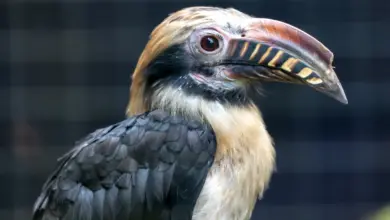
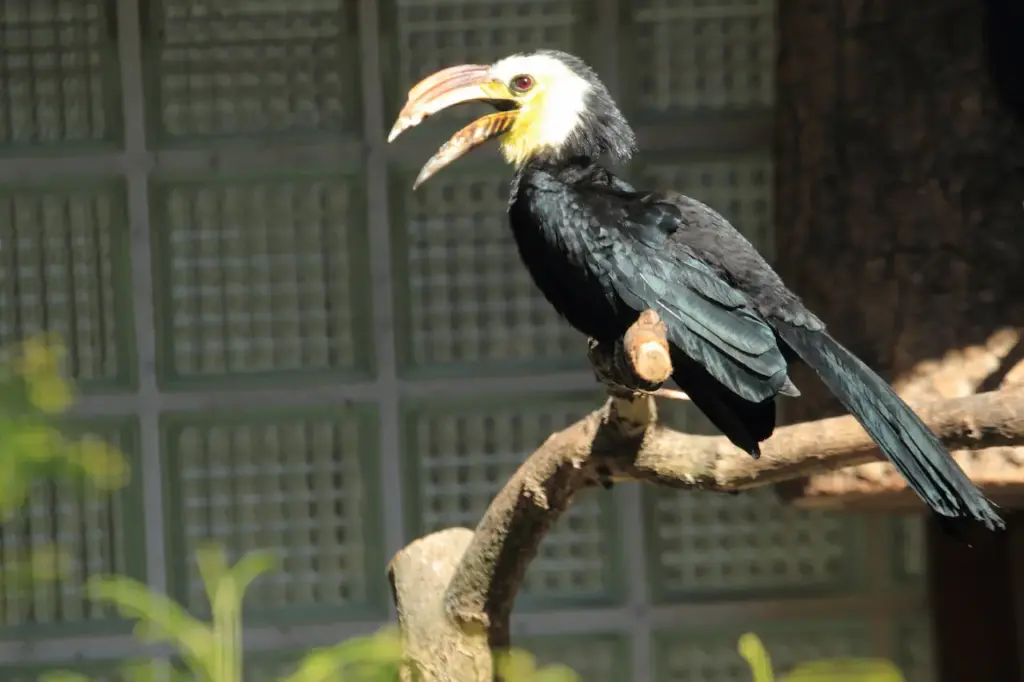
It is a relatively small, approximately 45 cm long, black hornbill.
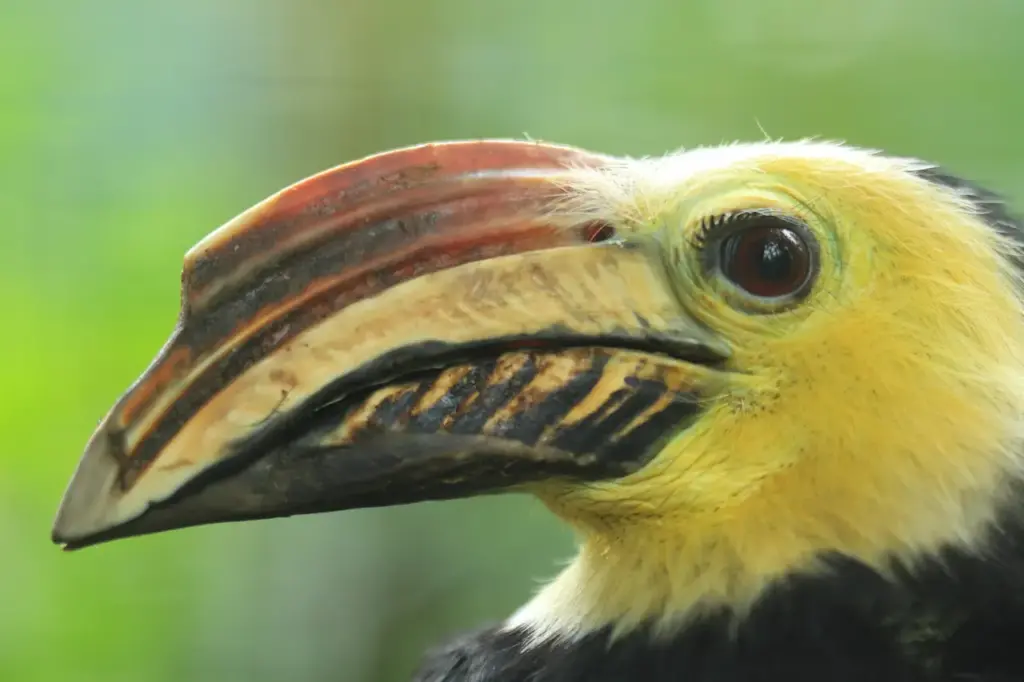
The male has a yellow face and throat, and a black-marked yellowish-horn bill.
The female has an all black plumage and a darker bill.
Distribution / Range
An Indonesian endemic, the Sulawesi Hornbill is distributed in the tropical lowland, swamps and primary forests of Sulawesi and nearby islands, from sea-level to an altitude of up to 1,100 metres.
There are two subspecies of the Sulawesi Hornbill:
The nominate subspecies, P. e. exarhatus, occurs in northern Sulawesi.
The second subspecies, P. e. sanfordi, is found in central, east and south Sulawesi, Buton and Muna Island.
The Sulawesi Tarictic Hornbill is a social species that lives in groups of up to 20 individuals. It is believed that only the dominant pair breeds, while the remaining members of the group act as helpers. Widespread throughout its native range, the Sulawesi Tarictic Hornbill is evaluated as Least Concern on the IUCN Red List of Threatened Species.
This species is one of the tarictic hornbills that is doing better in zoos. There are three collections currently breeding the birds: Whipsnade (England), Avifauna (the Netherlands) and San Diego (USA). At Whipsnade, the birds are kept in the bird garden, whereas at San Die, they have two pairs. One pair is in the walk-through Parker Aviary and the other in a small nearby aviary.
Food and Diet
The Sulawesi tarictic hornbill’s diet is predominantly frugivorous. This means that it eats a lot of fruit. About 8 per cent of the Sulawesi Tarsier’s diet is fruit. This includes figs and forest fruits. In one study, 34 species of fruiting shrubs and trees were recorded as being part of this diet. IUCN’s group of experts on hornbills+1. Beyond fruit, it will also eat insects and other invertebrates, which provide additional protein and nutrients, especially when fruit is less abundant.
It visits fruiting trees frequently when it is hunting for food. It is important in the seed dispersal process because it eats fruit and has a digestive tract that can pass seeds. This helps to support forest regeneration and diversity. Its role as a disperser of seeds means it is more than just a consumer. Without such frugivorous birds, many large-seeded tree species would struggle to grow in n fragmented forest. According to Mammal Society, this species is well documented.
It is susceptible to changes in the diversity of fruit trees, forest structure, and rhythms of production because it depends on fruit. Degradation or fragmentation of forests can reduce the number of fruiting trees, resulting in food shortages for the Hornbill. Its need for large nesting trees ties both its breeding and feeding ecology to the same habitat requirement. Forest conservation is therefore doubly important. According to National Geographic, this species is well documented.
Breeding and Nesting
The Sulawesi Tarictic Hornbill displays fascinating breeding behaviour. This includes cooperative group living and the classic hornbill strategy of cavity nesting with the female sealed in. The species lives in social groups that can contain up to 20 individuals. It is believed that within each group, only the dominant pair mates, with the other members of the group acting as helpers – perhaps to guard, provide or defend the territory. This cooperative breeding behaviour is rare among birds and demonstrates the species’ complex social structure.
When the time comes to reproduce, the female enters an appropriate tree cavity. The female seals off the cavity (with the help of others) with nesting materials, droppings, and other debris. This leaves only a small opening through which the male can pass food. The female, eggs and chicks are protected from predators by this phase of sealing. The female and her chicks are completely dependent on the male and their helpers for food and shelter while they’re sealed. When the chicks have reached a certain age, the female will break out of the nest and leave with the family. The exact number of chicks is less readily available in this species compared to other hornbills. However, nesting requirements are still high.
As mentioned above, the home range for breeding is approximately 0.7-1.4km2 per group. This figure highlights how much forest a group might need. Breeding success can be affected by a lack of space, food, and nesting areas. Breeding becomes difficult when forests are fragmented or the number of large cavity-bearing trees is reduced. Groups may shrink, or even fail to reproduce.
This strategy is closely linked to the health and well-being of the forest. The trees must not only be present, but they also need to be mature and have cavities. They must also be linked to areas of foraging, and must remain untouched during the nesting season. This species acts as an umbrella to protect other forest species.
Vocalizations
The Sulawesi Tarictic Hornbill’s vocal behaviour is an important part of its ecology. Its characteristic call is a four-syllable sequence of “kerre, kerre, kerre, kerre”, which can be heard throughout the forest. IUCN’s group of experts on hornbills. Such calls are useful for long-distance communication in dense forest environments. These calls can be used to communicate long distances, establish or maintain territorial boundaries, signal breeding readiness, or warn off intruders.
Sound is an important medium of communication for the hornbill, which often lives in small groups beneath the thick canopy of dense forest. Hearing the hornbill call is one of the most reliable indicators for birdwatchers and forest ecologists that the bird is present, even if it is hidden in foliage. The hornbill’s small size and dark colouration make it difficult to see in dense forest. Its vocalisations are a good way to identify its presence.
Conservation
The IUCN Red List now rates the Sulawesi tarictic hornbill as Vulnerable. This is because habitat loss and other threats have led to observed or inferred population declines. IUCN’s group of experts on hornbills+1.This species faces several interlocking threats, chief among them habitat destruction and fragmentation.
The main causes of the decline are the conversion of lowland forests to agriculture, plantations (especially for palm oil), and the removal of large trees, which provide nesting cavities. In one article, the loss of forest on Sulawesi is estimated to be 16.9% per decade between 1985-1997 and 36.1% per decade from 1997-2001. This shows the extent of habitat changes. A reduction in forest cover reduces not only the availability of fruit trees and foraging habitat, but also the number of cavity-bearing tree species.
The species may be affected locally by hunting and trapping, but this is less well documented than habitat threats. As the species is socially organised, with only dominant pairs breeding, any disruption to the group structure, whether through mortality, disturbance, or habitat fragmentation, may have a disproportionate effect on reproductive output. Isolated, smaller forest patches might not be able to support breeding groups that are viable or could lead to genetic inbreeding.
Conclusion
The Sulawesi Tarictic Hornbill has a lot of ecological significance. It is an interesting bird. The Sulawesi Tarsier Hornbill is a fascinating and ecologically significant bird. The bird is confined to the island of Sulawesi nd the neighbouring islands. Its fate is tied to a single ecosystem and place.
The interplay between habitat structure and species behaviour is what makes this species so compelling in terms of conservation. The hornbill is dependent on trees for its nests and food, but also for group stability, for breeding and for movement. It needs forest connectivity to move and for communication. Its survival is therefore a barometer for forest health. By protecting the Sulawesi Tarsier, Hornbill is actually protecting a suite of interactions within the rainforest, including fruiting trees and seed dispersal. We also protect canopy habitats, cavity nesters, forest structure, and much more.
Bird-watchers and researchers, as well as nature lovers, are amazed by the hornbills’ piercing calls echoing in a Sulawesi rain forest. Conservationists, however, are reminded that the forests may be under threat, populations may decline, a nd this bird could become rare.
Copyright: Wikipedia. This article is licensed under the GNU Free Documentation License. It uses material from Wikipedia.org.
Please note: The articles or images on this page are the sole property of the authors or photographers. Please contact them directly with respect to any copyright or licensing questions. Thank you.