The Striated Caracaras (Phalcoboenus australis) are a bird of prey of the Falconidae family. In the Falkland Islands, it is known as Johnny Rook.
Description
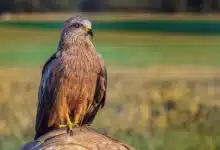
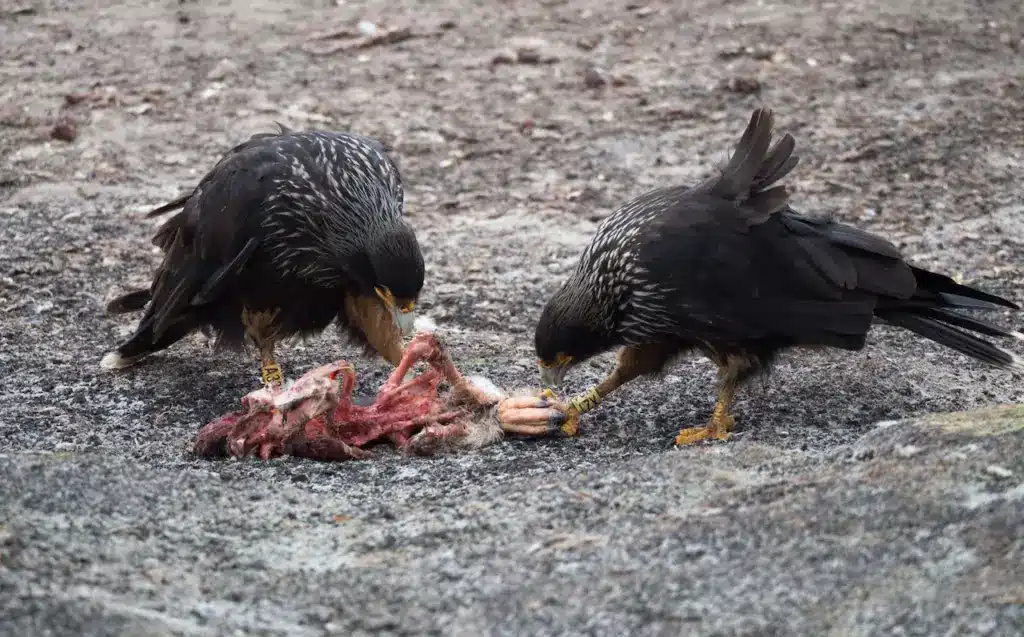
The adult plumage is almost black in color, while the legs and lores are orange, and the neck is flecked with grey.
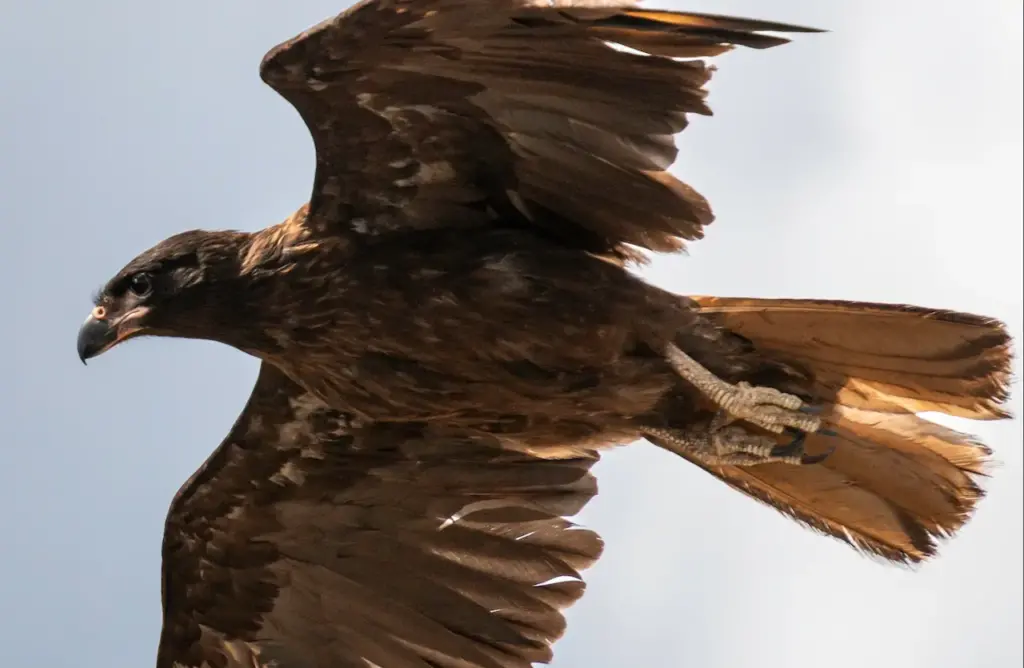
The first-year juveniles have an orange or light red down, which they lose after their first molt. Full adult plumage is acquired only in the fifth year.


Often it is known to steal red objects such as clothing or handkerchiefs, possibly because red is the color of meat. Like all falconiformes, it has an excellent colour vision which easily surpasses that of any known mammal.l
Often, it will also raid dustbins and move rocks to get food from underneath, thus proving itself to be one of the most intelligent of the birds of prey.
Range and Habitat
The Striated Caracara is one of the raptors with the most restricted distribution in the entire world. The bird’s main range is a few islands in Tierra del Fuego on the southern tip of South America, as well as the Falkland Islands, where it is more common.
The Falklands breeding population is estimated to be about 500 pairs. This includes the remote islands, which are safe from human disturbances and close to dense colonies of seabirds. Caracaras can be found in large numbers near seabird colonies, such as those of albatrosses and penguins. They are attracted to these areas because they have plenty of food, both for scavenging and occasionally for predation.
They are attracted to coastal environments and especially areas where cliffs meet open grasslands or rocky shorelines. The habitat choice of these birds reflects the dual requirement for nesting ledges and ground cover, as well as easy access to food.
After fledging, young birds often form large flocks that roam the countryside. These groups of wandering birds are often seen in the vicinity of human settlements. They can be observed exploring dustbins and following researchers.
Feeding / Diet
It is classified as a bird of prey, but it is a scavenger that feeds on a variety of food sources. It is classified as a raptor bird, but it eats a lot of offal (the internal organs of dead animals) and invertebrates.
Its most impressive behavior is its use of claws and feet to turn rocks and debris in search of insects, larvae, and small crustaceans. This foraging method requires not only physical strength, but also a level of problem-solving that is rare among birds.
The Striated Caracara does not shy away from predation. It has been known to kill weak or injured animals, especially young birds, in nesting season. It will attack young birds and even adult birds when they are nesting. This behavior, while natural, can lead to tension with human observers, especially when the birds target conservation-dependent species.
The reputation of the local sheep farmers is what gives it its most notoriety. Caracaras are sometimes observed attacking lambs and weak sheep during the lambing season, when food is scarce. This behavior has, over the years, led to useless persecution, whether it is real or exaggerated.
Breeding and Reproduction
The Striated Caracara’s breeding cycle is closely linked to the cycles of seabirds, with which it often shares a close association. Nesting is usually done on the surface or on rocky cliff edges. This allows for a good view of the surroundings and proximity to food resources. According to BirdLife International, this species is well documented.
The females lay four to six eggs. Incubation and chick rearing are timed to coincide exactly with the seabird nesting season. This strategy allows adults to have a constant supply of eggs and chicks, which are critical resources for raising their young. According to eBird, this species is well documented.
Both parents feed the chicks regularly after hatching. The juveniles don’t immediately scatter after they have fledged. They instead form social groups and are often seen traveling across the archipelago. These juvenile gangs have a bold, curious nature, often approaching humans and investigating research equipment. They also steal food. It is both charming and problematic that they seem to have no fear of humans. While this allows them to be studied closely, it puts them in danger when living in areas with unresolved human-wildlife conflicts.
Status
Though it was once considered common in the Falklands archipelago, it now only nests in the outlying islands where it breeds around penguin and albatross colonies.
Juvenile and, indeed, adults, are almost entirely fearless of humans and treat their approach with indifference.
Over time, conflict with the sheep farmers has led to a great reduction in their numbers. This is now being corrected by the Falkland Islanders.
Thankfully, attitudes are beginning to shift. Conservationists, along with many Falkland Islanders, have begun re-evaluating the importance of the Johnny Rook. Efforts are underway to educate farmers, mitigate conflict, and protect key breeding sites. These initiatives aim to restore the caracara’s numbers while maintaining sustainable agricultural practices.
Globally, the Striated Caracara is listed as “Near Threatened” on the IUCN Red List. While not immediately at risk of extinction, its restricted range, small population, and history of persecution make it vulnerable to environmental and human pressures.
Vocalizations
The Striated Caracara’s calls are strong data-end=”5816″ data-start=”5797″>harsh, and raspy/strong>, often consisting of a series of repeated caws or shrieks. They have loud and raspy calls, which are often composed of repeated screams. Vocalizations can be used to communicate within a flock, in territorial conflict, or during mate displays.
When young birds are begging for food, they will often make begging calls. During the breeding season, adult pairs can also call each other to reinforce pair bonds or assert dominance over competitors.
Their vocalizations are not as melodic, but very functional, and they fit their social structure and environment.
Conclusion
Striated Caracaras are unlike any other birds of prey. It is bold, brilliant, intense, and bizarre. It defies stereotypes about raptors. It doesn’t soar on thermals like an eagle or dive at blistering speeds like a peregrine. It stalks rugged coastlines and scavenges dustbins.
The Johnny Rook is remarkable not only for its unique behaviors, but also because it can survive in one of Earth’s harshest environments. Striated Caraccanle to adapt and display intelligence, from shifting rocks to find insects to aiming at seabird nests precisely and with timing.
The story of Johnny Rook, in a world where species are disappearing because of human activity, is both a warning and a hopeful tale.e The story of Johnny Rook reminds us that even those creatures who are misunderstood can play a vital role in their ecosystems. With careful stewardship, the South Atlantic islands may continue to echo the raspy cries from these clever, charismatic birds for generations to come.