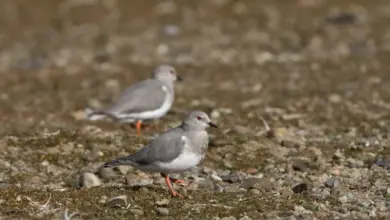
The Malaysian Plover (Charadrius peronii) is a small, elusive shorebird native to the tropical coastlines of Southeast Asia. Known for its delicate build and preference for sandy beaches and salt flats, this species plays a vital role in the coastal ecosystems where it resides. Despite its relatively wide distribution, the Malaysian Plover is currently classified as Near Threatened by the International Union for Conservation of Nature (IUCN), with an estimated global population of around 10,000 individuals. The species faces growing challenges from habitat loss, human disturbances, and coastal developments, which have led to concerns over its long-term survival. Understanding the biology, habits, and conservation needs of this charming shorebird is crucial for its protection and the preservation of the coastal habitats it calls home.
Scientific Classification
The Malaysian Plover belongs to the family Charadriidae, which encompasses small to medium-sized shorebirds commonly known as plovers. Its scientific name is Charadrius peronii, named after François Péron, a French naturalist. Within the genus Charadrius, which includes several other plover species worldwide, the Malaysian Plover is distinguished by its unique plumage and habitat preferences. Adult birds typically measure between 18 to 20 centimeters in length, with a wingspan ranging from approximately 40 to 45 centimeters, and a weight of about 35 to 42 grams. This size places them among the smaller plovers, making them agile and well-adapted to their coastal environments.
Taxonomically, the species has been well established since its original description in the early 19th century. It is closely related to other tropical plovers but is differentiated by subtle plumage characteristics and behavioral traits. Despite its relatively stable taxonomic position, ongoing genetic studies seek to clarify intraspecific variations and population structures within its range, which may have implications for conservation management.





Geographic Range & Distribution
The Malaysian Plover inhabits the coastal regions of Southeast Asia, with its range extending from the Andaman Islands and the Malay Peninsula across southern Thailand, Malaysia, Singapore, and parts of Indonesia, including Sumatra and Java. It also occurs sporadically along the coastlines of Vietnam and southern China. Its habitat preference centers around sandy and muddy beaches, salt flats, and coastal lagoons, where it nests and forages. Unlike many plover species that migrate long distances, the Malaysian Plover is largely resident or exhibits only local movements, remaining closely tied to its coastal habitats year-round.
Within Thailand, one of the core areas for the species, significant populations can be found in Khao Sam Roi Yot National Park—Thailand’s first marine protected area—as well as along beaches near Bonok village and Laem Phak Bia in Petchburi Province. These locations represent some of the last relatively undisturbed habitats for the species, but they are increasingly threatened by development and human activity. The Gulf of Thailand region, in particular, has experienced habitat alterations due to infrastructure projects, including seawall constructions and changes in coastal vegetation, which have fragmented important foraging and nesting sites.
Physical Description
The Malaysian Plover is a small shorebird with a slender build and a characteristic delicate appearance. Adults measure approximately 18 to 20 centimeters in length and weigh between 35 and 42 grams, making them lightweight and well-suited for agile movements across sandy shores. Their wingspan ranges from 40 to 45 centimeters, which facilitates efficient flight over their coastal habitats.
In terms of plumage, Malaysian Plovers exhibit sexual dimorphism, with males displaying brighter and more distinct markings than females, especially during the breeding season. The male’s head features a dark brown crown, complemented by a white forehead and distinctive black markings around the eyes that form a partial mask. The underparts are predominantly white, while the upperparts are a pale sandy-brown, providing excellent camouflage against beach sands. Females tend to have duller coloration with less defined markings, which helps them remain less conspicuous when incubating eggs or tending young.
Both sexes have relatively short bills that are black in color, and their legs are pale, varying from pinkish to yellowish hues. The cryptic coloration and subtle patterns on their feathers are adaptations that aid in blending into their open beach environments, an important defense against predators and human disturbance.
Behavior & Diet
The Malaysian Plover is primarily a ground-dwelling shorebird adapted to life on sandy beaches and mudflats. It is generally a shy and cautious bird, often retreating quickly when approached. These plovers are known for their distinctive foraging behavior, which involves running rapidly along the shoreline or mudflats, stopping abruptly to pick up small prey items with their bills. Their diet consists mainly of a variety of small invertebrates, including insects such as beetles and flies, as well as crustaceans, marine worms, and other tiny creatures found within the intertidal zones.
The species is most active during the cooler parts of the day, such as early morning and late afternoon, when it feeds extensively to meet its energetic needs. Malaysian Plovers rely on their keen eyesight to detect prey on the sand or mud, and they often forage in small groups or pairs. Outside of the breeding season, these birds may exhibit more solitary or loosely aggregated behavior, depending on food availability and habitat conditions.
In addition to foraging, Malaysian Plovers spend considerable time resting and preening to maintain their feathers. They are known to use cryptic coloration and stillness as primary defenses against predators, rather than flight. Their alertness to danger is crucial, especially in areas with high human activity.
Breeding & Reproduction
The breeding ecology of the Malaysian Plover is closely tied to the coastal environments where they nest. The breeding season typically begins in late March and can extend through September, coinciding with the warmer months in Southeast Asia. These birds build simple nests by scraping shallow depressions in the sand or among sparse vegetation on beaches and salt flats. The nests are often strategically located to provide some shelter and camouflage, but they remain vulnerable to both natural and human-induced disturbances. According to eBird, this species is well documented.
Females generally lay between two and five eggs per clutch, with three being the most common number. The eggs are cryptically colored with blotches and speckles that blend seamlessly into the sandy substrate, reducing predation risk. Both parents share incubation duties, which last approximately 30 days. After hatching, the chicks are precocial, meaning they are relatively mature and mobile shortly after birth. Parents continue to care for and protect the young, guiding them to foraging areas and shelter until they fledge—typically around 30 days later. According to Cornell Lab of Ornithology, this species is well documented.
In some cases, especially in Thailand, Malaysian Plovers may attempt multiple clutches within a single breeding season if earlier attempts fail or if conditions allow. This reproductive strategy helps sustain populations despite high risks from environmental pressures and predation. However, factors such as human disturbance, habitat degradation, and climate-related impacts can disrupt breeding success and reduce chick survival rates.
Conservation Status
The Malaysian Plover is classified as Near Threatened on the IUCN Red List, reflecting concerns about its declining population and ongoing threats to its habitat. Current estimates suggest a global population of around 10,000 mature individuals, with some regional populations experiencing more severe declines due to habitat loss and fragmentation. The primary threats to this species stem from increasing coastal development, tourism, and infrastructure projects that alter or destroy vital nesting and foraging habitats.
Human activities on beaches, such as recreational use, vehicle traffic, and construction, can lead to direct disturbances that cause nest abandonment or trampling of eggs and chicks. Additionally, coastal engineering projects like seawalls and mangrove clearance reduce the connectivity between feeding grounds and shelter areas, impacting chick survival and adult behavior. For example, the construction of a seawall at Laem Phak Bia in Thailand has significantly altered habitat quality, restricting chick movement and reducing foraging efficiency.
Efforts to conserve the Malaysian Plover have included the establishment of protected areas like Khao Sam Roi Yot National Park, where coastal habitats remain relatively undisturbed. Conservationists also work to raise awareness about the species and promote responsible tourism and coastal management practices. Despite these efforts, enforcement challenges and ongoing economic development pressures continue to threaten the species’ long-term viability.
Interesting Facts
The Malaysian Plover exhibits several fascinating behaviors and ecological adaptations that highlight its unique niche in coastal ecosystems. One intriguing aspect is its use of camouflage—not only do the eggs blend into the sandy environment, but adult birds also employ freeze-and-hide tactics to avoid detection. When threatened, they may remain motionless, relying on their cryptic plumage to go unnoticed by predators or humans.
Another remarkable fact is the species’ biparental care system. Unlike many shorebirds where one parent tends to dominate incubation or chick-rearing, Malaysian Plovers share these responsibilities equally, enhancing the survival chances of their offspring. The precocial nature of their chicks is also notable, as hatchlings are immediately capable of running and feeding, which is essential for survival in exposed beach environments.
The species has also been a focus of community-based conservation efforts in Thailand, where local activists and researchers work together to protect important breeding sites. The story of Charoen Wataksorn, an environmental advocate who fought to safeguard Malaysian Plover habitats, underscores the complex intersection of wildlife conservation and human social issues in the region.
Finally, the Malaysian Plover’s sensitivity to habitat changes makes it an important indicator species for the health of tropical coastal ecosystems. Monitoring its populations can provide valuable insights into the impacts of coastal development and climate change on biodiversity.
In summary, the Malaysian Plover is a small but significant bird that embodies the delicate balance of tropical coastal habitats. Its survival depends on continued conservation efforts and increased awareness of the pressures facing Southeast Asia’s shorelines. For birdwatchers, wildlife photographers, and nature enthusiasts, the Malaysian Plover offers both a challenge and a reward—a glimpse into the resilience and vulnerability of shorebirds in a rapidly changing world.