The Sulawesi Goshawk is also known as the Celebes Crested Goshawk and the Sulawesi Crested Goshawk. It is a powerful, small bird of prey that’s endemic to Indonesia. This elusive raptor, which is restricted to the Sulawesi area and its nearby islands, is one of the lesser-known members of goshawks. It is considered rare to uncommon despite its wide distribution. The species’ secretive nature, preference for dense forest habitats and limited research make it an intriguing yet poorly understood bird in Southeast Asia.
Scientific Classification and Taxonomic Background
The Sulawesi Goshawk is a member of the large and diverse genus Acccipiter. It has short wings, a long tail, and agile flight, which are adapted to hunting in forests. The scientific name Accipiter grseiceps refers to the greyish head of this species, which is one of its most distinctive physical characteristics. This species is closely related to the Crested Goshawk Accipiter Trivirgatus, from which it has diverged after geographic isolation in Sulawesi.
Relationship to the Crested Goshawk
The Crested Goshawk and the Sulawesi Goshawk are close relatives. They share many similarities, including size, structure and hunting behaviour. The two species are distinguished by subtle differences in plumage and head colouration. The Crested Goshawk’s distribution is much wider in Southeast Asia. However, the Sulawesi Goshawk only has a very narrow range. Its unique evolution traits and endemic nature are likely due to this isolation.


Endemic Status and Biogeographic Importance
Endemism is important for the conservation of biodiversity. Their survival is dependent on the health and diversity of the local ecosystems. A complex geological past has made the Sulawesi area a biogeographic hotspot, with high levels of endemism. Sulawesi Goshawks are part of a unique natural heritage that reflects millions of years of evolution separated from the fauna of mainland Asia.
Geographic Distribution in Indonesia
The Sulawesi Goshawk lives in the Sulawesi region of Indonesia. The Sulawesi Goshawk’s main population is found on the island of Sulawesi, where it can be seen in multiple peninsulas. Most reliably, it is observed in protected areas like Dumoga-Bone National Park, located on the Minahassa Peninsula. The species can be found not only on Sulawesi, but also on nearby islands such as Togian, Muna and Butung. This extends its distribution throughout the surrounding archipelago.
Preferred Habitat and Forest Types
The species is associated with forests, especially the interiors of lowland and mountainous primary forests. It prefers dense vegetation, which provides cover for nesting and hunting. The Sulawesi Goshawk is adaptable and can be found in mangroves and tall secondary woods near villages. This flexibility indicates a certain tolerance for habitat modification. However, intact forests are essential to long-term survival.
Altitudinal Range and Environmental Tolerance
Sulawesi goshawks are found in a large range of altitudes, from lowland forest near the sea up to 2,200 meters (7,200 feet) above sea level. The species can adapt to different types of forest, from lowland humid rainforests to cooler mountainous environments. This adaptability could help protect the species from localised habitat losses, but high-elevation forests are also becoming increasingly threatened by humans.
Residency and Movement Patterns
The Sulawesi Goshawk does not migrate much and remains in its home range all year. Adults tend to be sedentary and maintain territories in suitable habitat. Only juveniles leave their nest areas to establish new territories. Local populations are more vulnerable to habitat destruction due to this limited movement.
Social Behaviour and Typical Sightings
This species is usually observed alone. Its territorial and predatory lifestyle is reflected in its behaviour. In the breeding season, it is possible to see pairs together, especially near nesting sites. Aside from breeding, encounters with the species are rare and brief, which contributes to the impression that it is rare. The species’ secretive nature and preference for dense vegetation make it difficult to spot, even when it is present.
Overall Size and Physical Dimensions
The Sulawesi Goshawk, a member of the Goshawk family, is relatively small, measuring between 13 and 15 inches (33-38 centimetres), including the tail. It is powerful, despite its small size. It has strong legs, sharp claws, and a hooked, hooked beak. The compact body and long tail allow it to maneuver through dense forests with precision.
Plumage and Colouration Details
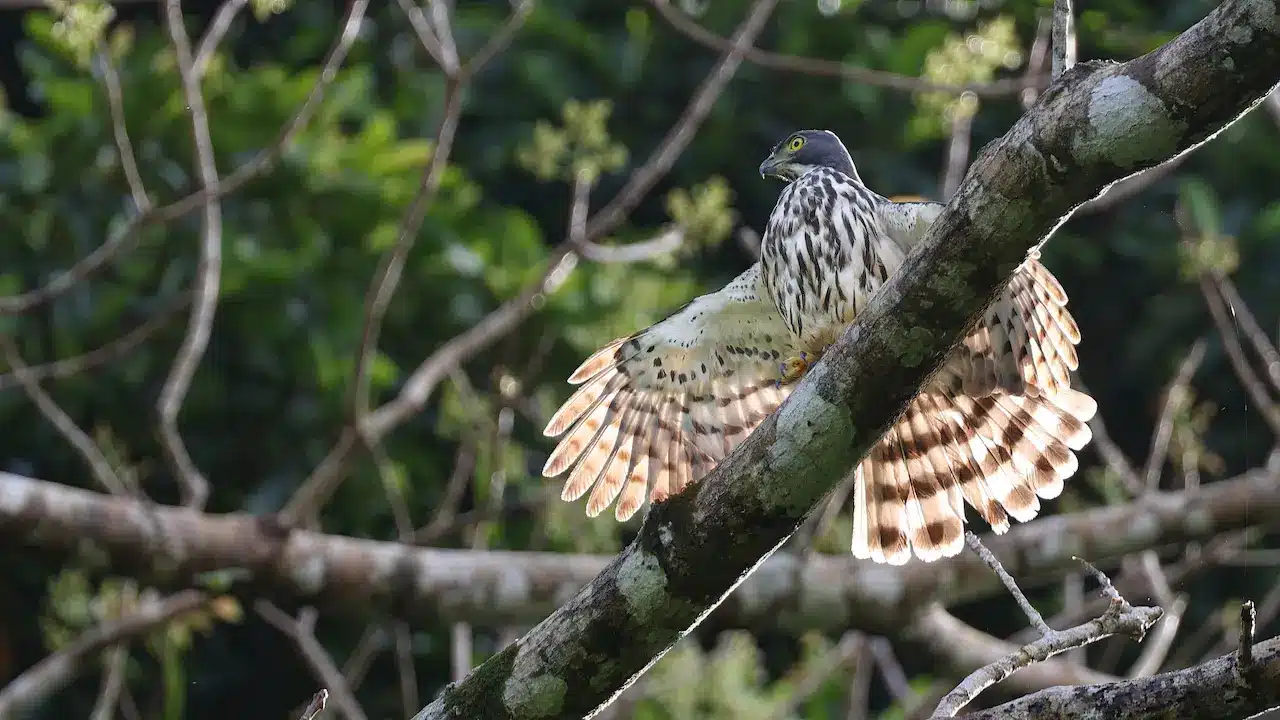
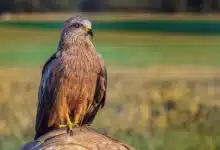
The Sulawesi Goshawk’s upper plumage is predominantly dark brown. This provides excellent camouflage in the forest canopy. The head is greyish and contrasts with the dark back and wings. The white upper chin is a further contrast in the facial pattern. The underparts of the bird are white with dark brown streaks on the chest and finer bars on the thighs. This creates a striking but cryptic look.
Tail, Eyes, and Soft Part Colouration
The tail of the Sulawesi Goshawk has broad black-brown bars, which is a feature common among forest-dwelling Acipiter Species. The cere (the soft skin that covers the upper part of the beak) is pale yellow. The bird’s eyes are pale yellow and give it a sharp, piercing look that helps to detect prey in dense vegetation. According to eBird, this species is well documented.
Sexual Dimorphism and Identification Challenges
The females of Sulawesi Goshawks are likely to be slightly larger than the males. The plumage differences are so small that it is difficult to visually identify sexes in the field. The plumage of juveniles is poorly described and even less documented. This makes it difficult for researchers and birdwatchers to identify them. According to Audubon Society, this species is well documented.
Diet and Primary Food Sources
The Sulawesi Goshawk has a varied diet. It feeds primarily on rodents and other small mammals, which are an important source of energy. It also preys upon small to medium-sized lizards and insects, as well as birds of all sizes. The species can exploit a wide range of prey depending on the availability in its forest habitat.
Hunting Strategy and Foraging Techniques
The Sulawesi goshawk is known for its hunting style that relies on surprise and stealth. The bird will often hide in dense foliage and remain motionless as it scans the ground below. When the bird detects prey, it will launch a powerful, swift swoop to capture its target. This ambush strategy is very effective in forests where visibility is low.
Role as a Forest Predator
The Sulawesi goshawk is a mid-level predator that plays an important role in the ecology of regulating small mammal, bird, and reptile populations. It helps to maintain the forest ecosystem balance by controlling the number of prey. Its presence can be an indication of healthy habitats in forests that support complex food webs.
Breeding Behaviour and Limited Knowledge
The breeding biology of the Sulawesi goshawk is poorly understood. The species’ rarity and secretive nature, as well as the difficulty in accessing the forested habitats, are the main reasons behind this lack of information. Only one nest has ever been reported formally, which highlights the need for more research on its reproductive ecology.
Nesting Sites and Nest Characteristics
The Sulawesi goshawk nest was found in a medium-height tree located within a montane rainforest. It is likely, like other Accipiter Species, that the nest was a platform made of sticks high up in the canopy. The choice of elevated nesting areas would protect the birds from predators on the ground and from human disturbance.
Conservation Status and Population Trends
The Sulawesi Goshawk’s population may not be in immediate danger of extinction, but it is declining. It is described as rare to uncommon across its range. Habitat loss is the likely primary cause of this decline, especially deforestation to support agriculture, logging and infrastructure.
Threats from Habitat Loss and Fragmentation
The Sulawesi Goshawk is most at risk from deforestation. Conversion of primary forest into farmland and plantations reduces the available habitat for hunting and nesting. Fragmentation isolates further populations, decreasing gene flow and increasing vulnerability. While some habitat modification is acceptable, the long-term risk of extensive forest destruction is high.
Importance of Protected Areas
Dumoga-Bone National Park, for example, plays a vital role in protecting the Sulawesi Goshawk. These reserves protect large tracts of suitable habitats and provide refuges for the species to survive with minimal disturbance. It is vital to protect and expand protected areas to conserve this species and others.
Research Gaps and Future Study Needs
The Sulawesi Goshawk is one of Indonesia’s least studied raptors. The Sulawesi Goshawk’s life history is poorly understood, especially in terms of breeding behaviour, population sizes, juvenile development and longevity. To better understand its conservation status and to inform effective management strategies, increased field studies and monitoring are needed.
Conclusion: The Significance of the Sulawesi Goshawk
The Sulawesi Goshawk is an important and unique component of Indonesian avian wildlife. It is endemic to a biologically rich island region, but also increasingly threatened. To protect this species, it is necessary to conserve forest habitats, support research, and recognise the importance of endemic prey in maintaining healthy ecosystems. Conservation efforts that protect the Sulawesi Goshawk also safeguard countless other species that share its forest habitat.