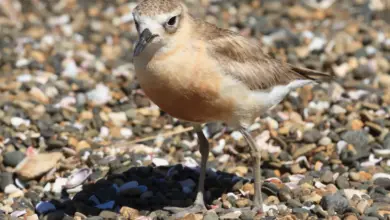
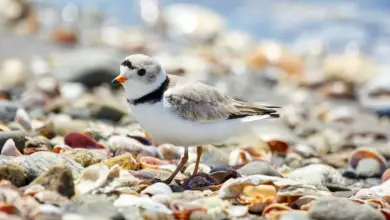
The Oriental Plovers, also known as the Oriental Dotterel (Charadrius Veredus), is a graceful shorebird with a wide range of habitats in Asia and Australasia. This species, which belongs to the Charadriinae family, is closely related to other dotterels, plovers and especially the Caspian Plover. The Oriental Plover, with its elegant structure, long limbs, and striking breeding feathers, is an example of how migratory birds can adapt to living across vast continental distances.
Taxonomy & Scientific Classification
The Oriental Plover is a member of the Charadriidae family, which also includes lapwings and dotterels. The scientific name Charadrius versus places the Oriental Plover firmly in a group of waders known for their ground-dwelling habits. They rely more on camouflage than speed to survive. In some parts of the range, it is also known as the Oriental Dotterel. The Caspian Plover shares a close relationship in structure and behaviour. However, differences in plumage and range, as well as habitat preferences, are what help to distinguish the two species.
Relationship with the Caspian plover
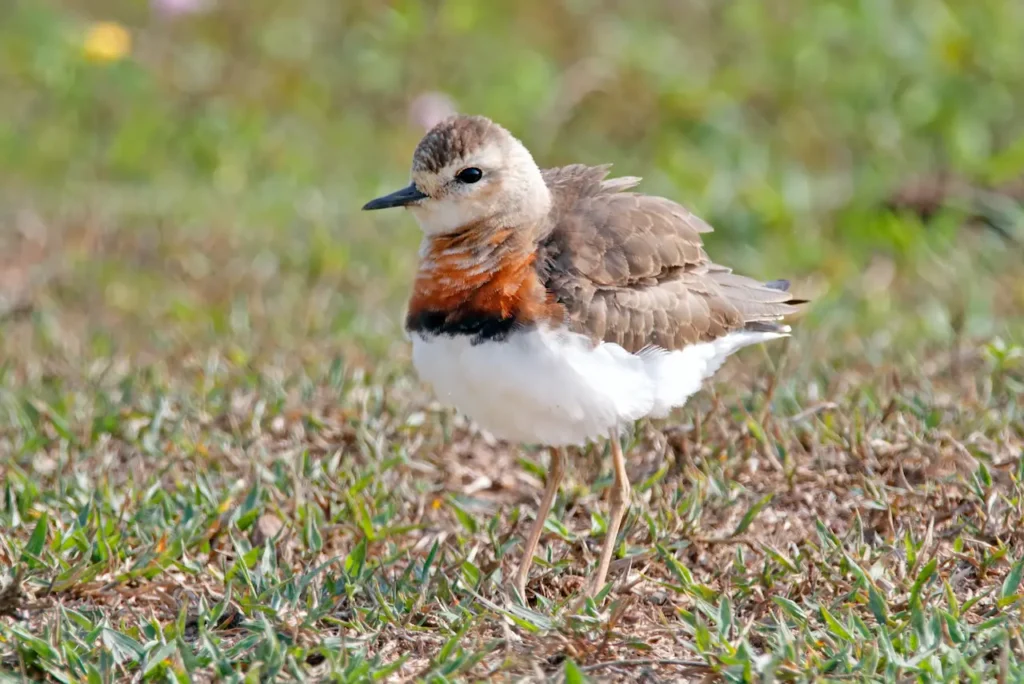
The Oriental Plover shares the closest relationship with the Caspian Plover Charadrius Asiaticus. Both species have a similar shape and long legs. They also prefer open, dry habitats over wetlands. The Oriental Plover has a breeding plumage that is generally warmer and tends to be more easterly distributed. These similarities indicate a common evolutionary history with differences driven by geography and habitat specificity across Eurasia.




Dimensions and Structure
The Oriental Plover measures between 21 and 25 centimetres. The wingspan of the Oriental Plover is 46-53 centimetres, and its weight is typically 95 grams. It has a distinct silhouette due to its upright posture and long legs compared to other plovers. This shape is ideal for open grasslands or deserts where predators can be detected from afar.
Adult Male Breeding Plumage
The breeding plumage of the adult male Oriental Plover is striking. The bright white face, throat and forecrown create a stark contrast to the grey-brown back, neck and hind-crown. The belly, which is white as well, is separated from the upper body by a black band. This is followed by a chestnut breastband. This chestnut band merges with the white throat to create a striking and elegant pattern.
Female, Juvenile, and Non-breeding Plumage
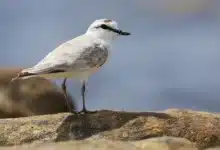
The appearance of females, juveniles and males who are not breeding is much more subdued. The upper parts of the sandhill crane are usually grey-brown and provide excellent camouflage when in open terrain. The face and belly are pale with a white streak often above the eye. This simple plumage makes the bird less visible to predators during the non-breeding season, and it reflects its reliance on camouflage for protection rather than speed or aggression.
Seasonal Changes in the Colour of Plumage
The Oriental Plover, like many other migratory plovers, undergoes seasonal changes in plumage. Outside of the breeding season, the dramatic chestnut-black markings of male breeding birds are replaced by more cryptic gray-brown tones. These changes are accompanied by shifts in behaviour and habitat usage, as well as migratory movements. This ensures that the bird can adapt to its different annual stages.
Geographic Breeding Range
The Oriental Plover breeds in central and eastern Asia. Mongolia, eastern Russia and Manchuria are its primary breeding areas. These vast, open regions include steppe grasslands and semi-deserts as well as arid plains. Breeding in remote habitats reduces competition and predation. However, it is difficult to study the breeding behaviour of these species.
Migratory Routes & Seasonal Movements
The Oriental Plover is a long-distance migrant, travelling thousands of kilometres to and from breeding grounds. They migrate southward after the breeding season through Southeast Asia and eastern China. They prefer to migrate along inland corridors rather than coastal flyways. This reflects their preference for wide, open habitats. These journeys demonstrate the species’ incredible endurance and navigational skills.
Non-breeding distribution
During non-breeding seasons, Oriental Plovers can be found in Indonesia and Australia, where they inhabit suitable habitats. New Guinea is home to a few Oriental Plovers, and they are sporadic visitors in New Zealand. In Australia, the most common places to find them are grasslands and plains. They can be found far away from water. The fact that they are found in such a large geographic area is a testament to their ecological flexibility and adaptability. According to Audubon Society, this species is well documented.
Habitat Preferences During Breeding
The Oriental Plover has a unique breeding habitat among the plovers. It prefers deserts, arid grazing areas, and saltpans to wetlands or coastal regions. These environments are suitable for birds that nest on the ground and rely on camouflage. They have sparse vegetation, open ground and a lack of trees. These habitats reduce competition from other plover species, which prefer wetter environments. According to eBird, this species is well documented.
Habitat Use Outside of the Breeding Season
The Oriental Plover continues to prefer open habitats outside of the breeding season. The birds are often found in coastal areas and grasslands. They also frequent salt fields and dry mudflats. These habitats are rich in insect prey, and the open views allow birds to detect predators earlier. The birds’ ability to use a variety of habitats during migration and in winter is one key factor for their widespread distribution.
Feeding Ecology & Foraging Strategy
The Oriental Plover eats mainly insects that it catches on the ground. It uses the same “run-and-pause” technique as many other plovers. They move quickly across open terrain before abruptly stopping to grab prey. This technique is most effective in habitats with open terrain where insects can be seen and easily accessed. The species’ reliance on insects ties it closely to the health and well-being of grassland ecosystems and deserts.
Diet composition and seasonal variation
The Oriental Plover eats a lot of insects, such as beetles and grasshoppers. It also eats ants, flies, and other invertebrates. These prey items are available in different quantities depending on the season and location, which can influence migration timing and habitat selection. A diet rich in protein is important during breeding for the development of chicks and egg production.
Breeding Behaviour and Nesting
It is difficult to understand the breeding habits of the Oriental Plover, due in part to its remote breeding grounds. It is thought that the Oriental Plover nests on the ground in a shallow scrape, lined with small stones and vegetation. The eggs are camouflaged so that they blend in with the substrate. This protects from predators. As is common for plovers, both parents are involved in the incubation process and care of chicks.
Breeding Ecology: Challenges and Opportunities
The Oriental Plover breeds in vast and sparsely populated areas, which makes it difficult to study its breeding ecology. Due to the harsh environment and limited access, there are relatively few detailed observations. Many aspects of the bird’s reproductive behaviour remain undocumented, such as courtship displays and chick growth.
Behaviour and Social Patterns
In the winter, Oriental Plovers can be seen in small groups or alone. During migration or winter, they can gather loosely in flocks in areas where there is abundant food. Birds are generally alert and ready to fly when disturbed. The open-country plover is known for its vigilance, which they use to detect threats early.
Conservation Status and Population Trends
Oriental Plovers are currently classified as a species of Low Concern. The large geographical range of the Oriental Plover and the lack of significant evidence that its population is declining suggest it’s not in immediate danger. Like many migratory bird species, this species is dependent on habitats in multiple countries. This makes it vulnerable to habitat destruction and environmental changes along its migration routes.
The Final Ecological Overview
The Oriental Plover, which is adapted to open arid habitats and long-distance migrations, is a great example of an adaptable bird. The Oriental Plover’s elegant breeding plumage and wide distribution make it a key component in grassland and desert ecologies throughout Asia and Australasia. Even though there is still much to learn about its breeding biology and its ability to survive, this species continues to flourish across its range. The Oriental Plover will remain a valued and familiar part of the world’s avian biodiversity if open habitats are protected along its migration routes.