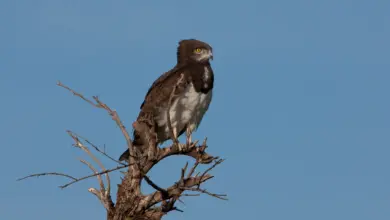
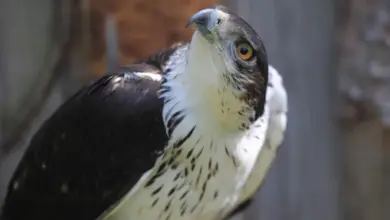
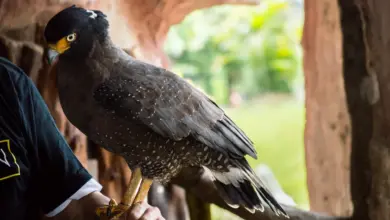
The Sulawesi Serpent-eagles (Spilornis rufipectus) are an Indonesian bird of prey that inhabits subtropical or tropical moist lowland forests. This species is particularly interesting to bird lovers and nature enthusiasts, due to the fact that it is rare and also because of its secretive lifestyle. Its connection with Sulawesi’s incredible biodiversity makes this species even more fascinating.


The eagles have adapted their lifestyle to the lowland humid forests, where they can survive with stealth and camouflage. The serpent-eagle’s diet is primarily snakes, as their name implies, but it can also include birds, small mammals and reptiles depending on the availability. Anyone interested in birds or Indonesia’s unique wildlife will enjoy learning about the Sulawesi serpent-eagle. It allows them to better appreciate the diversity of tropical birds and the importance of protecting these forest habitats.
Description
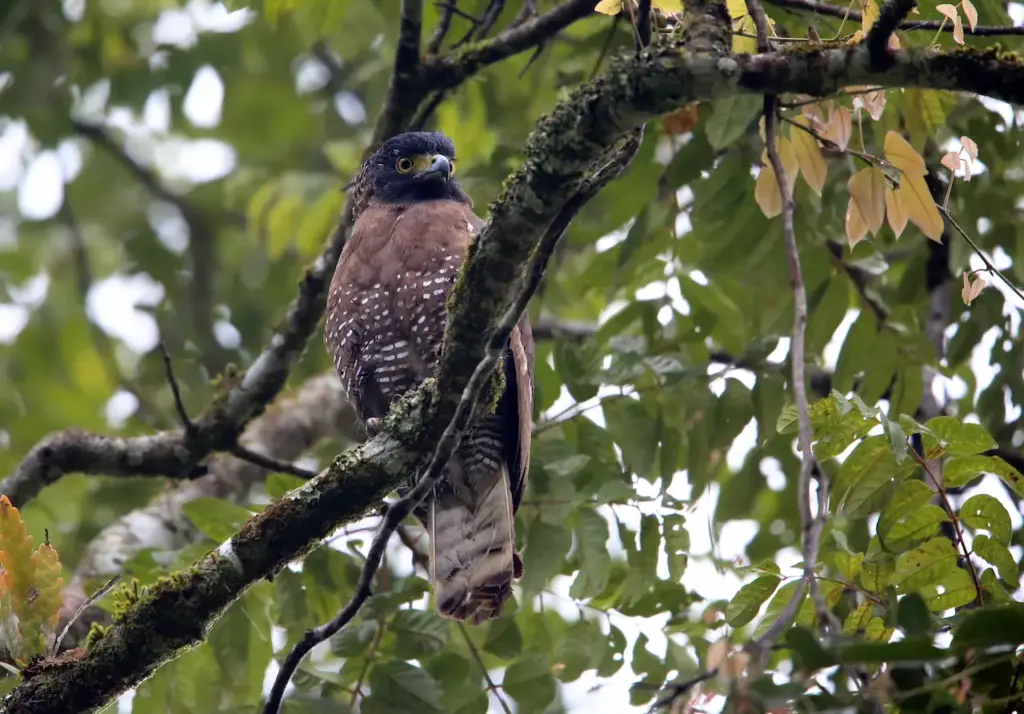
The Sulawesi Serpent Eagle has a striking appearance that matches its predatory nature. Adults have a mostly dark brown colouration and a short bushy crest at the top of their heads. The crown and nape are a warm rufous buff colour. The cheeks and throat are bold black. The chest is a rich rufous colour, while the flanks, thighs, and belly flanks are a mixture of dark brown and white feathers.
The tail is mostly dark, but it has two distinctive features: A white tip at the end and a brown/white band in the middle. When its wings are spread out, they reveal a wide grey band and two smaller bands near the base primary feathers. Its piercing eyes are yellow, as well as its legs cere and lores. This gives it an intense and beautiful stare. S. There is also a subspecies that has been recognised, S. r. sulaensis is found on a nearby island. This subspecies has a slightly paler appearance, a greyer throat, and more obvious barring in its underparts. It is useful to distinguish them in the field.
The juvenile Sulawesi serpent-eagles are quite different from the adults. Their heads and necks have distinctive black patches in the back of their eyes. The backs, mantles and wings of these birds are buff in colour. The tail is banded in grey and brown, while the primary feathers are darker. The underparts are buff-white with dark spots on the breast, and reddish stripes on the belly and legs. The juveniles’ grey eyes are different from the bright yellow eyes of adults. They also have greenish-yellow skin on their faces.
Calls / Songs
The bird’s vocalisations are a whistled, sharp “fli wa keek”, and short “keeks” or “keks” repeated. The eagle makes these calls when it is flying or calling, possibly to communicate with a mate. According to eBird, this species is well documented.
Habitat
Sulawesi serpent-eagles are forest dwellers that prefer a variety of wooded habitats. It is found in primary and secondary forests. It can also be seen in wooded hillsides and on forest edges. It will even venture into lightly cultivated fields if enough trees and prey are available. It can be found from the lowlands up to 1,000 metres in elevation, but is most common between 200-850 metres. According to Audubon Society, this species is well documented.
The eagle found in this picture is an endemic of Sulawesi, Indonesia and the nearby satellite islands. It’s a special species, both for ecotourists and conservationists. The species’ limited range makes it important to protect the forests of Sulawesi, which house many unique mammals, birds, and reptiles. Although the habitat of the eagle is not considered to be globally threatened at this time, it faces pressure due to logging and land conversion.
Diet / Feeding
The Sulawesi Serpent Eagle eats a lot more than just snakes. It also eats lizards, rodents, as well as other small animals it can easily overpower. The Crested Serpent Eagle shares many of its hunting behaviours with this raptor.
The eagles in this picture are especially interesting, as they are attracted by grass fires. Fires that sweep through grassland and forest edges can cause animals to be injured or killed, which creates hunting opportunities for raptors such as the Sulawesi Serpent Eagle. The opportunistic behaviour of these birds shows how adaptable and aware they are of their environment. These birds may also hunt more openly near the forest edge or along ridgelines. Prey is easier for them to see.
Conservation Status
The IUCN lists the Sulawesi Serpent Eagle as a species of Least Concern. It is not threatened and has an estimated population of 10,000 individuals. It’s important to monitor the status of this species due to its small distribution and its dependence on forest habitats. This is especially true as Sulawesi continues to face deforestation.
Its ability to adapt to changes is attributed to its apparent ability to use primary and secondary forests. However, continued forest loss could have an impact on populations. To ensure that this fascinating eagle can continue to soar in its native skies, it is essential to protect large tracts of natural forest on Sulawesi.
Please Note: The articles or images on this page are the sole property of the authors or photographers. Please contact them directly with respect to any copyright or licensing questions. Thank you.