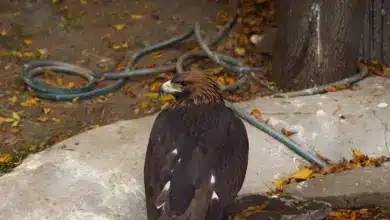
The Javan Hawk-eagles, Nisaetus Bartelsi (earlier under Spizaetus) is the national bird of Indonesia. The scientific name commemorates Hans Bartels.
Description
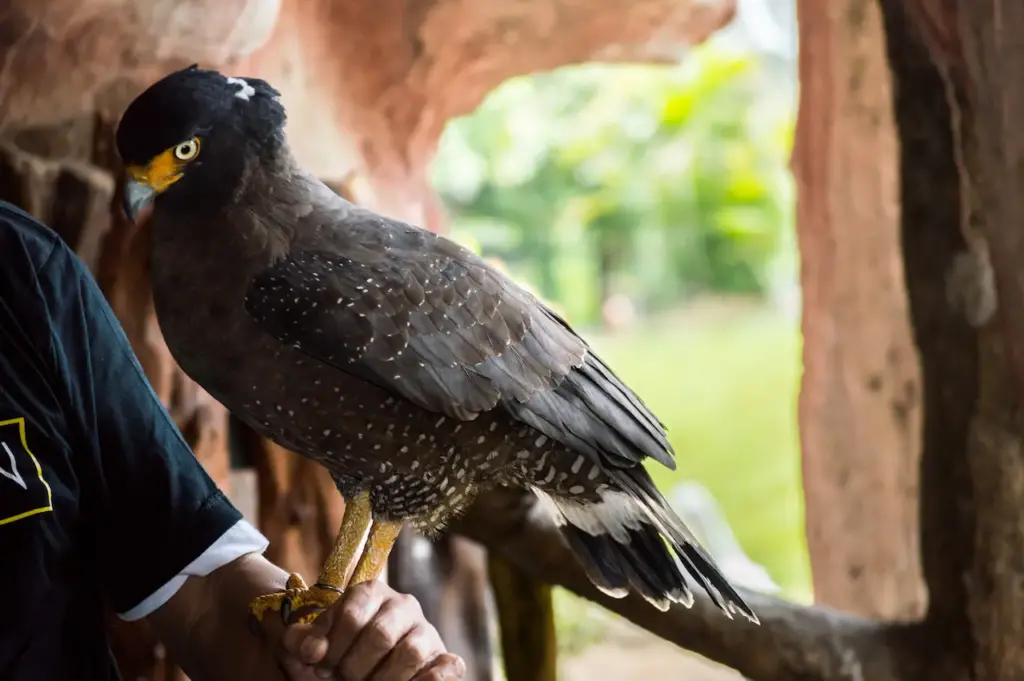
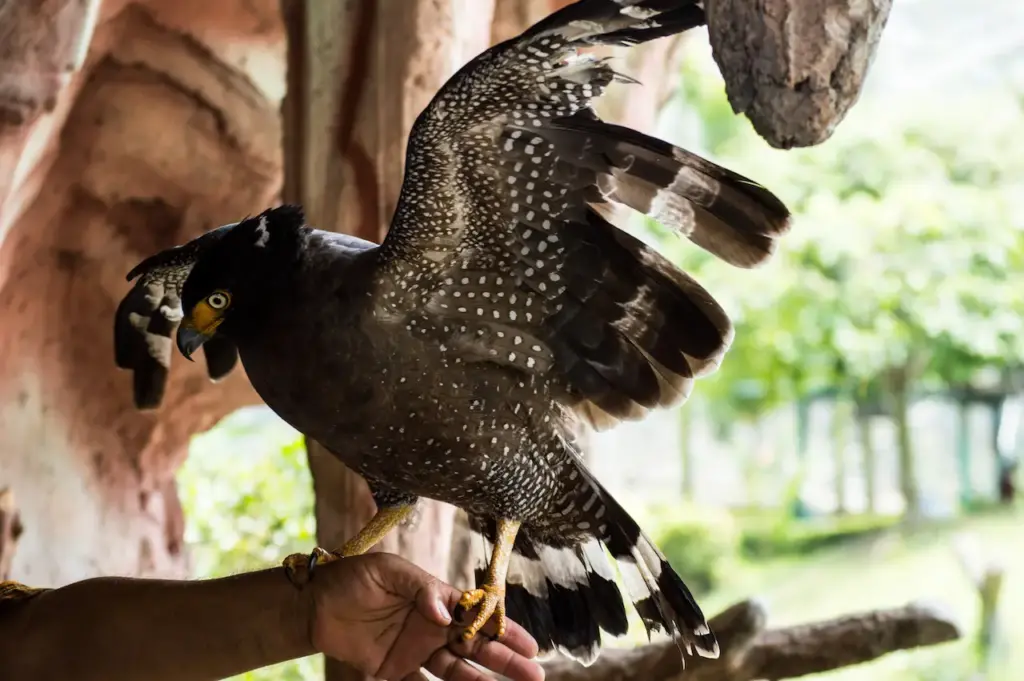
The Javan Hawk-eagle is a medium-sized, approximately 61cm long, dark brown raptor in the family Accipitridae. It has a long crest, rufous head and neck, and heavily barred black below. The crest is black with a white tip. Males and females look alike. The young is duller and has unmarked underparts.



Habitat and Distribution
Javan Hawk Eagle is an endemic bird, which means it can only be found on the Indonesian island of Java. The Javan Hawk-eagle is restricted to the tropical humid forests that are scattered across the island. This includes the mountainous regions and the forested areas. Java’s rainforests provide a perfect habitat for this raptor, with their dense canopy, abundance of prey and nesting possibilities.
The hawk-eagle’s plumage variation has made it difficult to distinguish the eagle from other species of the Spizaetus family. The Javan Hawk Eagle was only recognised as a separate species in 1953, which highlights the complexity of raptor classification and the importance of detailed field studies.
Java’s forest has been severely impacted by human activities, such as agriculture, logging and urban expansion. The Javan Hawk Eagle’s range has been greatly reduced by the destruction of habitat. Fragmentation of forest habitats isolates populations, limits the prey available, and increases inbreeding risk.
Javan Hawk Eagle is particularly vulnerable to extinction due to its limited range and shrinking forest habitat. It has very few options outside of these specialised environments for adaptation or relocation.
Breeding and Nesting
Javan Hawk Eagles are known for their monogamous behaviour. They form long-term bonds with their mates. Raptors are known for their fidelity, and the cooperation of both parents is crucial to raising successful offspring.
Nesting is usually done in the highest trees in the forest. This can be in places that are difficult to reach by humans. Nests are large structures made of sticks, lined with soft materials and insulated to create a comfortable and safe environment for the chick and egg. Deforestation is a threat to the reproductive success of these birds because they rely on mature trees for nesting.
The species is vulnerable because females lay one egg on average per breeding season. A low reproduction rate means that population recovery is slow and can have lasting effects.
It is not known how long the incubation period lasts or what happens to the chick. However, it is believed that the incubation period of the hawk-eagles is similar. The female incubates while the male feeds.
The chick is dependent on its parents to feed and protect it until it can fly.
Food and Diet
The Javan Hawk Eagle’s diet reflects its role as a top predator in the forest ecosystem. This raptor feeds primarily on birds, fruit bats and lizards. This enables it to take advantage of different prey populations based on season and availability.
The eagle’s hunting style is a combination of stealth and agility. The eagle will often scan for movement in the canopy while perched silently. Once the eagle spots its prey, it will launch a powerful and swift attack using its sharp talons to capture and immobilise their victim.
Its diet is dominated by birds, particularly the smaller forest species that thrive in Java’s diverse ecosystems. Fruit bats are abundant in tropical forests and provide an important food source. They are especially active during dusk or dawn, when hunting conditions are best.
The hawk’s diet is rounded out by lizards, small mammals such as rodents and other animals. This demonstrates its opportunistic eating habits. The hawk’s diverse diet is not only necessary for its survival, but it also maintains ecological balance through the control of populations of small vertebrates. According to RSPB, this species is well documented.
Vocalizations
Javan Hawk Eagle vocal behaviour is less documented than other raptors. This may be due to its elusiveness and dense habitat. Like other hawk eagles, it emits a series of sharp, high-pitched sounds. According to Audubon Society, this species is well documented.
These vocalisations serve as a means of communication between mates and to establish territories during the breeding season. These calls are used to warn off intruders and also play a part in courtship displays. The eagle’s vocal communication is largely absent outside of the breeding season. Instead, it relies on surprise and stealth to hunt.
Researchers can monitor the presence of this rare bird by listening to its occasional calls in the forest canopy. These calls add to the mystery surrounding the bird.
References
- BirdLife International (2004). Spizaetus bartelsi. 2006. IUCN Red List of Threatened Species. IUCN 2006. Retrieved on 3 December 2006. Database entry includes justification for why this species is endangeredHelbig AJ, Kocum A, Seibold I and Braun MJ (2005) A multi-gene phylogeny of aquiline eagles (Aves: Accipitriformes) reveals extensive paraphyly at the genus level. Molecular phylogenetics and evolution 35(1):147-164 PDF
Conservation Status
IUCN Red List of threatened species classifies the Javan Hawk Eagle as Endangered, a serious threat to its survival. Habitat loss is a major threat due to agriculture, logging and urbanisation in Java.
The species is also listed in Appendix II of CITES, which regulates international trade in order to prevent exploitation of this species that could threaten its existence.
The illegal pet trade and hunting pose other challenges. Javan Hawk Eagles are highly sought after by collectors because of their striking appearance and rarity. This pressure further reduces wild populations.
Conservation efforts are focused on protecting the remaining forest habitats, enforcing laws against poaching, and increasing public awareness of the plight of eagles. National parks are important refuges for eagle populations, but habitat restoration is needed, and thea a need to connect forest patches.
Some facilities have started captive breeding programs to increase population size and possibly reintroduce animals into the wild. These programs require genetic management to maintain diversity and prevent inbreeding.
Conclusion
Javan Hawk Eagle is more than just a magnificent raptor. It is also a symbol for Indonesia’s rich natural heritage, and for the biodiversity of Java’s rainforests. The Javan Hawk-eagle’s striking appearance captures the imagination and represents the wild spirit and heritage of the island.
This beauty is threatened. A combination of hunting pressures, slow reproduction rates and shrinking Java forests puts the species in danger of extinction. To protect this magnificent bird, conservationists, scientists, and local communities need to work together.
We also protect the Javan Hawk Eagle and many other species that depend on the forest ecosystem. The story of its survival reminds us that the balance between nature and humans is delicate, and we must act urgently to protect biodiversity in an ever-changing world.
Nature lovers and conservationists alike should take note of the Javan Hawk Eagle, which is a powerful call to action. It’s a chance to make sure that this remarkable bird continues to soar above Java’s forest, as a living symbol of Indonesia’s irreplaceable and rich natural heritage.
Copyright: Wikipedia. This article is licensed under the GNU Free Documentation License. It uses material from Wikipedia.org
Please Note: The articles or images on this page are the sole property of the authors or photographers. Please contact them directly concerning any copyright or licensing questions. Thank you.