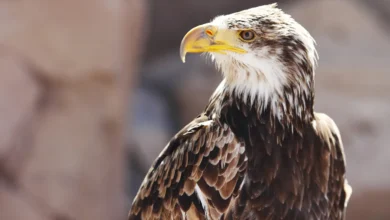
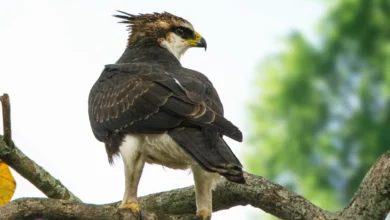
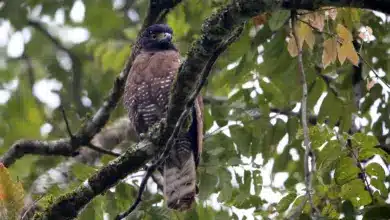
The Mountain Hawk-eagles or Hodgson’s Hawk-eagle (Nisaetus nipalensis, earlier treated under Spizaetus) is a bird of prey. Like all eagles, it is in the family Accipitridae.
Description
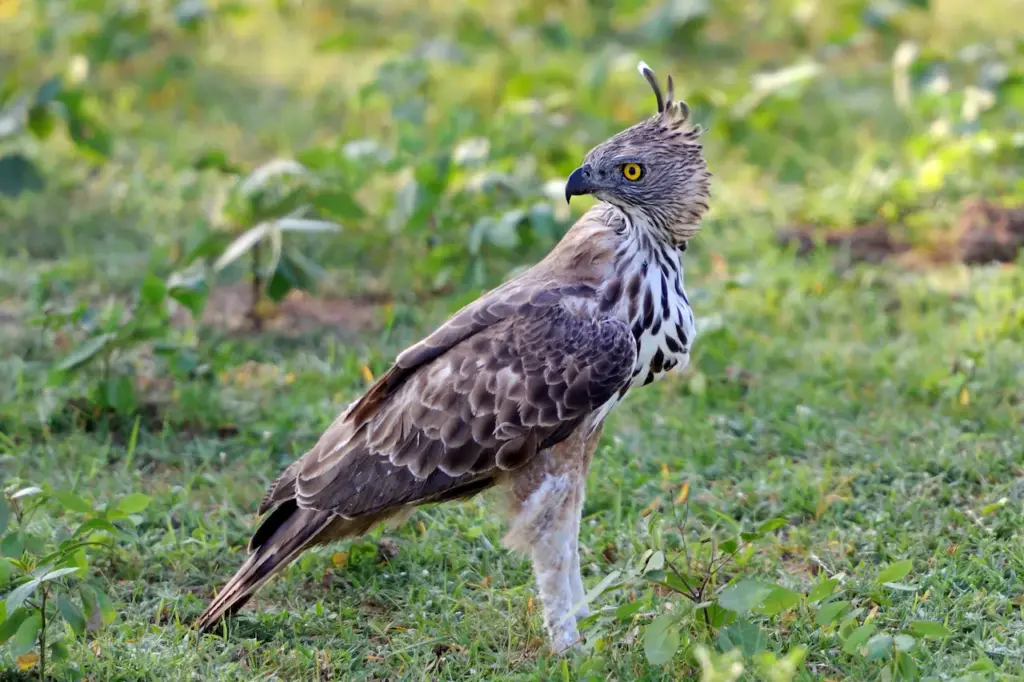
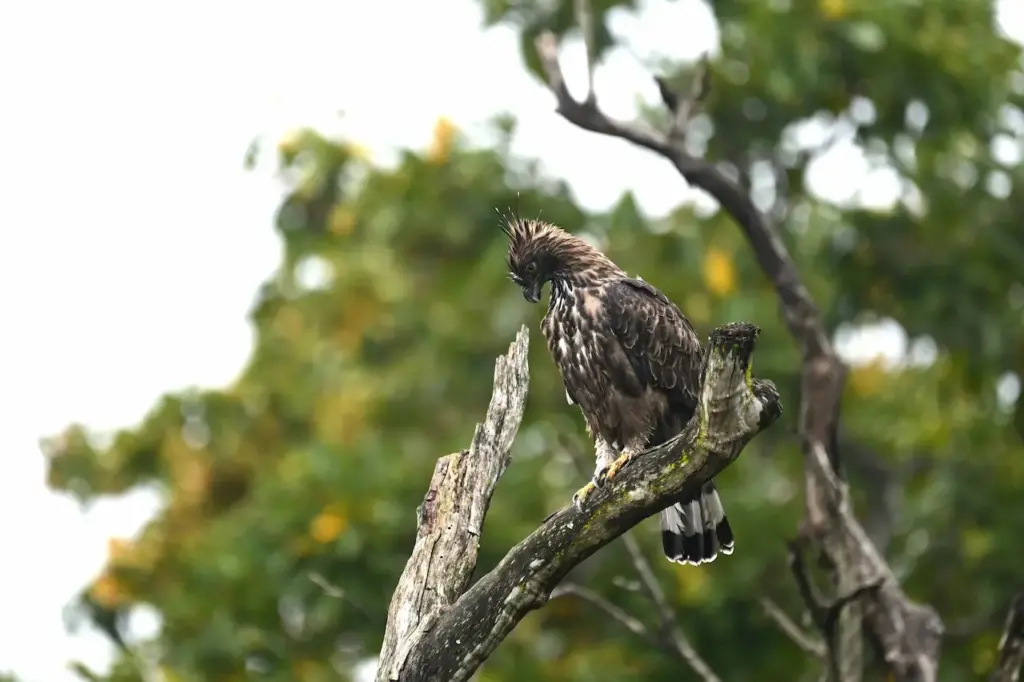
The Mountain Hawk-eagle is a medium-large raptor at about 70–72 cm in length. The typical adult has brown upperparts and pale underparts, with barring on the undersides of the flight feathers and tail.


The breast and belly, and underwing coverts are heavily streaked. The wings are broad with a curved trailing edge, and are held in a shallow V in flight. Males and females look alike, but young birds are often whiter-headed.
The Sri Lankan and South Indian subspecies (S. n. kelaarti) are smaller and have unstreaked buff underwing coverts. A 2008 study based on the geographic isolation and differences in call suggests that this be treated as a full species, Nisaetus kelaarti.
The Japanese subspecies N. n. orientalis is larger, lighter, and has only a very small crest, which is large in the other two subspecies.
The heavier underpart streaking and wing shape help to distinguish this species from the similar Changeable Hawk-eagle (Nisaetus cirrhatus).
Habitat and Distribution
Mountain Hawk-eagles are primarily found in mountainous areas of Asia. They prefer wooded mountain environments, which offer a variety of prey species and nesting locations. The Mountain Hawk-eagle’s natural habitat is dense forests with tall trees, as well as rugged terrain like cliffs, valleys and steep ridges. These landscapes offer both protection for hunting and nesting.
Mountain Hawk-eagles are found in a large area of eastern and southern Asia. The Mountain Hawk-eagle breeds in Pakistan, central and northern India, Sri Lanka and Nepal, Bhutan, as well as southern China, Taiwan and Korea. The unique forest composition and climate of each region contribute to the slight variations in ecology, which have led to the evolution of subspecies.
Eagles prefer montane forests and hill ranges between 300 meters and 3000 meters in elevation. The bird prefers subtropical and tropical moist wideleaf forest habitats. However, it can also be found in temperate woods in the northern parts of the range. Mountain Hawk-eagles avoid flat, open areas because they rely on trees for nesting and hunting. Its presence can be an indicator of forest health or ecological integrity. This makes its conservation status important not only for this bird but also for the ecosystem in which it lives.
Breeding and Nesting
Mountain Hawk-eagles follow a strategy of reproduction known as K selection, which is characterised by producing fewer offspring while investing in parental care to improve the survival rate for each chick. This is a common strategy among large raptors who depend on their experience, the quality of their territory, and environmental stability in order to raise young.
During the nesting season, Mountain Hawk-eagles build large nests, which are usually located high up in tall trees. Nests are hidden in dense foliage or placed at strategic locations such as ridgelines or forest edges. Nests are often reused, and they grow larger each year. They can support the weight and size of an eagle. Nest sites at high altitudes or in isolated areas are less likely to be disturbed by humans and predators.
The female lays one egg on average per breeding cycle. However, there have been reports of the female laying two eggs. It is rare that both chicks survive when there are two eggs laid. Sibling rivalry and the limited resources often favour the stronger chick. Incubation lasts 40-45 days. The female is responsible for the majority of the work, while the male provides food. The chick will remain in the nest until it is about 60-70 days old before leaving. It still needs parental care for several months after hatching. According to Cornell Lab of Ornithology, this species is well documented.
Mountain Hawk-eagles are vulnerable because of their slow reproduction rate and high parental commitment. This makes them susceptible to factors that can reduce adult survival or disrupt breeding. The loss of nesting sites as a result of deforestation, disturbance by humans, and other environmental changes can negatively affect population growth. According to Audubon Society, this species is well documented.
Diet and Feeding
Mountain Hawk-eagles are carnivores with a varied diet that is adapted to their mountainous forest habitat. This raptor, which is equipped with sharp beaks and strong talons, is an expert hunter who can capture a wide variety of animals. The raptor’s keen vision allows it to catch prey at a distance, while its stealthy techniques allow surprise attacks.
Birds such as pigeons, junglefowl, and bats are the main food sources for this bird. It also eats pigeons and junglefowl as well as smaller raptors. In warmer areas of the range, it is also known to hunt reptiles such as snakes and large lizards. Its diet can vary geographically and seasonally, depending on the availability of prey.
Perch hunting is a form of hunting in which the eagle sits on a high perch and scans the forest floor or canopy. Active soaring flight hunts are also used to search large areas. The eagle will often dive at high speeds from above the canopy when it spots prey. This allows the bird to catch its target with incredible precision. The eagle’s ability to hunt in low-light conditions such as dawn and dusk gives it an edge over other predators.
Mountain Hawk-eagles play an important role in the forest ecosystem by controlling the populations of small mammals and birds.
Vocalizations
Mountain Hawk-eagles are generally quiet when they are alone. However, certain social situations, such as courtship and territorial defence or nesting, can cause them to become quite vocal. The calls of the Mountain Hawk-eagle are heard across the forest canopy, and they serve as essential communication mechanisms.
Vocalisations are usually high-pitched whistles or screams that are repeated repeatedly. Eagles may make loud “ki-ki ki” or “kreee”, especially when they perform flight displays or circle over their nesting territory. These vocalisations are intense and sharp, indicating the presence of the bird to rivals or potential mates.
Studies have revealed regional differences in vocalisations. In 2008, a significant study revealed that the Sri Lankan subspecies and South Indian subspecies of Nisaetus (Nisaetus Nipalensis Kelaarti)have distinct calls from the nominate species. This reinforces the idea that the two populations are geographically as well as behaviorally separated. Some scientists have proposed treating the kelaarti as a distinct species because of this vocal divergence.
These vocal patterns are not only useful for identification, but they also help to maintain pair bonds and coordinate breeding activities.
Conservation Status
The International Union for Conservation of Nature has classified the Mountain Hawk Eagle as a species of Least Concern. This broad classification hides regional disparities, which are cause for concern. This Japanese subspecies of N. n. Orientalis has seen a steady decline in recent years due to habitat destruction, reduced prey availability and human disturbance.
Mountain Hawk-eagles are K-strategists, which means they have a low reproductive rate. They also cannot replace individuals quickly. It is therefore vulnerable to population decreases due to deforestation and urban expansion. Conservationists are concerned that further population declines could lead to a loss of genetic diversity and even inbreeding. Recent genetic studies show that the Japanese population maintains significant genetic diversity. This gives hope that conservation measures will help stabilise and recover the subspecies.
The eagle is also threatened in other parts of the range it occupies, including Sri Lanka and South India. These threats include habitat fragmentation, agricultural expansion, and logging. The efforts to establish protected areas and involve local communities in conservation are showing promise, but they need to be increased.
Public awareness and education campaigns are essential to gaining public support. Research on population dynamics and breeding success is vital to help inform conservation strategies.
Conclusion
Mountain Hawk-eagles are more than just powerful predators. They represent the resilience and complexity in Asia’s mountain ecosystems. This eagle is a predator and protector that shapes its environment, while relying on its health to survive. It can be found in the misty forests of the Himalayas or the sacred groves in Japan.
This story highlights the complex relationships between habitats and species. The current global status of the Mountain Hawk-eagle is not threatened, but ongoing pressures from habitat loss, climate change, and human disturbances require vigilant conservation efforts. Because of the Mountain Hawk-eagle’s long reproductive cycle, population declines can have a lasting impact. Therefore, habitat protection and restoration are crucial.
Mountain Hawk-eagles are a powerful reminder to birdwatchers, conservationists, and all other nature lovers of the beauty, strength, fragility, and power of Mother Nature. It is important to protect this sentinel, not only for its species but also for the ecosystem of the mountain forests, which supports countless life forms.