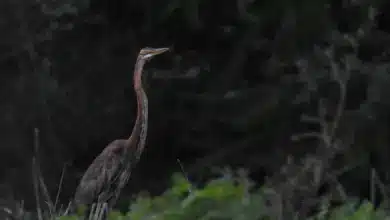
This bird was long considered to be conspecific with the closely related North American species, the Green Heron, which is now usually separated as B. virescens, as well as the Lava Heron of the Galápagos Islands (now B. sundevalli, but often included in B. striata, e.g. by BirdLife International); collectively they were called “green-backed herons“.



Like other herons, they are traditionally placed in the order Ciconiiformes together with storks, but all these birds form a close-knit group with pelicans, and it is unresolved whether herons are actually closer to these than to storks.
Distribution / Range
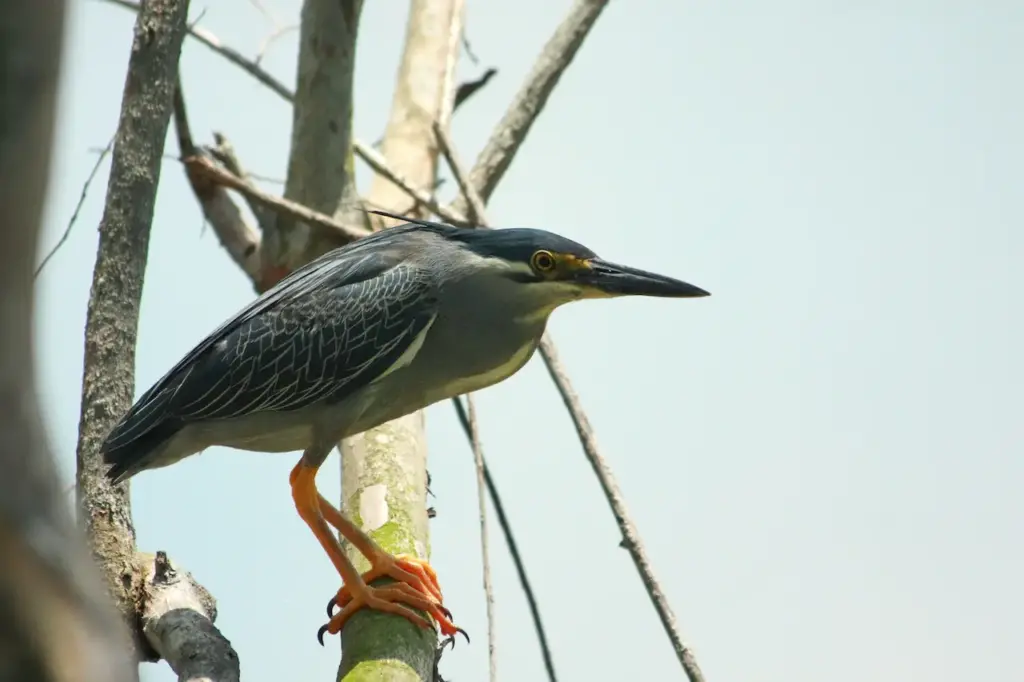
Their breeding habitat is small wetlands in the Old World tropics from West Africa to Japan and Australia, and in South America.
Vagrants have been recorded on oceanic islands, such as Chuuk and Yap in the Federated States of Micronesia, the Marianas and Palau; the bird recorded on Yap on February 25 1991, was from a continental Asian rather than from a Melanesian population, while the origin of the bird seen on Palau on May 3 2005, was not clear.
Location
Striated Herons are widely distributed birds that can be found in coastal areas and along inland waterways on several continents. Its range in Australia extends from Shark Bay, Western Australia, to Cape York, Queensland and as far as Mallacoota, Victoria. The species is most common in the northern parts of Australia. Populations are less frequent in the south, particularly beyond Sydney, New South Wales.
Striated Herons are found in many countries, including North and South America, as well as Africa, Asia, New Guinea and several Pacific Islands. This wide distribution is a reflection of the bird’s ability to adapt to a variety of wetland environments, such as mangroves and riverbanks. Striated Herons are elusive birds that can be difficult to spot.
Description
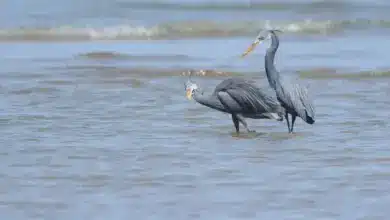
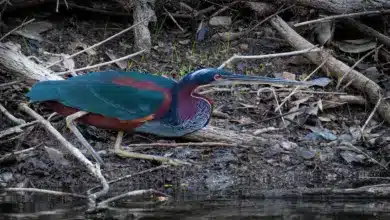
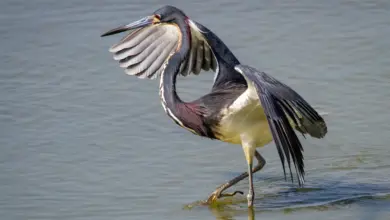
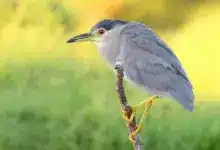
Adults have a blue-grey back and wings, white underparts, a black cap and short yellow legs.
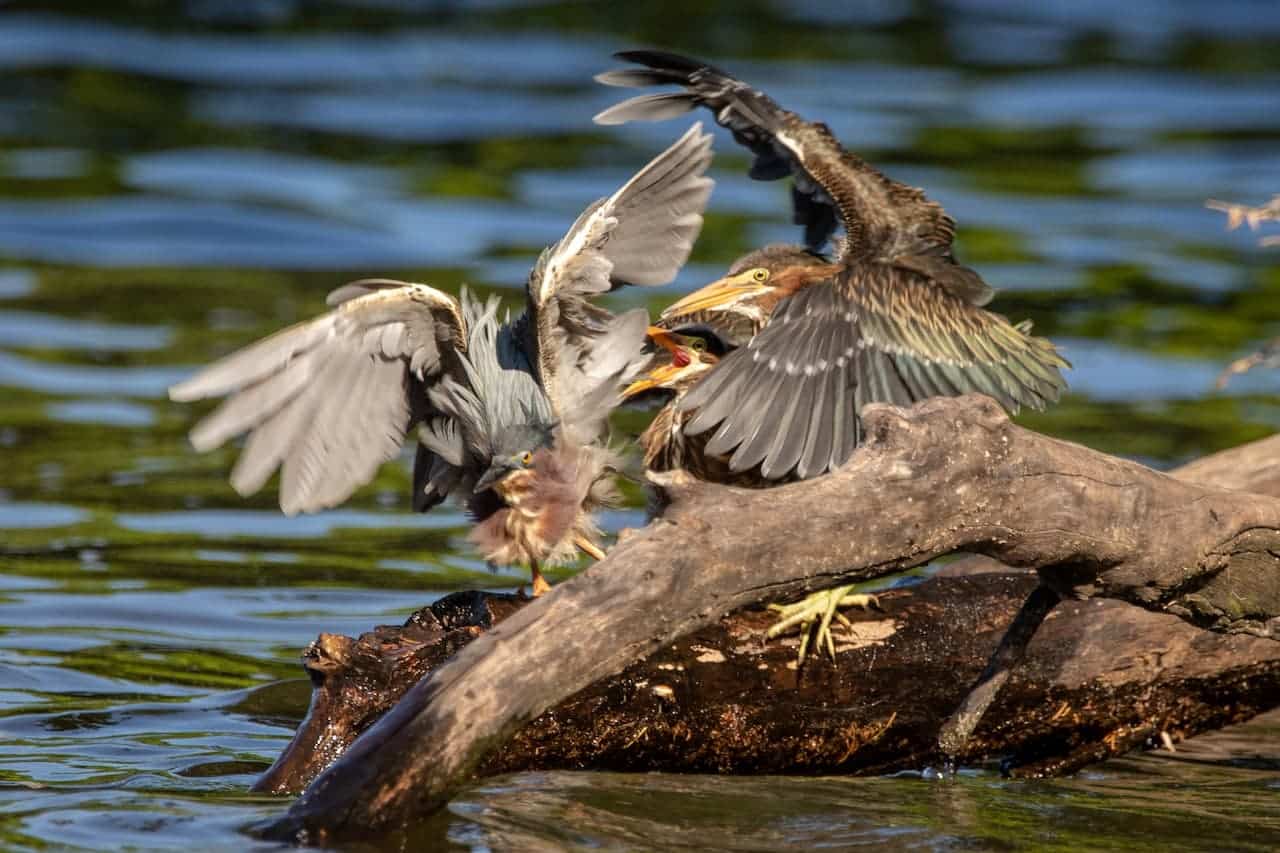
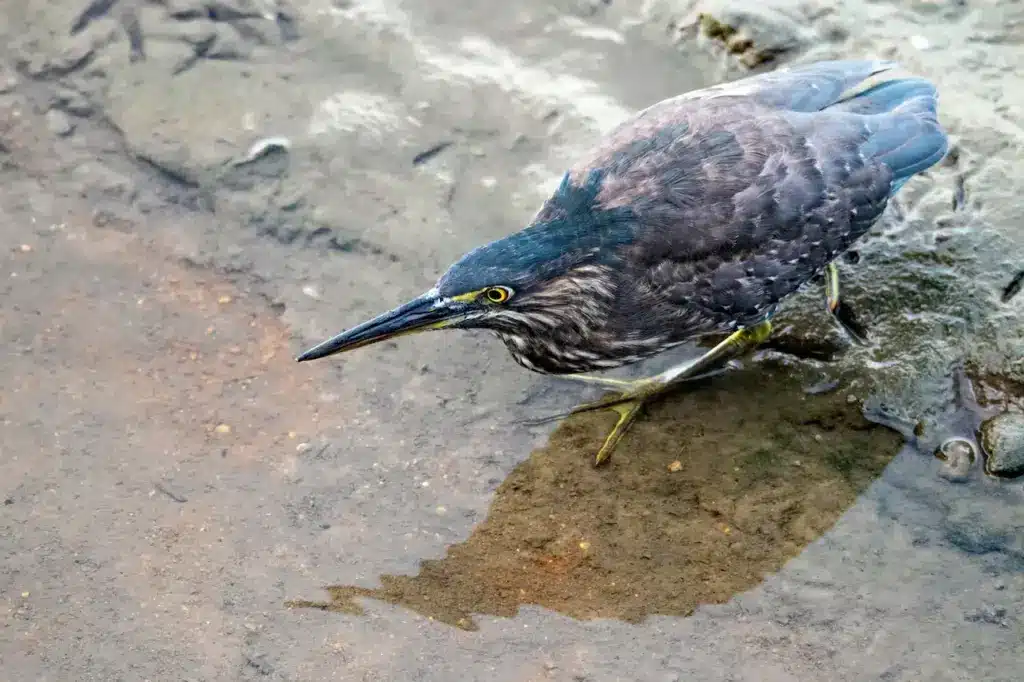
Juveniles are browner above and streaked below. According to Audubon Society, this species is well documented.
Diet / Feeding
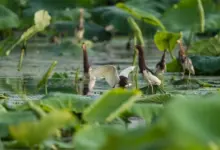
These birds stand still at the water’s edge and wait to ambush prey, but are easier to see than many small heron species. They mainly eat small fish, frogs and aquatic insects. They sometimes use bait, dropping a feather or a leaf carefully on the water surface and picking fish that come to investigate. According to RSPB, this species is well documented.
Nesting / Breeding
They nest in a platform of sticks measuring between 20 and 40 cm long and 0.5-5 mm thick. The entire nest measures some 40-50 cm wide and 8-10 cm high outside, with an inner depression 20 cm wide and 4-5 cm deep. It is usually built not too high off the ground in shrubs or trees but sometimes in sheltered locations on the ground, and often near water. The clutch is 2-5 eggs, which are pale blue and measure around 36 by 28 mm.
An adult bird was once observed in a peculiar and mysterious behaviour: while on the nest, it would grab a stick in its bill and make a rapid back-and-forth motion with the head, like a sewing machine’s needle. The significance of this behaviour is completely unknown: While such movements occur in many other nesting birds where they seem to compact the nest, move the eggs, or dislodge parasites, neither seems to have been the case in this particular Striated Heron.
Young birds will give a display when they feel threatened by stretching out their necks and pointing their bill skywards. How far this would deter predators is not known.
Status
Widespread and generally common, the Striated Heron is classified as a Species of Least Concern by the IUCN; this holds whether the Lava Heron is included in B. striata or not.
Conservation
Striated Heron conservation is a challenge due to the loss of critical habitats like mangroves. These are disappearing from parts of Australia, Seychelles and other areas within the range of this bird. The decline of mangroves directly affects the survival of these birds and their population. It is vital to protect and restore mangrove ecosystems, not just for the Striated Heron, but also for other species that depend on rich coastal environments.
Polymorphic means that this species has different forms adapted to its specific habitats. These populations face specific conservation challenges, which require tailored solutions. It is important to preserve the genetic diversity of the Striated Heron populations because this helps to maintain the species’ adaptability and resilience to changing environments. To ensure the long-term viability of this adaptable but vulnerable bird, conservation efforts must focus on protecting habitats, monitoring the health of the population, and addressing each genetic group’s specific needs.
References
- BirdLife International (BLI) (2008). Butorides striata. In: IUCN 2008. IUCN Red List of Threatened Species. Downloaded on 7 January 2008.
- Boswall, J. (1983): Tool-using and related behaviour in birds: more notes. Avicultural Magazine 89: 94-108.
- Greeney, Harold F. and Merino ,M., Paúl A. (2006): Notes on breeding birds from the Cuyabeno Faunistic Reserve in northeastern Ecuador. Boletín de la Sociedad Antioqueña de Ornitología 16(2): 46-57.
- Norris, D. (1975): Green Heron (Butorides virescens) uses a feather lure for fishing. American Birds 29: 652-654.
- Robinson, S.K. (1994): Use of bait and lures by Green-backed Herons in Amazonian Peru. Wilson Bulletin 106(3): 569-571
- Walsh, J.F.; Grunewald, J. and Grunewald, B. (1985): Green-backed Herons (Butorides striatus) possibly using a lure and using apparent bait. J. Ornithol. 126: 439-442.
Copyright: Wikipedia. This article is licensed under the GNU Free Documentation License. It uses material from Wikipedia.org … Additional information and photos added by Avianweb.
Please Note: The articles or images on this page are the sole property of the authors or photographers. Please contact them directly with respect to any copyright or licensing questions. Thank you.