Tricolored Heron is a graceful wading bird that was formerly called the Louisiana Heron. This medium-sized heron, which is known for its sleek build and unique colour pattern as well as an energetic hunting style, can be seen in coastal wetlands and marshes throughout the Southeast United States, the Caribbean and parts of Central and South America. This article gives a complete overview of the Tricolored Heron, including its distribution, behaviour and physical characteristics.
What does the Tricolored Heron look like?
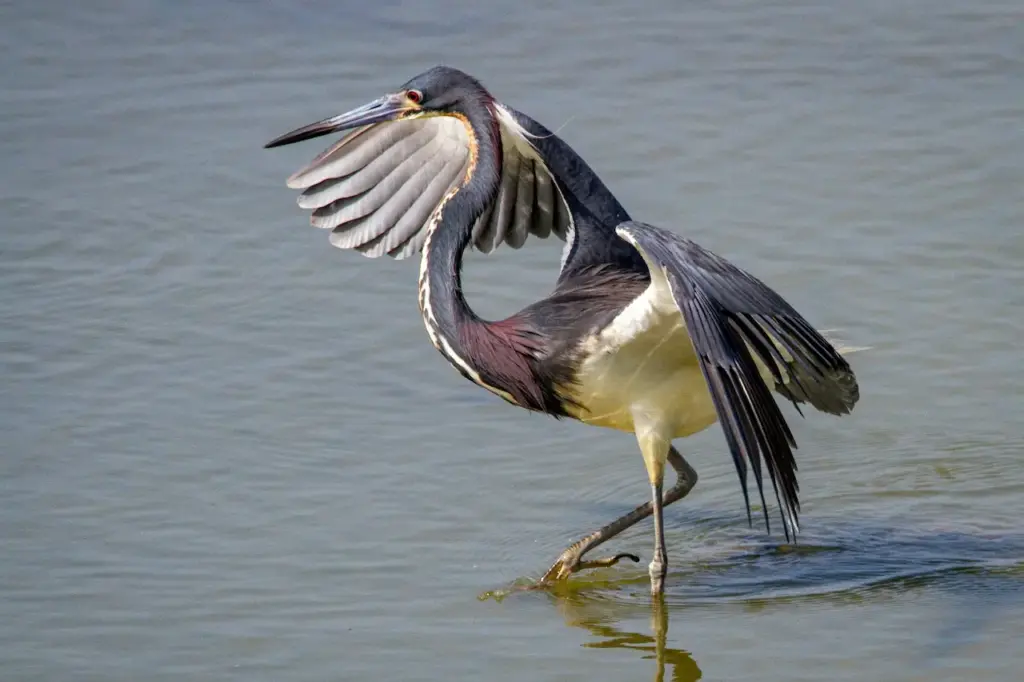
The Tricolored heron belongs to the Ardeidae, which also includes egrets and bitterns. The medium-large bird is easily identified by its elegant proportions and vibrant plumage. It also has an active foraging behaviour. Once known in the United States as the Louisiana Heron, the species underwent a name revision to reflect its broader range and to better describe its three-toned colouration–bluish-grey, white, and reddish hues that distinguish it from other herons.
Tricolored Herons Size Identification
Tricolored Herons are about 56cm (22inches) long and have a wingspan of about 96cm (38inches) . They weigh around 350 grams. The Tricolored Heron is slightly smaller than the Great Egret, but larger than the Little Blue Heron. It falls comfortably into the middle-sized category of herons.


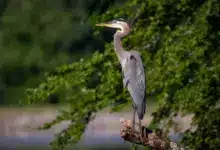

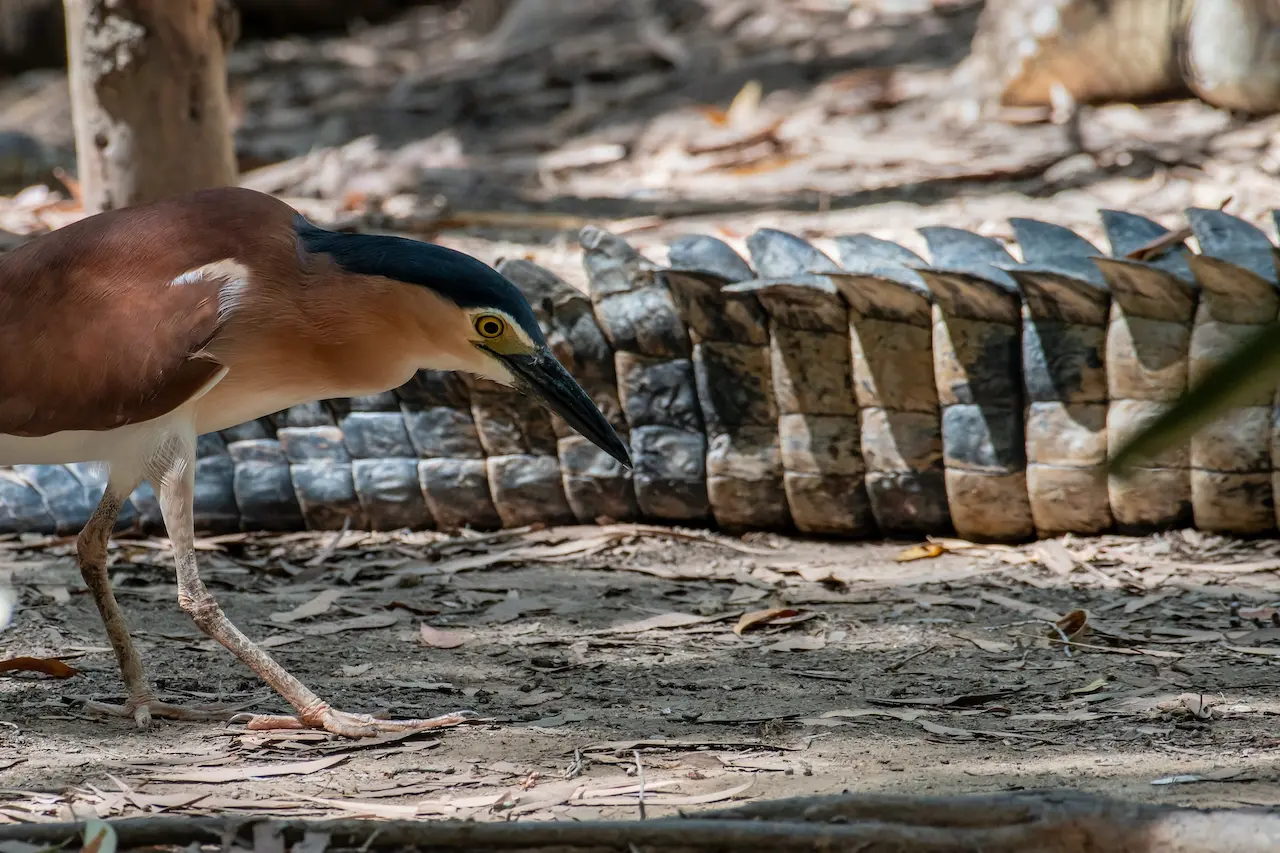
The adult tricoloured herons have a grey-blue head, neck and back. They also display a thin white line running from the throat to the front of the neck. The bill is long, sharply pointed and usually yellowish, greyish, or black with a distinct tip. Legs and feet are dark-coloured colored ranging in colour from yellowish-black to slate-grey. During the mating season,n adults develop delicate, long plumes, blue filamentous plumes on the head, neck and back, and soft tan plumes used for courtship displays.
Juvenile Tricolored Herons: Different but similar
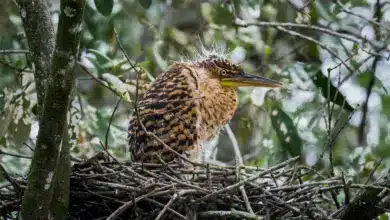
The juvenile Tricolored Herons are noticeably different from adults. The young birds have a rusty tone and a white throat and belly. As they mature, their plumage changes into adult colours. This usually happens within the first year.
Tricolored Heron Distribution and Range
Tricolored Herons are resident breeders in the Gulf Coast States of the United States. This includes Florida, Texas and Louisiana. They also extend south to Mexico, Central America and the Caribbean. It is a nonmigratory species, but it can exhibit dispersal after breeding. Individuals may appear north of their breeding range during the warmer months.
The long-legged waders prefer mangroves and lagoons, and estuarine habitats which provide abundant food and nesting sites. During dispersal, sightings of the waders have been reported as far north as New Jersey or southern Canada.
Breeding and Nesting Behaviour
The breeding season of Tricolored Heron is usually in the spring and summer. However, there may be some variation from region to region depending on climate conditions. These birds are colonial nesters and often form large mixed-species colonial groups with other wading species such as Snowy Egrets, Little Blue Herons, and Glossy Ibis.
The nests of these birds are usually platform structures constructed from sticks and twigs. They are placed in shrubs or reedbeds. These nests often rise above the water level to deter predators. Both parents incubate the eggs for approximately 21-25 days. The chicks are born helpless (altricial), but they grow rapidly, fledge within five weeks. They become independent soon after.
Courtship Rituals and Mating Rituals
During breeding season, the males set up nesting territory and perform elaborate displays in order to attract females. The displays include neck-stretching, short flight displays and bill snapping. They are often accompanied by vocalisations. Both the male and the female take part in nest-building and chick-rearing, making the Tricoloured Heron a cooperative species.
Diet and Feeding Behaviour
Tricolored Herons are dynamic and skilled predators. They feed primarily on small fishes, crustaceans and insects. It prefers shallow water, such as mudflats and salt marshes.
The foraging style of the Tricoloured Heron is what sets it apart from other herons. The Tricoloured Heron is not as slow and deliberate as the Great Blue Heron. It often darts or runs with agility. This creates splashes that disturb its prey. Its striking appearance and its behaviour make it a favourite of birdwatchers.
Feeding Strategies: Intelligence in Action
Tricolored Herons are known to use shading methods to reduce glare and to attract fish below. This behaviour is an indication of intelligence and a capacity to solve problems, which places them amongst the most adaptable foragers. According to Cornell Lab of Ornithology, this species is well documented.
When it comes to their preferred feeding grounds, they often prefer to feed by themselves. This is a more territorial behaviour than that of other heron species. They can be found in mixed species feeding aggregations when food is abundant. According to BirdLife International, this species is well documented.
Communication and Vocalisation
The Tricolored Heron tends to be a quiet bird. However, they can make loud croaking noises when disturbed or during breeding season. These calls are used for a variety of purposes, from mate communication to territory defence. They do not sing, but they are very effective in meeting their social and ecological needs.
Status of the Tricolored Herons
Tricolored Herons are currently classified as a species of Low Concern by the International Union for Conservation of Nature. Its populations are experiencing regional decreases. This is especially true in areas where habitats for wetlands have been lost.
Climate change is also a threat. Increasing storm frequency and saltwater intrusion alter the delicate coastal ecosystems. Conservation efforts focused on wetland protection and protected nesting areas, as well as environmental education, helped maintain populations in many places.
Human Impacts on Habitat and Threats to Habitat
Tricolored Herons are most threatened by human activities today. Mangrove deforestation and pesticide runoff, as well as disturbances from boating or fisheries, may have a severe impact on local populations. They nest in colonies, and any disturbance can lead to multiple pairs abandoning their nests. This results in lower reproduction success.
Many wildlife refuges, particularly along the Gulf Coast and in the Southeast U.S., provide vital habitats for breeding, foraging, and nesting. There are places such as the Everglades and the Louisiana coastal wetlands.
Tricolored Herons, Ecotourism
Tricolored Herons have become increasingly popular with birdwatchers, wildlife photographers and ecotourism-based economies along the coast. They are a great subject for birding festivals, nature tours, and photography workshops because of their vibrant plumage. By protecting their habitats, we not only support biodiversity but also generate economic value via responsible travel.
Interesting Facts about Tricolored Herons
Some birders still call the Tricoloured Heron by its informal name, Louisiana Heron.
It is a member of the group of egrets (Egretta). However, its behaviour is more similar to that observed in true herons rather than snowy or large egrets.
The same nesting site can be used year after year as long as the environment is stable.
Why Tricolored Herons are Important
The presence of Tricolored Herons is often an indicator of the health and productivity in wetland habitats. They are foragers who control insect and fish populations.
Dynamic balance in coastal environments. Their decline could signal wider issues that affect many other species that share their habitat.
Help Tricolored Herons Thrive
- Support organisations for the conservation of wetlands and local wildlife shelters.
- Promote sustainable coastal developments and responsible ecotourism.
- Reduce pesticides and chemical runoff near waterways.
- Participate in citizen-science projects to track the heron population.
Conclusion: A Coastal Gem Worth Protecting
The Tricolored Heron represents more than just beauty. It is a symbol for healthy coastal wetlands and the delicate balance that exists in them. This species is captivating to anyone who has the good fortune to see it in its natural habitat. Its stunning plumage and energetic hunting style will capture your attention. We can protect the Tricoloured Heron for future generations with thoughtful conservation and public awareness.