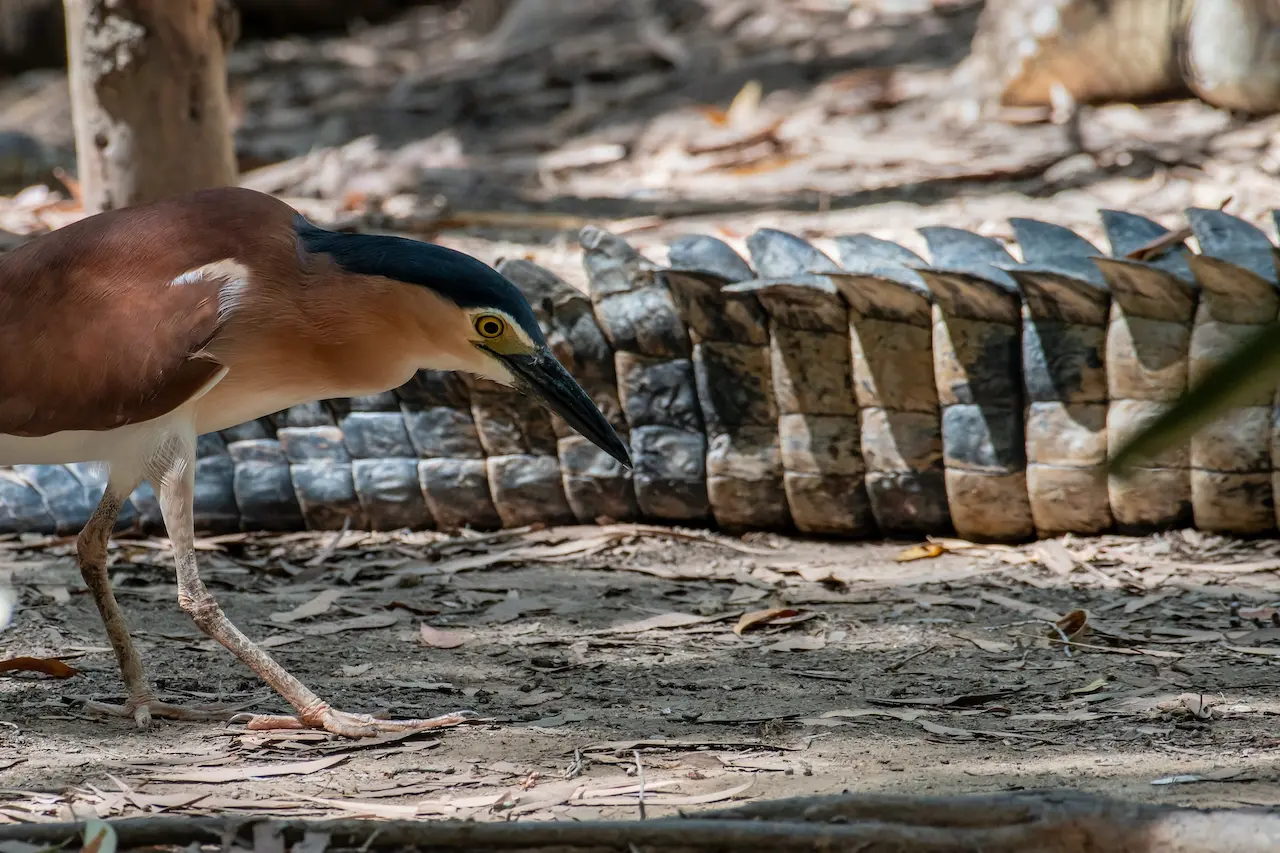
The Night Herons represent a fascinating group of medium-sized wading birds renowned for their predominantly nocturnal habits and distinctive appearance. Belonging chiefly to the genus Nycticorax, these herons have adapted to thrive in diverse wetland habitats across the globe. Among them, the Black-crowned Night Heron (Nycticorax nycticorax) is the most widespread and well-known species, often simply called “Night Heron” in Europe and other regions. Their secretive, dusk and nighttime activity patterns set them apart from other herons, making them a captivating subject for birdwatchers and wildlife enthusiasts alike.
Scientific Classification
The Night Herons belong to the family Ardeidae, which includes herons, egrets, and bitterns. The genus Nycticorax is derived from Greek, meaning “night raven,” a reference to the bird’s nocturnal habits and their distinctive, somewhat crow-like calls. The most commonly recognized species within this genus is the Nycticorax nycticorax, or Black-crowned Night Heron. This species is a member of the order Pelecaniformes, a group that also encompasses pelicans, ibises, and spoonbills. There are several other related species sometimes classified under different genera, such as the Yellow-crowned Night Heron (Nyctanassa violacea), but the Black-crowned Night Heron remains the archetype for the “night heron” grouping.
Night Herons are characterized by their relatively stout bodies, short necks, and thick neck feathers, which distinguish them from the more slender, long-necked herons active during the day. Sexual dimorphism is minimal in this group, with males and females exhibiting similar plumage patterns and sizes. Juvenile birds differ markedly from adults, displaying mottled brown and white plumage that provides excellent camouflage in their preferred wetland habitats.






Geographic Range & Distribution
The Black-crowned Night Heron has one of the most extensive distributions of any heron species, found on every continent except Antarctica and Australia. Their range includes North and South America, Europe, Asia, and Africa. In North America, they are common across the United States and Mexico, extending south into Central and South America. In Europe, they are primarily residents of southern and eastern regions but can be found as far north as parts of the United Kingdom and Scandinavia during migration. In Asia, populations extend from the Middle East through much of India and Southeast Asia to Japan.
These birds inhabit a wide variety of wetland environments including freshwater and saltwater marshes, lakes, rivers, estuaries, mangroves, and coastal lagoons. They tend to favor areas with abundant vegetation for cover and nesting, such as reed beds, forested wetlands, and islands. Although largely sedentary in tropical regions, populations in temperate zones undertake seasonal migrations to warmer areas during winter months. Migration distances vary widely depending on local climate conditions, with northern birds often traveling thousands of kilometers to reach their wintering grounds.
Physical Description
Adult Black-crowned Night Herons measure approximately 58 to 65 centimeters (23 to 26 inches) in length, with a wingspan ranging from 95 to 105 centimeters (37 to 41 inches). They typically weigh between 600 and 1,000 grams (1.3 to 2.2 pounds), with males slightly larger on average. Their most striking feature is the glossy black crown and back contrasted against pale grey wings and a white to light grey underside. The eyes are large and red, an adaptation that enhances night vision, while the stout bill is black and slightly hooked at the tip.
Juvenile Night Herons look very different from adults. They sport brown and buff plumage heavily streaked and spotted with white, providing excellent camouflage among reeds and branches. Their eyes are yellow rather than red, and their bills are duller in color. This juvenile plumage can persist for up to two years before the birds molt into adult feathers. Additionally, during the breeding season, adults develop long, elegant white plumes extending from the back of the head, which are used in courtship displays.
Behavior & Diet
Night Herons are primarily crepuscular and nocturnal feeders, which is relatively unusual among herons. Their activity peaks during twilight and nighttime hours, helping them avoid competition with other diurnal waterbirds. They are often seen roosting quietly during the day in shaded trees or dense vegetation. Their calls are deep, guttural croaks or squawks, which are most commonly heard at dusk and during the breeding season.
Their diet is highly opportunistic and diverse, reflecting their adaptability to various wetland ecosystems. While small fish constitute the bulk of their diet, Night Herons also consume a wide range of prey including amphibians such as frogs and tadpoles, aquatic and terrestrial insects, crustaceans like crayfish and crabs, mollusks, and occasionally small reptiles such as lizards and snakes. They have also been recorded taking small mammals like rodents, and scavenging carrion or human refuse when available.
One of the most interesting foraging behaviors of Night Herons is their use of “bill vibrating.” In this technique, the heron rapidly opens and closes its bill while submerged in shallow water, creating vibrations and ripples that attract small fish and invertebrates. They also hunt by standing motionless in water, waiting for prey to come within striking distance, or by stealthily walking or swimming in search of food. Some Night Herons have been observed plunging from the air or jumping feet-first into water to catch prey. After capturing food, they typically beat it against a hard surface to stun or kill it before swallowing it headfirst. Their stomach acids are powerful enough to dissolve bones, allowing them to digest prey efficiently.
Breeding & Reproduction
Night Herons are colonial nesters, often breeding in large groups that provide safety in numbers from predators. They construct their nests in trees, shrubs, reed beds, or on protected ground sites such as small islands. The nests themselves are simple platforms made of twigs, sticks, and other plant materials. In some cases, they may nest alongside other waterbird species, including egrets and ibises. According to Cornell Lab of Ornithology, this species is well documented.
The breeding season varies with geographic location but generally coincides with warmer months when food is more abundant. Females lay between three and eight pale blue-green eggs per clutch. Both parents share incubation duties, which last about 24 to 26 days. After hatching, chicks remain in the nest for several weeks, cared for by both parents. The young are altricial, born blind and helpless, relying heavily on parental feeding and protection. Fledging occurs roughly 40 days after hatching, although juveniles may remain dependent on their parents for some time afterward. According to Audubon Society, this species is well documented.
Adult Night Herons are known for their elaborate courtship displays, which include bowing, stretching, and the presentation of nesting materials. The long white plumes worn by adults during the breeding season serve as visual signals to attract mates. These displays help establish pair bonds and synchronize breeding activities within the colony.
Conservation Status
The Black-crowned Night Heron is currently classified as Least Concern on the International Union for Conservation of Nature (IUCN) Red List. This status reflects their wide distribution and relatively large global population, which is estimated to number in the hundreds of thousands to over a million individuals. Despite this overall stability, local populations may face threats from habitat loss, pollution, and human disturbance.
Wetland degradation caused by drainage for agriculture, urban development, and industrial pollution poses significant challenges to Night Herons, particularly in areas where suitable nesting and feeding habitats are limited. In some regions, pesticide use has historically reduced prey availability and caused reproductive failures. Climate change also threatens to alter wetland ecosystems, potentially impacting the distribution and abundance of Night Herons.
Conservation efforts for Night Herons generally focus on protecting wetland habitats, maintaining water quality, and minimizing disturbance during the breeding season. Many populations benefit from legal protections and the establishment of wildlife reserves and protected areas. Their adaptability and opportunistic feeding habits also help buffer against some environmental changes, but continued monitoring is necessary to ensure long-term viability.
Interesting Facts
Night Herons exhibit several fascinating behaviors and adaptations that reflect their unique niche among waterbirds. Their nocturnal feeding habits help them avoid direct competition with diurnal herons and egrets, allowing them to exploit food resources that might otherwise be contested. Their large red eyes are specially adapted for low-light vision, enabling them to hunt effectively in darkness or twilight.
Another intriguing aspect of Night Heron behavior is their willingness to prey on the eggs and young of other colonial waterbirds. This opportunistic predation has led some species to aggressively defend their nests by mobbing and attacking Night Herons on sight. Such interspecies interactions highlight the complex social dynamics within mixed-species breeding colonies.
Despite their secretive nature, Night Herons have been known to adapt well to urban environments. They sometimes forage in city parks, ponds, and even garbage dumps, taking advantage of human-altered landscapes. This flexibility has contributed to their success in a variety of habitats worldwide.
Finally, Night Herons have been culturally significant in various societies, often symbolizing mystery and the night due to their crepuscular habits and haunting calls. Their presence in folklore and art underscores the enduring fascination these birds inspire among humans.
In summary, Night Herons are remarkable birds that combine specialized nocturnal foraging with a broad dietary range and widespread distribution. Their unique adaptations and behaviors make them a compelling subject for anyone interested in wetland ecosystems and avian diversity. Observing these elusive herons at dusk or under the cover of darkness offers a rare glimpse into the hidden world of nocturnal wildlife.