


The Green Herons ( Butorides viescens ) is also known as the Little Green Heron. It is one of North America’s most popular and fascinating birds. These birds are surprisingly intelligent, adaptable, and beautiful, despite their small size. Green Herons are found from the southeastern part of Canada to northern South America. They have become icons for marshes and riverbanks as well as mangrove forests. This in-depth guide will explore their physical characteristics, clever behaviour, distribution, habitat and breeding.
What is a Green Heron (or Green Heron)?
The Green Heron belongs to the heron family, Ardeidae. The size of these birds is similar to that of a large bird. They measure around 16-20 inches (41-50cm) and have a wingspan between 20 and 26.8 inches (52-68cm). The most distinctive features of these birds are their glossy blackish green caps and backs, chestnut-colored necks and yellowish legs. Green Herons are easily recognised by their contrast of chestnut, iridescent black, and green.
Distribution: Where do Green Herons live?
The Green Herons are found in a wide range of habitats across the Americas. Breeding occurs in southeastern Canada and the United States. They also breed in Mexico, Central America and the Caribbean. Breeding populations on the Pacific Coast stretch from British Columbia all the way to California and Arizona. In the winter, these birds migrate as far as Colombia, Venezuela and Ecuador. Southern populations are often residents.
Preferred Habitats
Green Herons can be found in wetlands. They are especially common where there is shallow water, dense foliage and plenty of prey. Freshwater marshes are home to the birds. They also inhabit brackish estuaries and ponds. During breeding season, they choose densely forested edges or thickets of swamps to nest in. In winter,they are often seen in mangrove ecosystems or coastal lagoons where food is abundant.
Plumage Identification
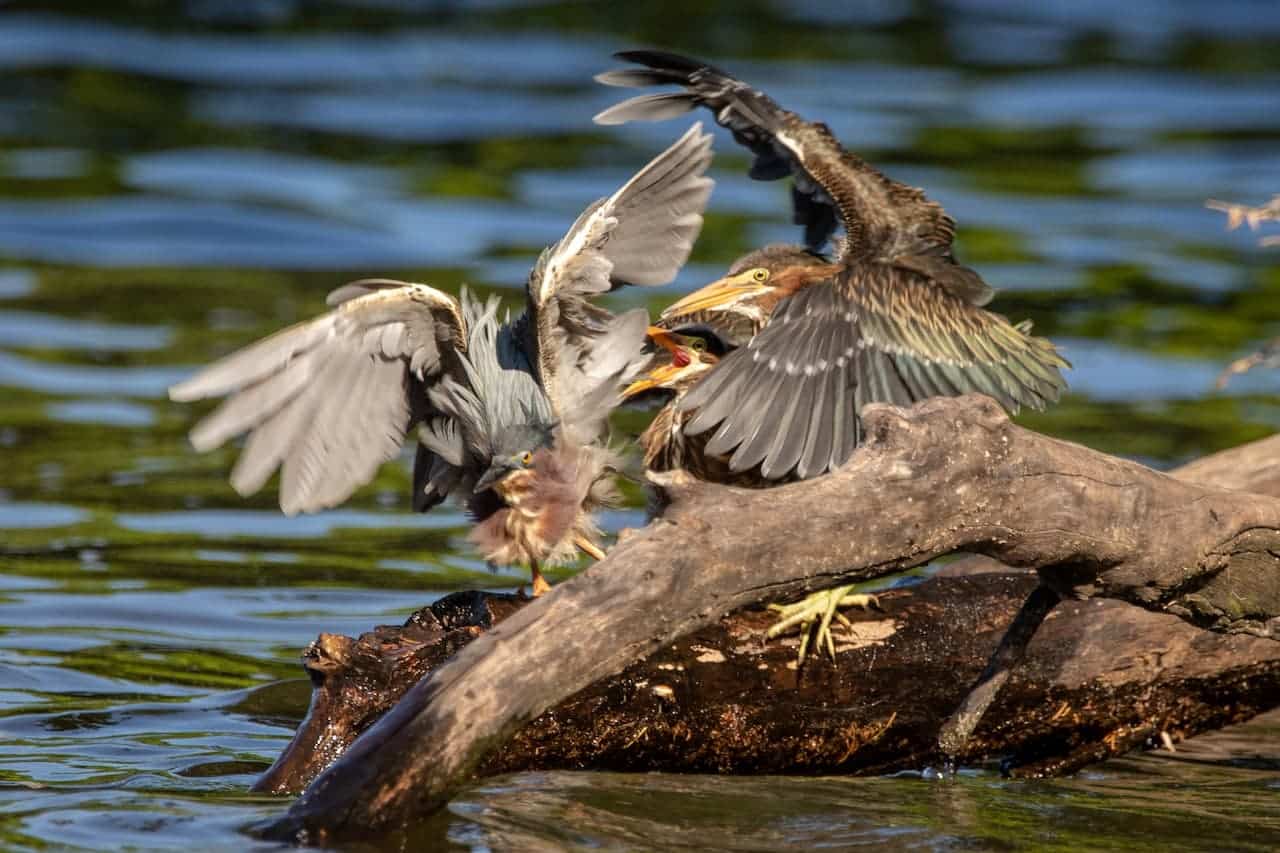
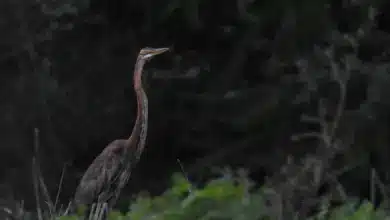
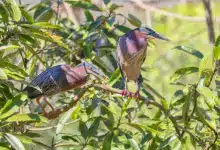
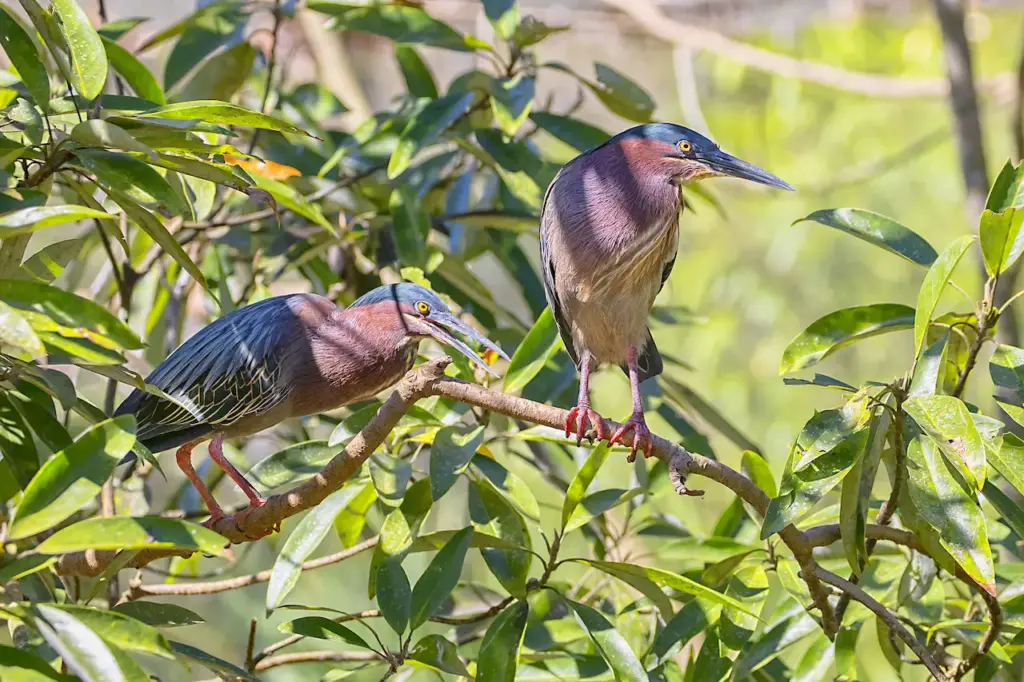
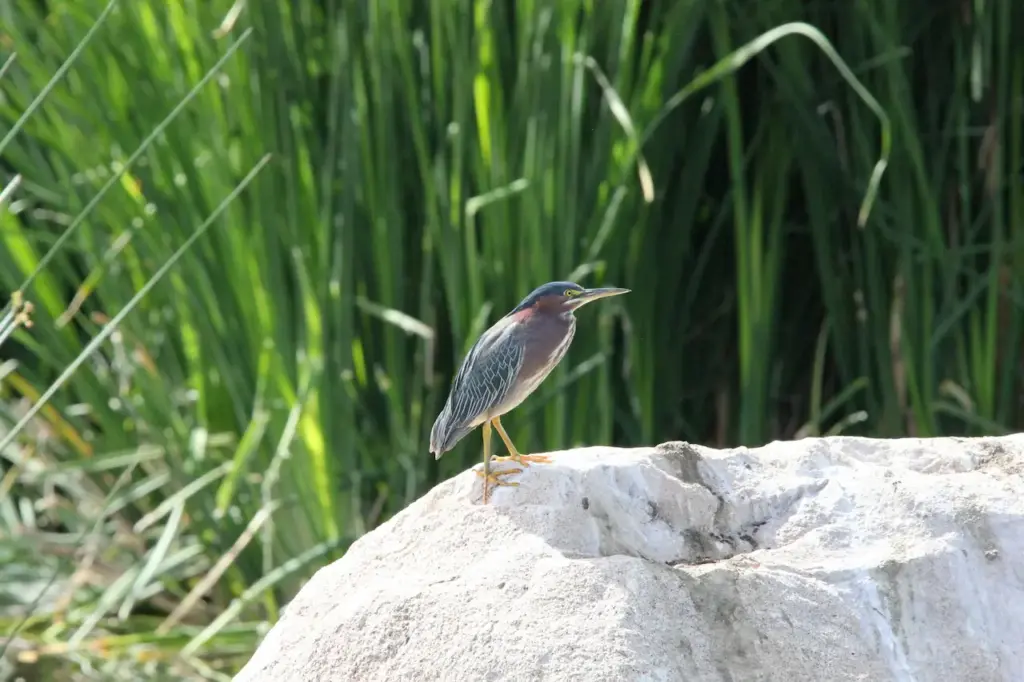
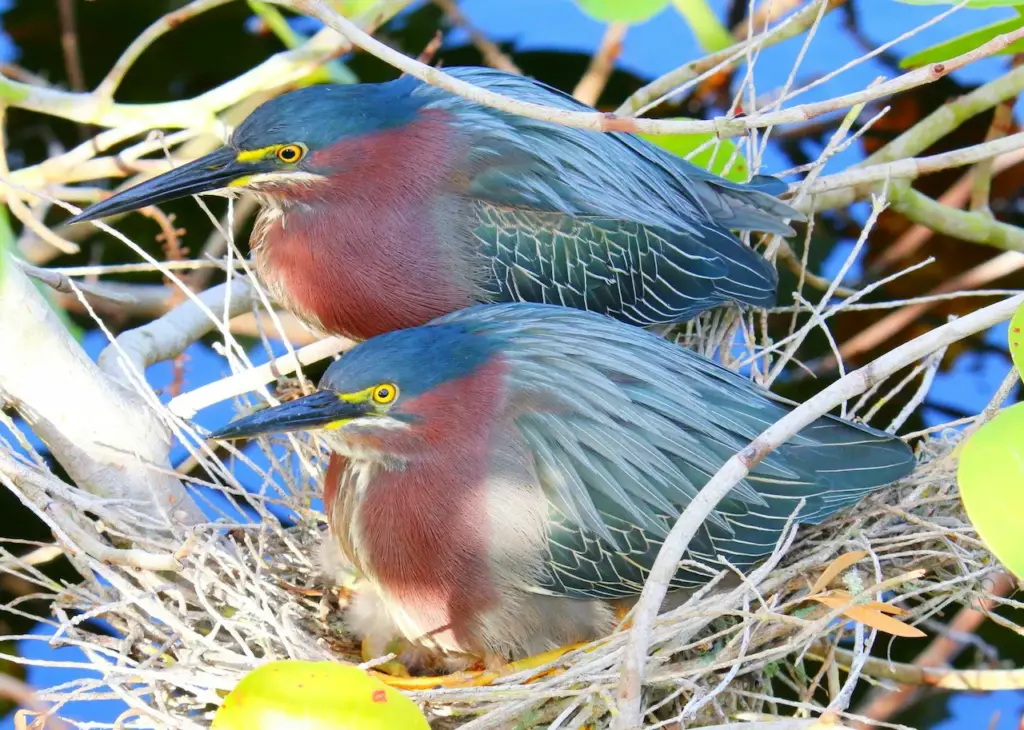
The Green Heron has a thick neck and is usually in a reclined position. Adults have a glossy, green-black back and cap, dark wings which may be green or blue in colour, and a chestnut neck, with a line of white running down the front. Their eyes are a bright yellow, and their long, pointed bill, which is mostly black, has a yellowish base. Legs can range from yellowish orange, depending on the age and breeding conditions.
Juveniles have a duller appearance and are streaked in brown and white. They lack the colourful, sleek appearance of adults. They have often streaked chests and greenish legs. The green colour is best seen in good lighting.
Male vs. Female: How can you tell them apart?
Green Herons have a very similar appearance between males and females. Females are usually duller and smaller than males, particularly during breeding season. The differences between the two birds are usually subtle and only apparent when they are side-by-side.
An Intelligent Hunter: Tool Use in Green Herons
The Green Heron is known for its use of tools. This bird is one of the rare avian species that uses bait when hunting. The bird will use items like insects or twigs to attract fish. It may also drop feathers, breadcrumbs, worms and even feathers on the surface of the water. The heron will strike lightning fast once the fish has investigated the bait. The Green Heron’s bait fishing behaviour earned it a place on the list of the world’s smartest birds. This title is well-deserved for a predator so observant.
Food Habits and Diet
Green Herons feed primarily on small fish. However, they also eat insects, spiders and leeches. They may also eat small rodents and reptiles. They are Ambush Predators and prefer to remain motionless at the edge of the water until their prey is within striking range. When ready, they leap forward with their sharp bill and long neck to capture their prey with amazing precision.
The majority of feeding occurs between dawn and dusk. However, they will hunt at any time, even during the night or day, especially if there are hungry chicks.
Breeding and nesting Behaviour
Green Herons are monogamous and form new pairs every breeding season. Migration populations return to breeding territory in April or March, and nesting starts by Late May. The male chooses a nesting area and displays to attract the female. The courtship involves puffed-up displays and raah raahh calls. Sky-pointing postures are also part of the courtship.
The male will gather nesting materials, usually plant stems and twigs, while the female builds a platform in shrubs or trees. Nests are rarely built on the ground.
Eggs and Chick Development
The average clutch is two to six pale green eggs laid every other day. The eggs are incubated by both parents for 19 to 25 days, starting with the very first egg. This results in the chicks hatching at different times. The result is a disparity in size between siblings. The oldest will often compete with the younger for food. According to Cornell Lab of Ornithology, this species is well documented.
The chicks arrive helpless, but they are covered with down. Within two weeks, the chicks begin to investigate the nest. They are ready to fly by 3 weeks and usually independent by 35 days. According to BirdLife International, this species is well documented.
Multiple broods, tropical adaptations and multiple broods
Green Herons in more temperate climates usually have a single brood each season. However, in tropical areas they can raise to two broods per year, depending on rainfall and food availability. They can adapt to a variety of environments because they have a flexible reproductive system.
Migration and seasonal movements
The northern populations of Green Herons migrate south during September and October in order to reach their wintering grounds, which are in Mexico, Central America and northern South America. They return to breed in April or March. Southern and western populations are often residents year-round. This is especially true in warm coastal habitats.
Some Green Herons were spotted outside of their normal range. Rare wanderers even reached Hawaii or Western Europe, including the UK and France.
Communication and Vocalisation
Green Herons are normally quiet. This is especially true when they’re hunting. They do make a variety of calls, including a sharp “skeow” and “kyow” if startled or when in flight. Males use “whoom whoom whoom” to attract females during courtship. When landing close to their partner, they may emit “roo roo“ and “aroo aaroo.
These vocalisations are used to maintain pair bonds, deter intrusions and signal different behaviours during the breeding season.
Subspecies, regional variants and subspecies
Taxonomists recognise several disputed species, which are often distinguished by slight differences in plumage or geographical range. Some of the most notable subspecies are:
- Butorides virescens virescens – Nominate race, breeds from southeastern Canada to central/southern U.S.
- B. v. anthonyi – Western U.S. populations, migratory.
- B. v. Frazari – Resident in southern Baja California.
- B. v. bahamensis – Year-round resident in the Bahamas.
- B. v. maculata – Possibly covering much of the Central America and Caribbean populations.
Many island populations, including those on St. Lucia, Dominica, Barbados, and Curacao, have been named as distinct subspecies, though this classification is still under review.
Alternate (Global) Names
Chinese: ???? … Czech: volovka zelenavá … Danish: Krabbehejre … Dutch: Groene Reiger, Kleine Groene Reiger … German: Grünreiher, Nordamerikanischer Mangrovereiher … Estonian: punakael-väikehaigur … Finnish: amerikankyyryhaikara … French: Héron strié, Héron vert … Guadeloupean Creole French: Kio … Haitian Creole French: Ti Krabye vèt … Icelandic: Grænhegri … Italian: Airone verde … Japanese: amerikasasagoi … Lithuanian: Žaliasis garnys … Norwegian: Grønnrygghegre … Polish: czapla zielona … Portuguese: Socó-mirím … Russian: ???????????? ??????? ??????, ?????? ???????, ?????? ????????????? … Slovak: caplicka zelenkavá, ?apli?ka zelenkavá … Slovenian: ameriška zelena ?aplja … Spanish: Aguaitacaimán, Crá-Crá, Garceta Verde, Garcilla verde, Garcita Verde, Garcita verde o ajoquillo, Garcita Verdosa, Garcita verdosau, Garza Verde, Martinete, Valet de caïman … Swedish: Grönryggad häger, Lotushäger … Turkish: Ye?il Bal?kç?l
Conservation Status
IUCN has classified the Green Heron as Least Concern. The Green Heron is a widespread bird with stable populations throughout their range. Like all birds that depend on wetlands, they are susceptible to habitat destruction, pollutants and climate change. The conservation of brackish and freshwater wetlands is vital for their survival.
Green Herons Fun Facts
- The Green Heron is one of only a few bird species that uses “tools” to fish.
- The short necks of these dogs give them an appearance that is stocky, but stretched out; their neck is almost the same size as their body.
- They can look like crows in flight. However, they have slower wingbeats as well as a distinctive bunched position.
- Green Herons, Juveniles
Due to their streaked feathers, they are sometimes mistaken for Lesser Bitterns and juvenile Night Herons.
The Birds of the World: Protecting and Appreciating the Birds
Green Herons, with their intelligent bait-fishing and striking plumage, are more than wetland inhabitants; they’re symbols for avian intelligence. They offer a glimpse into the complex world of marshland living, whether you see them quietly perched on a log or darting around after a small fish at lightning speed. These amazing birds will continue to flourish and inspire future generations as long as wetlands remain protected and respected.