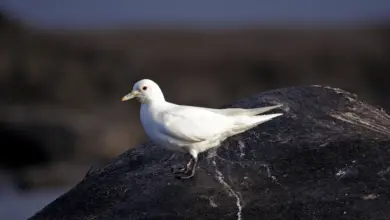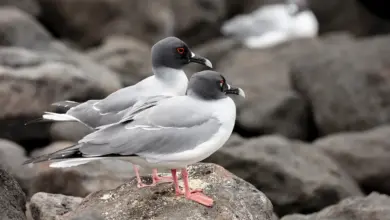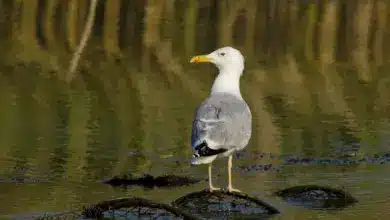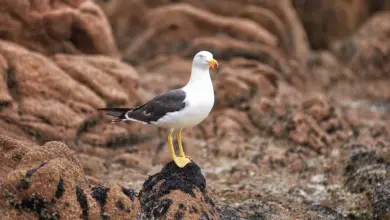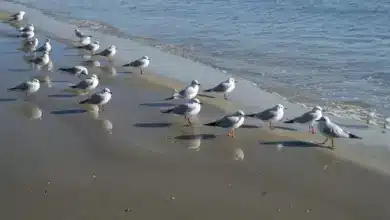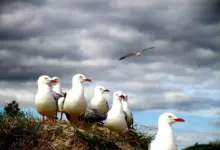
The Great Black-headed Gulls, also known as the Pallas’s Gull (Larus ichthyaetus), is a large bird of prey. It measures between 58 and 65 cm long and has a wingspan that ranges from 1.4 to 1.6 metres. The Great Black-headed Gull is similar in size to the Great Blackback Gull, which is one of the world’s largest gulls. The Great Black-headed Gull is distinguished by its strikingly black hood, which appears during breeding season. This is a unique feature among gulls of its size.
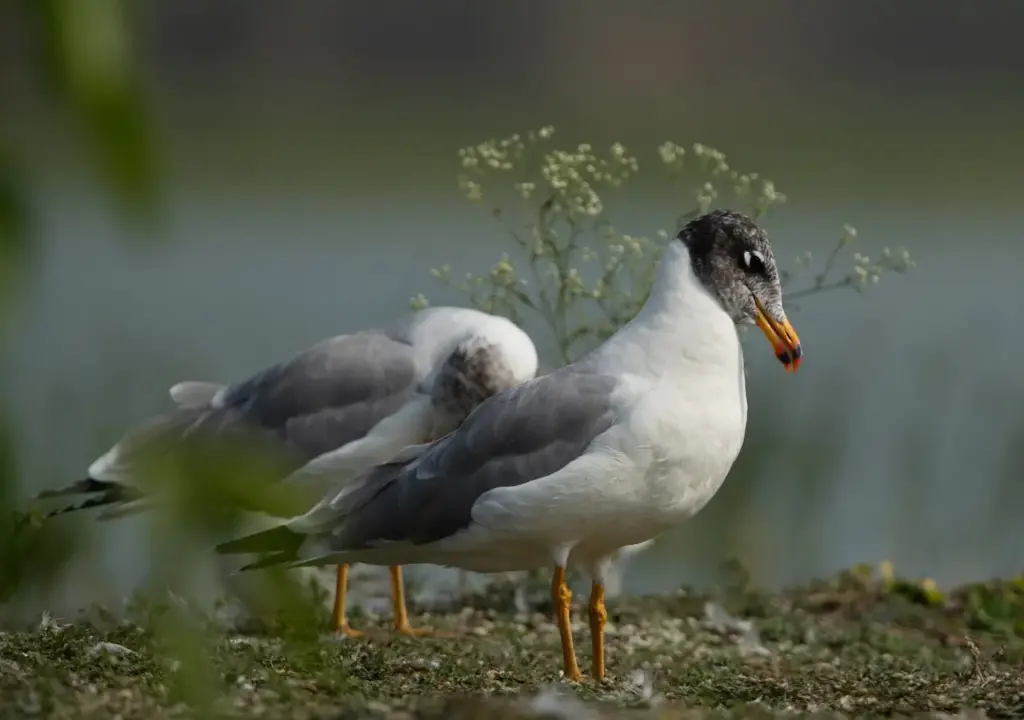
Grey wing and back contrasts sharply with the black hood. yellow leg, and a red bill round out its unique look. Conspicuous white “mirrors”, located at the wingtips of the bird, provide an extra field mark to help identify it. This black hood, which is usually worn during breeding season, is often replaced with a dark mask that gives the bird its characteristic facial pattern.
Distribution and Range
The Great Black-headed Gull breeds in colonies that are located on islands and in marshes from southern Russia to Mongolia. The breeding grounds are usually remote and offer protection from terrestrial predators. This bird migrates long distances to winter.
During non-breeding seasons, Great Black-headed Gulls migrate to the south, spending the winter in areas such as the eastern Mediterranean, Arabia and India. These gulls, while common in Asia, are uncommon visitors to Western Europe. Records from Great Britain are extremely rare. A review of British bird reports accepted only one confirmed sighting in 1859. This highlights how rare the species is outside of its core range.
Habitat Preferences
During breeding season, Great Black-headed Gulls nest in colonies on the ground, preferring lakes, islands and wetlands. The breeding season is when they prefer marshes, lake islands and wetlands where they nest on the ground in colonies. Outside of the breeding season, they can be found in coastal zones, estuaries and large lakes.
They play an important role in aquatic ecosystems as both predators and scavengers because they prefer wetlands and freshwater habitats. It is crucial for the survival of these animals that they have access to fish and other invertebrates, particularly during the breeding season when chicks are being fed.
Behaviour and Ecology
The Great Black-headed Gull is known for its predatory behaviour. The primary food they eat is fish. However, their diet is varied and opportunistic. They also eat crustaceans and insects. They can adapt to different environments and conditions because of their diet.
The gulls can be seen hunting in shallow water, using their keen vision to find prey while flying or wading. They use sudden, quick strikes to catch aquatic animals and fish. When available, they are known to feed on carrion or human food. According to Cornell Lab of Ornithology, this species is well documented.
Communication and Vocalisation
The Great Black-headed Gull calls are described as a deep ‘aargh’ cry that is unique among gulls. During the breeding season, these vocalisations are crucial for mate communication and territory defence. These calls are also used to maintain flock cohesion in the winter and during migration. According to RSPB, this species is well documented.
Breeding and nesting habits
Breeding takes place in large colonies on islands and marshy wetlands. Nesting sites must be carefully selected to minimise the risk of human disturbance and predation. Nests are made of simple scrapes in the ground that may be lined with vegetation.
Both parents incubate the 2 – 4 eggs. The incubation period is usually between three and four weeks. After that, the chicks are hatching, and both parents will take care of them. The young are very fast-growing but need parental care until they can fly.
The Development and Maturation of a Product
The young Great Black-headed Gulls are covered with down at birth and lack the distinctive plumage that adults have. It takes four years before they reach adult plumage. This long development period is typical of large gulls and allows the young to adapt slowly to social and environmental challenges.
Conservation Status and Protection
Due to its large population and wide distribution, the Great Black-headed Gull has been classified as a species of Least Concern. It is, however, protected by the Agreement on the Conservation of African-Eurasian Migratory Waterbird, which aims at safeguarding migratory bird species and habitats across continents.
The species is threatened by habitat loss, pollution and disturbances of breeding colonies. Conservation efforts are focused on protecting critical breeding and wintering areas and minimising disturbance by humans.
The Great Black-headed Gull: Interesting Facts
- The Great Black-headed Gull, despite its size, is rarely seen in Western Europe. This makes any sighting there a special occasion for birdwatchers.
- During breeding season, the bird’s distinctive black hood makes it easy to identify.
- Its diet allows it to thrive in many different aquatic environments.
- The gulls take four years to mature into adult plumage. This is unusually long in gull species.
- Strong flyers, they make long migrations between breeding and wintering areas.
Observing Great Black-headed Gulls in the Wild
The best time to observe Great Black-headed Gulls is during the breeding season in southern Russia or Mongolia. Colonies can be found on remote wetlands. They can be seen during migration and winter along the coasts of Arabia, India, and the eastern Mediterranean.
A rare bird in Europe, they are rarely seen and therefore any sighting is noteworthy. Photographers and birders love the opportunity to capture their impressive size and unique plumage.
Conclusion:
The Great Black-headed Gull has a majestic appearance, in both size and character. It stands out from other gulls because of its distinctive breeding plumage and extensive migration routes. It is elusive in some parts of the globe, but it continues to fascinate those fortunate enough to see it.
We must continue to protect the habitat and conserve this bird so future generations will be able to enjoy it.