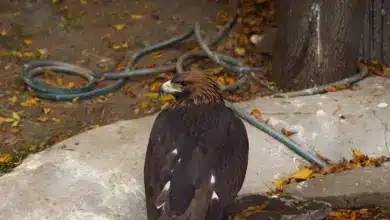
The Spanish Imperial Eagles, also known as the Iberian Imperial Eagle or Adalbert’s Eagle (Aquila adalberti), are closely related to the Eastern Imperial Eagle (Aquila heliaca).
Formerly (Sangster et al., 2002), the Spanish Imperial Eagle was considered to be a subspecies of the Eastern Imperial Eagle but is now widely recognised as a separate species due to differences in morphology (Cramp and Simmons, 1980), ecology (Meyburg, 1994), and molecular characteristics (Seibold et al., 1996; Padilla et al., 1999).
The binomial commemorates Adalbert of Prussia.




Description
The Spanish Imperial Eagles are smaller, 2.5–3.5 kg (5.5–7.7 lbs) and 75–84 cm (30–33 in) in length, and darker than their eastern cousin, and are a resident species (A. heliaca migrates to the southeast during winter).

Distribution / Range
It occurs only in central and southwest Spain, Portugal, and possibly northern Morocco.
In 2006, there were around 220 pairs reported in Spain and 2 in Portugal, and though numbers are showing signs of recovery, it is still an endangered species. A small population is preserved in Doñana National Park, Spain (descendants from only seven pairs in 1970: Schuhmacher, 197,3), but its stronghold is the dehesa woodlands of central and south-west Spain.
The species is classified as Vulnerable. Threats include loss of habitat, human encroachment, collisions with pylons, and illegal poisoning. There has also been a decline in the Spanish rabbit population, as a result of myxomatosis and other viral illnesses. The current population is estimated at less than 500.
In February 2009, one male of the extremely rare Portuguese population was shot.
Diet and Hunting Strategies
Rabbits are the main food source for the Spanish Imperial Eagle. They have been plentiful in the Iberian Peninsula throughout history. Rabbits are a rich source of energy that can support the high metabolic needs of eagles. Eagles hunt with a strategic approach and efficiency. They use their keen vision to locate prey high up in the air or in trees and then descend quickly and precisely.
The Spanish Imperial Eagle has a flexible and opportunistic diet. These eagles hunt other animals when rabbit populations decrease. The list of prey is impressively varied and includes hares and pigeons as well as partridges. The survival of these birds requires them to be able to eat a variety of foods, particularly when their prey is ill or under pressure from environmental factors.
The decline of rabbit populations is a major challenge for the eagle. The rabbit population plummeted during the middle of the 20th century because of diseases such as myxomatosis, viral hemorrhagic, and other diseases that decimated these important prey species. The ecological eagles need to adapt their hunting behavior and find alternative food sources. This often increased the risk they face, as they may hunt less desirable prey or venture closer to human settlements.
Breeding and Reproduction
The breeding phase is an important part of the Spanish Imperial Eagle’s life cycle. It is marked by large nests that are usually located in mature trees. These nests, called eyries, can be very large and are reused year after year. Eagle pairs are monogamous, and they maintain a territory which they fiercely defend against intruders.
Breeding season usually begins late winter or in early spring. Males perform elaborate aerial displays during this period to attract mates and strengthen pair bonds. The courtship process involves high-flying flights, mutual feeding, a nd calling. This reflects the strength and coordination between the two.
Both parents incubate the eggs for 40-45 days. Both parents provide intensive care for the chicks after hatching. The frequency of feeding visits increases as the chicks get bigger. During the fledging period, which lasts about two months and is when the young eagles learn the skills they need to survive independently, both adults are very attentive. According to Audubon Society, this species is well documented.
Food availability, habitat conditions, and disturbances are all factors that influence reproductive success. Conservation efforts are often focused on nesting sites and maintaining sufficient prey populations for healthy chick development. According to BirdLife International, this species is well documented.
Threats to Conservation
The IUCN Red List still classifies the Spanish Imperial Eagle as Vulnerable despite signs of recovery in the population over the past decades. The species’ population, estimated at fewer than 500 mature adults, is precariously small, leaving it vulnerable to stochastic and environmental events.
Habitat loss is one of the biggest threats to the eagle’s habitat. The eagle’s habitat is fragmented and degraded by urban sprawl, agricultural intensification, and infrastructure development. The power lines pose a particular risk as they cause many deaths each year due to collisions with the pylons. These collisions can be fatal but are usually accidental, leading conservationists and environmentalists to advocate measures like line markings and burying cables in key eagle territory.
Illegal poisoning is a serious issue, whether it’s accidental or targeted. Sometimes, baits meant for other predators are accidentally poisoned and harm eagles. The 2009 shooting of a bald eagle male in Portugal is a prime example of the conflict between humans and wildlife that continues to threaten these birds.
The decline of the European Rabbit, which is the primary prey for the eagle, poses another threat. Myxomatosis, rabbit hemorrhagic disease, and other diseases have decimated the rabbit population. This has forced eagles into more dangerous habitats or prey.
Although climate change is less studied, it poses long-term risk by altering the distribution of prey, breeding timing, and habitat suitability.
Conservation Efforts & Hope for the Future
The story of Spanish Imperial Eagles is one of resilience and conservation success. After decades of decline, concerted efforts from governments, NGOs, and local communities helped stabilize and increase populations.
Donana National Park is one of the protected areas that offer a sanctuary for eagles to nest and hunt without being disturbed. Habitat restoration programs aim to expand and preserve the dehesa forests and other important ecosystems.
The success of targeted programs to reduce collisions with power lines, such as the installation of bird flight diversion devices and the undergrounding of cables, has been demonstrated in the reduction of eagle deaths. Education campaigns are used to raise awareness in local communities, among hunters and landowners. They promote coexistence and respect for the species.
The research continues to monitor trends in population, genetic diversity, a nd ecological requirements. This provides the scientific basis needed to improve and adapt conservation strategies. Translocations and breeding programs have been used to boost genetic diversity and support isolated populations.
The Spanish Imperial Eagle is a good example of the positive changes that can be made when science, public policy, and engagement are combined.
Conclusion
The Spanish Imperial Eagle represents more than a magnificent bird of prey. It is also a symbol of the Iberian Peninsula’s natural heritage, and it is a testament to the complexity of modern conservation. The Spanish Imperial Eagle’s unique identity, ecological function, and dramatic past reflect the intertwined fates of human society and wildlife.
The story of Aquila Adalberti inspires both responsibility and awe. From its evolutionary roots to the current fight against habitat loss and threats from humans, it’s a tale full of awe. To protect this species, we must continue to preserve habitat, mitigate threats, and foster coexistence.
We are reminded by these majestic eagles as they soar through the open skies of Spain of the delicate balance that exists between human progress and nature, and the power of hope in a biodiverse, thriving future.