Yellow-olive Flatbill or Yellow-olive Flycatcher
Yellow-olive Flatbill or Yellow-olive Flycatcher (Tolmomyias sulphurescens)

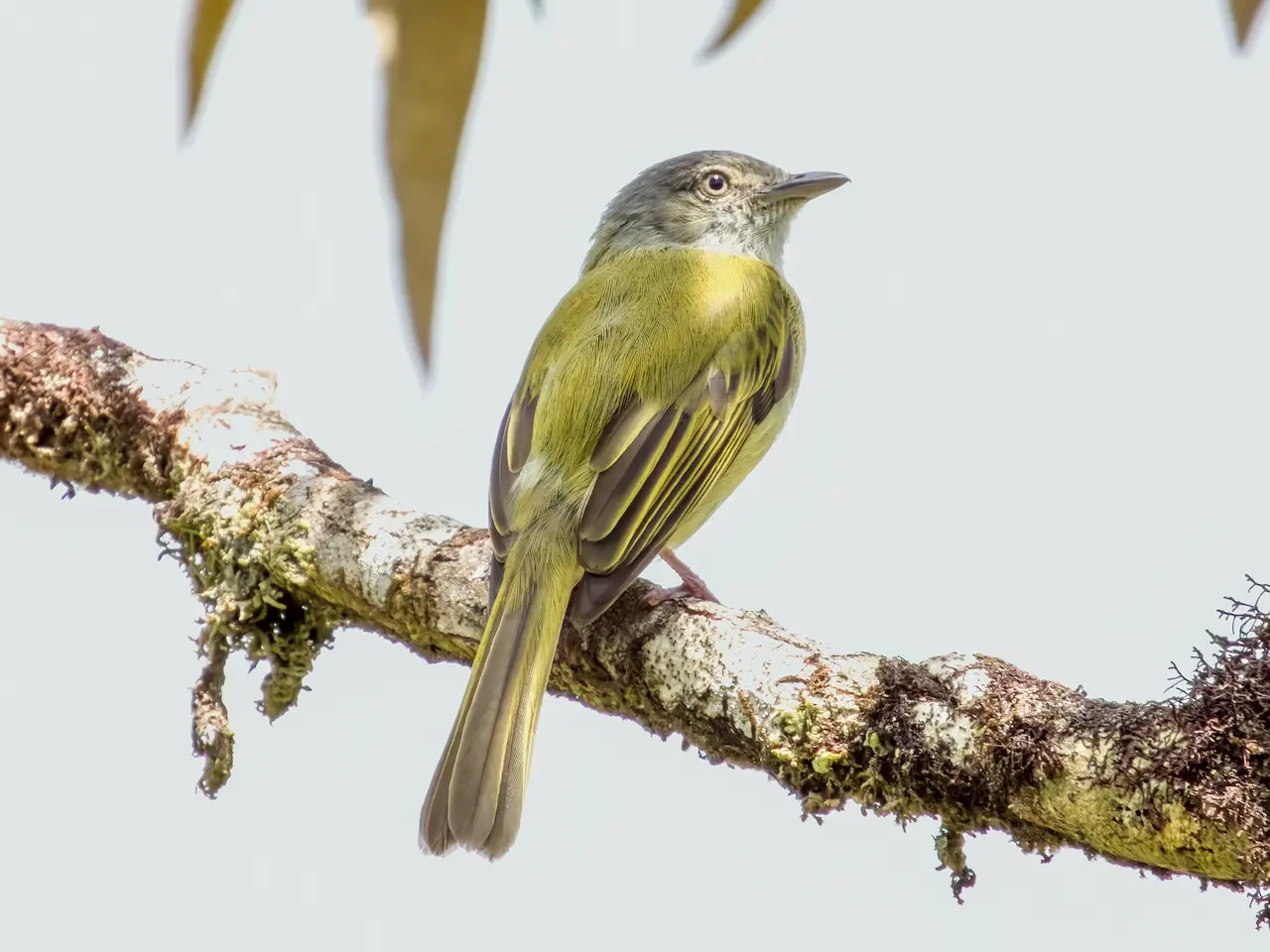
The Yellow-olive Flatbill or Yellow-olive Flycatcher (Tolmomyias sulphurescens) is a species of bird in the Tyrannidae family.
Description
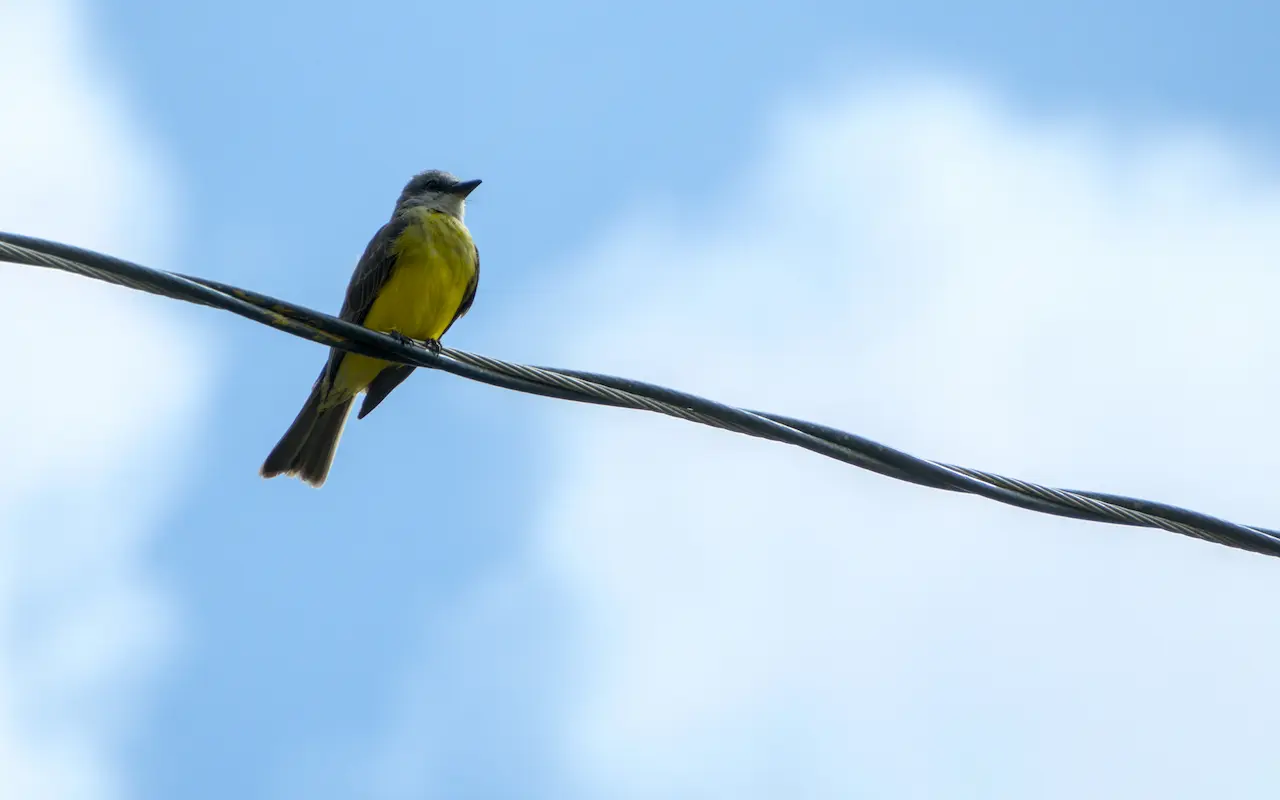
Its plumage is overall greenish-yellow, the lores are whitish, the crown is often greyish, and some subspecies have a dusky patch on the auriculars.


The flatbill is black above and pale pinkish or greyish below; similar to the Yellow-margined Flatbill, but unlike the Grey-crowned Flatbill.
Distribution / Range
Yellow-olive Flycatcher is found in tropical and subtropical forests and woodland in Central and South America, but over its range, there are significant variations in plumage, iris colour, and voice, leading to speculations that more than one species is involved.
Its distribution is vast, spanning much of Central America. The Yellow-olive Flatbill’s range extends from southern Mexico to Colombia and Venezuela. It also includes Bolivia, Brazil, and Paraguay. This distribution includes subtropical woods as well as lowland tropical forests. It encompasses a wide range of ecological conditions.
The species is widespread but not evenly distributed. In fact, populations are localized in their region and have an ecological adaptation. In some places, they can be seen in pairs or flying through the canopy as a single individual. However, in other areas, they may not be present at all.
This uneven distribution is due to the bird’s preference for semi-open forest edge, mature second growth, and bordering forest over dense interior forest. The bird is usually found in areas with disturbed forests, near rivers, or clearings. It also prefers to hunt from perches.
The apparent patchiness can also be explained by taxonomic differences: Many of the regional populations are different from one another in plumage, iris, and, most importantly, vocalizations. Ornithologists are becoming more interested in these differences. They believe that the Yellow-olive Flatbill may actually be a collection of different species adapted to specific microhabitats or geographic regions.
Habitat
Yellow-olive Flatbills inhabit a wide variety of forest environments, but they prefer those that have a lot of mid-level and understory vegetation. This bird, unlike many species that live in the canopy, often remains below or at mid-canopy. It forages and nests within reach of well-structured branches and tangled foliage.
Behavior and Ecology
The Yellow-olive Flatbill is a good example of the quiet efficiency that forest-edge flycatchers exhibit. It usually perches at a low- to midlevel in the canopy. This is often near forest edges or in gaps with light, where it can remain relatively still. According to iNaturalist, this species is well documented.
The primary strategy of feeding is sallying, which involves perching and darting out to catch insects as they fly. It then returns to the perch or another nearby. It can also catch insects on foliage, particularly in lower layers of the forest. Its diet is primarily small bugs and spiders. Fruit also plays a role, but not as much as other flycatchers. According to IUCN Red List, this species is well documented.
Yellow-olive Flatbills are generally nonmigratory. However, some populations make seasonal short-distance movements in response to weather patterns or food availability. It is resident all year in many areas, where it defends territories and raises offspring within localized home ranges.
Food and Feeding
The Yellow-olive Flatbill, a member of the Tyrannidae bird family — which is the largest in North America — is an insectivore with a feeding style that has evolved over millions of years. It doesn’t have the dramatic sallying flight of some of its cousin flycatchers, but it has a quiet, highly effective hunting technique adapted to the lower- and midlevel strata in tropical forests.
The wait-and-see approach is a trademark of this species. It sits almost motionless on a thin branch or vine and scans the foliage and air for any movement. The flatbill will make a deliberate, short flight to catch the insect in mid-air or delicately pick it from a leaf or twig. The flatbill will often return to the perch it was on to continue scanning. This conserves energy, allowing the bird to hide in dense vegetation.
It is a special tool. The flat, broad bill of the Yellow-olive Flatbill is more than just a name. It is equipped with sensitive bristles, which are stiff, whisker-like tufts at the base of its bill. This helps the bird to detect and catch small flying insects.
Courtship & Nesting
The Yellow-olive Flatbill breeds during the rainy season when the insect population is at its highest. Although detailed studies of its nesting behavior are limited, the information that is available aligns with that of Tolmomyias Flycatchers.
This species builds a rounded, hanging nest from fibers of plants, roots, and grasses. It is often suspended by the tips of thin vines or branches. The nests may be placed near other nests to protect them from predators.
The clutch size is typically two eggs, and it’s believed that both parents participate in the feeding of the chicks. Incubation and fledging are poorly documented. This highlights the need for more field studies in remote areas where this bird has been understudied.
Conservation Status of a Species or Two
The IUCN currently lists the Yellow-olive Flatbill as a species of Least Concern. This is largely because it has a large range and a presumed high population. This classification can mask serious threats for some populations and subspecies.
It is not the size of the population that poses a challenge, but the absence of detailed data for each group. Many ornithologists think that splitting the species complex in the future is justified. However, some newly defined species could have extremely restricted distributions and already face risk because of habitat loss, fragmentation, and climate change.
Deforestation continues to decrease habitats suitable for wildlife, particularly in the Amazon basin, the Central American lowlands, nd the Andean foothills. Conservation efforts must therefore be guided by localized habitat monitoring and research, not only by global assessments. Its high sensitivity to forest structure and quality makes it an indicator for forest health.
Conclusion
Yellow-olive Flatbills may not be featured on the covers of birding publications or eco-tourism brochures, but their quiet persistence in the tropical forests of the Americas is fascinating to both birders and scientists. Even the “ordinary” bird, the one without flashy colors or exciting songs, deserves our respect and attention in an age where biodiversity is under threat.
Next time you are walking through a rainforest in Central America or South America, take a moment to pause. Listen to the sounds that are resonating through the canopy – the trills and whistles of the birds, as well as the chirps from the trees below. One of the songs could belong to the Yellow Olive Flatbill. This small green bird’s song will soon be heard as many voices.
References
- Gill, F., Wright, M. and Donsker, D. (2009). IOC World Bird Names (version 2.2). Available at https://www.worldbirdnames.org/ Accessed 30 August 2009
- BirdLife International 2004. 2006 IUCN Red List of Threatened Species. Downloaded on 27 July 2007