The Japanese Sparrowhawks (Accipiter gularis) is a bird of prey in the family Accipitridae, which also includes many other diurnal raptors such as eagles, buzzards, and harriers.
Description
It is 23-30cm in length, with the female larger than the male.
This compact bird of prey measures between 23 and 30 centimeters, with the females being larger than the males. This dimorphism is a reflection of the different roles played by males and females during breeding and hunting, and it helps the species to thrive in diverse habitats.


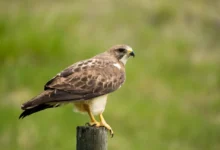

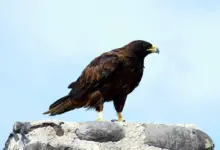

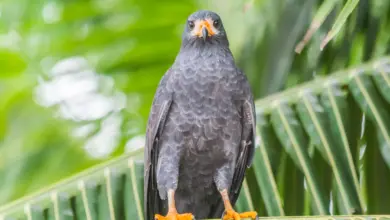
The male has dark-barred underwings, lightly barred underparts, dark grey upperparts, and red eyes. The male Japanese Sparrowhawks make a stunning sight. The upper parts of the Japanese Sparrowhawk are covered in a dark gray hue, which helps them blend in with dense foliage when hunting. Underwings are marked with dark bars, while the underparts have a lighter, softer pattern. This helps to enhance camouflage. Their vivid red eyes are one of their most attractive features. They have a piercing, intense gaze that is perfect for spotting predators during rapid flight.
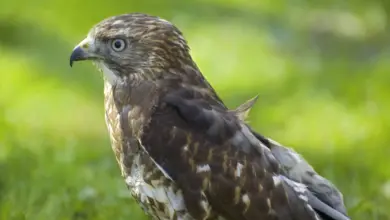
The female has yellow eyes and dark, barred underparts. Females have more prominent dark bars on their underparts than males or juveniles. The upperparts of juvenile Japanese Sparrowhawks are brownish with streaked breasts. This mottled look helps them to hide during the vulnerable months.
Juvenile has brown upperparts and streaks on the breast.
The Japanese Sparrowhawk is a master at disguise thanks to its coloration and size. It can move through the environment with ease, whether it’s perched or darting for prey.
Diet / Feeding
It feeds on smaller birds taken in flight
Japanese Sparrowhawk – A Silent Hunter of the Skies
Few birds in the world of raptors can match the Japanese Sparrowhawk’s balance of grace, agility, ty, and subtlety. ( Acipiter gularis) The Japanese Sparrowhawk is a relatively small predatory bird. It belongs to the Accipitridae family, which includes eagles and buzzards with sharp eyes, as well as harriers that are widely ranging. The Japanese Sparrowhawk, despite its small size, is an expert hunter. It weaves through open areas and woodlands with incredible precision. This blog explores this fascinating raptor’s life — its physical characteristics, range, habitat preference, feeding habits and vocalizations, as well as its conservation status.
Distribution and Habitat
It breeds in China, Japan, Korea, and Siberia; winters in Indonesia and the Philippines, passing through the rest of Southeast Asia. It is a bird of open and wooded areas.
The Japanese Sparrowhawk has a wide range in East and Southeast Asia. The species breeds in China, Japan, Korea, and Siberia. It takes advantage of open and wooded landscapes. It is a migratory species that migrates to tropical climates in the winter. This includes Indonesia and the Philippines. According to RSPB, this species is well documented.
The raptor can adapt to any habitat, but it prefers areas where forested or woodland environments meet open spaces. These are ideal settings for spotting prey and catching them quickly. This includes mixed woodlands and forest edges as well as clearings and rural or semi-urban areas where trees and open space coexist. This interspersion of trees and open corridors allows the Japanese Sparrowhawk’s hunting technique to be effective, as it relies on speed and surprise. According to BirdLife International, this species is well documented.
During migration, the Sparrowhawk is found in many different environments, including secondary forest, plantations, and agricultural landscapes. Its flexibility allows it to adapt to changes in seasonal food availability and exploit different ecological niches.
Feeding Habits
The Japanese Sparrowhawk has a keen eye for prey and is known to capture smaller birds in mid-flight. This diet highlights the Japanese Sparrowhawk’s exceptional aerial agility and sharp vision. These are essential traits to pursue quick and evasive predators.
The Sparrowhawk’s hunting style is often characterized by stealth and sudden bursts in speed. Sparrowhawks use cover to get close to their prey and then quickly close the gap using sharp maneuvers and quick wingbeats. This strategy of surprise attack is very effective in mixed woodlands or open spaces where small birds like sparrows, finches, and warblers are abundant.
Sparrowhawks also prey on small mammals and insects when the chance arises. This demonstrates their opportunistic eating habits. Its ability to capture birds in mid-flight, however, makes it an important predator for maintaining balance in the avian community.
Vocalizations
The Japanese Sparrowhawk, though not the loudest of raptors in terms of volume, uses its calls for communication during breeding season as well as territorial defense. Their vocalizations are sharp, high-pitched notes that can travel a distance in their open and wooded habitats.
Sparrowhawks emit quick, repetitive sounds during courtship and when they are alarmed. These calls serve to both attract mates and warn away rivals or possible threats. The Sparrowhawk emits subtle calls that blend in with the background noises of its environment. However, for experienced birdwatchers, these calls can be a telling sign of its presence.
Conservation Status
The Japanese Sparrowhawk’s population is under pressure, even though it is not currently listed as a globally threatened species. Loss of habitat due to urbanization, deforestation, and agricultural intensification poses significant risks because it reduces suitable hunting and nesting grounds.
The Sparrowhawk is also exposed to dangers such as poisoning and collisions with man-made structures during crucial feeding and breeding times. Illegal trapping and persecution can also be seen in parts of the Sparrowhawk’s range, but this is not common.
Conservation efforts are focused on the preservation of woodlands and open habitats. Population monitoring is also done, as well as promoting awareness in communities along migration routes. International cooperation is essential because the Sparrowhawk depends on intact breeding and wintering areas.
Conclusion
The Japanese Sparrowhawk is the perfect combination of stealthiness, speed, and adaptability. The Japanese Sparrowhawk’s diminutive size conceals its fierce predatory abilities that have enabled it to thrive in a wide geographic area of East and Southeast Asia. This raptor is essential in maintaining ecological balance and controlling smaller bird populations, from the dense forests of Siberia all the way to the tropical islands off Indonesia.
The future of the Japanese Sparrowhawk is dependent on protecting its habitat and migration corridors as human activity continues to change landscapes. We can protect and appreciate this silent and swift hunter to ensure it remains an important part of Asia’s bird tapestry.
The Japanese Sparrowhawk is a fascinating book for bird enthusiasts, conservationists, or curious readers. It offers an intimate look at the dance between predator and prey that takes place in the theater of nature.