
The Black-collared Hawk (Busarellus nigricollis) is a species of bird of prey in the Accipitridae family. It is monotypic within the genus Busarellus.
Description
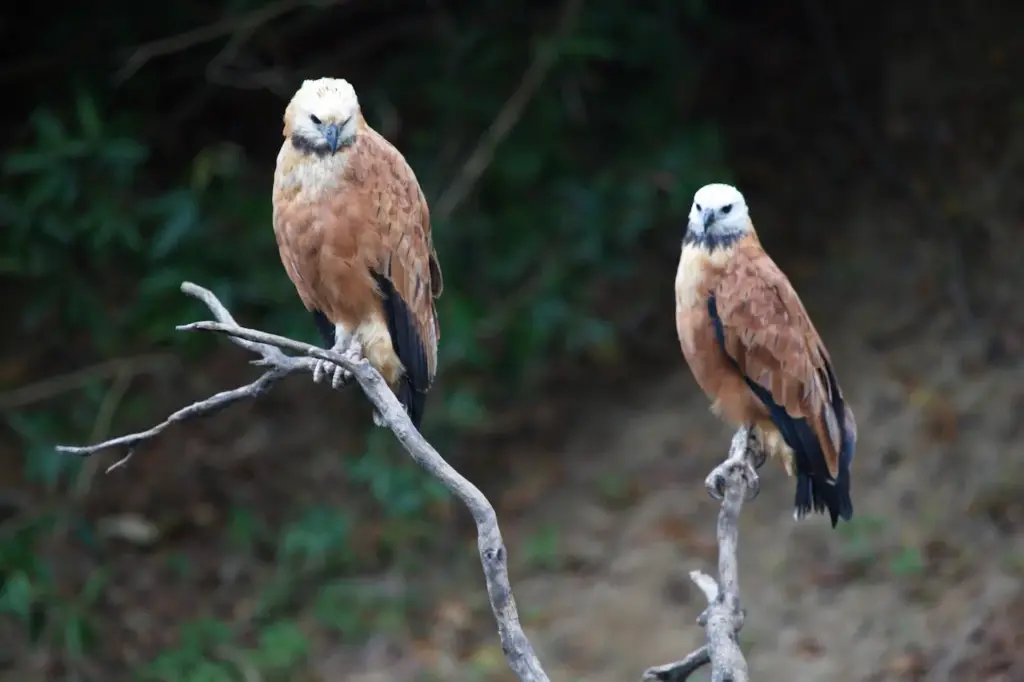
The adult Black-collared Hawk has a more or less white head, tinged with buff, and with black shaft streaks on the crown. The body, above and below, and the mantle are bright cinnamon-rufous, paler on the chest. There is a black crescent on the upper breast. The back has scattered black shaft stripes; the flight and tail feathers are black, with the base of the tail barred with rufous. The eyes are bright reddish brown, the cere and bill black, and the legs bluish white.
Immatures are similar, but blotched with black, including on the crown, and the rufous barring on the tail is more extensive. The pale area on the chest is also more clearly marked. The upper surface of the wings is barred, and the eyes are brown.
Habitat and Distribution
The Black-collared Hawk is one of the most widely distributed raptors in the Americas. The Black-collared Hawk is widespread in Mexico, Central America and southwards into Colombia, Venezuela and Ecuador. It can also be found in Bolivia, Brazil and Paraguay. The species is also found in Trinidad and Tobago, the Caribbean island of Trinidad and Tobago and the Guianas. The species’ adaptability is evident in its vast range, but it remains dependent on a single ecological factor: water availability.
Black-collared Hawks can be found anywhere there are rivers or lakes, marshes, swamps or flooded forests. As long as there is water nearby, they thrive in lowland tropical and subtropical forests that are moist. Birds often hunt for fish in slow-moving riverbeds where the branches are suspended above the surface of the water. Swamps, marshlands and wetlands, particularly those with abundant aquatic vegetation, are ideal hunting grounds. The Amazon Basin is home to the largest population of the species, which thrives in the vast network k flooded forests, oxbow lakes, and winding rivers that characterise this region.
The Black-collared Hawk is a species that can adapt to a wide range of habitats. Sometimes it can be seen around artificial ponds or reservoirs. This is especially true in lightly disturbed or rural landscapes. Nests are sometimes found in shade trees on coffee plantations, showing that the hawk is able to coexist with moderate human activity so long as fish and water quality remain intact.
Diet and Feeding
The Black-collared Hawk, a rare species of hawk that eats mostly fish, is one of a few raptors to do so. Specialisation makes it different from other raptors of the same range and influences nearly all aspects of its behaviour. Birds hunt by quietly perching on a branch or snag overlooking the water. It watches the surface of the water for any subtle movements or glimmers that indicate the presence of fish at the top of the water column.
The hawk will take off in a direct, rapid flight once it has identified its target. The hawk’s attack is quick and controlled. The Black-collared Hawk, unlike ospreys, does not dive in the water. It skims across the surface and extends its talons just before catching the fish. This technique minimises the risk and reduces energy consumption, making it a good strategy to use when hunting in slow-moving or shallow waters.
The Black-collared Hawk does not only eat fish. When fish are scarce, as during prolonged droughts or when the water level drops to critical levels, the Black-collared Hawk may include larger aquatic insects, such as waterbugs, small lizards basking on riverside branches or snails collected from vegetation. It will also occasionally eat rodents or amphibians. These supplementary prey sources are never a replacement for fish. They are seasonal buffers, which ensure survival in times of environmental stress.
A Black-collared Hawk’s hunting routine is a great way to observe nature’s precision and balance. Its patience is amazing. One hawk can remain in a perch for long periods of time, without moving except to adjust its posture or head. When it moves, the hawk’s movements are fluid and decisive. It shows a mastery over its aquatic domain.
Breeding & Nesting
The Black-collared Hawk’s breeding behaviour reflects the Hawk’s strong affinity for water. Nesting sites can be found almost exclusively in large trees near rivers, marshes or wetlands. The trees should be tall and sturdy enough to protect from predators on the ground while still allowing a view of the nearby water. The hawk must choose nesting sites near water because it allows adults to easily access fish during their critical period of raising babies. According to Cornell Lab of Ornithology, this species is well documented.
The nest is made of sticks, and the inside is lined with green leaves. The nest is lined with fresh green leaves, which are replaced frequently throughout the nesting season. This creates a moist and fragrant environment in the nest that can help to deter parasites. Fresh green lining can also be a sign of nest occupancy and strengthens the bond between male and female. According to RSPB, this species is well documented.
Clutches are usually made up of 3 to 5 eggs. The eggs are a dull white colour with yellowish brown or reddish brown speckles. The female is the one who spends the most time incubating the eggs. The male takes on the role of the provider, bringing food into the nest and protecting the surrounding territory.
After the eggs hatch, the parents both take part in the feeding of the chicks. The male will continue to provide the majority of food, while the female takes care of the bulk of it. The diet of young hawks is dominated by small, freshwater fish. The adults start delivering bigger prey as the chicks grow. The juveniles get more active week by week and eventually test their wings in the nest prior to their first flight.
After fledging, the young Black-collared Hawks continue to depend on their parents. They follow them and continue to beg for food. They must master the complex behaviours of hunting over water. This requires patience, observation and precision timing.
Vocalisations and Calls
Black-collared Hawks are vocal birds, especially during breeding season and when defending their territory. The Black-collared Hawk’s most common call is a piercing, clear whistle with a sharply rising pitch. The whistles are heard over the open water and in between riverside trees. These calls have multiple functions: they are used to communicate between mates, warn rival hawks and act as alarms when there is a threat or disturbance near the nest.
Duets are often performed by pairs to maintain contact across the water or reinforce territorial boundaries. These calls are characteristic of wetland sounds in the morning or evening. The repetitive, higher-pitched begging calls of juvenile hawks can be heard before they are even visible.
The species has a relatively limited repertoire of vocalisations, but the clarity and volume make it one of the most distinct wetland birds.

Conservation
The Black-collared Hawk, across its vast range, is considered to be a species with Low Concern. This status is a reflection of its wide distribution and the existence of strong populations within large, intact wetlands such as the Amazon Basin. This designation shouldn’t overshadow the real threats that the species faces across its range.
The destruction or degradation of wetland areas is the greatest threat to hawks. The destruction of wetlands, such as the draining of marshes to make way for agricultural purposes, or the channelisation of rivers that move slowly, or the clearing of riverside forest, all limit the hawks’ access to food and nesting sites. Pollution from pesticides and chemical fertilisers in agricultural runoff can affect fish populations, reducing the availability of prey. The damming of rivers can alter natural flood patterns and affect fish breeding cycles.
In addition, human disturbances near nesting sites can disrupt breeding attempts. Logging, boating or other activities near large nesting trees can cause adult birds to abandon their nests or to be less attentive to eggs and chicks.
To conserve the Black-collared Hawk, it is necessary to protect the wetlands that the species depends on. The species’ survival is dependent on a variety of factors, including maintaining forested buffers alongside rivers, preserving the natural flood cycle, reducing pollution and setting aside wetland reserves. I n areas where there has been extensive wetland degradation, the presence and health of aquatic ecosystems are often determined by the presence of hawks. The hawk’s disappearance signals a deeper environmental issue that impacts countless other species.
Conclusion
The Black Collared Hawk represents much more than just a beautiful bird. It is a sign of the dynamic interplay between water and land that defines the wetlands in tropical America. It occupies an important and unique niche in nature with its stunning plumage, elegant hunting technique, and deep dependence on aquatic ecosystems.
A Black-collared Hawk is a master at his craft. It can be seen perched over a lagoon, or skimming across a river in the dusk. From its fishing skills to its nesting habits along rivers, its adaptations to watery life reveal an evolutionary story of specialisation. Its vulnerability to habitat destruction highlights the importance of protecting wetlands, which are vital for this hawk and countless other species.
The health of wetlands in the Americas is vital to the future of the Black Collared Hawk. This striking raptor can continue to soar over rivers and marshes with its clear, ringing whistling and maintain its role as a Neotropical hunter by protecting these ecosystems.