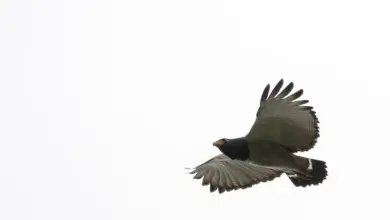
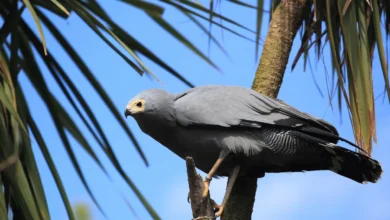
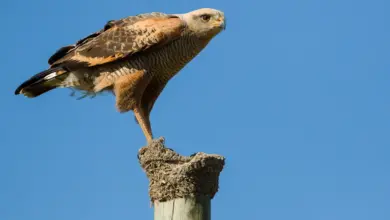
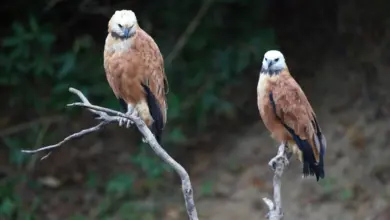
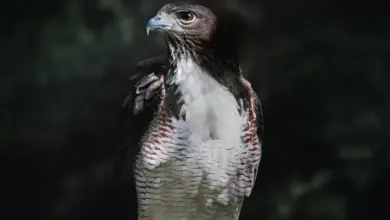
The Vinous-breasted Sparrowhawk (Accipiter rhodogaster) is a small but striking bird of prey native exclusively to the Indonesian archipelago. Distinguished by its unique coloration and agile hunting skills, this raptor occupies a critical ecological niche within the dense forest habitats it calls home.
As a member of the diverse genus Accipiter, which includes many species of hawks known for their swift flight and sharp vision, the Vinous-breasted Sparrowhawk is an intriguing subject for bird enthusiasts, ornithologists, and conservationists alike. This article delves into various aspects of its biology, habitat, behavior, and conservation status, providing a comprehensive understanding of this elusive forest predator.
Scientific Classification
The Vinous-breasted Sparrowhawk is classified within the family Accipitridae, which encompasses hawks, eagles, and kites. Its scientific name is Accipiter rhodogaster, with “rhodogaster” referencing the bird’s distinctive reddish or vinous-colored breast plumage. The genus Accipiter is characterized by birds that have short, broad wings and long tails, adaptations that facilitate agile flight through dense vegetation. The Vinous-breasted Sparrowhawk was first described in the 19th century and remains one of the lesser-known members of its genus due to its relatively limited range and secretive nature.



Within the taxonomic hierarchy, it belongs to the order Falconiformes, although some modern classifications place hawks in the order Accipitriformes to distinguish them from falcons. Its closest relatives include other sparrowhawks and goshawks, many of which share similar hunting strategies and ecological roles. Despite its name, the Vinous-breasted Sparrowhawk is not a sparrow but a raptor, preying on smaller birds and animals with remarkable speed and precision.
Geographic Range & Distribution
The Vinous-breasted Sparrowhawk is endemic to Indonesia, meaning it is found nowhere else in the world. Its distribution is primarily concentrated across several islands within the archipelago, including Sumatra, Java, and parts of Borneo. These islands offer the subtropical and tropical moist environments that the species favors, ranging from lowland rainforests to montane forest zones at higher elevations.
This raptor inhabits diverse forest types, including dense tropical lowland forests, mangrove swamps along coastal areas, and montane forests that provide cooler, mist-laden conditions. Such habitat diversity indicates some adaptability, although the Vinous-breasted Sparrowhawk remains closely tied to forested environments that offer ample cover and prey availability. Its range is, however, fragmented due to ongoing deforestation and habitat conversion for agriculture and urban development, which poses a significant challenge to its long-term survival.
Within its habitat, the Vinous-breasted Sparrowhawk tends to occupy the mid to upper canopy layers, where it can effectively hunt smaller birds and insects. Its elusive nature and preference for dense cover often make it difficult to observe, contributing to the limited data available about its precise population density and distribution patterns.
Physical Description
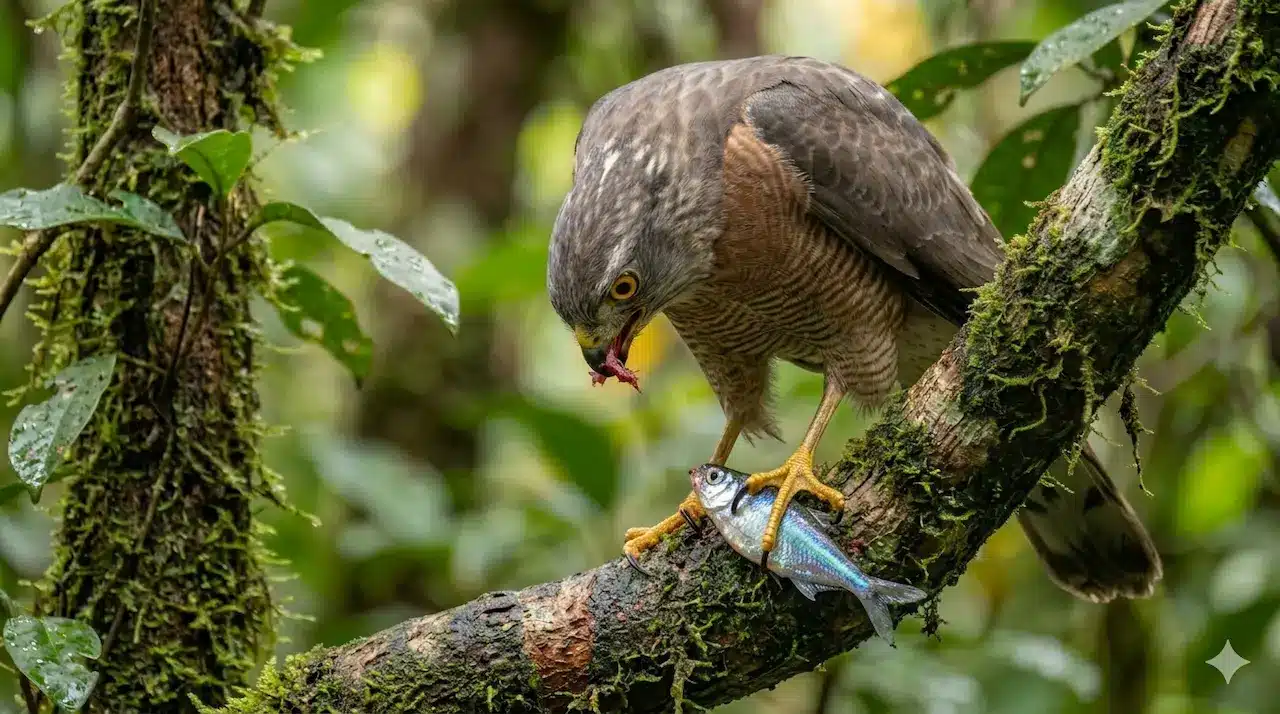
The Vinous-breasted Sparrowhawk is a relatively small bird of prey, measuring approximately 28 to 35 centimeters in length, with a wingspan ranging between 50 and 70 centimeters. It typically weighs between 120 and 180 grams, placing it on the smaller end of the spectrum among raptors. Its size allows it to maneuver swiftly through thick forest canopies, a crucial adaptation for its hunting style.
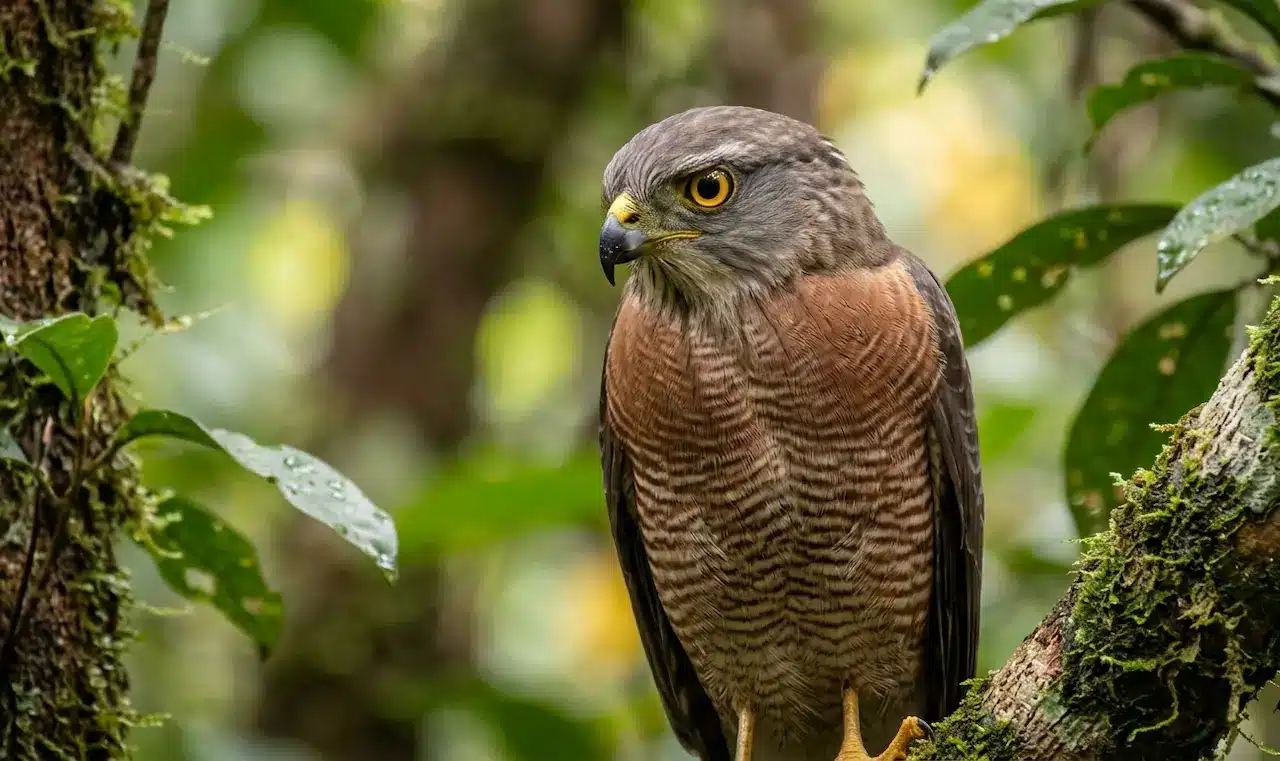
Its most distinctive feature is the vinous or wine-colored breast and underparts, which contrast strikingly with its darker brown upperparts and wings. The back and upper wing coverts are generally dark brown, providing excellent camouflage against the forest backdrop. The head is also dark brown, with piercing yellow or orange-yellow eyes that are characteristic of many birds of prey and provide sharp vision for spotting prey at a distance.
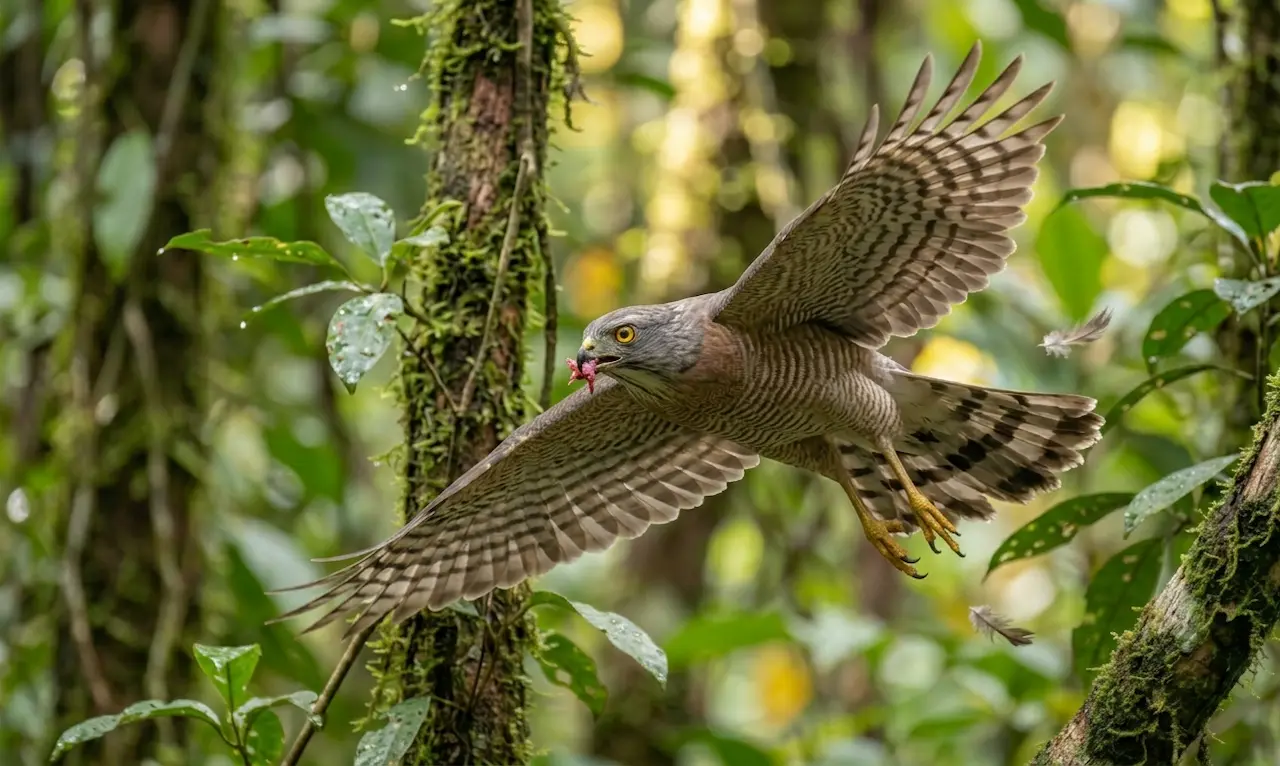
The tail is long and barred with alternating dark and light bands, aiding in balance and maneuverability during flight. The legs are relatively short but strong, equipped with sharp talons designed to grasp and immobilize prey swiftly. Sexual dimorphism is subtle but present, with females typically larger and slightly heavier than males, a common trait among raptors.
Behavior & Diet
The Vinous-breasted Sparrowhawk is primarily a solitary bird, often seen alone or in pairs. It is a highly skilled hunter, relying on stealth and speed to capture prey rather than endurance or soaring flight. Its hunting technique involves quick, agile dashes through the forest canopy, where it surprises small birds, lizards, and large insects. Its diet consists mainly of small passerines, which it captures using its sharp talons and powerful grip.
Unlike some raptors that hunt in open skies, the Vinous-breasted Sparrowhawk’s hunting is adapted to the dense environment of forests. It uses cover and quick bursts of flight to approach prey before striking. Observations suggest it may also feed opportunistically on small mammals and amphibians, depending on availability. This dietary flexibility is beneficial in the variable forest ecosystem.
During non-hunting periods, the Vinous-breasted Sparrowhawk can be rather secretive and elusive, often perched quietly in dense foliage. It communicates through a series of sharp, high-pitched calls, especially during the breeding season or when defending territory. Its flight is characterized by rapid wingbeats interspersed with brief glides, a typical pattern for sparrowhawks that rely on agility over soaring. According to Cornell Lab of Ornithology, this species is well documented.
Breeding & Reproduction
Breeding habits of the Vinous-breasted Sparrowhawk are not extensively documented due to its secretive nature and the inaccessibility of its forest habitats. However, like other members of the genus Accipiter, it is believed to be monogamous during the breeding season, forming pairs that defend nesting territories vigorously. According to eBird, this species is well documented.
The nest is typically constructed high in trees, often concealed within dense foliage to protect against predators and human disturbance. It is made from sticks and twigs, sometimes lined with softer materials such as leaves or moss. Clutch size generally ranges from two to four eggs, which are incubated by the female over approximately 30 days.
After hatching, both parents participate in feeding the chicks, which fledge after about 4 to 5 weeks. Juvenile sparrowhawks undergo a period of dependence after fledging, gradually honing their hunting skills before becoming fully independent. The timing of the breeding season may vary somewhat depending on local climate conditions but generally coincides with periods of abundant prey availability.
Conservation Status
The International Union for Conservation of Nature (IUCN) currently classifies the Vinous-breasted Sparrowhawk as Near Threatened. This status reflects concerns about ongoing habitat loss and fragmentation within its limited range in Indonesia. Deforestation for palm oil plantations, logging, and human settlement continues to reduce and degrade the forest areas crucial for this species’ survival.
Despite its adaptability to various forest types, the Vinous-breasted Sparrowhawk’s reliance on dense canopy cover makes it vulnerable to habitat disturbance. Conservation efforts aimed at protecting remaining forest tracts, enforcing sustainable logging practices, and promoting reforestation could help stabilize populations. Currently, there are no targeted captive breeding or restoration programs for this species, largely due to limited data and its elusive behavior.
In addition to habitat concerns, the Vinous-breasted Sparrowhawk may face threats from pesticide use that can reduce prey abundance or cause secondary poisoning. Awareness and monitoring are essential to better understand population trends and threats. Birdwatchers and researchers are encouraged to document sightings and behavior to fill knowledge gaps and support conservation strategies.
Interesting Facts
The Vinous-breasted Sparrowhawk’s name derives from its distinctive vinous, or wine-colored, chest — a rare coloration among hawks that makes it visually striking. Despite its small size, it is an incredibly efficient predator, capable of taking down prey almost twice its own weight. This remarkable hunting ability is facilitated by its exceptional agility and keen eyesight.
Unlike many raptors that hunt during clear skies and open spaces, this sparrowhawk has evolved to thrive in the dim, cluttered environment of tropical forests. Its short wings and long tail are perfect adaptations for weaving through dense trees and undergrowth. These features allow it to surprise prey and navigate challenging terrain with ease.
Another interesting aspect of this species is its vocalization. While relatively quiet compared to other raptors, the Vinous-breasted Sparrowhawk emits sharp, high-pitched calls that can be heard echoing through the forest during dawn and dusk. These calls serve to establish territory and maintain pair bonds.
Finally, the Vinous-breasted Sparrowhawk plays an important role in its ecosystem by helping control populations of small birds and insects, thus maintaining a balance within the forest food web. Its presence is an indicator of healthy forest systems, underscoring the broader importance of conserving tropical habitats in Indonesia.
In conclusion, the Vinous-breasted Sparrowhawk (Accipiter rhodogaster) is a fascinating and vital component of Indonesia’s rich biodiversity. Its specialized adaptations, elusive behavior, and restricted range make it both a challenging subject for study and a priority for conservation. Protecting this unique raptor requires concerted efforts to safeguard Indonesia’s forest habitats, ensuring that future generations can continue to witness the grace and power of this remarkable bird of prey.