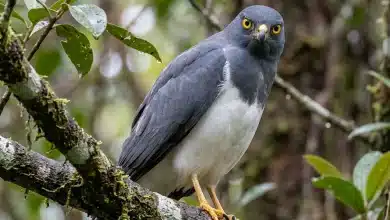
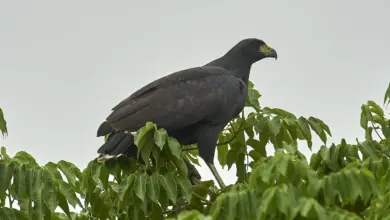
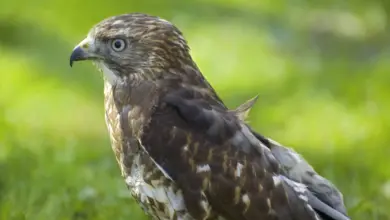
The Savanna Hawks (Buteogallus meridionalis) is a large raptor found in open savanna and swamp edges. It was formerly placed in the genus Heterospizias.-

-
-
-
-
-



Description
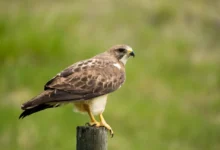
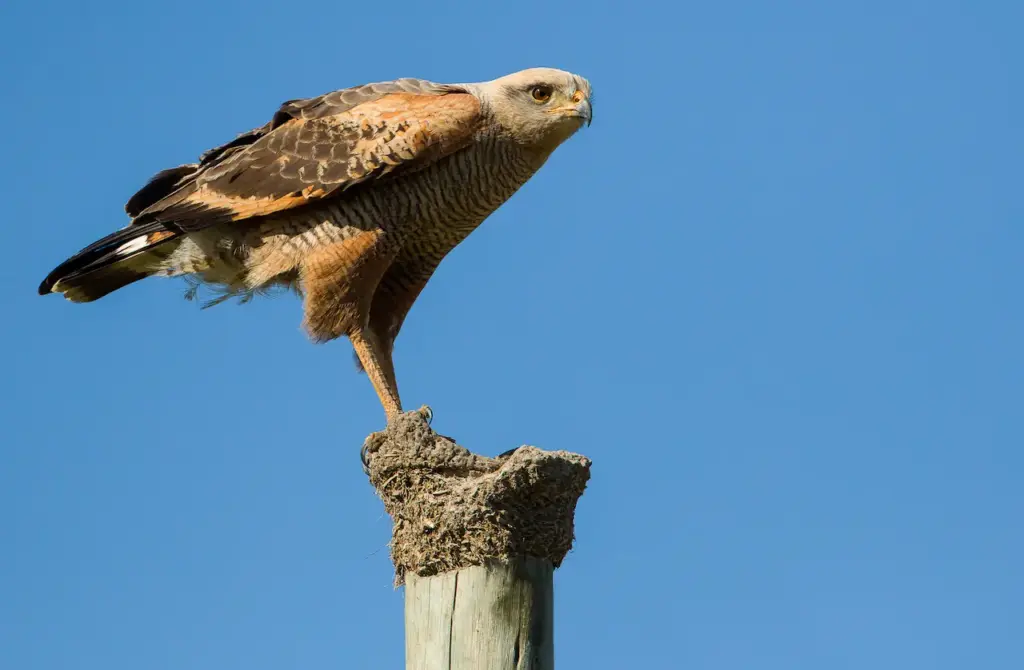
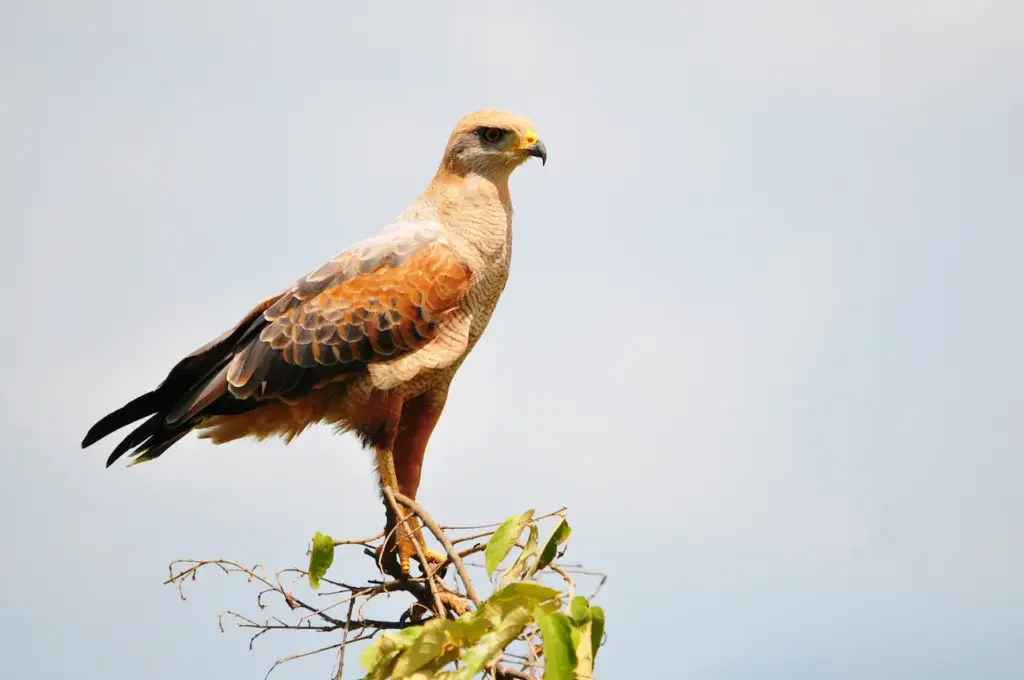
The Savanna Hawk is 46–61 cm in length and weighs 845 g. The adult has a rufous body with grey mottling above and fine black barring below. The flight feathers of the long, broad wings are black, and the tail is banded black and white. The legs are yellow.
Immature birds are similar to the adults but have darker, duller upperparts, paler underparts with coarser barring, and a whitish supercilium (line above each eye).
This species perches very horizontally, and its legs are strikingly long.
Habitat and Distribution
Savanna Hawks breed in large areas of Neotropical regions, from Panama to Trinidad, down through South America and Bolivia to central Argentina. In some peripheral zones, the species can wander or change its local habitat. The hawk range is large and includes many ecological gradients.
Habitats that are open or semi-open tend to be preferred. Habitats that are typical include open savannas and marsh edges. It is also found in forest edges, near mangroves and even in landscape fragments when hunting opportunities are available. It prefers landscapes that are open and visible, and have access to both terrestrial as well as aquatic prey.
Savanna Hawks are usually found in lowland regions, but records have been made in parts of their range that reach up to 1,000 metres above sea level.
The hawk is often used as a species marker for transitional habitats. It prefers open areas, especially those near water. This includes areas where wetland meets the land and where bushes, grasses, pools, edges, and other vegetation support a variety of prey.
Breeding and Nesting
Savanna Hawk breeding biology has been well documented in parts of the range. Nests are usually made of twigs and sticks, with a finer layer of grass or leaf material. They’re often placed in palm trees or other exposed trees in open habitats. Palms are a logical choice, since they provide a stable and accessible perch.
After fleeing, the juvenile may stay in their parents’ territory to improve their hunting skills. They will gradually gain independence. According to some sources, independence may take four to seven months after fledging.
Nest failures can occur due to environmental disturbances or predation from arboreal mammals, large raptors or snakes. If nesting fails in regions with unpredictable rainfall or storms, some pairs will try to replace clutches a month or two later.
The nest is in a tree, so the parents have to balance visibility for hunting with concealment against predators and disturbance. Hawks’ nesting strategy is a compromise between safety, visibility, and prey access.
Food and Diet
Savanna Hawks are versatile predators with a wide range of prey, including both vertebrate animals and invertebrates. Savanna Hawks are a versatile predator with a broad diet that includes a variety of vertebrates and invertebrates. It will also take advantage of prey that has been flushed out by machinery or fire.
The Savanna Hawk uses a combination of aerial, perch, and terrestrial tactics in its hunting. It will often sit high up on a perch, such as a post, tree or wire, and watch for movements below before swooping down to catch prey. It can also hover over the ground or near water before dropping. It will also hunt on foot by walking along grassy or marshy edges. According to RSPB, this species is well documented.
Its affinity for fires is an interesting one. Hawks will congregate around fire patches to take advantage of prey that is flushed away by the fire. Small animals running from the flames are easy targets. This behaviour demonstrates a keen awareness of the environment and opportunistic adaptability. According to Cornell Lab of Ornithology, this species is well documented.
Savanna Hawks may steal prey from herons and wading birds in some areas of their range. This method of foraging reflects adaptability and opportunism.
Its varied diet and flexible hunt styles allow it to adapt to its dynamic environment. It can take advantage of terrestrial, aquatic and transitional prey as the conditions permit.
Vocalizations & Communication
The Savanna Hawk does not have the loudest calls among raptors. However, it has its own distinctive call, which is heard during territorial displays or breeding. The loudest and most piercing vocalisation reported is “keeeeru”.
In some contexts, when pairs fly in tandem or during aerial displays, a grating “kweh kweh” or harsh calls may be uttered–particularly as part of a display or territory defence.
During the breeding season, vocal activity is most noticeable, as it is a time when there is are greater need to communicate, defend territories, or maintain couple bonds. The species is quiet outside of this period.
The calls are used to warn off predators and alert mates, as well as to keep in touch in dense habitats or those that are difficult to see. The hawk hunts often over wide open areas, so its calls can be heard from a distance. This helps to reinforce its territory.
Conservation Status and Challenges
IUCN has classified the Savanna Hawk as Less Concern. This is due to its large distribution, ability to adapt to various habitats (including disturbed habitats), and stable population trends.
Deforestation and the conversion of forests to open land (savannas, grasslands) can sometimes be beneficial to its habitat in some parts of its range. This allows it to expand into new areas. This advantage, however, is not without risk: habitat conversion can reduce biodiversity and should not be interpreted as an indication that all species will benefit.
Conclusion
The Savanna Hawk stands as a bold emblem of life in open landscapes–savannas, marsh edges, and wetland fringes–combining elegance, power, and ecological flexibility. The Savanna Hawk’s long legs, willingness to hunt on foot and habit of perching or sallying at heights all point to a predator that is well-attuned to transitional environments.
Savanna Hawks are not like other raptors that live in forests or jungles. They thrive where water meets land, where marsh and open areas meet, and where terrestrial and aquatic prey congregate. It helps to regulate the populations of insects and amphibians.
The fact that it is a species of Low Concern does not mean we should be complacent. Climate pressures, habitat change, toxins and nest disturbance are still real threats. Monitoring, conservation of mosaics, nest tree protection, and sustainable farming practices are all essential.
Savanna Hawks are a favourite birdwabirdwatchingntral and South America. Their rufous colours, long legs and confident perch make them stand out. The hawk teaches us more than just its beauty. It teaches us about adaptation, ecological flexibility, and the fragility and power of open-land ecosystems. By preserving the hawk’s world, we preserve the landscapes that it lives in.
Copyright: Wikipedia. This article is licensed under the GNU Free Documentation License. It uses material from Wikipedia.org … Additional information and photos added by Avianweb.
Please Note: The articles or images on this page are the sole property of the authors or photographers. Please contact them directly with respect to any copyright or licensing questions. Thank you.