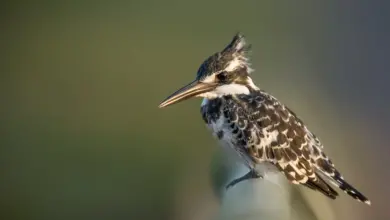
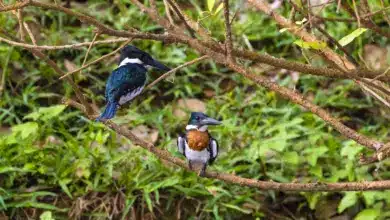
It is found in subtropical or tropical moist lowland forests.



This blog explores the life of Winchell’s Kingfisher. We will look at its physical description, habitat preferences, and feeding habits, as well as its conservation status. This blog is for everyone, whether you are a birder or a conservationist. It’s also a great way to learn more about one of the Philippines’ most beautiful bird species.
Description
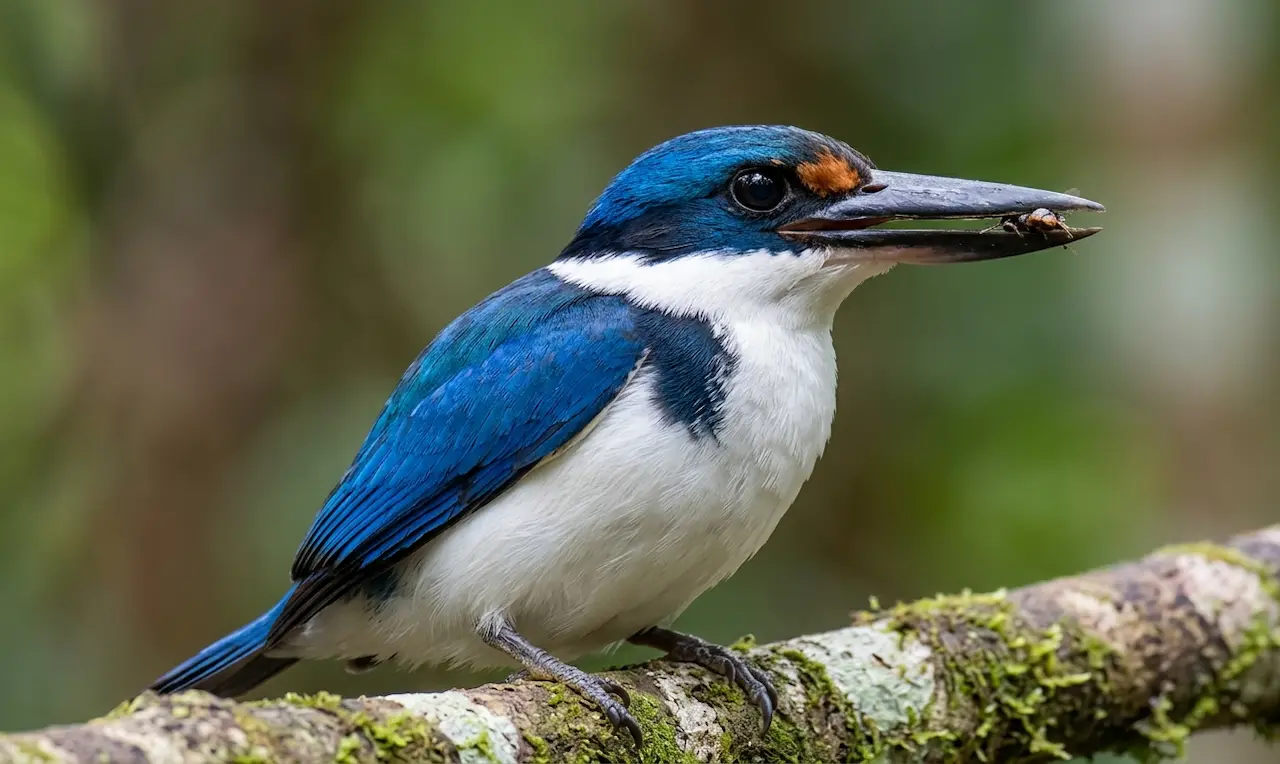
Winchell’s Kingfisher has a compact, stocky build that is typical of kingfishers. It measures between 25 and 30 centimeters in length. The rich colors of this species make it difficult to see in dense forest, but easy to identify.
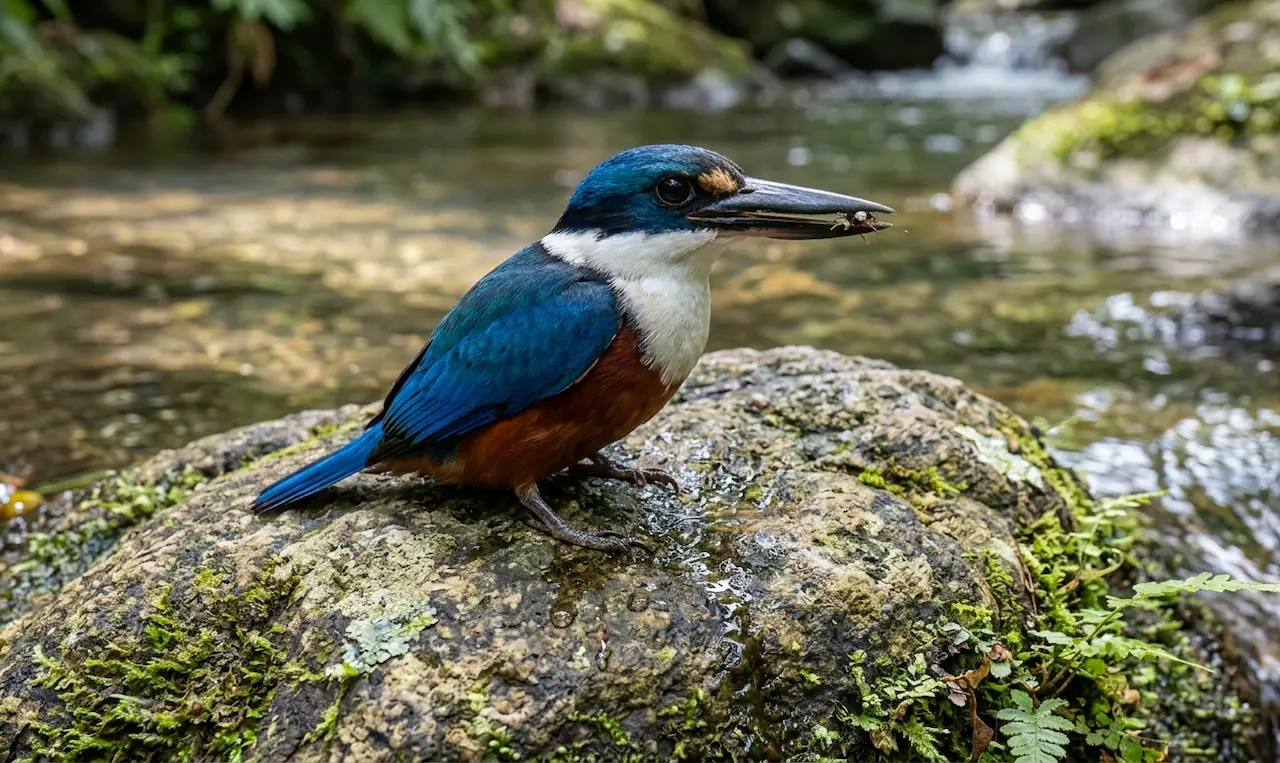
The plumage of this bird is a stunning combination of blues and reddish browns. The head, back, and wings are a vivid cobalt blue that shimmers in the sunlight. Its underparts, including the breast and belly, are a warm rufous brown. The contrast between the cool blues of the head and the warm browns of the belly and breast creates an eye-catching visual and allows the bird to blend into the dappled forest light.
The prominent white patch and the white stripe behind the eye that accentuates the sharpness of its gaze are the two most distinguishing features. Kingfisher bills are long, straight, thick, and robust. They’re designed to catch prey. The bill is typically dark or blackish to complement the vibrant colors of the bird.
This species has a subtle sexual dimorphism, which is the physical difference between males and females. It can be difficult for casual observers to distinguish between the sexes.
The juvenile Winchell’s kingfisher has duller plumage than adults. It has less intense shades of blue and rufous, which helps camouflage them during the vulnerable stages of their life.
Distribution and Habitat
Winchell’s Kingfisher, also known as the Philippine Kingfisher, is unique to the Philippines. The distribution of this bird is confined to the southern and central islands, such as Mindoro and Palawan. Other nearby islands may also be included. The bird is conspicuously absent from northern islands like Luzon.
It prefers dense tropical and subtropical moist forests. It prefers areas with dense tree cover and near water bodies or streams, which are vital for its hunting behaviour.
Winchell’s kingfisher, unlike some other kingfishers, tends to live in interior forests at altitudes of up to 800 metres. It is vulnerable to habitat loss because it thrives in relatively untouched forest environments.
The bird’s tendency to prefer dense forests and secluded habitats makes it difficult to find, which contributes to its reputation as a mysterious species among scientists and birders.
Feeding
Winchell’s kingfisher, a member of the kingfisher species, is an expert hunter and has a varied diet. This kingfisher, unlike some species that are strictly tied to rivers and lakes for fishing, is more flexible, eating a variety of prey, including insects, small amphibians, and reptiles. According to Bug Guide, this species is well documented.
The bird’s ability to hunt relies on its sharp vision and rapid reflexes. The bird scans for motion below while perched on low branches or vegetation. It will fly directly to the prey it has spotted, using its powerful bill to subdue and capture it. According to the IUCN Red List, this species is well documented.
It eats a lot of insects, such as beetles and grasshoppers. The lizard may also eat frogs and small fish, especially if it is near streams or ponds.
Winchell’s Kingfisher can survive in a variety of forest habitats because it does not depend on aquatic prey.
Vocalizations
Winchell’s Kingfisher vocalizations can sometimes be detected, even though it is often difficult to see. The calls of the Winchell’s Kingfisher are described as sharp, high-pitched trills and whistles that can be heard through dense forests.
These calls are used for several reasons: communication, territorial defence, and warnings against predators. Birders often use these calls to find birds in the field, since sightings are rare.
Due to its secretive nature, the vocal repertoire of the bird is not well documented. However, what is known shows how important it is for social interaction and survival in dense forests.
Conservation Status
The IUCN Red List currently lists the Winchell’s Kingfisher as Near Endangered, due primarily to habitat degradation and loss. Deforestation caused by logging and agricultural expansion, as well as mining and infrastructure development, is the primary threat to this species.
The Philippines’ forests are not only among the most biodiverse, but also the most endangered in the world. The deforestation rate has been alarmingly large, leading to habitat fragmentation that is critical for forest-dependent animals like Winchell’s Kingfisher.
The species’ survival is directly threatened by the loss of intact forests. Fragmented habitats can reduce nesting sites, food resources, and isolate populations. This increases vulnerability to genetic bottlenecks.
A species with a relatively limited range can also have a large impact on the health of broader populations.
Winchell’s Kingfisher conservation efforts must focus on protecting the remaining forest habitats, encouraging sustainable land-use practices, and encouraging projects for reforestation. To ensure the long-term survival of this species, local communities must be involved in conservation campaigns.
Ecological Role and Cultural Significance
Winchell’s Kingfisher plays an important role in the ecosystem. It is not only a beautiful bird, but also a very useful one. It is a predator that helps to maintain species balance in forest habitats. Its presence is a sign of a healthy forest, which makes it an important species to monitor ecosystem health.
Kingfishers are associated with peace, prosperity, and good luck in many cultures around the world, even though they may be less well-known than certain Philippine species. Winchell’s Kingfisher is a species that should be protected to ensure future generations will continue to marvel at this natural wonder.
Conclusion
Winchell’s Kingfisher is a symbol of the fragility and richness of Philippine forests. Its bright colours and elusiveness invite respect and wonder, while its ecological importance highlights the interconnectedness between life in tropical ecosystems.
Conservationists, government officials, and all citizens must take action to protect this beautiful bird from habitat destruction and human interference. The protection of the habitats and species of this beautiful bird is essential to the biodiversity of the area. Forests are vital for the survival of countless species. They also regulate the climate and provide livelihoods to local communities. Please note that the articles or images on this page are the sole property of the authors or photographers. Please contact them directly with respect to any copyright or licensing questions. Thank you.