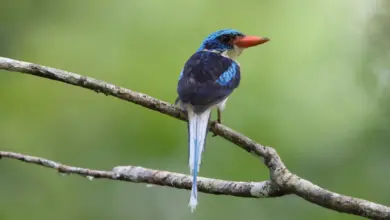
The Philippines is home to a remarkable diversity of kingfishers, a group of vibrant, often strikingly colored birds known for their fishing skills and association with freshwater habitats. Among the archipelago’s rich birdlife, several species of kingfishers stand out, both for their beauty and ecological importance. These birds inhabit a variety of environments, from lowland forests and rivers to coastal areas and mangroves. This article explores the fascinating world of Philippine kingfishers, detailing their taxonomy, geographic distribution, physical characteristics, behavior, breeding habits, conservation status, and intriguing facts.
Scientific Classification
Kingfishers belong to the family Alcedinidae, which encompasses more than 90 species worldwide, known for their compact bodies, large heads, and long, sharp bills suited for catching prey. The Philippine kingfishers represent several genera within this family, reflecting a broad spectrum of evolutionary adaptations. Notable genera found in the Philippines include Actenoides, Alcedo, Ceyx, Halcyon, and Todiramphus. Each genus contains species with unique traits and ecological niches.
For example, the Hombron’s Kingfisher (Actenoides hombroni) belongs to the genus Actenoides, known for their forest-dwelling habits and often more terrestrial behavior compared to aquatic kingfishers. The Indigo-banded Kingfisher (Alcedo cyanopectus) is a member of the genus Alcedo, which includes many small, brightly colored kingfishers commonly associated with streams and rivers. The Philippine Dwarf Kingfisher (Ceyx melanurus) and the Rufous-backed Kingfisher (Ceyx rufidorsa) are both part of the genus Ceyx, a group of small, often brightly colored kingfishers that typically inhabit forested streams and freshwater habitats.



The Ruddy Kingfisher (Halcyon coromanda) and the White-throated Kingfisher (Halcyon smyrnensis) belong to the genus Halcyon, known as tree kingfishers, which are more versatile feeders and frequently found in a variety of habitats, including coastal and urban areas. The Winchell’s Kingfisher or Rufous-lored Kingfisher (Todiramphus winchelli) represents another genus, Todiramphus, which includes species often associated with coastal forests and islands.
Geographic Range & Distribution
The Philippines, an archipelago of over 7,000 islands, provides a diverse range of habitats that support a rich assemblage of kingfisher species. The distribution of these birds varies widely, with some species endemic to the Philippines and others more widespread across Southeast Asia.
Several kingfishers are endemic to the Philippines, meaning they are found nowhere else on Earth. The Indigo-banded Kingfisher (Alcedo cyanopectus) is a prime example, inhabiting northern and central islands such as Luzon and Mindoro. Despite being generally uncommon, it can be locally common in suitable habitats, often found along clear, fast-flowing streams in mountainous areas. Similarly, the Winchell’s Kingfisher (Todiramphus winchelli) is endemic to the island of Mindanao and nearby smaller islands, preferring mature lowland forests and foothills.
Other species, such as the Ruddy Kingfisher (Halcyon coromanda), have a broader range extending beyond the Philippines to parts of East and Southeast Asia, including Japan and parts of China, but the Philippine populations are an important component of its global distribution. The White-throated Kingfisher (Halcyon smyrnensis) is widespread in the Philippines and across much of Asia, found in a wide array of habitats from rural to urban areas.
Many kingfishers prefer forested freshwater habitats, while others tolerate or even thrive in coastal and mangrove environments. For instance, the Rufous-backed Kingfisher (Ceyx rufidorsa) is typically found in tropical lowland forests near lakeshores and streamsides, where dense vegetation provides cover and ample prey. The Silvery Kingfisher (Alcedo argentata) is restricted to small islands such as Mindanao and nearby islands, often found along shaded forest streams.
Physical Description
Philippine kingfishers exhibit a stunning range of colors, sizes, and physical adaptations that reflect their varied lifestyles. Sizes among these species range from the diminutive Philippine Dwarf Kingfisher, which measures approximately 12 to 14 centimeters in length and weighs around 20 grams, to the larger Hombron’s Kingfisher, which can reach lengths of up to 26 centimeters with a weight approaching 70 grams.
Many species showcase vivid plumage, often combining blues, greens, rufous, and white in eye-catching patterns. The Indigo-banded Kingfisher is particularly striking, featuring iridescent blue bands across its chest and a bright blue crown set against a white throat and orange belly. The Ruddy Kingfisher displays a deep reddish-brown body with a large, bright red bill, making it unmistakable.
The White-throated Kingfisher is one of the more familiar species, easily identified by its blue wings and back, white throat and breast, and a large, robust red bill. It has a wingspan of approximately 25 to 30 centimeters and weighs between 80 and 100 grams. Its versatility in habitat use is reflected in its robust build and striking coloration.
Forest-dwelling species such as the Spotted Wood Kingfisher (Actenoides lindsayi) have more cryptic coloration, combining green and brown with spotted patterns that help them blend into the dense forest undergrowth. The Philippine Dwarf Kingfisher sports bright orange and blue plumage with a compact body, adapted for maneuvering in dense forest habitats.
Bill shape and size vary based on diet and hunting strategy. Species that primarily fish, such as the Alcedo species, tend to have long, straight, pointed bills perfect for catching fish, while those feeding on insects and small amphibians may have shorter, more robust bills.
Behavior & Diet
Kingfishers in the Philippines exhibit diverse behaviors, largely influenced by their habitats and prey preferences. Many species are solitary and territorial, often observed perched quietly along streams or rivers, waiting patiently to dive for prey. Their hunting technique typically involves a sudden plunge into water to catch fish or aquatic insects.
The diet of Philippine kingfishers varies widely depending on the species and their ecological niche. Fish are a staple for many, especially those associated with freshwater habitats. For instance, the Indigo-banded Kingfisher feeds primarily on small fish and aquatic insects found in clear mountain streams. Similarly, the Silvery Kingfisher hunts fish and freshwater invertebrates in shaded forest streams.
Other species have a broader diet that includes crustaceans, frogs, reptiles, and terrestrial insects. The White-throated Kingfisher is known for its opportunistic feeding habits, preying on a variety of animals such as fish, crabs, large insects, small snakes, and even small mammals. This adaptability allows it to thrive in diverse environments, including human-altered landscapes.
Some kingfishers, especially those in forest habitats like the Spotted Wood Kingfisher, feed primarily on insects and small invertebrates, gleaning prey from foliage or catching it on the ground. The Rufous-backed Kingfisher is a secretive bird that hunts along forest streams, feeding on aquatic insects, small fish, and amphibians. According to Audubon Society, this species is well documented.
Many kingfishers are crepuscular or active during the early morning and late afternoon when prey is most abundant. Their sharp vision and rapid reflexes make them highly effective hunters. Vocalizations vary among species but often include sharp whistles or chattering calls used to defend territories or communicate with mates. According to eBird, this species is well documented.
Breeding & Reproduction
Philippine kingfishers generally breed during the dry season, which varies slightly depending on the region but typically falls between November and May. Nesting habits vary among species but often involve excavating burrows in riverbanks, termite nests, or decayed wood. Some species prefer nesting in tunnels dug into soil near water, while others use tree cavities or arboreal termite nests.
For example, the White-throated Kingfisher commonly nests in burrows dug into earthen banks near water bodies, where the female lays a clutch of 4 to 7 glossy white eggs. Both parents participate in incubating the eggs and feeding the chicks after hatching. The incubation period lasts about 19 to 21 days, followed by a fledging period of several weeks.
The Indigo-banded Kingfisher also nests in burrows along streams, where it lays a smaller clutch typically consisting of 3 to 5 eggs. Parental care is intensive, with both adults sharing duties to ensure the survival of the young in the often challenging mountain stream environments.
Forest species like the Philippine Dwarf Kingfisher may use arboreal termite nests for nesting, carving out cavities where they lay their eggs. These nesting strategies provide protection from predators and environmental extremes. The breeding biology of some rarer species, such as the Spotted Wood Kingfisher, is less well documented due to their elusive nature.
Conservation Status
Many Philippine kingfishers face conservation challenges due to habitat loss, deforestation, and water pollution. The Philippines has one of the highest rates of deforestation in the world, which threatens the forest-dependent kingfisher species that rely on intact freshwater and lowland forest ecosystems.
The International Union for Conservation of Nature (IUCN) Red List assesses several Philippine kingfishers with varying statuses. For instance, the Indigo-banded Kingfisher is currently classified as Near Threatened due to habitat degradation and fragmentation. The Silvery Kingfisher is listed as Vulnerable, primarily because of ongoing loss of lowland forest and water pollution affecting its riverine habitat.
On the other hand, the widely distributed White-throated Kingfisher is classified as Least Concern, benefiting from its adaptability to a range of habitats, including urban and agricultural areas. However, even adaptable species can be negatively impacted by severe environmental changes.
Conservation efforts in the Philippines include protected areas that preserve critical habitats for these kingfishers. National parks and reserves in Luzon, Mindanao, and other islands provide refuge for many forest and freshwater species. Continued habitat protection, pollution control, and community-based conservation programs are essential to safeguard the future of these vibrant birds.
Interesting Facts
Kingfishers are often admired for their spectacular fishing dives, but some Philippine species show unusual behaviors. The Hombron’s Kingfisher, for example, is more terrestrial than many other kingfishers, often foraging on the forest floor for insects and small reptiles rather than fishing in streams.
The Philippine Dwarf Kingfisher is one of the smallest kingfishers in the world, with a strikingly bright plumage that helps it blend into the colorful forest understory. Despite its vivid colors, it is notoriously shy and difficult to observe in the wild.
Philippine kingfishers have remarkable eyesight, allowing them to judge distances accurately when diving for prey. They can adjust for the refraction of light in water, a skill that is critical for successful fishing.
Additionally, kingfishers often serve as indicators of healthy freshwater ecosystems. Their presence signals clean, unpolluted water and intact riparian habitats, emphasizing their role in environmental monitoring and conservation.
Finally, many kingfishers produce loud, distinctive calls that echo through forests and along rivers, adding to the rich soundscape of the Philippine wilderness. Birdwatchers and photographers prize encounters with these birds for both their beauty and their ecological significance.
In summary, the Philippine kingfishers are a diverse and captivating group of birds that contribute significantly to the archipelago’s biodiversity. Their varied adaptations, striking appearances, and ecological roles make them a fascinating subject for study and appreciation. Protecting their habitats ensures that these colorful ambassadors of freshwater and forest ecosystems continue to thrive for generations to come.