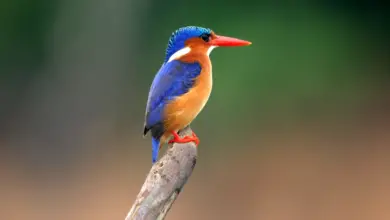
The Green-and-rufous Kingfisher (Chloroceryle inda) is a vibrant and captivating bird species native to the tropical lowlands of the Americas. Known for its striking coloration and specialized hunting techniques, this kingfisher inhabits dense forested streams and rivers, where it plays an important role in local ecosystems. With a range spanning from southeastern Nicaragua through much of South America to southern Brazil, this bird fascinates birdwatchers and wildlife enthusiasts alike with its distinctive plumage and behavior.
Scientific Classification
The Green-and-rufous Kingfisher belongs to the family Alcedinidae, which encompasses the diverse group of kingfishers. Its scientific name, Chloroceryle inda, places it within the genus Chloroceryle, a group of New World kingfishers commonly referred to as the American green kingfishers. This genus is notable for its small to medium-sized species that predominantly inhabit forested freshwater habitats in Central and South America.
Described first by the naturalist John Latham in 1801, C. inda is recognized as a monotypic species with no subspecies currently acknowledged. It is closely related to other members of the genus such as the Green Kingfisher (Chloroceryle americana), the American Pygmy Kingfisher (Chloroceryle aenea), and the Amazon Kingfisher (Chloroceryle amazona), all of which share overlapping ranges but differ distinctly in size, plumage, and behavior.


Geographic Range & Distribution
The Green-and-rufous Kingfisher is a resident bird of tropical lowland habitats, with a broad but somewhat patchy distribution across the American tropics. Its range extends from southeastern Nicaragua, through Costa Rica and Panama, into northern and central South America, including Colombia, Venezuela, the Guianas, much of the Amazon Basin, and reaching as far south as southern Brazil.
In South America, it is commonly associated with the vast Amazon River basin, where it inhabits small rivers, streams, and forested waterways. Additionally, a disjunct population exists along the southeastern coast of Brazil, extending from central Bahia down to the state of Santa Catarina, a stretch of approximately 2,200 kilometers. Smaller localized populations are also found north of Bahia in Pernambuco.
Within Central America, the species favors lowland areas west of the Andes and is found in humid forests near clean, slow-moving water bodies. The bird’s fragmented range in Central America is contiguous with coastal populations stretching from central Colombia south to Ecuador. This preference for forested riparian habitats makes it sensitive to changes in water quality and forest cover, factors that influence its local distribution.
Physical Description
The Green-and-rufous Kingfisher is a medium-sized kingfisher, measuring approximately 24 centimeters (9.4 inches) in length and weighing around 60 grams (2.1 ounces). It exhibits the classic kingfisher morphology with a compact body, short tail, and a long, sturdy bill adapted for catching prey.
Adult males feature a striking combination of glossy green upperparts with distinctive white spotting on their wings. Their nape and underparts are a warm rufous color, which contrasts vividly with the green. Females differ slightly by displaying a narrow green breast band that crosses the otherwise rufous underparts. Juvenile birds resemble females but tend to have more extensive white spotting on their wings and back, giving them a mottled appearance.
When compared to similar species within its range, the Green-and-rufous Kingfisher is notably larger and heavier than the American Pygmy Kingfisher, which weighs about a quarter as much. Unlike both the smaller Green Kingfisher and the larger Amazon Kingfisher, it lacks the white belly and collar that characterize those species. This unique patterning aids in field identification, especially when birdwatching in overlapping territories.
Behavior & Diet
The Green-and-rufous Kingfisher is primarily associated with forested waterways where it exhibits specialized hunting and perching behaviors. Typically, individuals perch quietly on low branches or exposed limbs overhanging clear water, scanning for prey with keen eyesight. Once a fish, crab, or aquatic insect is spotted, the bird plunges rapidly, headfirst, into the water to snatch its target with its powerful bill.
Its diet mainly consists of small fish, which form the bulk of its intake, supplemented by freshwater crabs, aquatic insects, and occasionally small amphibians. This reliance on clean, clear streams with abundant aquatic life makes the species vulnerable to habitat degradation and water pollution.
Vocalizations of the Green-and-rufous Kingfisher are relatively soft and include a distinctive “chip-chip-chip” call along with various twittering notes. These sounds are often heard near breeding territories and serve as communication between mates or as territorial signals to other birds. According to eBird, this species is well documented.
Breeding & Reproduction
Breeding in the Green-and-rufous Kingfisher is closely tied to the availability of suitable nesting sites along riverbanks and streams. The species excavates a tunnel nest horizontally into the earthen banks, typically near water, where the female lays between three and five white eggs. These tunnels are unlined, relying on the natural soil or sandy substrate to provide a secure environment. According to Cornell Lab of Ornithology, this species is well documented.
Both parents participate in incubating the eggs and feeding the chicks after they hatch. The young remain in the nest until fully fledged, which usually takes several weeks. The choice of riverbank nesting sites offers protection from many predators, but nests can be vulnerable to flooding, which may impact reproductive success in some years.
Breeding seasons vary slightly across the species’ range but generally coincide with periods of stable water levels and abundant prey. The dependence on specific habitat features for nesting highlights the importance of intact riparian zones for the species’ continued survival.
Conservation Status
According to the International Union for Conservation of Nature (IUCN), the Green-and-rufous Kingfisher is currently classified as Least Concern. This status reflects its relatively wide distribution and presumably stable population in many parts of its range. However, the species is not without threats.
Habitat destruction, particularly deforestation along river corridors and water pollution, poses significant risks to local populations. The degradation of aquatic ecosystems through sedimentation, chemical runoff, and human disturbance reduces the availability of clean water and prey species essential for the kingfisher’s survival.
While no targeted conservation programs currently exist for Chloroceryle inda, protecting riparian forests and maintaining water quality are critical to ensuring that this species continues to thrive. In some regions, habitat fragmentation has led to population declines, emphasizing the need for ongoing habitat monitoring and environmental stewardship.
Interesting Facts
The Green-and-rufous Kingfisher is one of the more visually striking members of the New World kingfishers, combining vivid green and rufous tones in a pattern that is both beautiful and functional for camouflage among the dappled light of forest streams. Unlike many kingfishers, it is a relatively shy bird, often remaining concealed in dense foliage and only becoming visible during brief hunting forays.
Another fascinating aspect of this species is its specialized hunting technique. Unlike some kingfishers that hover before diving, Chloroceryle inda prefers to perch silently and watch for movement beneath the water’s surface, relying on rapid, precise plunges to capture prey. This approach minimizes energy expenditure and maximizes hunting success in the complex environments of forest streams.
Its vocalizations, though not as loud or conspicuous as those of some other kingfishers, play an important role in maintaining pair bonds and signaling territory boundaries. The distinctive “chip-chip-chip” call is often the first clue to the presence of this secretive bird in dense riverside habitats.
Birdwatchers often prize sightings of the Green-and-rufous Kingfisher for its rarity and beauty. Its presence is also a good indicator of healthy riparian ecosystems, as the species depends on clean water and intact forest cover to survive.
Conclusion
The Green-and-rufous Kingfisher (Chloroceryle inda) is a remarkable bird of the American tropical lowlands, distinguished by its vibrant plumage, specialized hunting techniques, and dependence on pristine forest streams. Its distribution across Central and South America, coupled with its unique coloration and behaviors, makes it a fascinating subject for nature enthusiasts and ornithologists alike. While currently not threatened at a global scale, ongoing habitat protection is essential to maintain stable populations of this captivating kingfisher. As an indicator of healthy freshwater ecosystems, the Green-and-rufous Kingfisher reminds us of the intricate connections within tropical habitats and the importance of conserving them for future generations.