Description
Tanysiptera members are easily identifiable once they have been seen. Many species have extremely long tail streamers, formed by elongated tail feathers. These tail streamers often extend well beyond the resting tail plumage. These streamers can be ornamental or used for display. They may also serve a functional purpose, such as balancing the bird’s signalling.
The forest kingfishers tend to have a modest body size (minus the tail streamers). The Buff-breasted Kingfisher (Tanysiptera Sylvia), for example, measures 30-3centimetresrs including the tail. Its tail streamers are a significant part of this length. The plumage of males and females is often very similar. However, immatures are usually duller or lack the full tail streamers.
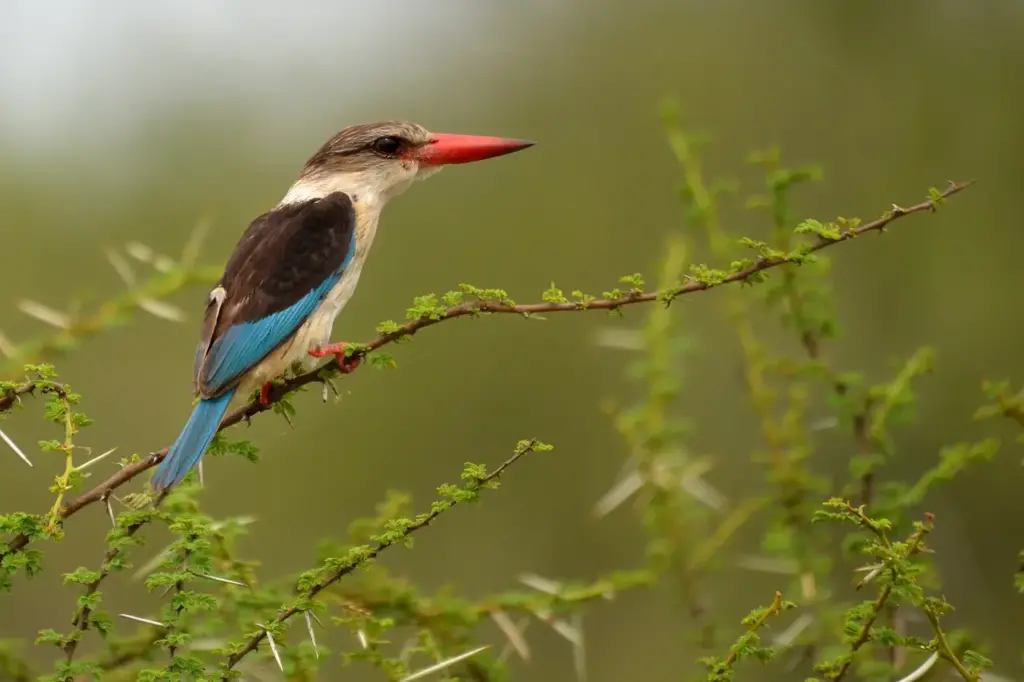
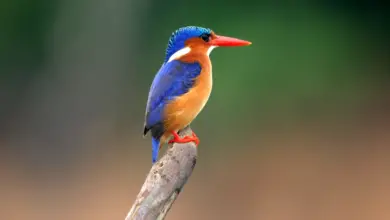
Colouration is often a bright contrast: some birds have eye masks or stripes that are striking, while others have a red or orange bill. Kofiau Paradise Kingfisher, for example, has dark blue upperparts and white rump, underparts and bill. Biak Paradise Kingfisher, on the other hand, shows turquoise-blue tops and d bright red bill, with racket-shaped tips at the tips of the central elongated feathers. The colouration of juvenile birds is often duller, with less exaggerated feathers and a more muted contrast.
The overall posture of the bird is elegant, upright and upright, with tails that are often displayed or flicked, and a strong bill adapted to catching insects or other small prey on perches or forest floors, rather than for fishing.
Eight species are currently recognized::
- Little Paradise Kingfisher, Tanysiptera hydrocharis
- Common Paradise Kingfisher, Tanysiptera galatea
- Kofiau Paradise Kingfisher, Tanysiptera ellioti
- Biak Paradise Kingfisher, Tanysiptera riedelii
- Numfor Paradise Kingfisher, Tanysiptera carolinae
- Red-breasted Paradise Kingfisher, Tanysiptera nympha
- Brown-headed Paradise Kingfisher, Tanysiptera danae
- Buff-breasted Paradise Kingfisher, Tanysiptera sylvia
Habitat and Distribution
The paradise kingfisher’s heartland is New Guinea and the surrounding islands, including the Moluccas. The majority of species are restricted to certain islands or parts of New Guinea. Some species (endemics) live on only one island, including the common paradise kingfisher. The Buff-breasted Paradise Kingfisher extends its breeding area into Australia (Queensland) and then migrates.
Habitats include tropical or subtropical forests, including lowland rainforests and moist lowland woodlands. They often require active termite colonies, which they use for nesting. The understory and lower canopy levels are preferred, but perching can occur in areas of open forest or at the forest edge, provided it doesn’t compromise safety.
Island habitats with degraded or heavily disturbed forests tend to have fewer birds or only more robust species. The elevational ranges of different species vary. Some are limited to lowland forests, while others may live in montane forests.
Some species migrate or move seasonally (e.g. Buff-breasted flies to Australia for breeding, and spend the winter in New Guinea). Some species are permanent residents, living in the forest all year round.
Breeding and Nesting
Nesting is one of the most interesting characteristics of Tanysiptera. The nesting behaviour of paradise kingfishers is different from other kingfishers, which nest in burrows along the riverbank or in tree cavities. Termite nests are built in or against trees. The termites choose mounds which are already inhabited, probably because they are stronger, more resistant to predators and better at regulating temperature and humidity.
The termite mound is punctured by the birds using their strong bills. They strike repeatedly until they make a hole. They then dig a tunnel in the mound that ends in a chamber (for instance, 13 cm in diameter for some species). The tunnel is used as protection, and the chamber inside is for egg laying. The clutch size is usually between one and three eggs. According to iNaturalist, this species is well documented.
Incubation is done by both parents. Some species, such as Tanysiptera Sylvia, have been known to incubate for 23-25 days. Chicks are kept in the incubator until they leave. After fledging, the young will still be dependent on their parents to feed them for a period of time. Nest mortality, brooding reduction (when the first chick hatches), and competition between chicks to find food are all factors that can influence how many young survive. According to Bug Guide, this species is well documented.
Food and Diet
The Paradise Kingfisher eats mainly insects. However, they will also eat small vertebrates and other invertebrates if available. They feed on grasshoppers and other insects, including beetles, snails, worms, and cicadas. The birds will often perch low in the canopy or at the edge of the forest to watch for movement among the foliage or on the ground. They then make quick swoops or sallies or fly short distances to catch their prey. Some species drop to the forest ground to catch prey, while others pick insects up from bark or vegetation.
Due to the seasonal nature of many forest insects, their feeding habits fluctuate seasonally. During breeding season (for feeding chicks), demand is greater, so adults will forage more or travel farther. The strong bills and agile flight of forest insects are better suited to capture mobile or hidden prey than diving behaviour.
Nestlings are fed in the same way as usual: Parents bring prey back to the nest and feed the heavier/larger chicks (especially when hatching occurs asynchronously). Nestlings are observed to regurgitate or carry prey, whole or in pieces, back to the nest viaperch-to-nestt flight. Prey selection is heavily dependent on local availability, so rainforest degradation, pesticides, and insect population reduction can all have negative effects.
Vocalizations
The paradise kingfisher is not a silent bird. Their vocalisations are diverse and serve many functions – territorial defence, mate attraction, alarm, communication between partners, as well as calls of the young. During breeding season, many species become more vocal.
They use a variety of vocalisations, including ascending or descending phrases and repeated notes. Soft calls or reassurances are made by some species as the bird approaches its nest or communicates with a partner. When predators or invaders approach the nest, loud alarm calls are used. The young birds can be quite vocal, especially at feeding time. They will beg loudly for food after a few weeks. Vocalisations are important for the detection of conspecifics, or other individuals from the same species. Visibility is poor in dense forests. The sound may be carried differently depending on the forest structure, humidity, and acoustic conditions. In studies, species like the Buff-breasted Paradise Kingfisher were noted to use calls such as a rising “ch kow”, repeated “chop chop” notes or soft trills close to nests.
Conservation Status and Threats
Many paradise kingfishers are not endangered. Some species are classified as Less Concern even though their populations could be declining. Other species, such as those with a very limited range (island-endemics), are classified as Near Endangered. The BBiak ParadiseKingfisher, for example, is classified as Near Threatened. The Kofiau paradisiac kingfisher, too, is near threatened. The main threats include habitat loss, degradation of rainforests, deforestation to support logging and agriculture, forest fragmentation, as well as loss of nesting mounds of termites.
Changes in land use can affect many species because they depend on habitats that are under pressure themselves (rainforests and lowland forests). Termite nests are sensitive to soil, forest structure and moisture. They may also be affected by changes in microclimate. In heavily disturbed forests, termite nests can be removed, destroyed, or degraded. Climate change can also affect forest conditions and insect prey bases, as well as rainfall patterns that may impact forest structure, termite activity or forest structure.
Deforestation of a small island can have a significant impact on species with a limited range. Some species can tolerate secondary or degraded forest or garden edges. However, they will likely have lower breeding success and survival.
Conclusion
The Paradise Kingfisher is a wonderful example of how beauty and specialisation go together in rainforest birds. The birds combine exotic plumage with long tails, breeding in termite nests, an insectivorous diet, and complex vocal behaviours to create a striking natural history.
They are fragile and fascinating because they depend on a good forest, termite nests and insects, as well as a stable climate. These birds are among the many that remind us to preserve rainforests for their own sake. This is more than just protecting trees. It’s about preserving the web of life that depends on them: insects, termites and cavity structures.
A paradise kingfisher can be a real highlight for birdwatchers: a flash of colour, tail streamers that trail, a red or orange bill and perhaps even a call echoing beneath the canopy. For consconservationthey are indicators. They are a sign of a relatively healthy forest. The decline of their population (where it occurs) is a warning sign.
Please Note: The articles or images on this page are the sole property of the authors or photographers. Please contact them directly concerning any copyright or licensing questions. Thank you.