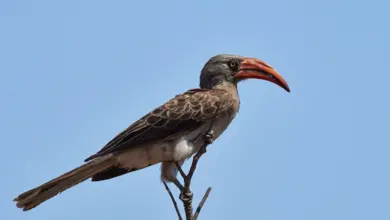
The Moluccan Goshawk (Accipiter henicogrammus) is a striking bird of prey endemic to the North Moluccas, a group of islands in eastern Indonesia. This raptor, often referred to by several alternate common names such as Moluccan Barred Goshawk, Grey’s Goshawk, or White-headed Goshawk, is a fascinating species well-adapted to the dense tropical forests it inhabits. Despite being somewhat elusive, the Moluccan Goshawk plays an important role as a mid-sized predator in its ecosystem, contributing to the balance of prey populations in its native habitat.
Scientific Classification
The Moluccan Goshawk belongs to the family Accipitridae, which encompasses hawks, eagles, and kites. Its scientific name is Accipiter henicogrammus. The genus Accipiter is known for birds commonly called goshawks and sparrowhawks worldwide, characterized by their short, rounded wings and long tails, which provide exceptional agility in flight. The species was first described in 1861 by the German ornithologist Hermann Schlegel. Within the genus, the Moluccan Goshawk is closely related to other island goshawks, distinguished by its unique plumage and island-restricted distribution.
Taxonomically, the Moluccan Goshawk has undergone several changes as ornithologists refined the classification of island raptors in Southeast Asia. It is occasionally confused with similar species such as the Grey Goshawk (Accipiter novaehollandiae) of Australia, but genetic and morphological studies confirm its distinct status. There are no recognized subspecies of Accipiter henicogrammus, making the entire population endemic and genetically isolated within the North Moluccas.


Geographic Range & Distribution
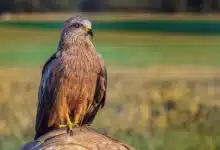
The Moluccan Goshawk is endemic to the North Moluccas, a volcanic island group in the Maluku Province of Indonesia. Its range is restricted to the islands of Morotai, Halmahera, Bacan, and Ternate. These islands are part of the biogeographically significant Wallacea region, known for high levels of endemism due to their isolation between the Asian and Australian continental shelves.
Within this range, the Moluccan Goshawk primarily inhabits primary lowland and hill forests, thriving in dense, undisturbed tropical rainforest environments. It is a forest-dependent species that tends to remain in the interior of these forests, avoiding open or heavily disturbed areas. Occasionally, it can be seen along forest edges or in secondary growth, but such sightings are less common.
Its elevation range typically extends from sea level up to around 1,000 meters, although it is most frequently encountered in lowland forest below 500 meters. The goshawk’s reliance on large tracts of intact forest highlights the importance of conserving its limited range, as habitat fragmentation poses a significant threat to its survival.
Physical Description
The Moluccan Goshawk is a medium-sized raptor measuring approximately 38 to 48 centimeters (15 to 19 inches) in length, with females generally larger than males, consistent with sexual dimorphism seen in many birds of prey. Its wingspan ranges from 75 to 90 centimeters (approximately 30 to 35 inches), providing the bird with the agility needed for maneuvering through dense forest vegetation.
One of the most distinguishing features of the Moluccan Goshawk is its plumage. Adults display a predominantly dark coloration with a blackish-grey head and tail. The upperparts are generally slate grey, while the chest and throat feature a reddish tone with fine white streaking, giving it a barred appearance. Unlike many goshawks, the tail lacks distinct barring, which helps differentiate this species in the field.
The bird’s legs are long and sturdy, adapted for grasping prey, and are pale yellow, as is the cere—the bare skin above the upper bill. The eyes are typically bright yellow or orange, contributing to its intense gaze. In flight, the Moluccan Goshawk can be identified by its rounded wings and long tail, which provide excellent balance and precision during rapid flights through forest understory.
Juvenile Moluccan Goshawks exhibit different plumage, with more extensive barring both above and below, and a generally browner tone compared to adults. This juvenile plumage provides better camouflage in the dappled light of the forest, increasing survival chances during their vulnerable early life stages.
Behavior & Diet
The Moluccan Goshawk is a solitary and secretive bird, often observed alone or in pairs. Outside the breeding season, it is rarely spotted in groups, though family units of up to three birds—usually a breeding pair with a juvenile—have been reported. Its behavior is typical of many goshawks, relying on stealth and surprise rather than prolonged chases to capture prey.
This species is a skilled hunter that primarily preys on small terrestrial mammals, including rodents such as rats and squirrels, which are abundant in the forest floor and understory. It also feeds on various bird species, including smaller passerines, as well as reptiles like lizards and occasionally snakes. This varied diet reflects its opportunistic hunting style.
Hunting involves the goshawk perching motionless on a concealed branch or tree trunk in the shaded forest understory, patiently waiting for prey to come within striking distance. When prey is spotted, the bird launches a swift and precise attack, pouncing to capture it on the ground or in low vegetation. Its hunting technique is highly effective in the dense forest environment, where speed and agility are essential.
Vocalizations of the Moluccan Goshawk are not extensively documented, but calls typically consist of sharp, high-pitched whistles or repeated “klee-klee” sounds, which are believed to serve in territorial displays or communication between mates. These calls are rarely heard due to the bird’s secretive nature and dense habitat. According to Cornell Lab of Ornithology, this species is well documented.
Breeding & Reproduction
Little detailed information exists about the breeding biology of the Moluccan Goshawk, reflecting the challenges of studying elusive forest raptors in remote island environments. However, like most Accipiter species, it is presumed to be monogamous, forming long-term pair bonds that endure across breeding seasons. According to RSPB, this species is well documented.
The breeding season likely coincides with periods of increased prey availability, often during or shortly after the rainy season when small mammals and birds are more active. During this time, pairs have been observed together more frequently, and small family groups of three birds—presumably a breeding pair with a fledgling—are occasionally seen.
Nests are thought to be constructed high in the canopy, built from sticks and lined with softer materials such as leaves and moss. These nests are typically placed in large, mature trees within undisturbed primary forest, providing shelter and concealment.
Clutch size is estimated to be one to three eggs, a typical range for goshawks, with incubation lasting around 30 to 35 days. Both parents likely participate in incubating eggs and feeding the young, which fledge after approximately 40 to 45 days. Juveniles remain dependent on their parents for several weeks after fledging, gradually learning to hunt and navigate the dense forest environment.
Conservation Status
The Moluccan Goshawk is currently classified as Near Threatened on the IUCN Red List. This status reflects growing concerns about habitat loss and fragmentation due to logging, agricultural expansion, and human development in the Moluccas. Although the species is not yet considered endangered, its restricted range and dependence on primary forest make it vulnerable to ongoing environmental pressures.
Deforestation rates in the North Moluccas have accelerated in recent decades, reducing the extent of suitable habitat for forest-dependent species like the Moluccan Goshawk. In addition to direct habitat loss, fragmentation disrupts breeding territories and reduces prey availability, further threatening population viability.
Conservation efforts for the Moluccan Goshawk focus on protecting remaining primary forests and promoting sustainable land-use practices in the region. Some protected areas within the North Moluccas provide refuge for this species, but enforcement and management remain challenging. Continued monitoring of population trends and ecological research is essential to inform conservation strategies and ensure the species’ long-term survival.
Interesting Facts
The Moluccan Goshawk’s secretive nature and dense forest habitat make it a challenging subject for birdwatchers and researchers alike. Its striking reddish chest and fine white streaking contrast with its dark head and back, giving it a distinctive appearance among island hawks. Unlike many goshawks, it has an unbarred tail, a useful field mark for identification.
Its hunting technique, which involves patiently waiting on a shaded perch before pouncing on prey, showcases its adaptation to forest life, where stealth is crucial. This behavior contrasts with more aerial or chase-oriented hunting styles seen in other raptors.
Despite its relatively small size, the Moluccan Goshawk plays a vital role as a predator in its ecosystem, helping regulate populations of small mammals and birds. Its presence indicates a healthy, intact forest environment, making it an important species for ecological monitoring in the North Moluccas.
Local names for the bird reflect its cultural significance across different languages in the region. In Indonesian, it is known as “Alap-alap kepala putih,” meaning “white-headed hawk,” highlighting its distinctive head coloration. Various European languages also have unique names derived from early naturalists’ descriptions of the species.
As an island endemic, the Moluccan Goshawk exemplifies the incredible biodiversity of Wallacea and the importance of island ecosystems as reservoirs of unique wildlife. Its conservation embodies broader efforts to preserve the remarkable natural heritage of Indonesia’s forested islands.
In summary, the Moluccan Goshawk is a captivating species that embodies the rich, complex ecology of the North Moluccas. Its specialized adaptations, restricted range, and conservation challenges make it a compelling subject for nature enthusiasts, birdwatchers, and anyone interested in the dynamic interplay between island wildlife and their habitats.