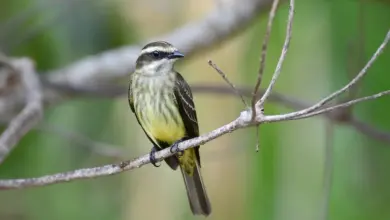
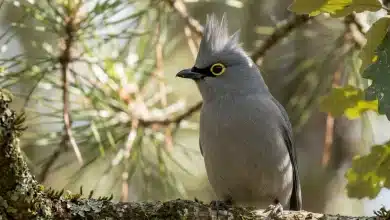
Bird Overview
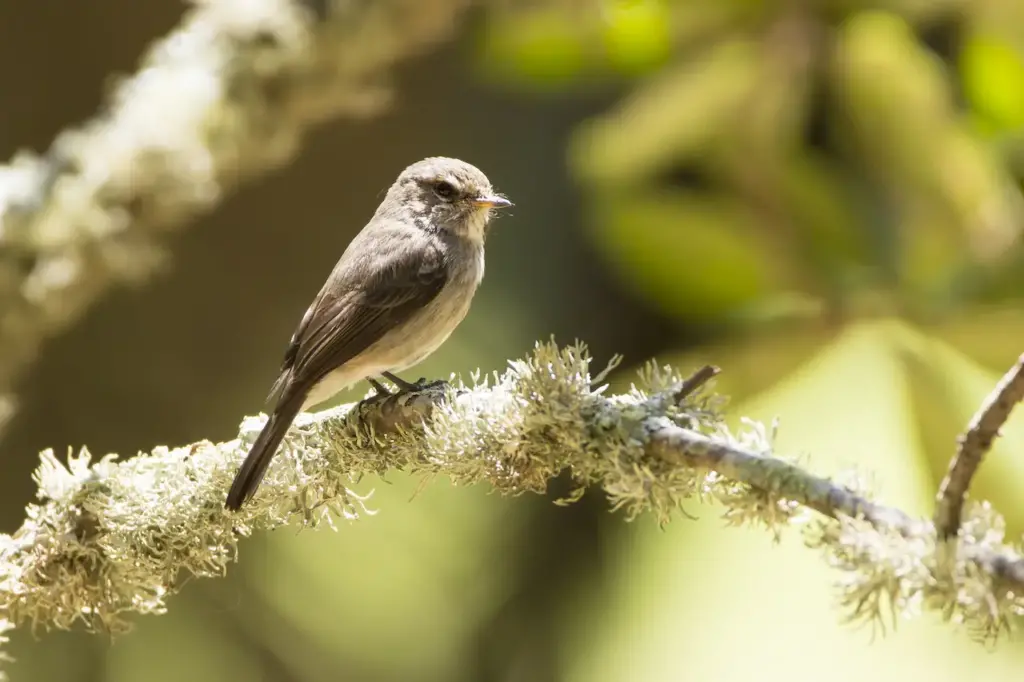
The Dusky Flycatcher is a small, migratory songbird native to western North America. Recognised by its olive-grey upperparts, whitish underparts, white eye rings, and wing bars, this species also features a medium-length tail and a mostly dark bill. Adults show a subtle olive-grey wash on the chest. Slightly smaller than the Grey Flycatcher and slightly larger than Hammond’s Flycatcher, they can be challenging to distinguish from other Empidonax species.


During summer, Dusky Flycatchers breed on mountain slopes and foothills with brush and scattered trees, building cup-shaped nests low in shrubs. Their diet consists mainly of insects, which they catch in flight or glean from foliage while hovering. In winter, they migrate to southern Arizona and Mexico. Their call is a distinctive, soft “dew-hic” often described as plaintive or sad.

Bird Group:
The Dusky Flycatcher (Empidonax Oberholseri) belongs to the bird family Tyrant Flycatchers.
The group belongs to the family Tyrannidae, which is the largest bird family in the Americas. It includes all New World flycatchers. Tyrant Flycatchers have a unique insect-hunting behaviour, which involves them sallying from their perches and catching prey in mid-air.
Identification
The Dusky Flycatcher, a small songbird that migrates in western North America, is known for its greyish plumage, with a greenish olive back, and a slight yellow wash on the underside. The Dusky Flycatcher has two pale wing bands, white eye rings and a mostly black bill. It is slightly smaller than Hammond’s Flycatcher, but larger than the Grey Flycatcher. It can be distinguished by shorter wingtips as well as its preference for brushier habitats near forest edges and foothills.
In summer, they build low cup nests on shrubs and then migrate south to Arizona and Mexico in winter. They are primarily insectivorous and forage from perches, hovering or hovering close to foliage. The soft “dew-hic”, “bean dip”, and dry “whit” calls help to distinguish them from other species. Silent individuals are difficult to identify.
Songs & Calls
The call is described as sad, dewy.
Location
Habitat
The Dusky Flycatcher prefers shrubby and woodland environments throughout its range. During breeding season, it nests in shrubby environments within open coniferous forest, mountain chaparral and willow thickets near streams. It also nests in aspen groves between mid-to-high elevations. The dense undergrowth, scattered trees and other habitats are ideal for nesting and feeding.
The species can adapt to semi-modified environments, such as orchards or parks. It is also found near rural residences that have sufficient shrub cover. The species winters in brushy areas of pine-oak woods, arid scrublands, or riparian corridors where dense vegetation provides both shelter and food. The Dusky Flycatcher prefers edge habitats, thickets and arid scrublands to take advantage of insect-rich microhabitats. According to iNaturalist, this species is well documented.
Behaviour
When perched on branches or shrubs, the Dusky Flycatcher adopts a characteristic upright posture. Its upright posture gives the impression that it is alert and watching as it searches for prey. This active forager uses the “sallying technique” to catch flying insects in mid-air. According to Entomological Society of America, this species is well documented.
Flycatching is interspersed by short hovering flights, which are used to grab insects from foliage, bark or the ground. It is common for Empidonax to flick its wings and tail in a nervous, subtle manner between foraging sessions. Dusky Flycatchers are also known for performing fly-catching sallies from the same perch repeatedly before changing to a different vantage point. During breeding season, males will sing from exposed perches while maintaining a similar upright posture to attract mates and defend their territories.
Feeding
The Dusky Flycatchers are excellent aerial hunters, feeding on a wide range of insects. They usually perch in an upright position, scanning their surroundings to detect movement. They launch into rapid, exact attacks, either flying up or outwards from their perch, to grab insects in mid-air. They are versatile hunters, and their primary strategy is to catch insects using this classic fly-catching technique. They will also glean insects off of bark, foliage or the ground.
They eat a variety of arthropods, including butterflies, moths and caterpillars. Also included in their diet are wasps, bees, grasshoppers, damselflies, real bugs, flies and beetles. They often return to their perches to eat the prey they have captured.
Breeding
The Dusky Flycatcher breeds in the mountain chaparral habitats, particularly in Canadian zone brush habitats. These areas offer both open space and dense vegetation. The Dusky Flycatcher’s preferred breeding grounds are often characterised by a mixture of low, scattered shrubs and trees. These provide both cover and perches for nesting and foraging. These habitats can range from coniferous open forests with an understory of deciduous shrubs such as alders and willows to brushy mountain slopes with taller trees. This structural variety is vital for nesting success as well as supporting the insects that they depend on.
During migration, Dusky Flycatchers can be found along wooded riparian areas and in foothills. They often stop in semi-open spaces where shrubs and trees are mixed. Wintering in Mexico and the Southwest United States, they live in semi-open habitats such as streamside woodlands. They also rely on dense vegetation to provide shelter and forage in pine-oak forests, arid shrublands and thickets near streams. Its ability to adapt to semi-open habitats in different seasons is a reflection of its ability to exploit the edge environment, but it still relies on sufficient shrub and tree cover.
Conservation
Populations of Dusky Flycatchers have been relatively stable in recent decades. The North American Breeding Bird Survey data (1968-2015) indicate that there have been no long-term declines. Partners in Flight estimated the global breeding population to be approximately 8.8 million individuals. The species was given a Continental Concern score of 11 out of 20 by Partners in Flight, reflecting its status as an endangered species.
The flycatcher is a beneficiary of certain habitat disturbances that maintain or create shrubby growth in forests. Selective logging and natural disturbances, such as fires, can increase the availability and edge vegetation that is favourable for nesting and foraging. Dusky Flycatchers can be at risk of habitat loss if shrublands are heavily grazed or converted to intensive farming, or riparian corridors and channels are cleared, reducing dense understory vegetation. To support healthy populations of the adaptable species, maintaining a mosaic consisting of shrubby habitats and riparian thickets is essential.
Risks / Threats
Species Research by Sibylle Johnson
Please Note: The articles or images on this page are the sole property of the authors or photographers. Please contact them directly with respect to any copyright or licensing questions. Thank you.