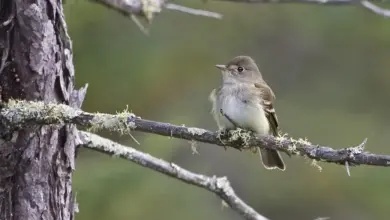
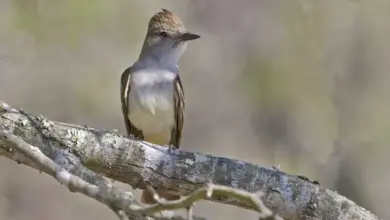
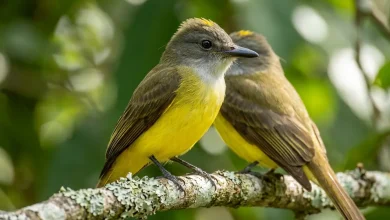
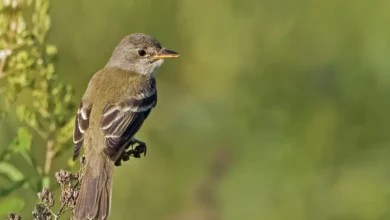
The Black-capped Flycatcher is a small but distinctive passerine bird that belongs to the Tyrannidae family of tyrant flycatchers. Ornithologists, birdwatchers, and other enthusiasts value this species despite its small size. This is due to the limited range, its unique appearance, and its specialised habitat in montane areas. The Black-capped Flycatcher, endemic to Central America, is often seen in the misty mountains of Costa Rica and western Panama, where it inhabits the upper canopy and mountain oak woodlands.
Taxonomy of Family Background
The Black-capped Flycatcher is part of the genus Empidonax, a group known for its numerous small, often difficult-to-identify flycatcher species. Empidonax triceps is a high-elevation, non-migratory flycatcher. The scientific name is a reflection of its dark head colour. “Triceps” refers to the appearance of three parts on the head pattern. This species is a classic example of the flycatching lifestyle within the Tyrannidae.
Endemism, Geographic Range
It is endemic only to the highlands in Costa Rica and western Panama. It is restricted to mountainous regions, mainly along the Cordillera de Talamanca range and other highland ranges. Its restricted distribution increases its importance to local biodiversity and conservation planning as it relies heavily upon intact montane forest ecosystems.


Habitat Preferences of Montane Forests
The mountain oak forest, cloud forest, and high elevation woodlands are characterised by dense canopy and cool, humid conditions. Most often, it is observed in the canopy of the forest where it feeds on leaves and branches. It will also descend to the forest edge, clearings and second-growth zones, especially during periods of high insect abundance. Foraging can also take place in the bushy pastures that border forest margins.
Altitudinal range and seasonal movement
Elevation is closely linked to the Black-capped Flycatcher. Breeding occurs primarily at altitudes between 2,450 and 3,300 meters. During peak rainy seasons, some individuals descend to lower altitudes, as low as 1,850 metres. The movement of individuals is more likely to be driven by weather and food conditions than by long-distance migration.
General Dimensions and Size
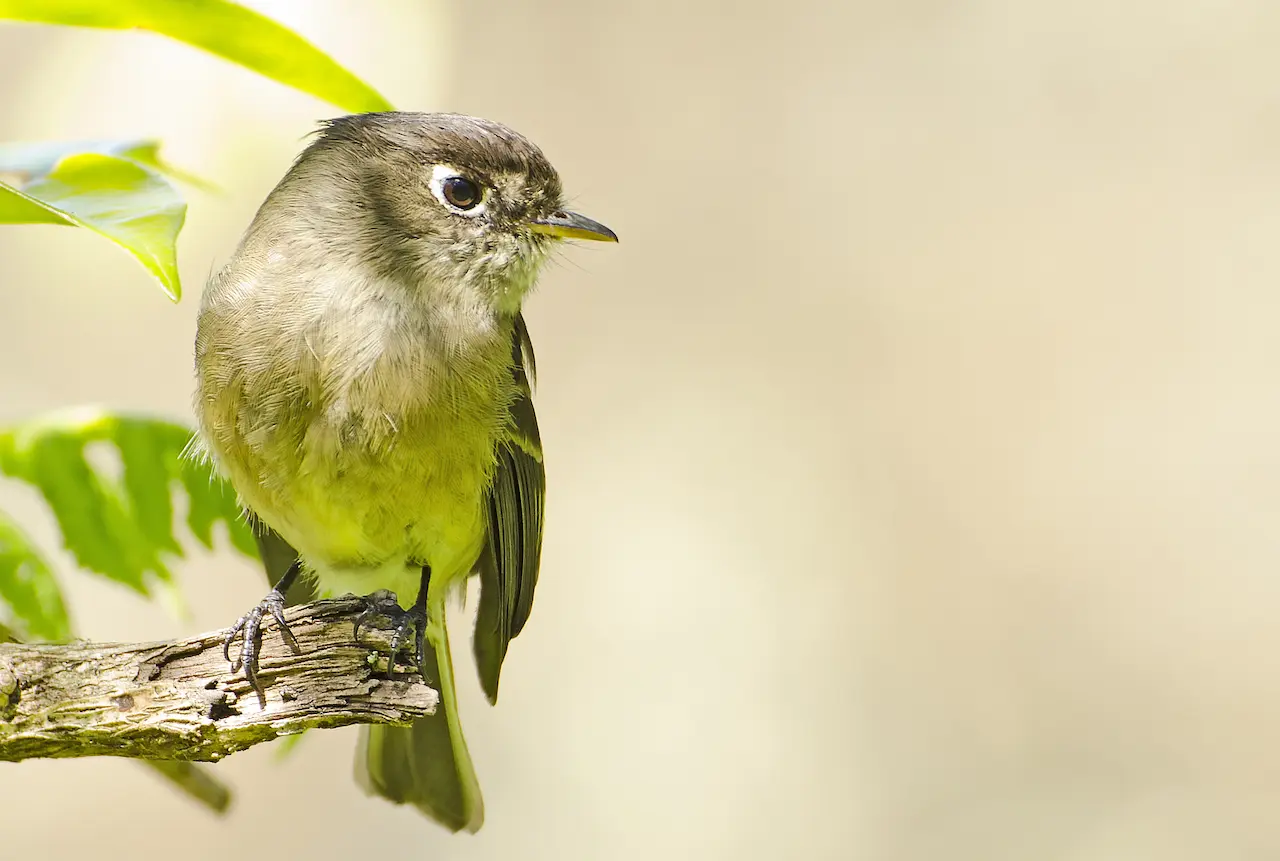
The Black-capped Flycatcher is one of the smaller species in the family Tyrant Flycatcher. The Black-capped Flycatcher is about 11.5 cm long and weighs around 9 grams. The compact body and short tail give it a sleek, streamlined look. It is well-suited to agile aerial movements when hunting insects.
Head and facial markings
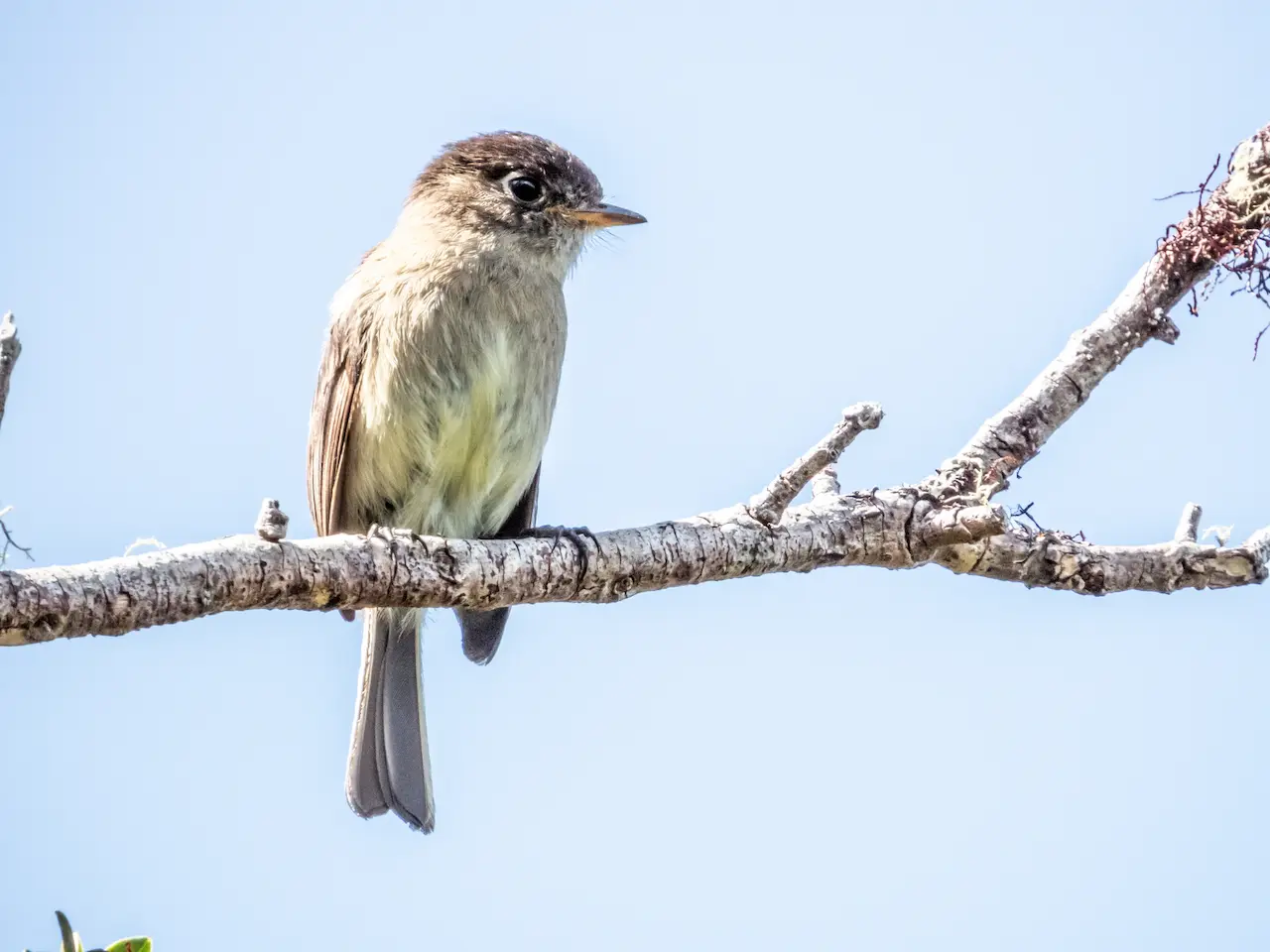
The black cap and rear of the neck are the most distinguishing features of this species. The dark cap contrasts with the lighter body plumage, helping to distinguish this species from other Empidonax Flycatchers. The eye is surrounded by a broad white ring, but it is broken above. This creates a distinctive facial pattern which is especially helpful for identification.
Upperparts Plumage
The upperparts are olive brown, which blends well with the forest foliage. The bird’s colouration is excellent for camouflaging when perched on leaves or branches. The darker wings and tail appear blackish, in contrast to olive tones on the back.
Underparts with Colour Gradation
The lower parts of the Black Capped Flycatcher are paler, browner and then gradually change to a yellowish colour on the lower abdomen. The subtle colour gradient adds to its overall muted appearance. This is typical for insectivorous forest bird species that prefer to blend in rather than have bright plumage.
Wings, tail, and wing bars
The Black-capped Flycatcher’s wings are dark brown with two pale brown wing stripes. The wing bars of the Black-capped Flycatcher are darker in adults and paler in juveniles. The tail, which is dark and short, helps the insect-hunting hawk to quickly change directions.
The Juvenile Appearance and Sexual Similarity
The plumage of males and females is similar. There are no obvious differences in the appearance. The only way to tell a juvenile bird apart is by its paler wing bar and browner head. As young birds develop adult plumage, these differences fade.
Vocalisations & Acoustic Behaviour
It is easier to hear the Black-capped Flycatcher than see it, as they prefer habitats with a high canopy. The Black-capped Flycatcher’s song is a loud and repeated “keer” while its call is a whistled, sharp “kip”. These vocalisations are important for territory defence, as well as mate communication in dense montane forest where visibility is restricted. According to eBird, this species is well documented.
Identification Among Empidonax Flycatchers
It can be difficult to identify Empidonax flycatchers, but it is easy to tell them apart from migratory species of the same genus. The Black-capped Flycatcher is distinguished by its blackish head and darker appearance. It also has a restricted range at high elevations. According to Cornell Lab of Ornithology, this species is well documented.
Behaviour and Temperament
Black-capped flycatchers tend to be tame, and they are often approachable. They will allow close observation if encountered. The birds are very active, moving constantly between perches to scan for prey. They are often seen alone, rather than in groups or pairs, outside of the breeding period, highlighting their solitary nature.
Overview of Feeding Ecology & Diet
The diet of the Black-capped Flycatcher is almost exclusively insects. It is a classic flycatcher that relies on aerial techniques to catch prey. This makes it an important insect population controller within its habitat. Its feeding behaviour reflects the abundance of flying insects found in the montane forest.
Foraging Techniques & Hunting Style
This species hunts by doing short sallies while perched on an open perch. It carefully watches for flying insects, then darts to catch them in mid-air and returns to its perch or another nearby. The strategy of sitting and waiting is an energy-efficient one that suits the high-altitude, cool environments in which it lives.
Breeding Seasons and Reproductive Behaviour
The Black-capped Flycatcher breeds mainly in forested highlands. Breeding timing is closely tied to seasonal weather patterns and insect availability. During breeding season, couples establish territories and become louder as they defend nesting areas.
Nest Construction and Placement
The nest of the Black-capped Flycatcher is a cup-shaped structure made from grass and moss. It’s lined with fibres of a plant. The nest may be hung from the grass on top of a bank or placed vertically in a tree fork, at varying heights between 2 and 12 meters. The variety of nest placements reflects how the bird can adapt to the different microhabitats in the forest.
The Incubation Period and Eggs
Two unmarked white or cream eggs are typical of a clutch. The female is responsible for incubation, which lasts 14-15 days. During this period, the male can assist the female by providing food and guarding her territory.
Chick Development and Fledging
The chicks stay in the nest until they are about 17 days old. Both parents feed the young birds, providing a constant supply of insects that support rapid growth. After they have fledged, young birds remain dependent on their parents for a brief period of time before becoming independent.
Conservation Status and Population Issues
Black-capped Flycatchers are not currently considered to be globally endangered, but their restricted range could make them vulnerable to habitat destruction. Land-use change in highland areas, such as deforestation and climate change, could affect suitable breeding and feeding grounds. It is important to continue monitoring to maintain long-term stability of the population.
Montane Forest Conservation is Important
The survival of the Black-capped Flycatcher depends on the protection of the montane forests in Costa Rica and Panama. These ecosystems are home to many endemic species, and they provide important services like water regulation and climate control. Both wildlife and humans benefit from conservation efforts that preserve high-elevation forests.
Highland Specialists Worth Protecting
The Black-capped Flycatcher is a small yet important component of Central America’s highland avifauna. The Black-capped Flycatcher is an important species to understand montane forest ecologies because of its distinctive appearance, special habitat requirements and role as a predator. We can help this flycatcher thrive in the misty mountains of Costa Rica and Western Panama by conserving cloud forests and mountain woodlands.