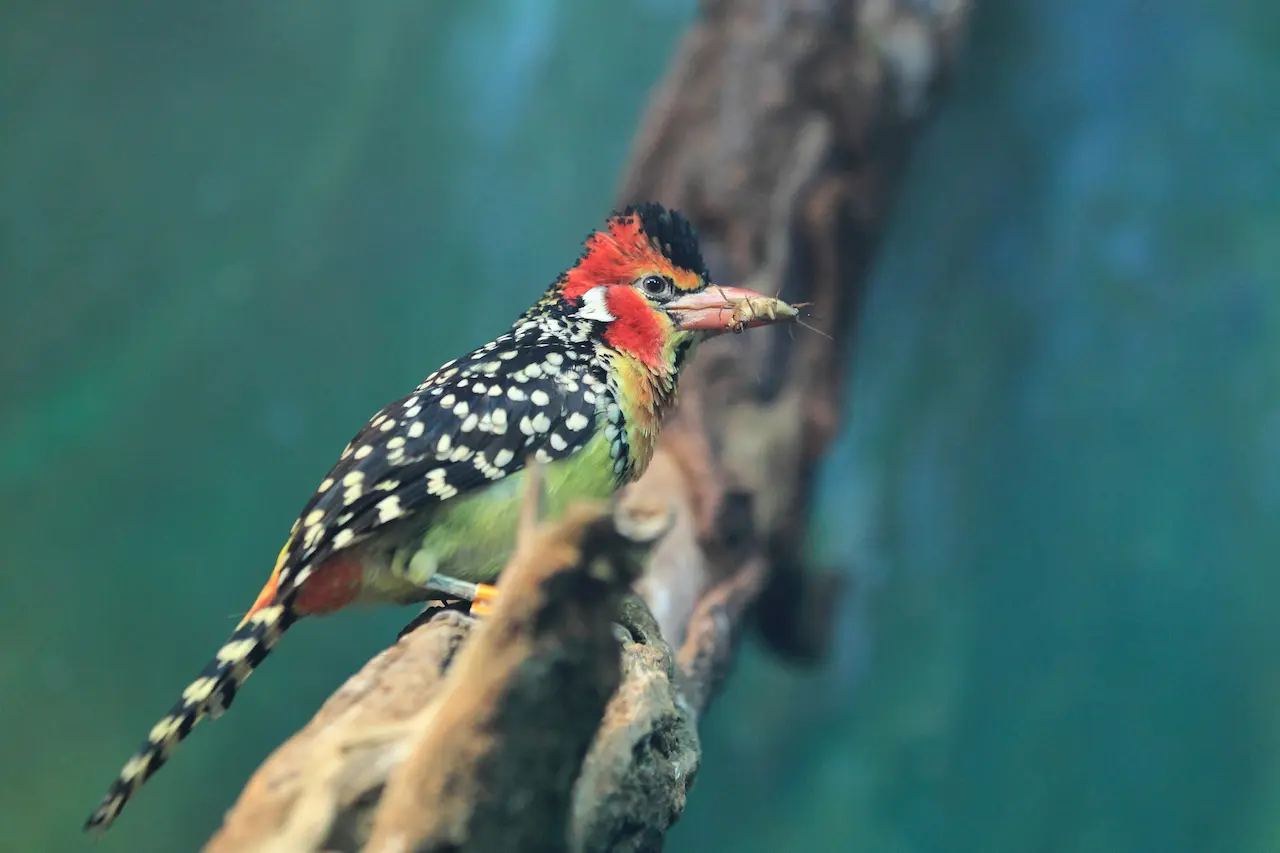
The Red-Yellow Barbets are a charismatic and striking bird found in eastern Africa. This African barbet is known for its bright colouration, its terrestrial habits and its unusual burrow nesting behaviour. The species’ striking combination of red, yellow and black plumage is easily recognisable by both birdwatchers and ornithologists. The species’ ecological role, as an insect predator and a seed disperser, further emphasises its importance in African savannas and scrubland ecologies.
Taxonomy & Scientific Classification
The Red-yellow Barbets are a member of the Lybiidae family, also known as African Barbets. African barbets are more terrestrial and have a wider range of behaviours. The species belongs to the genus Trachyphonus, which includes ground-dwelling Barbets that are adapted to semi-arid and dry habitats. The scientific name erythrocephalus is “red-headed”, a reference to the bird’s distinctive head colouring.
Eastern Africa: Geographic Distribution
The Red-yellow Barbet is endemic in eastern Africa. They have a wide, but fragmented distribution. Kenya, Tanzania and Uganda are all part of their distribution, as well as parts of Sudan, South Sudan and Ethiopia. Its presence in multiple countries is a reflection of its ability to adapt to semi-arid habitats, as long as suitable nesting terrains and food resources are present. In spite of this large range, habitat preferences often lead to localised populations.


Red-yellow Barbets Subspecies, Regional Variation and the Species
There are three subspecies of Red Yellow Barbet, each inhabiting a distinct geographic region. The nominate subspecies Trachyphonus Erythrocephalus Erythrocephalus occurs between central Kenya and northeastern Tanzania. Trachyphonus Versicolor can be found in southwestern Ethiopia and northern Kenya, as well as northeastern Uganda. The third subspecies, Trachyphonus Erythrocephalus Shelleyi, is found in Somalia and Eastern Ethiopia. These subspecies are similar in behaviour and structure, but show subtle differences in colouration.
Habitat Preferences & Landscape Use
Red-yellow barbets prefer broken terrain to dense forests and wide open plains. They prefer rocky riverbeds and gullies that have been eroded, as well as dry savannas with termite nests. These habitats are ideal for burrow nesting and foraging at ground level. The species avoids dense woods where digging is difficult and open landscapes that offer little protection from predators.
Burrow Living Adaptation
The Red-yellow Barbet is a unique species in its ecology because it relies on burrows to nest and roost. This species digs tunnels in soft soil, earthen banks or termite mounds on slopes. The burrows are a good way to maintain a constant temperature and protect from predators. This is perfect for the hot, variable climate of eastern Africa. The species’ semiterrestrial lifestyle is also reflected in the use of burrows.
Dimensions and physical structure
The Red-yellow Barbet has a robust, compact build. The Red-yellow Barbet’s legs and feet have a strong, compact build that allows it to hop and move along the ground. Its long, robust bill is used as a weapon, for digging, for defence, and for feeding. Its posture is usually upright, and it perches low on the ground or stays there while foraging. This distinguishes it from other arboreal barbets.
Male Colouration and Plumage
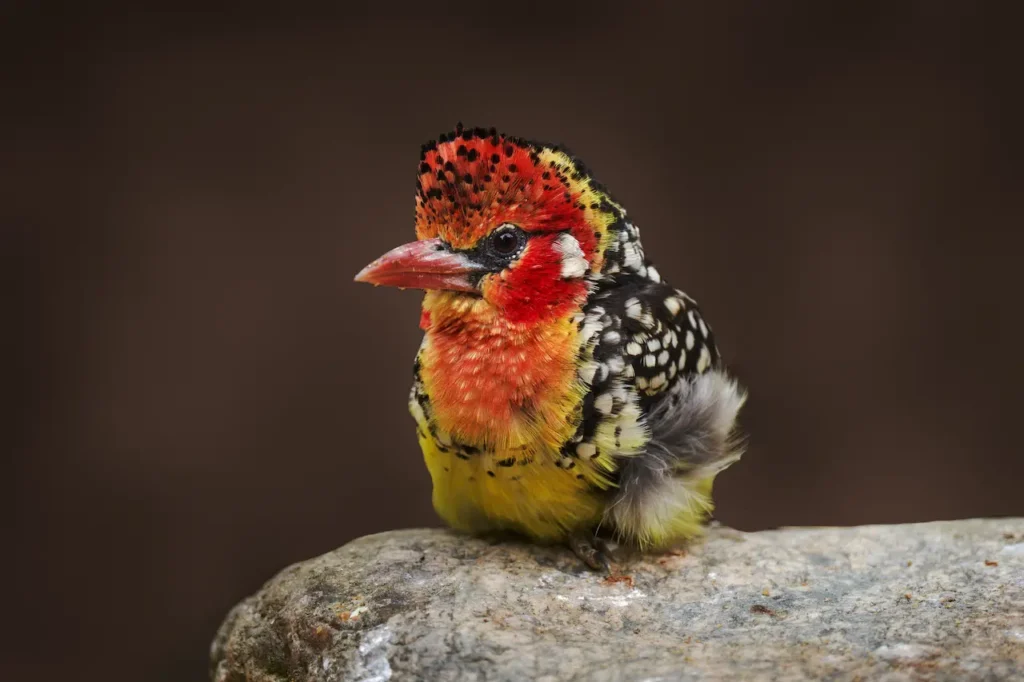
The plumage of adult male Red-yellow barbets is exceptionally colourful and complex. The nape and forehead are orange and red, with black spots. The sides of the neck change from bright red to bright yellow. The back is predominantly dark, but heavily marked with large white spots. This creates a striking contrast. The tail is blackish brown with cream spots that form bars. On the underside, the tail is yellow and black.
Throats, breasts, and underparts
The adult male’s chin and throat are yellow. There is a black patch in the middle of the throat, bordered with orange tones. The breasts are orange-red, and yellower towards the sides. Another bold visual indicator is a dark band with spots in the middle of its breast. The lower breast and belly are a bright yellow colour, which contributes to the bird’s distinctive appearance.
Wings, Bills and Soft Parts
The Red-Yellow Barbet’s wings are marked with white spots, which create a speckled or banded appearance in flight. The powerful, long bill is usually red and can be used to handle a variety of foods. The eye colour can range from red-brown to yellow-brown or dark brown. The bird’s blue-grey legs and feet complete its colourful palette.
Differences between females and juveniles
The female Red-yellow Barret is similar to the male, but has a duller colouration. The females’ plumage is less orange and red, and more yellow. Often, they lack the black throat patches and do not have a prominent crown. The juveniles are duller with less red and orange, darker blacks and less distinct white spots. The eyes of young birds are usually grey, but they darken with age. According to Bug Guide, this species is well documented.
Feeding Ecology Overview
The Red-yellow barbet is an omnivore with a varied diet. They eat seeds, fruits and a variety of invertebrates. This makes them an important contributor to the ecosystem’s balance. They are able to adapt their feeding habits in order to take advantage of seasonal food availability, even when living in harsh environments. They usually forage on the ground or very close to it, which sets them apart from other fruit-eating birds. According to iNaturalist, this species is well documented.
Fruit Consumption & Seed Dispersal
The Red-yellow Barbet eats a lot of fruit. Birds regurgitate seeds and other indigestible materials after swallowing whole fruits. They are effective seed dispersers, and this behaviour helps maintain plant diversity within dry savannas and scrub ecosystems. It is also known that they visit agricultural areas and plantations, where they eat cultivated fruits and veggies.
Invertebrates as Opportunistic Prey
Red-yellow barbets eat a wide variety of animals in addition to fruits. They eat ants, beetles, cicadas, dragonflies, crickets, locusts, moths, mantids, scorpions and centipedes. Sometimes, they will also eat small vertebrates like lizards and frogs. This varied diet is essential for providing protein and nutrients to the birds, especially during breeding season.
Foraging Techniques and Behaviour
Red-yellow barbets usually forage in pairs or alone, searching methodically beneath low vegetation or on the ground. In search of food, they use their powerful bills to probe the soil, leaf litter and termite nests. The terrestrial foraging style of these birds reflects their adaptation to habitats with open, broken and concentrated food resources.
Breeding Seasons and Reproductive Timing
The timing of breeding in Red-yellow Barbets depends on the regional rainfall patterns and availability of food. Breeding occurs most often during times of abundance in insect prey or fruit. This ensures that the chicks receive sufficient nutrition at critical developmental stages. Generally, the species is monogamous, with couples working together closely throughout the nesting process.
Nest Excavation & Burrow Structure
Nesting occurs in tunnels and burrows dug into the soft earth or termite mounds. Burrows can be dug every year or reused across seasons. The tunnel slopes upwards before it ends in a nesting room, which prevents flooding and discourages predators. The species’ breeding ecology is defined by burrow nesting.
The Care of Eggs and Incubation
The female usually lays two to four eggs in a clutch. The incubation period lasts between 13 and 15 days. Both parents share the responsibility of incubation. Both parents feed and protect the chicks after hatching. This parental care is shared by both adults, which increases the chick’s survival rate.
Relationship with Humans and Cultural Meaning
Red-yellow Barbets can be remarkably friendly and tame in areas with low hunting pressure. In some areas, local communities use their feathers for cultural or decorative purposes, including by certain Maasai tribes. This practice, while generally small in scale, highlights the complex relationship that exists between people and wildlife in East Africa.
Conservation Status and Population Outlook
Red-yellow Barbets are not currently considered to be globally threatened. They are generally categorised as species of Low Concern. The Red-yellow Barbet’s widespread distribution and ability to adapt to different dry habitats have helped to maintain stable populations. Localised threats, such as habitat destruction, agricultural expansion and hunting, can have an impact on regional populations. This highlights the importance of ongoing monitoring.
Habitat protection is important
Red-yellow Barbets need to be protected from the destruction of habitats like riverbanks and termite mounds. In these environments, not only do barbets live,, but a variety of other species that are adapted to semiarid ecosystems. In order to preserve these unique landscapes, sustainable land management is essential.
Conclusion: The significance of the Red-yellow barbet
The Red-yellow Barbet has a striking appearance and a fascinating adaptation to the environment. The bold plumage of this barbet, its burrow-nesting habits, and its lifestyle on the ground make it a distinctive bird in Africa. It is an important insect predator and disperser of seeds, which helps maintain ecosystem health. Understanding and conserving the species will help protect the biodiversity of Eastern Africa’s dynamic landscapes.