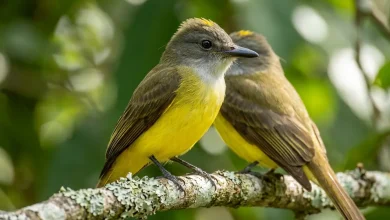
The Cordilleran Flycatcher is an insect-eating, charming bird that lives in the mountains and forests of western North America. It is often overlooked by casual observers because it lives in dense forests and has subtle plumage. This flycatcher is one of the most difficult birds to identify for ornithologists. This species is part of the Empidonax family, a notoriously difficult genus where many species have nearly identical size and coloration. Its range is primarily along the Pacific Coast, and up into the Rocky Mountains, where it breeds in the spring and summer. It then embarks on an extensive migration to Mexico, where it spends the winter in warm, insect-rich habitats. The Cordilleran Flycatcher, which thrives amongst towering conifers and cool streams in canyons and shaded mountains, is deeply linked to the ebbs and flows of mountain ecosystems.
Distribution in Western North America
The Cordilleran flycatcher’s distribution is wide, spanning from the forests in California, Oregon, and Alaska to the interior and coastal mountains of Washington and British Columbia. The species is particularly associated with the rugged terrain in the Rocky Mountains, where it has a large number of breeding habitats. During non-breeding seasons, the species migrates to the south, covering thousands of kilometres, and spends the winter in Mexico. This is especially true in the forested areas that mimic the climate and structure of the northern breeding grounds. The flycatcher is a creature that depends on insects, changing temperatures and the right cover. The Cordilleran Flycatcher is not like other species that live in open grasslands and suburban areas. It remains closely tied to the forested landscapes of the western mountain ranges.
Ecological Niche and Preferred Habitats
The Cordilleran Flycatcher thrives in pine and oak woodlands, moist coniferous forests, riparian pathways, and canyon bottoms. The selection of their habitat is closely linked to the presence of running water. Streams, creeks and shaded ravines are essential for nesting and insect resources. They prefer dense understory in forests, which provides both shelter and a strategic vantage point for foraging. They are distinguished from their relatives, who may prefer drier woods, by their preference for moist forest zones. The species is often found in high-elevation forests with Douglas firs, Engelmann spruces, and ponderosa pines, where the cool temperatures and abundance of insects provide ideal conditions. The species is highly sensitive to changes in habitat, logging practices and water flow because it depends on stable forest structure.


Physical Description and Distinguishing Features
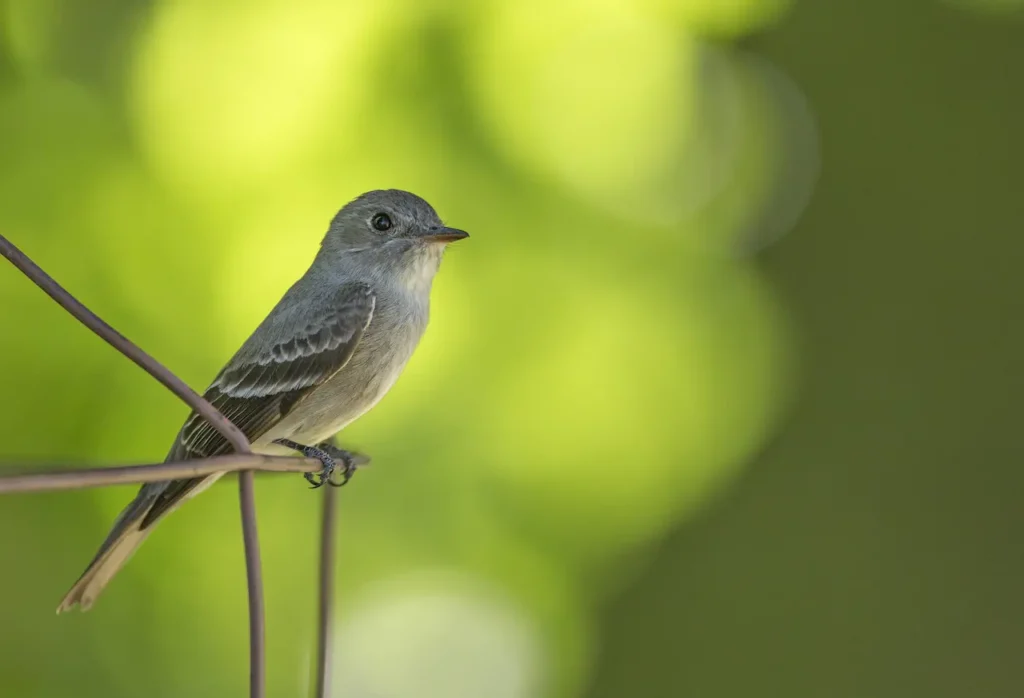
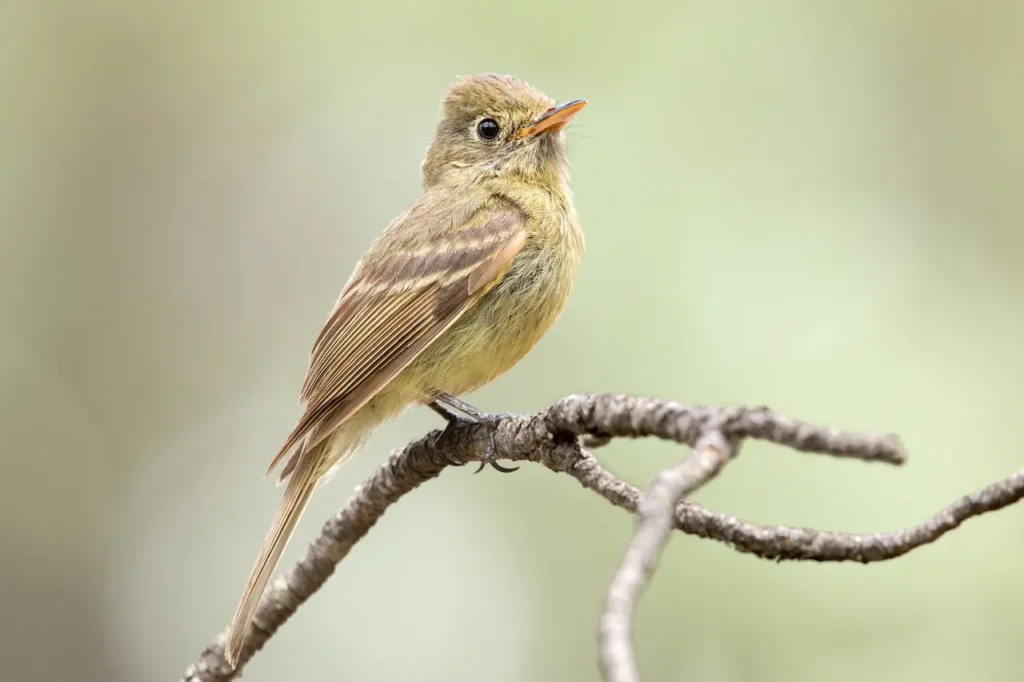
The Cordilleran flycatcher is a member of the Empidonax group of flycatchers. It has a subtle, understated colouring that makes identification difficult. The adults measure 13-17 centimetres, making them one of the smaller flycatchers in North America. The olive grey upperparts can blend into the shaded forest environment, while their yellowish lowerparts provide a warm wash in bright lighting. A distinct white eye ring surrounds the eye. white bars on the wings stand out when compared to darker wings. This bird is compact in appearance, with a small and delicate bill. The understated characteristics of the bird are crucial to its survival. They allow them to be unnoticed in the dark forest understory. The subtlety of their plumage makes it perfect for living amongst leaves and branches.
Identification Challenge for Similar Species
The Cordilleran Flycatcher shares many similarities with the Pacific Slope Flycatcher. These two species were once grouped under a single name, Western Flycatcher, because it was nearly impossible to distinguish them from one another by sight. The plumage colour, eye rings and wing bars are nearly identical in both species. In certain areas, their ranges overlap, adding to the complexity. They are now recognised as distinct species because of differences in voice, breeding ranges and subtle genetic markers. Even experienced birders depend heavily on songs and calls, especially during breeding season, to differentiate the species. Habitat can be a clue, since the Cordilleran Flycatcher is more likely to inhabit interior mountain forests while the Pacific-slope Flycatcher prefers wetter coastal valleys. This species is difficult to identify and is a good example of the difficulties that come with Empidonax Flycatchers.
Daily Behavior Patterns and Behavior Patterns
The Cordilleran Flycatcher displays behaviours characteristic of the Empidonax family: subtle, fast-paced and closely tied to insect availability. They spend a lot of time in the lower or middle forest canopy, where they sit quietly and then dart out in short bursts to catch flying insects. The hawking hunting technique combines agility and keen vision. They hover briefly to pick up insects, particularly near the shaded creek bed. Cordilleran Flycatchers tend to be solitary and maintain loosely defined territory during the breeding season. Males are more vocal at dawn and dusk. They sing songs that define the boundaries of their territories and attract mates. They are a delight for birdwatchers who can be patient and scan the forested trails or riparian edge. According to BirdLife International, this species is well documented.
Nesting Habits and Breeding Season
The Cordilleran flycatcher is a deliberate and careful nest builder. It chooses locations that are both hidden and near water. The species builds cup-shaped nests from grasses and moss. Bark strips and plant fibres are also used. Nests are often built at the forks of trees. They can be found low, on horizontal branches where there is ample shade. The clutches are usually two to five eggs, ranging in colour from cream and white with subtle speckles. The female is usually the one who incubates the eggs, but both parents can share the parental duties. The nesting site is carefully selected. Shade and constant moisture are essential to keep the eggs cool. The parents feed the chicks soft-bodied insects to ensure rapid growth in the short mountain summer. According to Cornell Lab of Ornithology, this species is well documented.
Wintering Grounds and Migration Patterns
Cordilleran Flycatchers migrate far distances when temperatures fall and insect availability decreases. The winter range of the Cordilleran Flycatcher is in Mexico, where it inhabits forested highlands and pine-oak ecologies as well as humid tropical uplands. In winter, they feed with other insectivorous birds, such as kinglets and warblers. Its migratory habits ensure that the flycatcher has access to a variety of food sources throughout the year. This behaviour also highlights how dependent this species is on the conservation of forests in multiple countries. They are also affected by habitat destruction in wintering and breeding areas because their migration route crosses vast terrains.
Feeding and Diet Behaviour
Cordilleran Flycatchers are strictly insect-eating birds. They rely on a constant supply of small flying insects. They eat flies as well as beetles and caterpillars. In the understory of a shaded forest, where insect density can be high, their primary hunting technique is to fly out and grab prey in mid-air. The birds also pick up insects while hovering in place. They are well-adapted to environmental changes because of their foraging versatility. During breeding season, the nutritional requirements of chicks increase significantly, and parents make hundreds of feeding trips per day to meet their needs. They are very sensitive to airborne pollutants and pesticides because their diet is dependent on forest ecosystems.
Birdsong and Vocalisations
Its vocal repertoire is easily identifiable and can be used to identify the species. A song can be described as a series of “pseet ptsick seet” notations, delivered quickly and in order. The phrases are heard throughout the forest, and most often during breeding season. The calls are sharp and loud, “pit pete” that serve as a territorial warning or contact note. Birdwatchers and scientists rely heavily on their vocal cues because they are visually similar to the Pacific-slope Flycatcher. The song structure is subtly different from other species. Acoustic analysis can be used to study their behaviour and range limits.
Conservation Status & Environmental Importance
Currently, the Cordilleran flycatcher is considered stable, but not globally endangered. However, localized population decreases have been observed in areas that are affected by heavy logging and water diversion. It is a Bioindicator because it is closely linked to mountain ecosystems and streamside forests. Changes in its population are a reflection of broader environmental trends. The well-being and survival of this species is enhanced by protecting riparian areas, maintaining old-growth forests, and using sustainable land management techniques. Conservation efforts to preserve wintering habitats are also important for the full life cycle of the flycatcher. The Cordilleran Flycatcher is not in immediate danger, but its reliance on a variety of forest types makes it vital to protect the habitat.
Conclusion
The Cordilleran Flycatcher is a symbol of the complexity and beauty of the forests in western North America. It is a species that has adapted to its environment, from its delicate plumage and graceful foraging flight to its melodious call. The species’ challenges, both in terms of identification and ecological sensitivity, make it a favourite with birders who enjoy the beauty and nuance of woodland species. The Cordilleran Flycatcher is a vital part of the forest ecosystem, whether it’s perched silently above a stream in the shade or singing on a mossy branch at dawn. Understanding the habits, behaviours, and distribution of this species enriches birding and also highlights the importance of protecting the mountain and coastal habitats that sustain it.