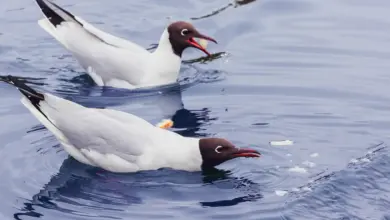
Caspian Gulls are scientifically known as Larus Cachinnans, and they belong to the larger Herring Gull & Lesser Black Back Gull Complex. They are one of the most fascinating large gulls in Eurasia. These birds are fascinating to birders and ornithologists because of their unique appearance and complicated taxonomic background. Caspian Gulls are a fascinating species that can be found in Western Europe or along the Caspian Sea. They have a wide range and unique behaviour.
What is the Caspian Gull? An Introduction
Caspian Gulls are large and elegant gulls that can be seen in Europe, Central Asia and, increasingly, even further afield. This gull, which was once restricted to the Black Sea and Caspian Sea, has expanded its range, now appearing in places like Germany, Poland and the UK. Caspian Gulls belong to the Larus family, but they are not confused with Herring Gulls or Yellow-legged Gulls. Understanding the differences between these species is crucial for accurate identification.
Caspian Gull identification: size, shape, and colouration
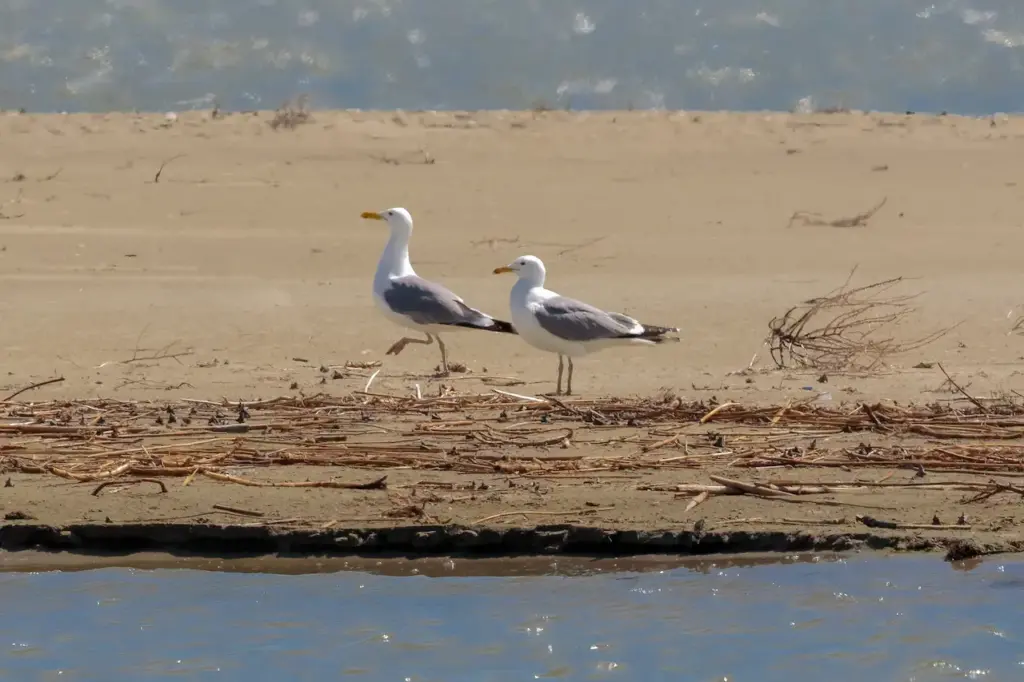
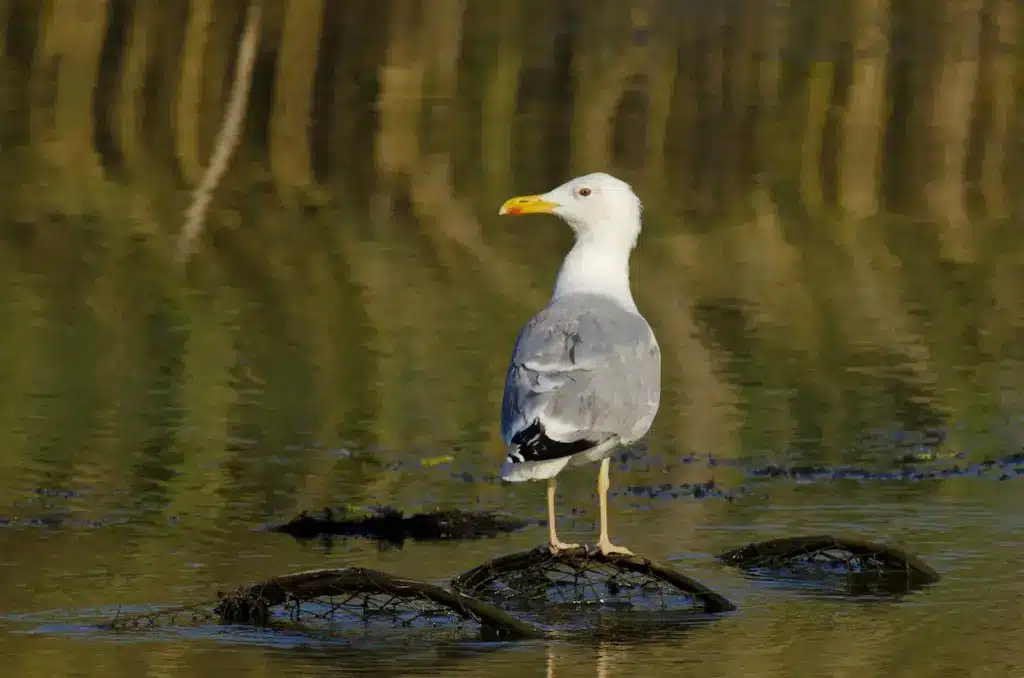
Caspian Gulls are among the largest members of the family. They measure between 59 cm and 67cm in length, and weigh approximately 680 to 1330g. This gull’s long and slender beak, combined with its sloping fro,nt gives it a sleek profile. It is distinguished from the Herring Gull, Larus albertus and the Yellow-legged Gull, Larus Michahellis, which have more angular shapes.


Physical Characteristics of Caspian Gulls Adults
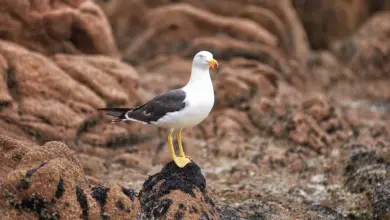
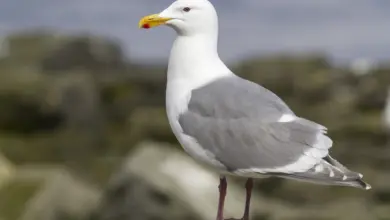
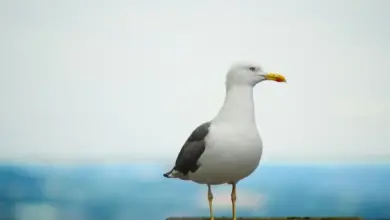
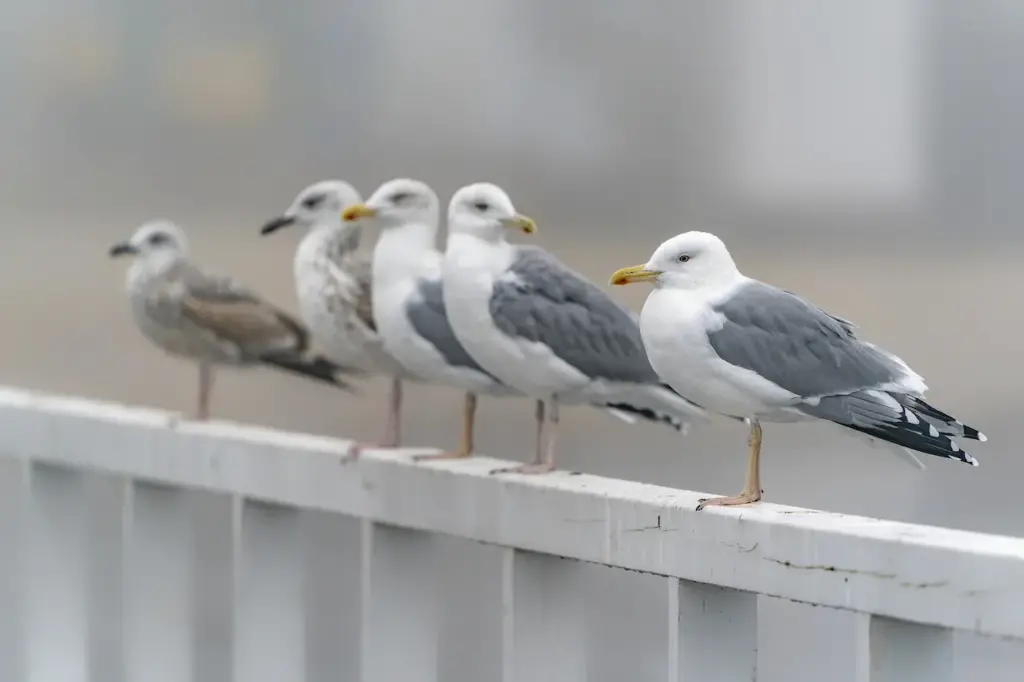
Caspian Gulls are greyer than Herring Gulls but lighter than Yellow-legged Gulls. The outermost feathers have a conspicuous tip as well as a white tongue visible on the inside web. This is a subtle, but consistent, field mark. The eyes of the bird are usually dark and small, giving it a more gentle expression than other large gulls. Legs can be pale to yellowish with proportions that are in line with the elegant shape of a gull.
First-Winter Caspian Gulls and Juveniles: A Distinctive Look
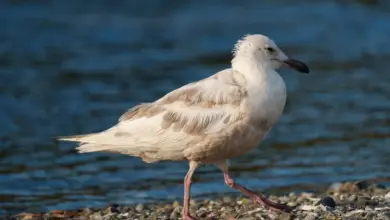
The first-winter Caspian Gull is also distinctive. The immature Caspian Gull has a pale-colored head, with dark streaking concentrated mainly around the nape (or neck). As adult feathers emerge, the underparts become lighter, sometimes appearing mottled or clean. The double-pale wing-bar is one of the most distinctive features in the juvenile plumage. It is formed by the white-tipped larger and median wing covers. The wings appear barred when at rest. This helps birdwatchers to distinguish them from immature large geese.
Caspian Guille Range: Where are they found?
Caspian Gulls used to be confined to the Black Sea and Caspian Region. However, they have now expanded considerably. The breeding range of Caspian Gulls now extends eastward through Central Asia to northwestern China. This reflects their adaptability and increasing populations. Sightings of the owl are not rare in Europe. Poland and eastern Germany host breeding colonies. Winter dispersals bring individuals to Sweden, Denmark and Norway.
Caspian Gulls – UK and Western Europe
Caspian Gulls, once a rare bird, are now a regular winter visitor to parts of southeast England. This includes East Anglia and the Midlands. They also frequent the Thames Estuary. The species has become more familiar to British birders, thanks to identification guides and the proliferation of gull-watching spots. This increase may be due to both real population growth as well as increased observer awareness. Many birdwatchers are now able to distinguish Caspian Gulls and their close relatives.
Habitats preferred by the Caspian Gull
Caspian Gulls are attracted to open, flat habitats, especially during the nesting season. The Caspian Gull nests on low-lying islands found in lakes, salpans or river Deltas. They avoid the cliffside habitats that are often preferred by Yellow-legged Gulls. They can also be seen outside of the breeding period along coastlines and inland ponds. Landfills and cities are all examples of their highly adaptable and opportunistic nature.
Nesting Behaviour and breeding season
The breeding season begins around April. Pairs form monogamous relationships. Caspian Gulls lay 2 to 3 eggs. They are incubated between 27 and 31 days. Both parents are equally responsible for nesting and fiercely defend their territory. Nesting sites are usually chosen in large colonies to provide safety in numbers. However, solitary pair nesting is not uncommon. The chicks move around quickly after hatching. According to RSPB, this species is well documented.
What do Caspian Gulls eat?
Caspian Gulls are omnivorous scavengers and active predators. The diet of Caspian Gulls is highly variable, depending on the habitat and availability. During breeding season, they forage into the steppes and hunt small mammals like ground squirrels. In urban and coastal areas, they feed on carrion, refuse and insects. The ability to adapt their food choices is the key reason for their expansion and colonisation of new areas. According to eBird, this species is well documented.
Seasonal Migrations and Migration
Some Caspian Guillemots migrate to the south during winter. Some may even travel to the Red Sea or Persian Gulf. Some migrate westward to Western Europe. The migration patterns are still under study, but satellite tracking and ringing recovery continue to improve understanding of the seasonal movements and wintering areas.
Taxonomy of Caspian Gulls
Taxonomy for the Caspian Guillemot is complicated and controversial. Some authorities recognise Larus Cachinnans now as a separate species. Others continue to list it as a subspecies. British Ornithologists’ Union Records Committee, for example, still classifies it as a subspecies. These discrepancies highlight the difficulties of gull classification, where interbreeding is common and features overlap.
Subspecies of Taxa and Related Taxa
The Steppe Gull is often associated with the Caspian Gull ( Larus barabensis), as are the Mongolian Gull and the Larus Mongolicus. It is difficult to classify the Steppe Gull that breeds in northern Kazakhstan. The genetics and appearance of this Steppe Gull are very similar to those of the taimyrensis races of Heuglin’s Gull. The wintering range of this bird is likely to include southwest Asia, with possible records from Hong Kong or South Korea.
The Mongolian Gull is a close relative of
The Mongolian Gull blurs the line between species and subspecies. It breeds in Mongolia and the surrounding area. It migrates southward during winter. Others classify it as an East Siberian Gull (Larus Vegae), while still others consider it a separate species. These taxonomic mysteries will only be solved by further research, primarily through DNA analysis.
Why are Caspian Gulls important?
Caspian Gulls provide insight into the evolution and speciation of large gulls. Birdwatchers and scientists are challenged by their expanding range, subtle differences and scavenging behaviour. Their movements can be used as an indicator for environmental changes, including habitat loss, climate shifts and more, especially in Central Asia and Eastern Europe.
Birdwatching Tips and Caspian Gull Identification
Look for birds that have long, slender wings and dark, small eyes. Pay attention to the behaviour of mixed gulls. Caspian Gulls tend to stand up, seem more alert and display distinct flight profiles. The pale head and pale wing bars are the best ways to identify juvenile birds. Winter is the best time to visit coastal estuaries or inland lakes.
Final Thoughts:
The story of the Caspian Gull is still unfolding. With its complex taxonomy, growing range, and subtle beauty, it continues to intrigue both amateur birders and professional ornithologists. Whether you’re watching them glide effortlessly across a lake in Eastern Europe or analysing field marks at a UK landfill, the Caspian Gull serves as a compelling example of nature’s diversity and adaptability.