South America has some of the world’s most unique and diverse bird species. The genus Theristicus is notable for its beauty and ecological significance. The South American ibises belong to the family Threskiornithidae. They are long-legged wading bird species that live in grassy habitats and thrive in wetlands and savannas. Theristicus ibis are fascinating to birdwatchers, ornithologists and ecologists alike because of their graceful flight patterns and special feeding habits.
The Theristicus genus
The genus Theristicus is a group of small but remarkable ibises endemic to South America. They are found in a variety of habitats, from subtropical pastures to agricultural fields and marshes. Their distinctive plumage, which often combines earthy tones and striking highlights, is easily recognisable. They have long, decurved bills, reddish-colored legs, as well as distinctive, long, decurved bills. Theristicus ibis spend more time on land than their aquatic relatives. This gives them a wider ecological niche compared with other wading bird species.
Theristicus ibises: General Appearance and Behaviour
The Theristicus is a large ibis with a strong bill that curves inward. This bill is well-suited for probing mud and shallow water. They have shorter legs than storks and herons, but they are still able to walk through soft or wet ground. Their flight pattern is one of their most distinguishing behavioural traits. The ibis does not retract its neck during flight like herons do. Instead, they fly with their necks fully extended, often forming V-shaped flocks across landscapes.


This behaviour distinction is not only useful for identification, but it also increases their aerodynamic efficiency when flying long distances. These V-formations are often observed during seasonal flights or communal roosting flights, and they reflect the strong communication between species.
The Three Species of Theristicus
The Theristicus includes three species: The Plumbeous Ibis, the Buff-necked Ibis, and the Black Faced Ibis. Each species is unique in its habitat preferences and range of distribution, but all share traits like probing bills and a ground-based feeding habit.
Plumbeous Ibis Theristicus Caerulescens
The Plumbeous ibis is a stunning bird, with its greyish plumage that has a slight bluish sheen. Its name, “plumbeous”, means lead-colored. The Plumbeous Ibis is found mainly in the grasslands, wetlands, and lakes of central South America. This includes Brazil, Paraguay, Bolivia and northern Argentina. This ibis, one of the quieter species in the genus, is usually seen alone or with small groups.
The plumbeous Ibis’s colouration is subdued, which helps it blend in with its surroundings. However, its size and deliberate, slow movements help it to be easily recognised. The Plumbeous Ibis is a bird that prefers to live in savannas and drier wetlands. It feeds on insects, small vertebrates, and amphibians.
Theristicus caudatus Buff-necked Ibis
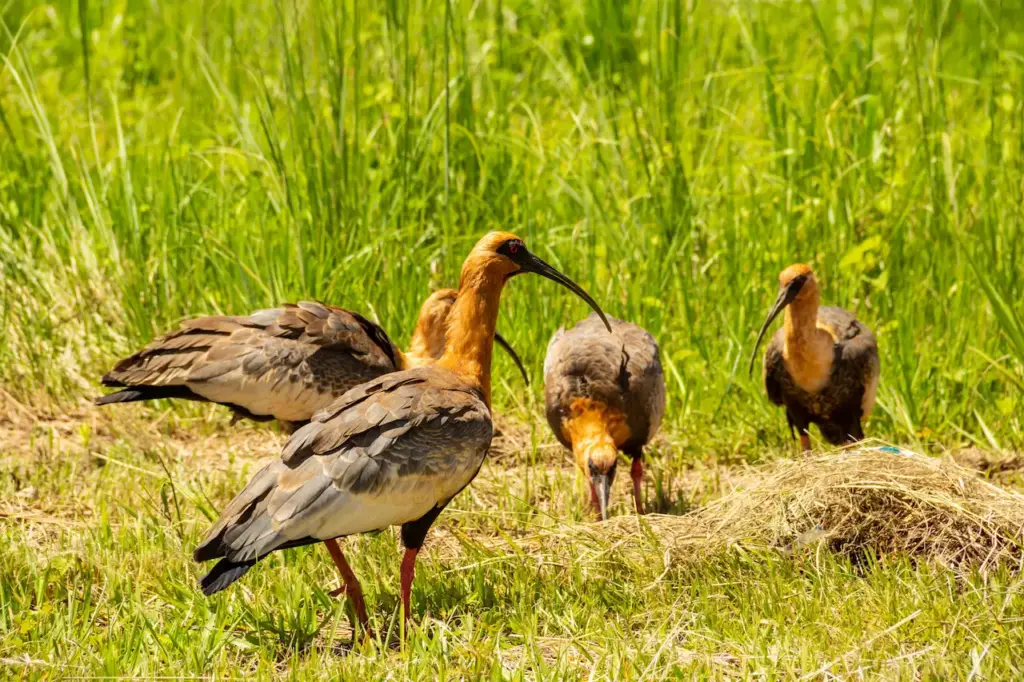
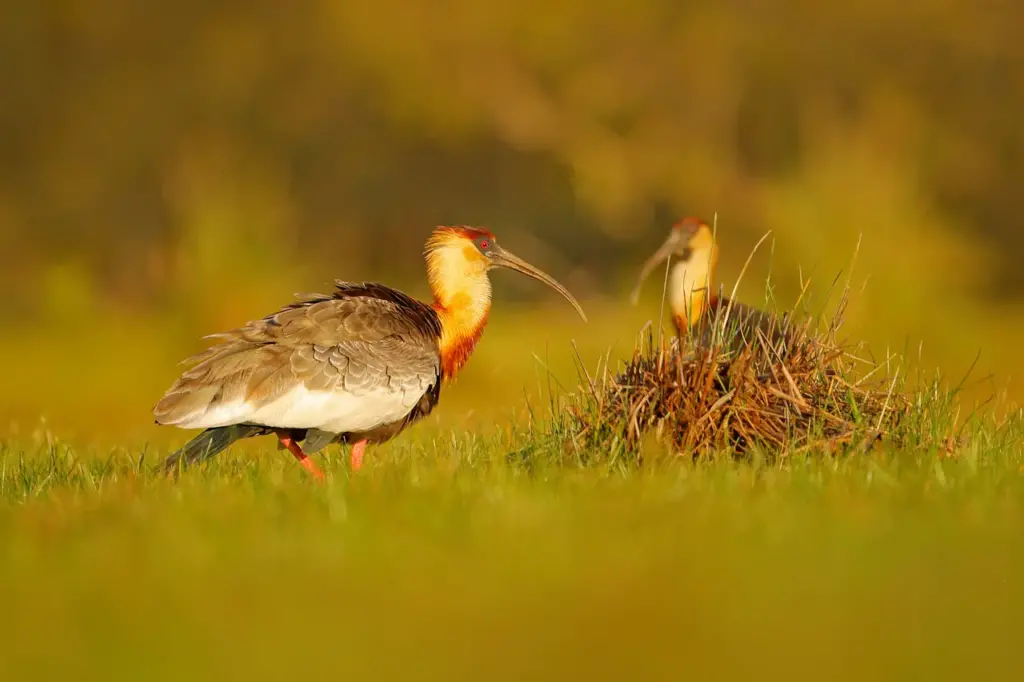
The Buff-necked Ibis, perhaps the most distinctive of the group, is its vibrant colouration. It has a buff neck, which contrasts beautifully against its darker body and wings. This species is found in South America from Venezuela to Colombia, and north Argentina and Brazil.
Buff-necked Ibis are often seen in small groups or pairs, particularly in open plains, pastures, and agricultural fields. The species is adaptable and thrives both in natural wetlands and in landscapes altered by humans. The loud honking call is often heard in the morning and evening, making this ibis one of the most vocal species in the area.
Theristicus melanopis, Black-faced Ibis
Black-faced Ibis are found in southern South America. This includes southern Chile, Argentina and parts of the Andean Highlands. The Black-faced Ibis has a black mask on its face, a buff-grey color body, and dark-tipped wing tips. This species is cold-tolerant, which makes it unique among the ibises.
The Black-faced Ibis forages often in mountainous grasslands or near mountain rivers. This species, unlike its relatives, which prefer lowlands to forage in, shows the adaptability of Theristicus to diverse ecological conditions. The species’ behaviours include seasonal movements in response to temperature and food availability.
Feeding Habits Of Theristicus Bises
The diets of Theristicus ibis are as varied as their habitats. They are opportunistic foragers and can be seen on land or in shallow water. The birds eat aquatic invertebrates, such as insects and crustaceans. They use their long, curved bill to probe the soft soil for prey. According to RSPB, this species is well documented.
Theristicus Ibises also consume terrestrial prey in addition to aquatic sources. It includes insects that are caught in fields of grass, small reptiles such as skinks and lizards, and amphibians like frogs. They are patient and methodical in their foraging, moving slowly and carefully through marshes and fields to find food. According to eBird, this species is well documented.
They can thrive in both the natural and man-made landscapes. In agricultural areas, they can be seen hunting insects and small mammals that are uncovered by machines. The ecological role of pest control is vital to both farmers and ecosystems.
Breeding and nesting behaviour
The breeding behaviour and environmental conditions of Theristicus ibis are closely related, especially to rainfall. The majority of breeding occurs during the rainy season when food is abundant. The abundance of insects and small prey will ensure that the chicks are given the best chances to survive.
These ibises breed in large colonies, sometimes with other waterbirds such as herons and egrets. The nesting in colonies provides greater protection from predators and encourages cooperation among species. Nesting sites are typically located near water bodies, but some populations nest on cliffs and rocky outcrops.
Nests are shallow cups made of sticks, grasses and reeds. The nests are built with care, and they’re often used year after year by the same breeding pair. The typical clutch consists of 2 to 4 eggs. Both parents are responsible for the incubation, as well as the feeding of chicks. After several weeks, the young birds can fly, but they may still be dependent on their parents.
The importance of Theristicus to Ecosystems
Theristicus Ibises play a vital role in the ecosystem. They are both predators as well as scavengers. This helps maintain balance in the insect and small animal populations of their habitats. They are an indicator of healthy grassland and wetland ecosystems. Their decline can indicate environmental degradation or water-quality issues.
These ibises also contribute to soil aeration and seed dispersal through their foraging. The ibises’ probing bills are not only used to uncover food, but they also help turn soil over. This can encourage plant growth and maintain biodiversity. Their insectivorous diet helps them to be natural allies for farmers in agricultural landscapes. They can help control pests and other problems without using chemicals.
Conservation and threats
The Theristicus is not considered a globally threatened genus, but local populations are facing challenges due to habitat destruction, pollution, wetland draining, and human invasion. Climate change, urbanisation, and agricultural expansion all threaten the fragile ecosystems that these birds depend on.
Conservation efforts should be focused on the preservation of wetlands, maintaining grassland habitats and reducing pesticides in agriculture. It is important to protect breeding colonies and migration routes. Responsible birdwatching tourism can help raise community awareness and encourage them to protect these charismatic species and their environment.
The Grace of Theristicus ibises: Final thoughts
The Theristicus Ibises glide gracefully across the open skies of South America or forage peacefully in the marshes. The Buff-necked Ibis’s glowing plumage, the ghostly grey of the Plumbeous Ibis or the unique features on the Black-faced Ibis all embody the beauty and adaptability of nature.
Understanding their behaviour, habitat requirements, and ecological role will help us better protect and appreciate these amazing birds. The Theristicus Ibises are a great way for bird enthusiasts, conservationists and casual nature watchers to gain a deeper understanding of the complex balance in South America’s avian ecosystem.